
Have you ever wondered why the same aquatic plant is much less effective in different tanks? There are various reasons for the answer to this question. All of these reasons are discussed below. After going through the article, you will be able to select the right plant for your tank.
Content Table
In the following, you will learn about how tank conditions affect plant growth and the selection of aquarium plants according to the growth mode. The balancing approach between CO2 and lighting, substrate and fertilization, and fish and plant compatibility is worth learning topics. At the very end, you will find a table for beginner aquarium plants with a pro tip to start your planted tank journey.
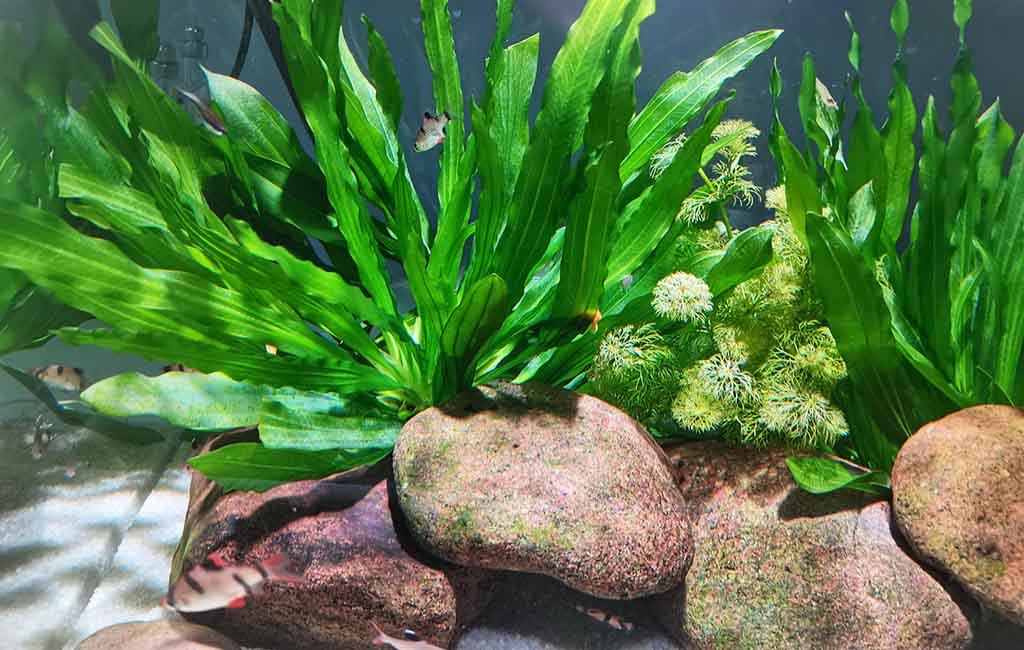
right plant for your tank
The Same Aquatic Plant Has Different Effects in Different Tanks
You may have observed that you and your aquarist friend bought the same plant from the same shop. After some time, you observed each other’s tanks and found some unusual differences. Your plant is fragile, weak, and almost dead. Your friend’s plant is strong and healthy. You begin to think that plants are the same, conditions are almost similar, but what has gone wrong?
The answer to this varying plant behavior is due to varying conditions in both tanks. These varying conditions include:
- Lighting intensity and duration
- Water temperature
- Water hardness
- CO2 levels
- Substrate type
- What fish are sharing the space?
- How many types of plants are in your tank?
Underwater plants behave similarly to your garden plants. For example, you have two different plants that require different treatments. However, you are applying the same treatment to both. After a few days, you will find that one plant is in prime condition, while another is on the verge of collapse or has already collapsed. It happened because you have similarly treated both plants, although they require different treatment.
Start with Your Tank Conditions
Don’t fall for the fancy or friend-suggested plant. Before buying it, you need to understand your tank. For better understanding, observe the following six elements, which are extremely crucial.
Tank Size
Tank size, more specifically tank depth, is extremely crucial. If you want to grow substrate plants but ignore the tank depth, you are most likely writing your plants’ death warrant. Water affects the light penetration. If your tank has more than 18 inches of depth, install high-penetrating lights.
Water Visibility
If your tank has tea water or an unclear water condition, it will also affect light penetration. Must inspect the water visibility before selecting the plant. Otherwise, your plant will suffer from weakness and various other problems.
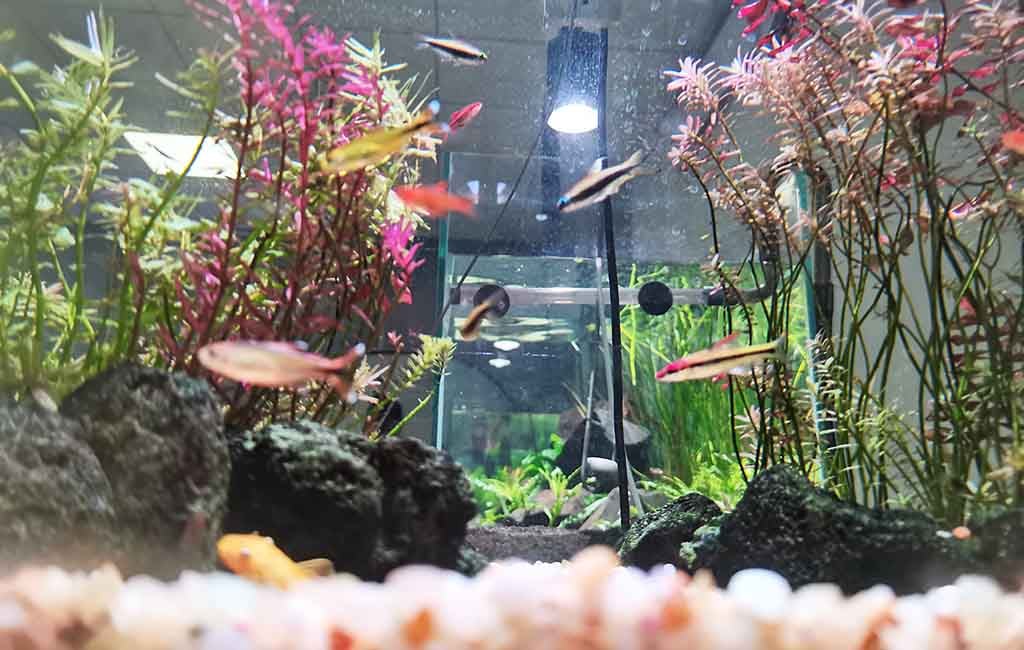
Fish and plant compatibility
Lighting Setup
Most beginners, without proper research, buy some LED lights and consider these lights enough for plant growth. Mostly LED lights offer 10 to 30 PAR, which is not enough for high-light-requirement plants. In this situation, you have 2 options.
- Buy such plants that require low PAR.
- Update lighting according to your desired plant requirements.
Water Parameters
Your plants must match the tank’s water conditions. Moreover, the water parameters should be stable. Unstable or sudden variation in water parameters will cause problems for fish and plants. Water parameters affect plant growth and nutrient uptake.
Water Flow
Canister filters offer high flow, while some filters offer extremely low flow rates. Both conditions are harmful to plants. A high flow rate will damage or even uproot the plants, while low flow makes it hard to access nutrient availability. Therefore, maintain a moderate flow rate. Flow rate mainly depends on the tank size. If your tank is large, a canister filter will be suitable. If your tank is small, a low flow rate can work. The flow rate should be between 4 and 10 times the tank size.
CO2 Availability
Humans intake Oxygen and exhale CO2. So we consider O2 a lifeline for humanity. Similarly, CO2 is important for plants. However, CO2 injection depends on the type of plants. If you have low-light plants, there is no CO2 injection required. For medium-to high-light-requiring plants, you need to inject CO2 for proper plant growth. Otherwise, your plant will melt away and will not show the desired results.
Choose An Aquarium Plant According to the Growth Mode
Different plants have different placement suitability. According to this suitability, they are divided into various groups. Some plants are suitable for the foreground, others show their potential in the background, and many other types have their own strong growth areas. Therefore, it is necessary to select and place the plants according to their grouping for successful plant growth. Here are different groups according to growth suitability.
| Group | Size and growth pattern | Examples | Notes |
| Foreground or Carpeting Plants | Short and low-growing or carpeting plants. They usually spread across the bottom of the tank. | Dwarf baby tears | Require high light |
| Monte carlo | Require CO2 injection | ||
| Dwarf hairgrass | |||
| Midground Plants | These are medium height and anchor in the middle of the tank. | Anubias nana | Low-light tolerant |
| Cryptocoryne wendtii | Suitable for beginners | ||
| Java fern | |||
| Background Plants | Tall | Vallisneria | Most plants in this group are happy with medium light |
| Fill the back of the tank | Ludwigia | ||
| Hide the equipment in back | Water wisteria | ||
| Create depth | Amazon Sword | ||
| Floating Plants | They drift on the surface | Frogbit | They absorb nutrients from the water column and help to avoid algae bloom
Resilient to varying conditions |
| Rapidly absorb nutrients in the water column | Amazon Frogbit | ||
| Reduce the light penetration at the bottom | Duckweed | ||
| Epiphyte Plants | These plants are attached to rocks or driftwood. | Java fern | Never bury rhizomes as they can rot. Tie it to the hardscape with a fishing line, thread, or glue. |
| Anubias |
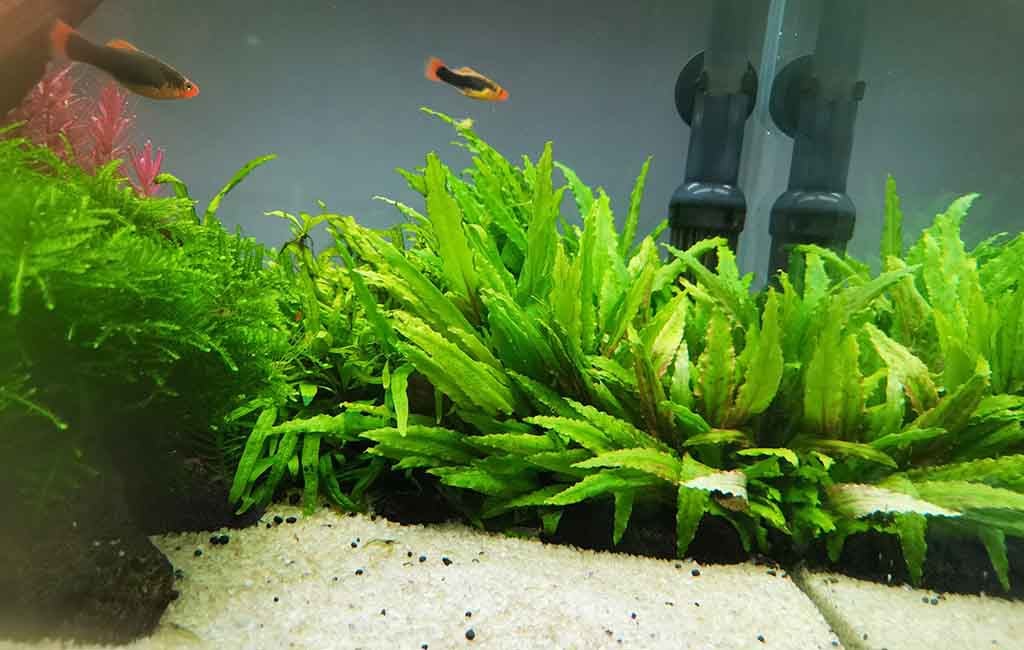
choose aquarium plant
The Matching Formula of Light and CO2
Light and CO2 are complementary to each other. If one is raised, the other must be increased. Otherwise, the mismatch will cause problems. In other words, a mismatch will lead to a domino effect. Here is a table that will help you to keep a balance between Light and CO2. You can consider it as a matching formula.
| Tank Tier | Light Level (PAR) | CO2 Needed | Fertilizer | Best For |
| Low-Tech | Low (≤30) | None | Optional liquid fertilizer | Java Fern |
| Anubias | ||||
| Mosses | ||||
| Crypts | ||||
| Medium-Tech | Medium (30–80) | Liquid carbon or DIY CO2 | Root tabs + liquid fertilizer | Ludwigia |
| Swords | ||||
| Vallisneria | ||||
| Bacopa | ||||
| High-Tech | High (80+) | Pressurized CO2 system required | Full dosing or full fertilizer | Glossostigma |
| HC Cuba | ||||
| Rotala | ||||
| Stem plant carpets |
If you are a beginner, don’t leap toward high-tech tanks. High-tech tanks are for the masters or pros who understand their tank. Starting with a low-tech tank is not a constraint. These tanks are forgiving and easy to manage. They will allow you to understand your tank and lay a foundation for better light and CO2 relations. Moreover, these low-tech tanks also allow you to grow beautiful plants.
Once you are fully aware of your tank conditions, then go for the high-tech tanks. You will enjoy this journey as you are fully aware of your tank and its behavior.
Don’t Ignore Substrate and Nutrients
Substrates and nutrients are other vital parts that help your plant to grow optimally. If you are a beginner and have just laid a layer of gravel at the bottom of the tank, and want to grow some heavy root feeders, you will experience no or little growth. As gravel has no nutrient-holding capacity, roots will be starved. For better understanding, look at the following table.
| Substrate Type | Nutrients | Best Plant Types | Notes |
| Plain Gravel / Sand | None | Epiphytes | Add root tabs for root feeders |
| Floating Plants | |||
| Fluorite / Eco-Complete | Low–Medium (iron-rich) | Swords | Good starter substrate |
| Crypts | Long-lasting | ||
| Stem Plants | |||
| Aqua Soil (e.g. ADA Amazonia) | High | Almost all plant types | Best for high-tech planted tanks |
| Lowers pH naturally | Needs cycling after setup | ||
| Root Tabs (additive) | Targeted root nutrition | Root-feeding plants in any substrate | After every 3 to 4 months, push tabs beneath the roots of heavy feeders |
Root tabs nourish root feeders, and Liquid fertilizers keep column feeders alive. So, wisely distribute your fertilization in root tabs and liquid fertilizer. It will help to keep each plant type in optimal condition.
Compatibility with Your Fish
It is another important thing, and most of the time, beginners overlook this condition. The plant should be compatible with fish. Because some fish can eat plant leaves or destroy them.
| Fish type | Plant Type |
| Goldfish | Grow tough plants, as they can eat soft-leaved plants. |
| Java Fern, Anubias, and plastic alternatives | |
| Cichlids (especially African) | Grow heavy root-anchoring or epiphyte plants tied with rocks as they dig and uproot plants. |
| Silver Dollar Fish & Buenos Aires Tetras | Grow only extremely tough and unpalatable plants, like Java Fern |
| Bettas | Avoid sharp-edged plants. Otherwise, they enjoy being in the company of plants. |
| Shrimps | They are highly suitable to live in a densely planted tank. |
| Corydoras & Small Tetras | During schooling, they can uproot very delicate plants. Otherwise, they are safe with plants. |
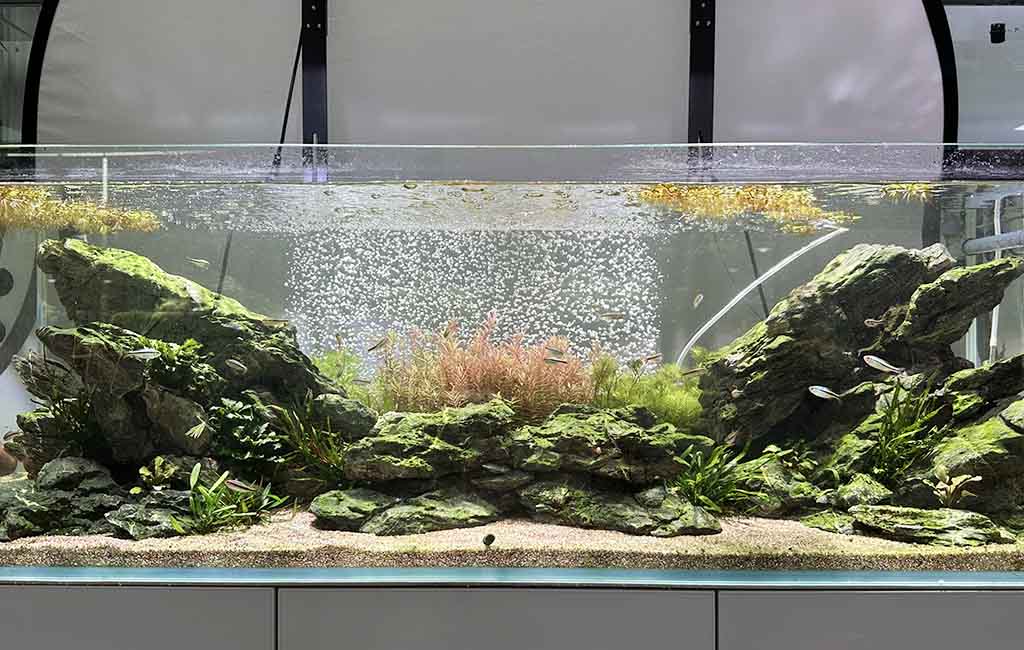
table for beginner aquarium plant
Decision Table for Beginner Aquarium Plant Selection
In conclusion, here is a beginner-friendly plant table. This will help you to start your journey.
| Plant Name | Light | CO2 | Substrate | Growth Zone | Fish Safe? | Difficulty |
| Java Fern | Low | Not needed | Tie to hardscape | Mid–Back | Yes (most fish) | Easy |
| Anubias nana | Low | Not needed | Tie to hardscape | Mid–Front | Yes | Easy |
| Java Moss | Low | Not needed | Any / attach to surface | Mid / Carpet | Yes (great for shrimp) | Easy |
| Cryptocoryne wendtii | Low–Med | Not needed | Nutrient-rich preferred | Mid | Yes | Easy |
| Amazon Sword | Medium | Optional | Root tabs needed | Background | Yes (avoid with plant eaters) | Easy |
| Vallisneria | Medium | Optional | Any + root tabs | Background | Yes (goldfish may nibble) | Easy |
| Water Wisteria | Medium | Optional | Any | Background / Floating | Yes | Easy |
| Ludwigia repens | Medium–High | Recommended | Nutrient substrate | Background | Yes | Medium |
| Bacopa caroliniana | Medium | Optional | Any + liquid ferts | Mid–Background | Yes | Medium |
| Dwarf Hairgrass | High | Required | Fine sand or soil | Foreground / Carpet | Yes (can be uprooted by diggers) | Hard |
| HC Cuba | High | Required | Aqua Soil required | Foreground / Carpet | Yes (sensitive setup) | Hard |
| Frogbit (floating) | Low–Med | Not needed | None (floating) | Surface | Yes (reduces light below) | Easy |
If you have an eye on any other planting option, run proper suitability criteria for your desired plants. It involves tank size, your level, lighting, CO2, fish type, substrate type, etc. If the desired plant is showing green light for all of the discussed criteria, go for that. Otherwise, don’t take risks.
Related Products

Leave a comment