
Mineral-rich benefits an aquarium in several ways, and it is the wish of every aquarist to see an optimal aquarium. In the following, you’ll learn about mineralized substrate, its peculiarities, roles, and its components. Mineralization technique and how you can convert your simple soil into a mineral-rich soil at home. Moreover, several different available options for making the substrate more mineral-rich are also a part of this article. Scroll down and elevate your tank condition.
Content Table
What Are Minerals Rich in Soil?
It’s such a soil that is predominantly rich in minerals instead of organic material. Usually, mineral-rich soils have less than 20% share of organic matter. This soil is formed after rock weathering and decaying organic matter. The continuous interaction of air, water, and microorganisms also plays a vital role in the formation of such soils.
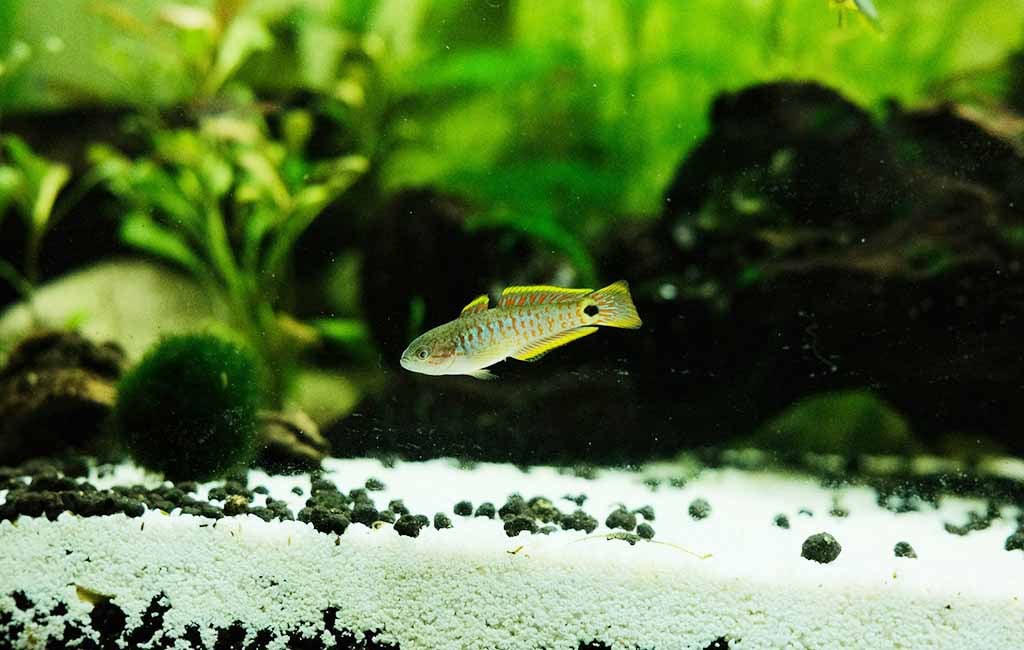
mineralized substrate
What Is Mineralized Substrate in Aquariums?
In terms of aquariums, mineralized substrate is a type of bottom soil that is mineral-rich and provides nutrients to aquatic plants for a long time. It breaks down organic matter, stabilizes it, and produces plant-available nutrients, which elevate plant growth.
Peculiarities
- It provides nutrients without frequent replacement. Usually, it lasts for a whole year.
- Reduces the risk of algae bloom in the tank due to the slow release of nutrients.
- It avoids the faster decomposition of organic matter and keeps the water clean.
- Holds effective cation exchange capacity and results in healthy plants.
- It helps to replicate the natural environment of aquatic plants.
- It improves the health of roots in the tank and enhances nutrient cycling.
Roles
- It helps to store the essential elements in the tank and acts as a nutrient reservoir.
- It encourages the deep and stable root growth of aquatic plants.
- Mineralized substrate buffers pH and improves nutrient availability.
- It plays a vital role in algae control in the tank.
- It encourages the biological habitat by providing beneficial bacteria and supports nutrient cycling.
- Mineralized substrate brings stability to the tank and maintains the fertility.
Constituents
Here are the components of nutrient-rich soil.
- Base soil (topsoil/loam)
- Clay (e.g., Bentonite, Laterite)
- Dolomite (Calcium-Magnesium Carbonate)
- Potassium Source (e.g., Potash)
- Optional peat
- Optional charcoal
Mineralization Technique for Soil Substrate Tanks
It is a technique of converting a natural soil into a stable and nutrient-rich substrate. It remains stable for long years. Usually, this technique is applied before adding the soil to the tank, so the tank remains algae-free and other problems.
Here is a technique to mineralize the natural soil.
- Select a natural topsoil or loam.
- Remove the stones, large roots, and debris from the soil. You can remove it by rinsing the soil.
- Dip the soil into water for 1 to 2 days, remove the water, and spread it into a thin layer. Repeat the procedure 3 to 5 times. It will help to decompose organic matter, oxidize harmful compounds, and convert nutrients into mineral form.
- Break down the soil clumps and do the aeration. Pass the soil through a sieve to remove any unintentional matter in the soil. It’ll bring the soil uniformity and avoid anaerobic conditions in the tank.
- Do the enrichments. Mix the clay, dolomite, and potash. Potash addition is optional. Do it if required.
- Spread a 2 to 3-cm deep layer and cover the top with gravel to avoid cloudiness in the water column.
How to make substrate more mineral-rich
How to Make Tank Substrate More Mineral Rich at Home?
Here is a brief tutorial about how to make home aquarium substrate more mineral-rich.
Base Substrate
Lay a foundation of naturally inert sand, gravel, and plain topsoil at the bottom. It should be free from any chemical treatment, fertilizer, and pesticides.
Mix the Desired Mineral
Make a soil mixture that contains the following components.
| Components | Functions |
| Clay (Laterite or Bentonite) | It enriches the soil with iron and other trace elements.
It helps to improve nutrient retention. |
| Dolomite Powder | It enriches the substrate with calcium and magnesium.
It helps to buffer the pH. |
| Potash (K₂O Source) | It enriches the soil with potassium.
It helps in plant metabolism and photosynthesis. |
| Trace Mineral Mix | Add garden micronutrient powder and aquarium-safe additives to your substrate.
It supplies zinc, copper, manganese, boron, and molybdenum. |
| Crushed Coral or Limestone | It is additional and add if required.
It adds hardness. It helps in buffering. |
Layering
Lay a 2 or 3-cm deep mineralized soil. Over that layer, lay a thin peat layer. It’ll provide humic acids and regulate pH. After that, add a 2 to 4-cm layer of sand or fine gravel. It’ll help to avoid nutrient leaching.
Conditions for Layering
To make the layering more effective, thoroughly rinse the soil to remove any excessive dust. Moreover, a few days of dipping the mineral-rich soil into dechlorinated water will help to remove excessive soluble nutrients. Daily change the dechlorinated water.
Final Step
Once the soil reaches optimal conditions, gently add the stable parameter water to the tank. A fast-growing plant at the earlier stages will help to avoid excessive nutrients and minerals from the soil. In this way, the soil will be stable.
Mineral Rich Substrates
Various types of mineral-rich substrates exist. Each type has its own specification. Here are the types, main constituents, and their function in an aquarium.
| Mineralized Substrate Type | Constituents | Best For |
| Mineralized Top Soil (MTS) | Fe, K, Ca, Mg, trace | Planted tanks (base layer) |
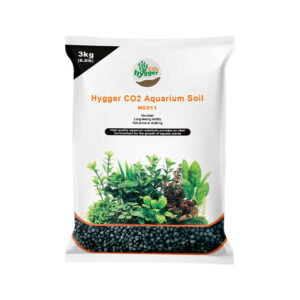
| hygger CO2 Aquarium Soil | Abundant in organic matter and free iron, and enriched with micronutrients | Cultivating and propagating crystal shrimp and aquatic plants. |
| Amazonia / Aqua Soil | N, P, K, Fe, trace | Aquascaping
Soft-water plants |
| Laterite | Iron (Fe) | Root feeders
Red plants |
| Eco-Complete / Fluorite | Fe, Mg, Ca, trace | Long-term planted tanks |
| Crushed Coral / Aragonite | Ca, Mg, carbonate | Cichlids
Hard-water fish |
| Lava Rock | Fe, Mg, trace | Mineral boost
Biofilter |
| Zeolite / Mineral Sands | Trace minerals | Water purification
Plants |
Choose the Mineral Rich Substrate for Planted Tank
Several types of planted tanks are available. Each type has its own preference and requirements for substrate selection. Here are different types of planted tank and their respective best choices of mineral-rich substrates.
Low-Tech Planted Tanks
If you have a low-tech planted tank, i.e., no CO2 supply and low lights, the following are suitable options.
- hygger CO2 Aquarium Soil
- Mineralized Top Soil (MTS) with gravel/sand cap
- Eco-Complete / Fluorite
Suitability Reasons
- Plants in such a tank grow slowly. These substrates release the nutrients at a matching pace.
- They provide minerals for a long time.
- A gravel cap helps to avoid cloudiness in water.
- It supplies the trace elements, i.e., iron and other trace elements, to the plants.
High-Tech Planted Tanks (CO₂ Injection, High Light)
High-tech planted tanks are tanks that have proper CO2 injection and have high lighting. Such tanks should go with
- Aqua Soil (hygger CO2 Aquarium Soil, Amazonia, Stratum, Tropica Soil).
Laterite base is optional for this substrate. However, if you lay its layer, it’ll be icing at the top.
Suitability Reasons
- This substrate provides nitrogen, phosphorus, potassium, and iron. This is exactly what a high-tech aquarium plants require.
- Laterite increases the iron availability if you have red plants in your tank.
Choose the Mineral Rich Substrate
Root Feeder Dominant Tanks
If your tank is dominated by root-feeders, e.g., Amazon swords, Cyrpts, Vallisneria, etc., use the following substrate.
- Laterite + MTS base, capped with gravel/sand
- Eco-Complete (iron-rich clay)
- hygger CO2 Aquarium Soil
Suitability Reasons
- These plants take up heavy nutrients from the roots. The iron-rich bottom helps in strong root development.
Carpeting Plant Aquascapes
If you have carpeting plants in your tank, e.g., dwarf hairgrass, Monte Carlo, clossostigma, etc., use the following substrate.
- Aqua Soil or Stratum or hygger CO2 Aquarium Soil
Suitability Reason
- The fine texture of the substrate improves the root spreading.
- Available nutrients accelerate the dense carpeting.
Hard-Water or Cichlid Planted Tanks
If your tank water is rich in calcium or cichlid-planted, the following substrate will help you.
- Crushed Coral / Aragonite mixed with soil or sand.
Suitability Reason
- It adds calcium and magnesium that help to stabilize the water alkalinity.
- It also helps the plants to tolerate hard water.
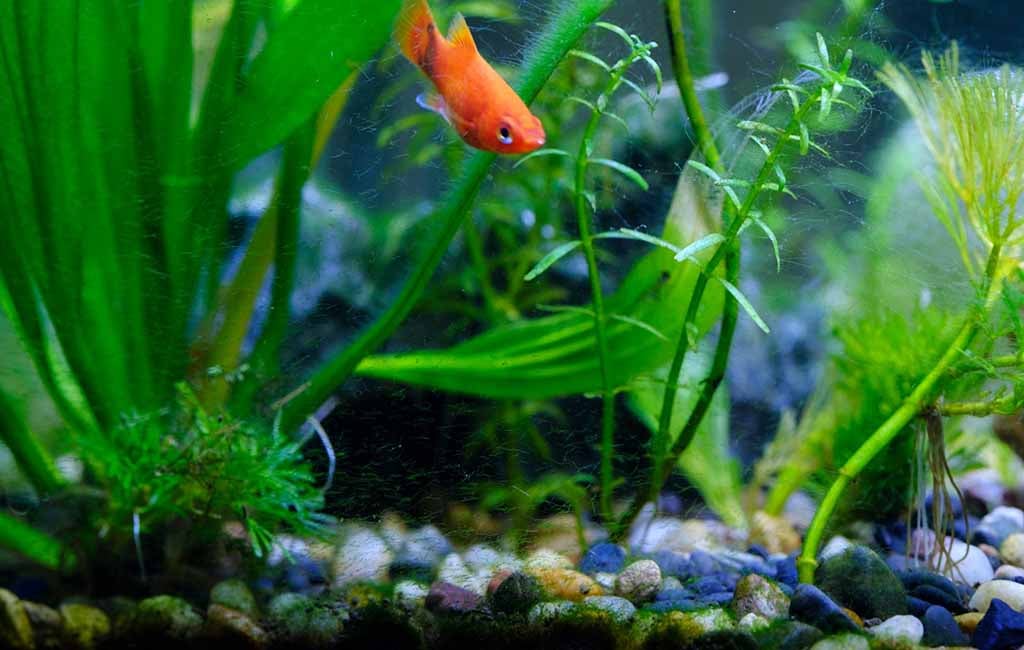
mineral-rich substrate
Lasting Impressions
A mineral-rich substrate benefits your tank in several ways, i.e., improved water quality, plant growth, etc. You can mineralize your tank substrate by yourself by following a step-by-step method. Moreover, you can select a mineral-rich soil according to your tank conditions, as several substrate options are available.
Related Products



Leave a comment