
Planted aquariums are alluring and gorgeous ecosystems. To be successful, they need to be managed well. One of the most important aspects of this management is proper nutrition. A well-balanced macro and micronutrient diet is required by plants. There must be the right quantity of fertilizer. An excess of it may lead to algae blooms and other problems. How do you decide on the correct dose-how much fertilizer to apply, then? This hygger guide will discuss the key factors, like the role of aquarium water fertilizer, and also discuss the density of aquatic plants and the types of aquarium water fertilizers.
Content Table
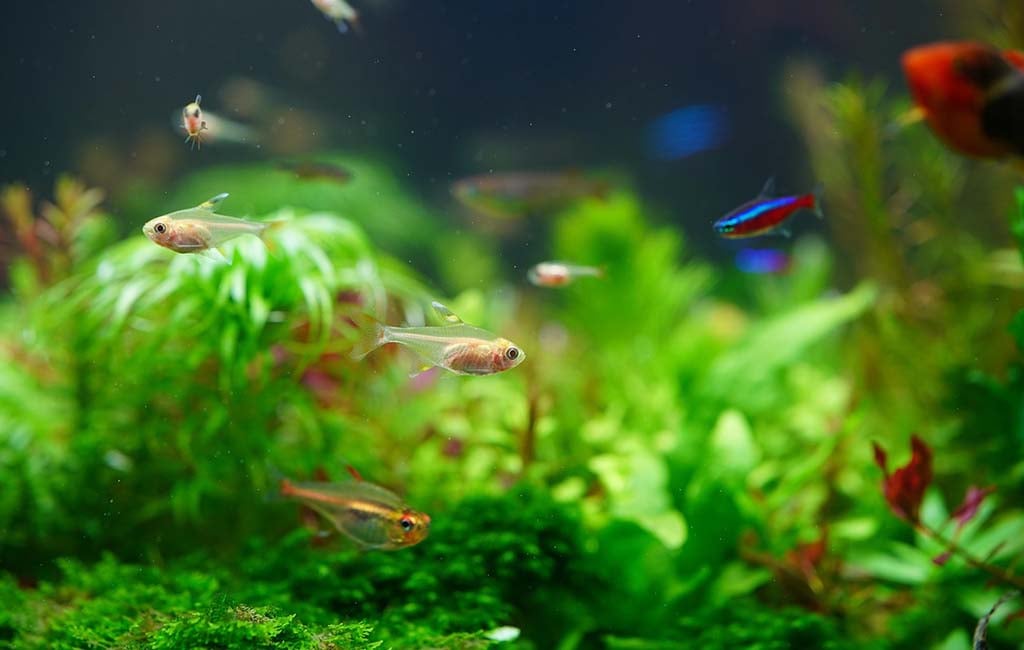
aquarium water fertilizer
Aquarium Water as Fertilizer
Aquarium water is not a passive medium only. It is a natural source of most of the nutrients plants require. These nutrients are acquired as a result of fish waste and organic decomposition. The waste generated by fish contains nitrogen and phosphorus. These are necessary macronutrients for the growth of plants. These nutrients are also discharged by decaying leaves and uneaten food. They also give out potassium, which is another important macro nutrient. The water may also be having traces of micronutrients such as iron, manganese and zinc. These are required in lesser amounts.
Nutrients Found in Aquarium Water
The water of an aquarium is usually abundant in nitrogen and phosphorus. However, it may be deficient in other important nutrients. For example, Potassium is often deficient, by the way. Plants consume a lot of it in different functions. Another typical deficiency is iron, and it plays a significant role in the production of chlorophyll. In the absence of adequate iron in the leaves, they become yellow. Limitations may also be applied to other micronutrients. That is why a complete fertilizer is frequently required. It fills the gap caused by the water.
The other consideration is nutrient variability. The nutrient content of aquarium water varies daily according to the feeding, water replacement, and filtration. Trace minerals are usually spotty, whereas nitrogen and phosphorus can build up. Plants have the capability of consuming nutrients that are available in large amounts within a short time in heavily planted tanks, resulting in deficiencies in case they are not replenished.
Also, aquariums that contain few fish or are not fed frequently may not supply enough macronutrients altogether. Due to this fact, aquarists tend to use aquarium water as a natural base, and not as a full, full-fledged source of nutrition to plants. Even fertilization guarantees constant growth and a healthy and bright foliage.
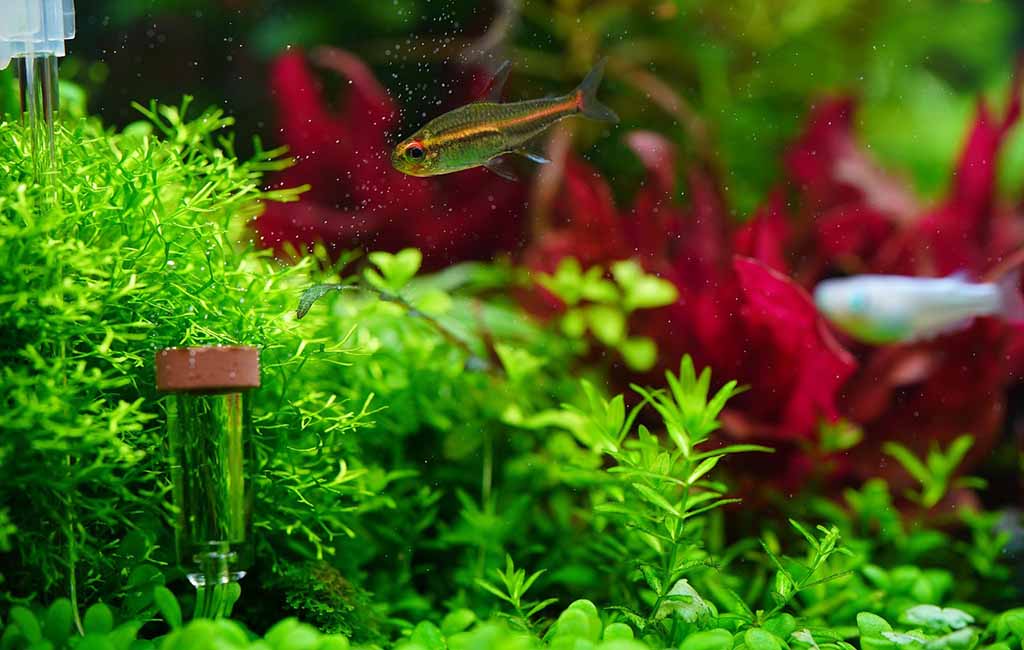
the density of aquatic plants
The Density of Aquatic Plants
The number of plants you have in your tank is very important. It has a direct influence on the uptake of nutrients. A tightly spaced tank possesses a greater nutrient demand. The reason is that most plants are competing for the same resources. A low-density tank requires fewer nutrients. The plants use nutrients at a slow rate. Thus, a thick tank must be fertilized more frequently, and less is required in a sparsely planted tank.
What is a Good Plant Density?
A dense tank is usually the best, with a planted aquarium. The ideal target is the coverage of 70-80 percent of the substrate, which forms a well-balanced ecosystem. The plants outcompete the algae for nutrients. A stable tank is a high-density tank and also supplies more oxygen.
Aquariums, which are representative of the Dutch style, are examples of appropriate dense layouts. A great number of plants are placed in these tanks. They create color gardens in the water. A simple carpet of foreground plants is another example that can be Dwarf Hairgrass or Monte Carlo. This thick carpet may be beautiful.
How Aquarium Water Compares to Normal Fertilizer
Aquarium water gives a threshold level of nutrients. These nutrients are by-products of the occupants of the tank that are emitted over time. Normal aquarium fertilizers are supposed to be complete with a rich source of nutrients. They are usually made of nitrogen, phosphorus, and potassium. These are the macronutrients and are also the source of all the micronutrients. These are iron, manganese, zinc, and others.
how much fertilizer to apply
Types of Commercial Fertilizers
Planted tank commercial fertilizers typically can be divided into three broad groups, namely, macronutrient fertilizers, micronutrient fertilizer, and root fertilizer.
- Macronutrient fertilizers: Macronutrient fertilizers contain the trio of essentials: nitrogen (N), phosphorus (P), and potassium (K), which is often known as NPK. These nutrients provide energy to the general growth of plants, growth of the leaves and healthy root systems.
- Micronutrient fertilizers : Micronutrient fertilizers contain trace elements such as iron, magnesium, manganese and zinc, which exist in less quantity but yet are important in vibrant colors and healthy photosynthesis. In their absence, plants tend to have pale or yellow leaves.
- Root fertilizers: Root fertilizers may be delivered as root tabs and are intended to be used on heavy root-feeders like Amazon swords and crypts. These inject nutrients straight to the substrate, so that deep-rooted species will have regular access to vital elements.
Most aquarists mix these fertilizers to make a complete nutrient program, matching aquarium water nutrients with accurate supplementation to ensure the long-term health of plants.
Do I Still Need to Use Normal Fertilizer in the Planted Tanks?
Yes, normal fertilizer is favorable to almost all planted tanks. Fish waste is normally insufficient in its nutrients. They are often imbalanced. As an example, they are generally rich in nitrogen and poor in potassium. Plants require a balanced proportion of the nutrients. This is referred to as the Redfield ratio in certain contexts. This balance is achieved through provision of a full fertilizer.
Tailoring Your Dosing Strategy
The way you utilize it is based on your plants. Lightly tanks may not require as much. An ordinary liquid fertilizer can do, and the dense planting tanks require more. A special regimen may be necessary. This may involve individual macro and micronutrient dosing. You may need to add a nitrogen, phosphorus, and potassium (NPK) supplement. Then you would add a supplement of trace elements that allows for fine-tuning.
It should also be considered the type of plants. Some plants take in nutrients through the leaves that are commonly called water column feeders. Anubias and Java Fern are examples. Liquid fertilizers do them a favor.
Other plants are deep-root feeders. They obtain the majority of their nutrients from the substrate, such as Cryptocoryne species and swords of many kinds. These plants enjoy an enriched substrate. Root tabs or special aqua soil can be used.
Use Normal Fertilizer in the Planted Tanks
Signs of Nutrient Deficiency
Deficiencies of nutrients are frequently manifested in observable changes in the plants. Leaves turning yellow normally signify a deficiency of nitrogen or iron. Potassium deficiency is indicated by holes or pinholes.
Low or impaired growth is an indication of the absence of micronutrients such as calcium or magnesium. Weak stems and pale leaf color can also be present. These are the early warning signs to observe and help you to adjust fertilization early enough so that plants remain healthy, lively, and stress-free.
The Last Word
Planted tank fertilizer does vary depending on the nutrients in the aquarium water, the density of the plants, and the requirements of the particular plants. Aquarium water itself is a natural nutrient base, but it is seldom sufficient to support long-term growth. Fertilizers compensate for these shortages, guaranteeing healthy and lively aquascapes.
There is no standard dosage of fertilizer–you have to calculate this based on your plants and the weight of your fish, and the state of your aquarium generally. Through this observation, you can ensure a steady growth without overfeeding your plants or stressing your aquatic life.
Related Products



Leave a comment