
Most people assume a fish tank is a fish tank. Add water, drop in a heater, choose a filter, done. That assumption works fine for some species. It does not work for bubble nest builders. These fish are operating on a completely different set of biological needs, and a standard aquarium setup ignores most of them. Whether the goal is breeding, long-term health, or simply watching natural behavior unfold, the bubble-nest builder fish tank requires a specific approach from the start.
Content Table
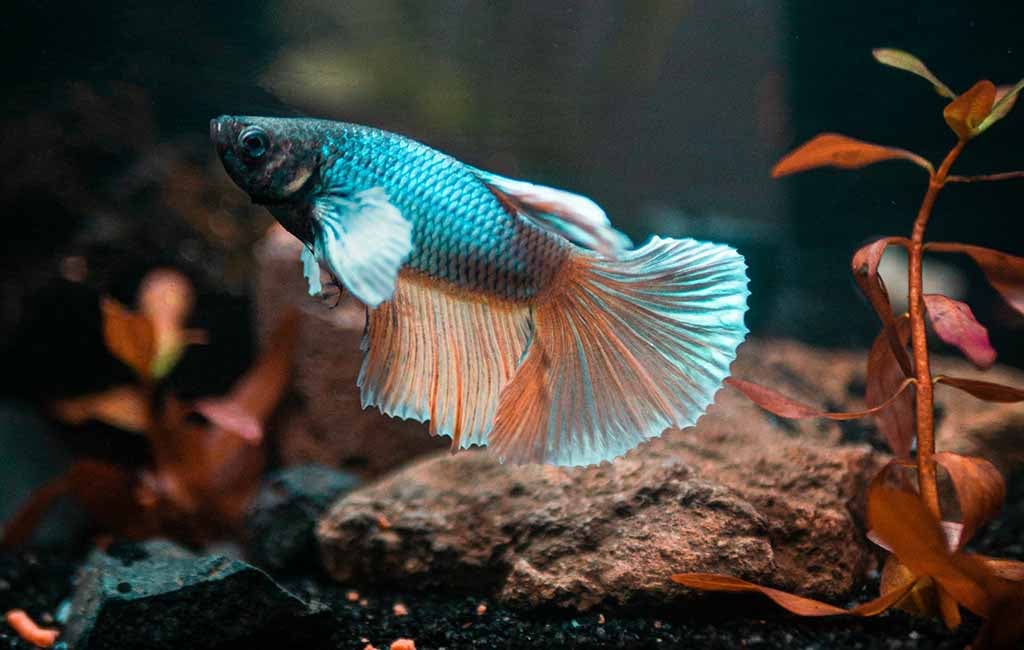
bubble nest builder fish tank
Bubble Nest Builder Fish and Why the Environment Matters So Much
Bubble nest builders belong to a group called anabantoids, or labyrinth fish. The defining feature of this group is a secondary breathing organ called the labyrinth organ, which allows them to extract oxygen directly from the air at the water surface. This one biological fact explains nearly all of these fish’s environmental requirements.
Because they breathe from the surface, the air sitting just above the waterline needs to stay warm and humid. A cold draft across the tank, a wide-open lid, or low water levels all interfere with this breathing process over time. And the surface itself is where males build their nests, a mass of mucus-coated air bubbles where eggs and newly hatched fry develop.
Disrupt the surface, and you disrupt everything. Strong current, temperature swings, or even poor tank placement near a window can cause males to abandon nesting behavior entirely. A proper bubble nest builder fish tank protects the surface environment with as much attention as the water below it.
Common Bubble Nest Fish: Know What You Are Working With
Before finalizing any setup for bubble nest builders, it helps to identify the specific species because size and temperament vary significantly across this group.
- Siamese Fighting Fish (Betta splendens): The most commonly kept bubble nest builder. Males require solitary housing. A 10 to 15-gallon tank suits them well.
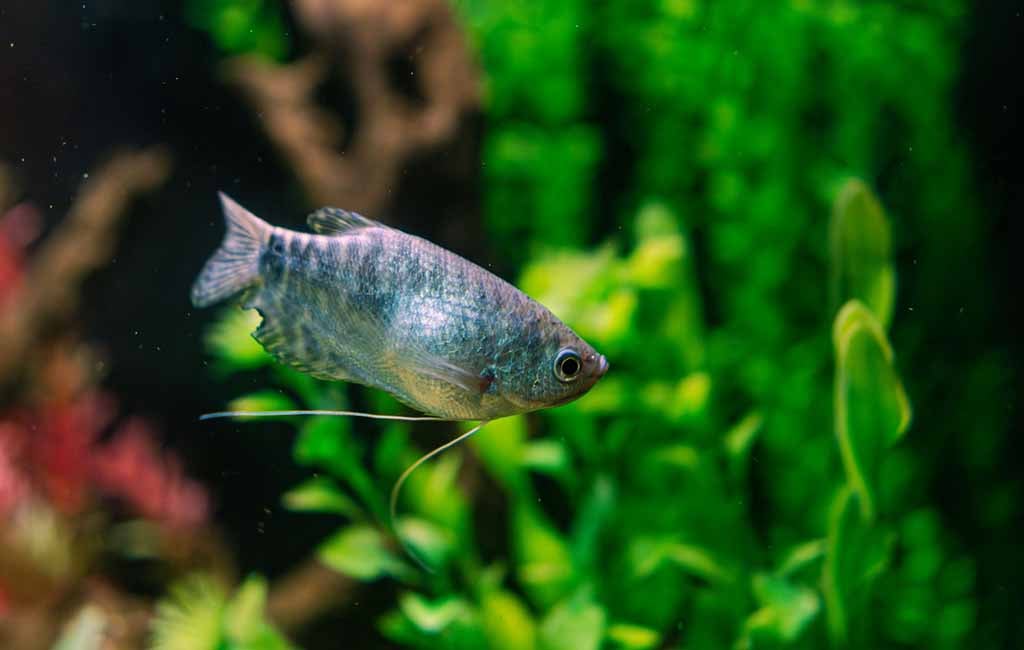
- Dwarf Gourami (Trichogaster lalius): Peaceful and well-suited to planted community tanks. A 20-gallon setup works for a pair.
- Pearl Gourami (Trichopodus leerii): One of the calmer gourami species. Needs at least 30 gallons due to its active swimming behavior.
- Blue Gourami (Trichopodus trichopterus): Hardy and adaptable, though males can display aggression toward tankmates. A 30-gallon minimum applies.
- Paradise Fish (Macropodus opercularis): Tolerates cooler temperatures better than most in this group and builds nests consistently when conditions allow.
Each species has its own preferred water chemistry. Confirm those parameters before moving forward.
Choosing Tank Size and Layout
Choosing Tank Size and Layout for the Bubble Nest Builder Fish Tank
Surface area takes priority over depth when choosing a tank. Tall, column-style aquariums restrict surface access and give little advantage to fish that spend most of their time in the upper half of the water column. A wider, shallower design serves these species far better.
For bettas, a 10 to 15-gallon long-format tank provides enough territory without wasting space. Gouramis kept as pairs or in community setups need 20 to 30 gallons to establish separate zones and reduce aggression.
The interior layout should be divided with a purpose. One side of the tank gets dense planting, the other stays relatively open near the surface, where nesting activity happens. Floating plants anchored to the back corner or along one wall give the male a sheltered location to build and defend the nest.
Position the tank away from air conditioning vents, drafty windows, and high-traffic areas. Vibrations from nearby doors or speakers are a genuine stressor for these fish. Temperature fluctuations at the glass can be sharp enough to destabilize the nest even when the fish tank heater is working correctly.
Filtration and Water Flow: The Non-Negotiable Boundary
Strong current destroys bubble nests. The mucus film on each bubble is delicate, and consistent surface movement tears the nest apart within hours. Repeated disruption causes males to stop building entirely, which is a reliable sign that the filtration setup is wrong.
The best filter options for a bubble nest builder fish tank:
- Sponge filters: The preferred choice. Water moves through slowly, surface disturbance is minimal, and the sponge itself provides beneficial bacterial colonies without producing current.
- Hang on back filters with a baffle: A plastic bottle neck or foam piece placed over the outflow redirects water downward instead of across the surface.
- Internal filters on the lowest setting: Functional in smaller tanks when the output points toward the glass rather than open water.
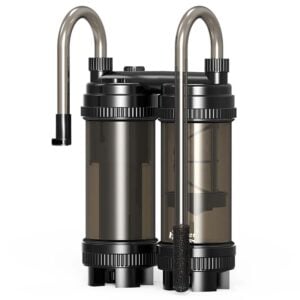
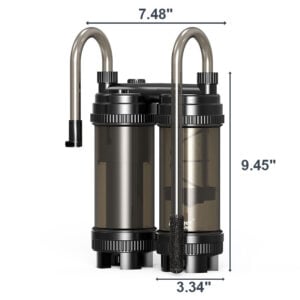
Canister filters can work, but the return flow needs a spray bar positioned below the waterline. The goal is complete water turnover without any visible ripple at the surface.
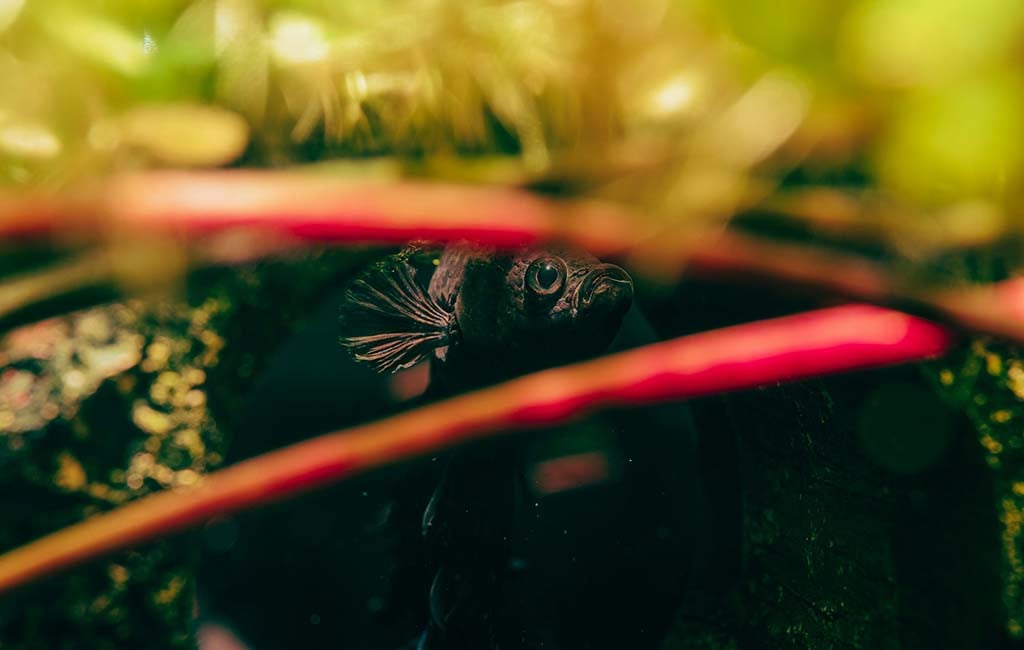
setup for bubble nest builders
Factors Affecting Bubble Stability at the Surface
Getting this part right is what separates a tank that produces consistent nesting from one that never does.
- Temperature consistency
The sweet spot for most bubble nest builders sits between 76 and 82 degrees Fahrenheit (24 to 28 Celsius). Temperatures outside this range reduce activity. Temperatures that shift unpredictably are even worse than a stable value that runs slightly low.
- Lid coverage and humidity
A fitted lid that leaves only a small gap traps warm, humid air above the water surface. This matters for labyrinth organ health. An open-top tank with room air drifting across the surface can cause long-term respiratory stress.
- Floating plants
Species like frogbit (Limnobium laevigatum), Amazon frogbit, or water sprite (Ceratopteris thalictroides) give males anchor points for the nest and physically calm the surface by slowing air movement across the water. The root structure underneath the plant holds the bubble cluster in place while the male tends it.
- Minimal surface skimming
Light, natural surface film actually helps bubbles bind together. Aggressive surface skimming, the kind produced by powerful filters, strips this away and makes nest construction noticeably harder.
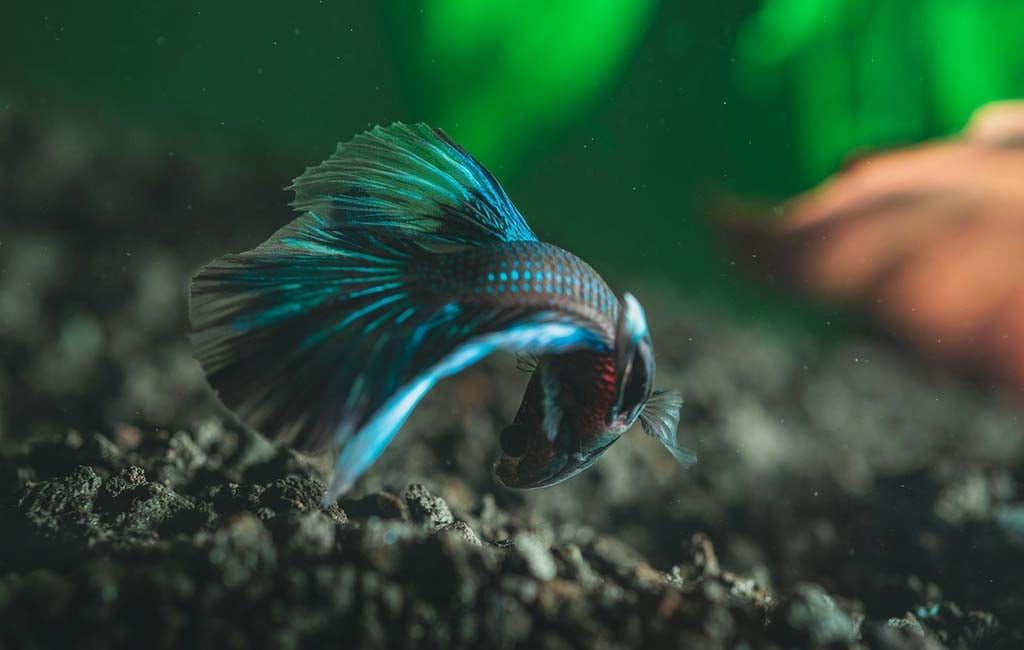
Bubble Nest Builder Hiding Spot
Bubble Nest Builder Hiding Spot Design
In any setup for bubble nest builders that houses both males and females, spatial division is not optional. It is how the tank functions without constant injury.
Males need an unobstructed nesting zone near floating plants at the surface, with overhead coverage from the plants or lid. Females need multiple escape routes and physical barriers that break the male’s line of sight when he becomes territorial.
Effective hiding and territory design:
- Tall stem plants like hornwort or vallisneria create visual dividers across the middle of the tank
- Vertically placed or angled driftwood blocks sightlines between fish at multiple levels
- Dense background planting on one wall gives the female a retreat zone that feels genuinely separate
- A cave or hollow decoration near the substrate provides low-level cover when the female needs to rest without being visible.
The male gets the front open zone and the top area. The female gets the densely planted back. Simple in theory, but skipping this step causes chasing, fin damage, and chronic stress that shortens lifespan significantly.
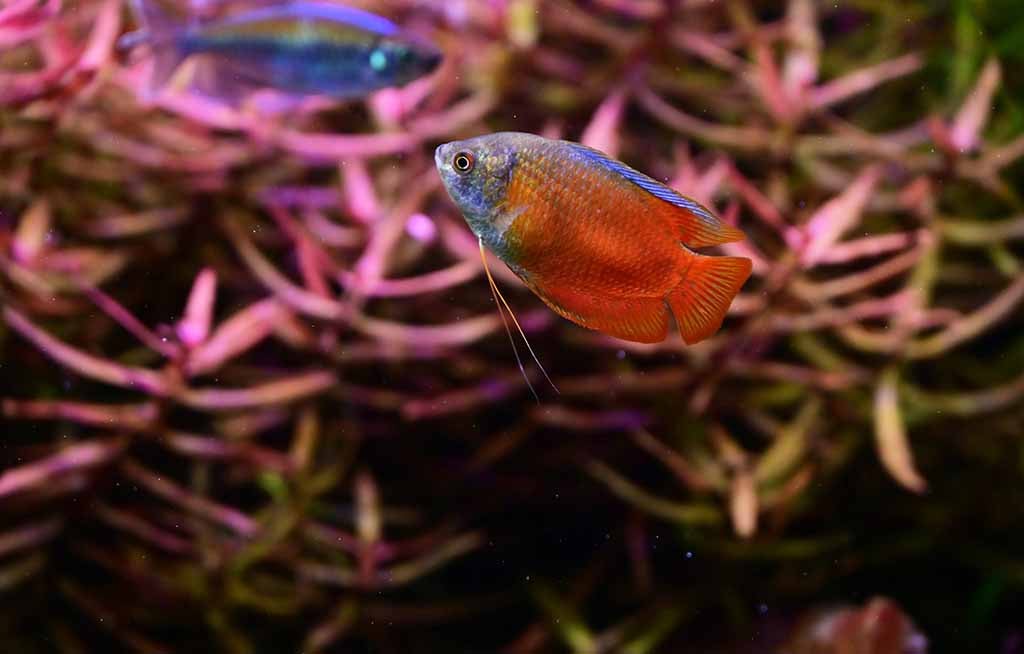
bubble nest builder setup checklist
Step-by-Step Bubble Nest Builder Setup Checklist
Running through a full bubble nest builder setup checklist before adding fish prevents most of the common problems.
- Select the correct tank size for the species. No smaller than 10 gallons for bettas, 20 gallons minimum for gouramis.
- Install low-flow filtration and test the output to confirm there is no visible surface movement.
- Set the heater to the target temperature and allow the tank to stabilize for 24 to 48 hours before proceeding.
- Add substrate and hardscape, including driftwood, rocks, and caves, before planting begins.
- Plant the tank with a dense retreat side and an open nesting side near the surface.
- Introduce floating plants in the nesting corner and allow two weeks for them to establish and spread.
- Cycle the tank fully using the nitrogen cycle. Ammonia and nitrite must reach zero before any fish are added.
- Verify all water parameters: ammonia at 0 ppm, nitrite at 0 ppm, nitrate under 20 ppm, and pH within the species-appropriate range.
- Check the lid humidity by closing the lid and observing whether condensation forms on the inside within a few minutes.
- Acclimate the fish by floating the bag or container in the tank for 30 to 60 minutes before release.
This bubble nest builder setup checklist does not take shortcuts. Every step builds on the one before it.
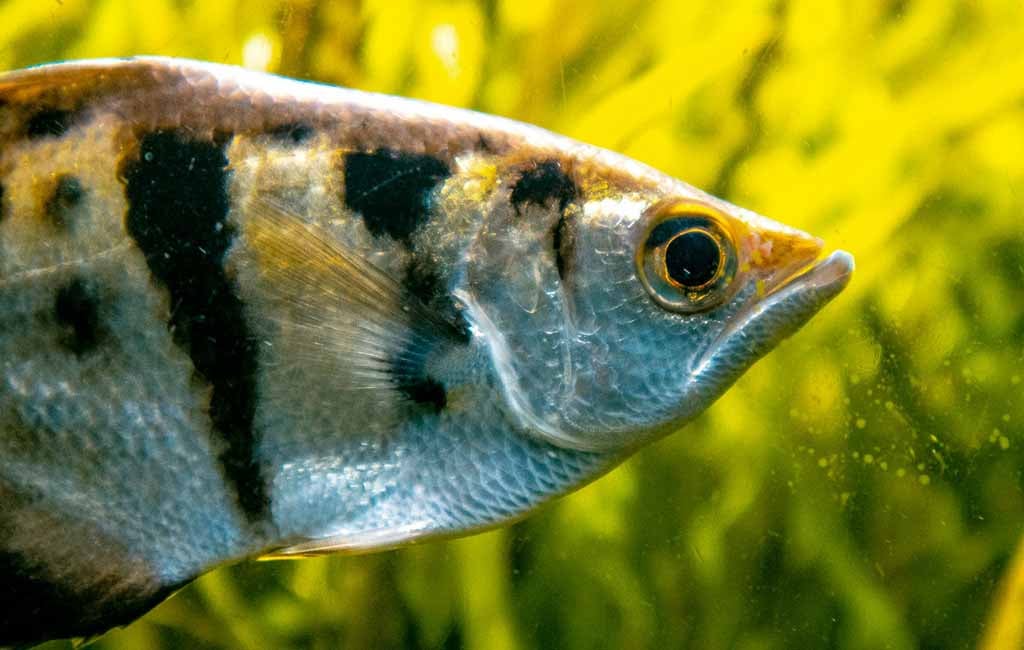
bubble nest builder setup
The Key Elements
A bubble nest builder fish tank succeeds when the environment matches the biology of the fish, not when it merely looks attractive. Flow rate, surface stability, temperature consistency, and territory design all work together. Miss one and the others compensate poorly.
Work through the full bubble nest builder setup checklist before the fish go in, take the extra week to cycle and plant properly, and the result is a tank where these fish actually do what they are built to do. That is the entire point.
Related Products


Leave a comment