
Each fish species has a rhythmic swimming pattern, feeding habits, and overall way of life. For a happy fish tank, you should have the ability to read fish behavior. On finding anything unusual, make a troubleshooting route. Moreover, it is necessary to learn about some common mistakes aquarists make in a hurry. Moreover, if there is a true problem, phase out the treatment. If you are finding these things hard, the following article is going to help you to learn about unusual fish behavior and how to fix these abnormalities, along with some anecdotes.
Content Table
aquarium fish anecdote
The Early Signs of Aquarium Fish Behavior
Before any water test, the fish’s behavior is the first thing that will let you know about the water parameters. Fish behavior promptly detects the problem or comfort in the water. By observing their behavior, you can learn about water quality, stress, fish disease, or social conflict.
Like an aquarist once wrote, his experience is that his betta continuously sits for 2 days at the bottom of the tank. On testing the water parameter, it was found that the nitrite level was 0.5 ppm.
Therefore, it is recommended to observe the fish’s behavior continuously for at least 5 minutes daily.
What Counts as Normal Aquarium Fish Behavior?
Knowing about normal fish behavior is the first step before understanding abnormal fish behavior. Normal behavior will enlighten us about how fish behave normally. Here is a table about general fish behavior. It varies according to species. However, this table will offer a general fish behavior.
| Behavior | Description | Status |
| The fish is actively swimming around the tank | Moving steadily with balanced fins and showing no erratic darting | Normal |
| Fish are eating normally with appetite at the fixed feeding schedule. | Rushes to the surface or food zone within seconds | Normal |
| Fish are showing schooling behavior | Moves in tight and coordinated groups | Normal |
| Resting near the bottom or on leaves | Especially at night or midday | Normal |
| Continuously exploring different parts of the tank | Fish are curious, moving around decor, plants, and substrate in the tank. | Normal |
| Mildly chasing other fish during feeding time | Brief competition for food. However, this settles quickly. | Normal |
| Colors are bright and consistent | It is due to species-typical pigmentation, and they do not wash out over time. | Normal |
unusual fish behavior
Reading Unusual Fish Behavior
Here are some unusual fish behaviors. If you observe any of these behaviors, fix the problem.
| Behavior | Possible Cause |
| Gasping at the Surface | Low dissolved oxygen |
| Gill disease | |
| Ammonia spike | |
| Sudden Hiding / Corner Hugging | New tankmates |
| Predator stress | |
| Sudden light changes | |
| Sign of early disease or transportation trauma | |
| Aggressive Chasing / Fin Nipping | Overcrowding |
| Lack of hiding spots | |
| Spawning behavior | |
| Incompatible species | |
| Refusing to Eat | Stress |
| Early organ disease | |
| Poor water quality | |
| Wrong food type | |
| Internal parasites | |
| Rubbing on Objects (Flashing) | It indicates external parasites like ich, velvet, or flukes |
| Faded / Pale Color | Stress |
| Incorrect water parameters | |
| Illness | |
| Poor diet | |
| Abnormal Posture | Head-down |
| Neurological damage | |
| Tail-up | |
| Constipation | |
| Sideways swimming. It often indicates swim bladder disorder | |
| Spinning / Spiraling | Serious neurological issues |
| inner ear infection. Often untreatable |
Unormal Behavior Quick-Reference Table
| Behavior | Most Likely Cause | First Action |
| Gasping at the surface | Low O₂ | Test ammonia and nitrite levels |
| High ammonia | Improve aeration | |
| Hiding constantly | Stress | Check tankmates |
| New tank | Add hiding spots | |
| Aggression | ||
| Flashing/scratching | Ich | Inspect under light |
| Velvet | Initiate parasite treatment | |
| Flukes | ||
| Pale color | Stress | Check water parameters |
| Poor diet | Review feeding | |
| Disease | ||
| Refuses food 2+ days | Water quality | Full water test |
| Parasites | Consider fasting, then a variety of food | |
| Abnormal posture | Swim bladder disorder | Fast for 3 days |
| Try daphnia | ||
| Check diet |
Reading Aquarium Fish Behavior
A Troubleshooting Routine After Reading Fish Behavior
A healthy fish has a certain way of life. It follows a rhythm, swimming style, and steadiness. However, if you observe anything off, i.e., rapid breathing, hiding, erratic swimming, check the equipment, test the water quality, and isolate the problematic fish. You need proper troubleshooting and proper documentation.
Troubleshooting Routine
Here are the troubleshooting steps. These steps will help to identify the deviating habits and triggers that are causing problems.
Quick Observation
It requires you to observe your fish for 5 minutes daily. While observing, take notes about the following aspects.
| Observation Category | Details to Check |
| Posture and Breathing | ● Are gills moving rapidly? |
| ● Are they gasping at the surface? | |
| Swimming Style | ● Are they flashing? |
| ● Are they frantically pacing around the glass? | |
| Interaction | ● Are fish hiding more than usual? |
| ● Are they being chased? | |
| ● Are they showing signs of fin rot/white spots? |
The Equipment And Water Check
| Item to Check | Details / Requirement |
| Temperature | ● Is the heater or chiller working properly? |
| ● Does water temperature match the fish species requirement? | |
| Filtration And Flow | ● Is the filter working properly? |
| ● Is the aerator producing bubbles steadily? | |
| Water Parameters | ● Ammonia |
| ● Nitrite | |
| ● Nitrate | |
| ● pH |
Corrective Action
| Action | Details |
| Address Water Quality | Perform a 25% water change |
| Avoid over-cleaning the substrate. Over-cleaning can remove the beneficial bacteria. | |
| Adjust Feeding | Remove leftover food as it can cause an ammonia spike. |
| Quarantine | Quarantine the stressed and sick fish. |
Behavioral Record Table Template
| Date & Time | Fish/Tank | Observed Behavior | Potential Triggers | Action Taken | Status |
| e.g., June 2, 2026, 10 AM | Community Tank | Gourami hovering at the top, gasping. | Filter output reduced, water looks slightly cloudy. | Cleared filter intake, 25% water change. | Monitoring |
Avoid Common Mistakes of Fish Behaviour
Avoid Common Mistakes
There are several things that aquarists usually dismiss. Although these things are worth noticing. Here are some common mistakes.
Personality Trait
Sometimes, fish show unusual behavior. Some aquarists consider these changes to be a personality trait. Although it is common sense that personality traits don’t develop overnight or disappear suddenly. Therefore, if you see any sudden behavioral change, at least test the water parameters.
Watch Them Only While Eating
Numerous aquarists consider it enough to see the fish’s behavior while eating. Although it is a crucial time, it is not all. Fish express different personality traits at different times of day. Therefore, it is optimal to observe their behavior at different times of day.
Treat Only Symptoms
Most of the time, aquarists look for fish sickness, treat them, and assume that everything is fine. The proper way is to look at the cause of the disease, fix the cause, and also treat the disease. Once the fish is cured, don’t forget to fix the cause. It will help you to completely cure the fish disease.
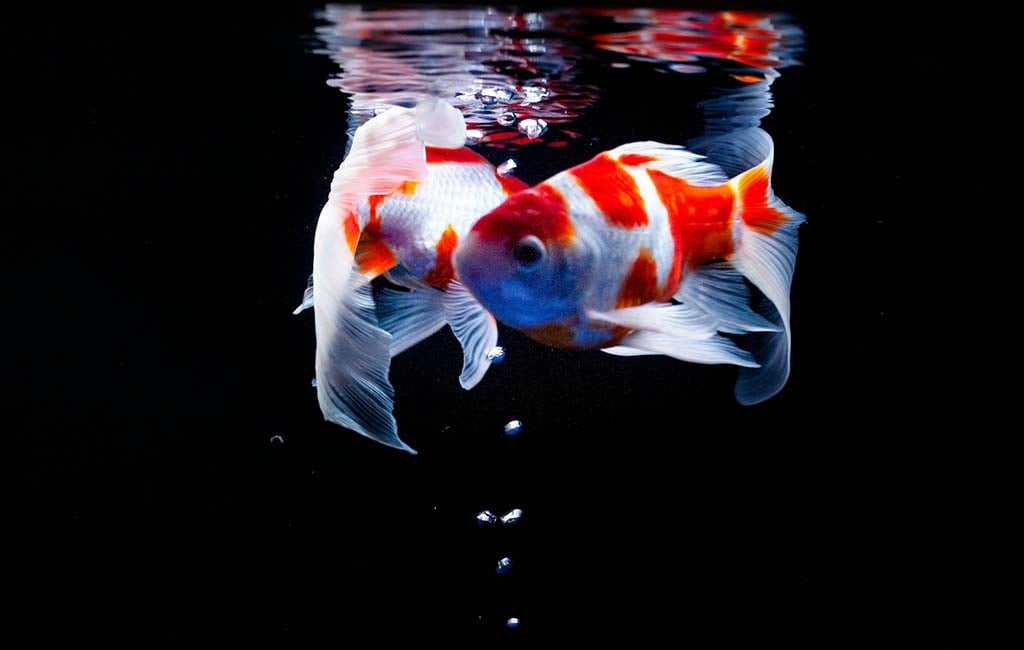
reading fish behavior
Ignoring a Single Fish Because the Rest of the Fish Are Fine
Sometimes, aquarists observe that a single fish is losing appetite, fading colors, and has torn fins, but the rest of the clan is fine. They don’t pay attention to fixing the single one. This is dangerous as it will cause a bigger problem throughout the tank.
Not a Clear Understanding of Fish Behavior
It is the basis for understanding the personality traits of every fish species that you have in your tank. Some fish species have peculiar personality traits. If you are not fully aware of these traits, you will be worried. Like Pelco fish, they can stay motionless for a long time.
Overreacting
This is another common mistake. Sometimes, fish exhibit abnormal behavior for various reasons, e.g, tapping glass, moving decor, and transferring to a new tank. In such conditions, give them about 24 to 48 hours as a cooling period. Usually, after 1 or 2 days, fish begin to behave naturally.
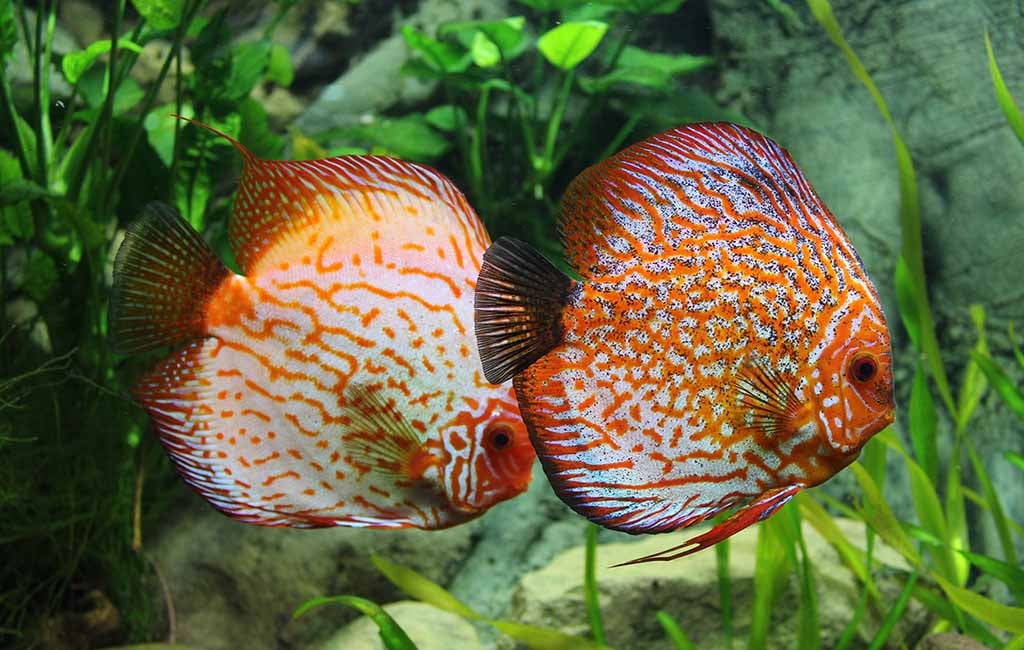
Correct unusual fish behavior
Make Phased Corrections
Once you have identified the root cause, don’t go for a sudden fix. Sudden fixes involve various steps, and if you perform these steps simultaneously, it will be problematic. It will increase the stress among fish, and the problem will be bigger. The best approach to fix the problem is to treat it in multiple phases. Here are the phases.
Bottom Line Inspection
Most of the time, three things are the root cause of the problem. Check them and fix any of them that are abnormal.
- Temperature
- Ammonia Level and Nitrite Level
- Filter Function
Environment Check
Once you have passed these parameters, check the environmental parameters. Look at the following things. If any of the following parameters are varying from the optimal range, fix the parameter.
- Stocking Density
- Hiding spots
- Lighting
- Potential aggressor
Diet Review
The next thing is to review the fish diet.
- Are fish eating correctly?
- Are you feeding the same food, or do you have a variety of food?
- What is the quality of food?
- Are you feeding live or frozen food to carnivores and omnivorous species?
Disease Treatment
After treating the water, environment, and food, the next thing is disease treatment. Mostly, after the previous phases, fish begin to swim and live happily. However, if you don’t find any change after 24 to 48 hours, it is time to treat the disease. Check the disease symptoms, remove the fish from the main tank to a secondary or quarantine tank, and give them medication. However, do proper research for the disease and its cure. According to research findings, treat your sick fish. If the fish is still not showing any recovery, consult the vet.
Follow Your Plan
Now that you have understood a proper troubleshooting way, it’s time to act on your plan. Read fish behavior, and if you find any unusual fish behavior, follow the step-by-step procedure and different troubleshooting methods to cure your abnormal fish in various phases.
Related Products



Leave a comment