
The ocean holds some genuinely strange creatures, and the longhorn cowfish sits near the top of that list. With a rigid, box-shaped body, two prominent horns above its eyes, and a swimming style that looks almost mechanical, this fish turns heads in both the wild and home aquariums. Whether someone is considering adding one to a tank or simply curious after spotting one at a public exhibit, understanding this species properly makes all the difference. This article covers essential longhorn cowfish facts, from diet and growth to toxicity and care requirements.
Content Table
cowfish
Longhorn Cowfish Profile and Characteristics
The longhorn cowfish (Lactoria cornuta) belongs to the family Ostraciidae, commonly known as boxfish. Native to the Indo-Pacific region, this species inhabits shallow lagoons, seagrass beds, and coral reefs at depths ranging from 1 to 50 meters. It has a broad distribution, appearing from the Red Sea and East Africa all the way to Japan and Australia.
What makes the cowfish immediately recognizable:
- Body shape: A hard, bony carapace made of fused hexagonal plates covers the entire body except for the fins, mouth, and tail.
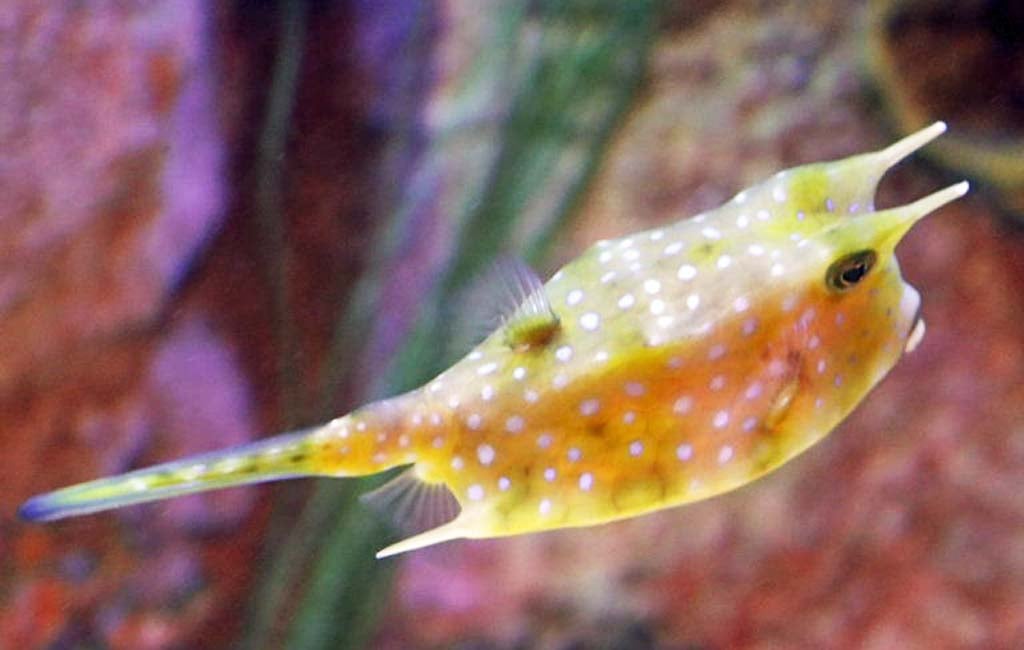
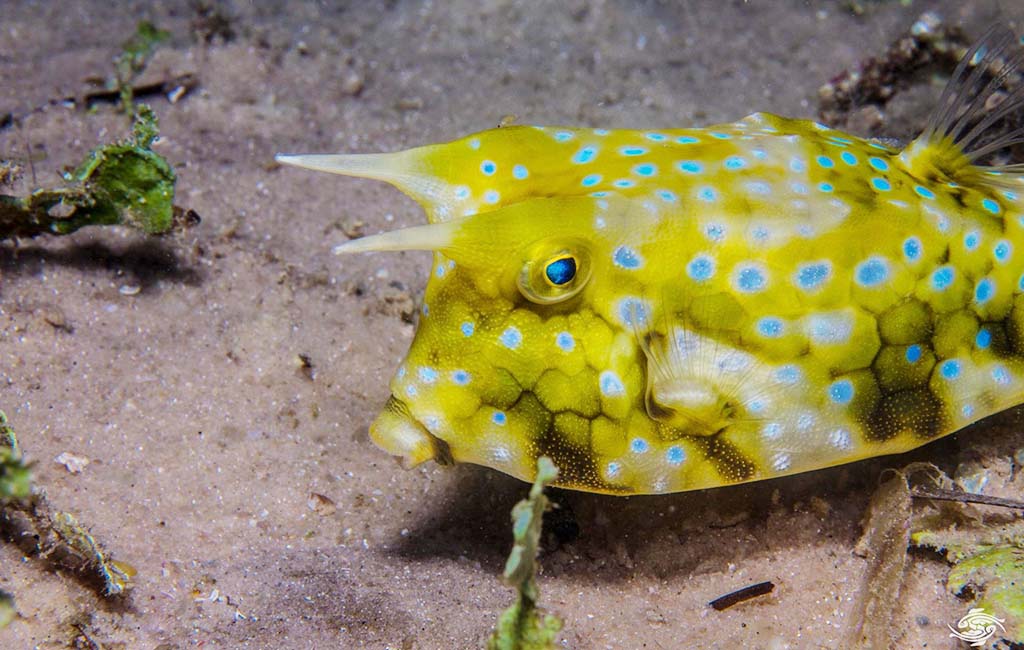
- Horns: Two long horns protrude from above the eyes, and two shorter projections extend from the lower rear of the body.
- Coloration: Typically yellow or olive with blue or white spots, though color shifts depending on mood and environmental conditions.
- Movement: Propelled mainly by its pectoral fins in a rowing motion, giving it a slow, hovering swimming style unlike almost any other fish.
The long-horned cowfish is a slow-moving animal that relies more on camouflage and its toxic defense mechanisms than on speed for survival. Adults are generally solitary and territorial, particularly the males. Despite their unusual appearance, they are highly capable in their natural habitat.
What Do Longhorned Cowfish Eat
Diet in the Wild
In natural reef environments, the long-horned cowfish feeds by blowing jets of water into the sandy substrate to uncover buried prey. This foraging method is highly specific and genuinely impressive to observe. The diet consists primarily of:
- Benthic invertebrates such as worms and small crustaceans
- Sponges and tunicates
- Foraminifera and small mollusks
- Algae and organic plant material
The cowfish essentially uses its mouth like a precision water jet, exposing prey that would otherwise remain hidden beneath the seafloor. This feeding behavior shapes much of its anatomy, including the downward-facing mouth and strong jaw muscles.
long-horned cowfish
Diet in Captivity
In a home aquarium, the longhorn cowfish accepts a variety of foods, though feeding needs to be consistent and nutritionally varied. Suitable options include:
- Frozen or live brine shrimp
- Mysis shrimp
- Chopped clams or squid pieces
- Vitamin-enriched pellets formulated for marine carnivores
- Spirulina-based foods for supplemental plant nutrition
Feeding once or twice daily in small portions works best. Overfeeding creates water quality issues, which this species handles poorly.
Lifespan
Under proper care, the longhorn cowfish lives between 5 and 10 years in captivity. In the wild, estimates sit within a similar range, though precise data remains limited. Longevity depends heavily on water quality, dietary variety, and consistent low-stress conditions.
How Large Do Longhorned Cowfish Get
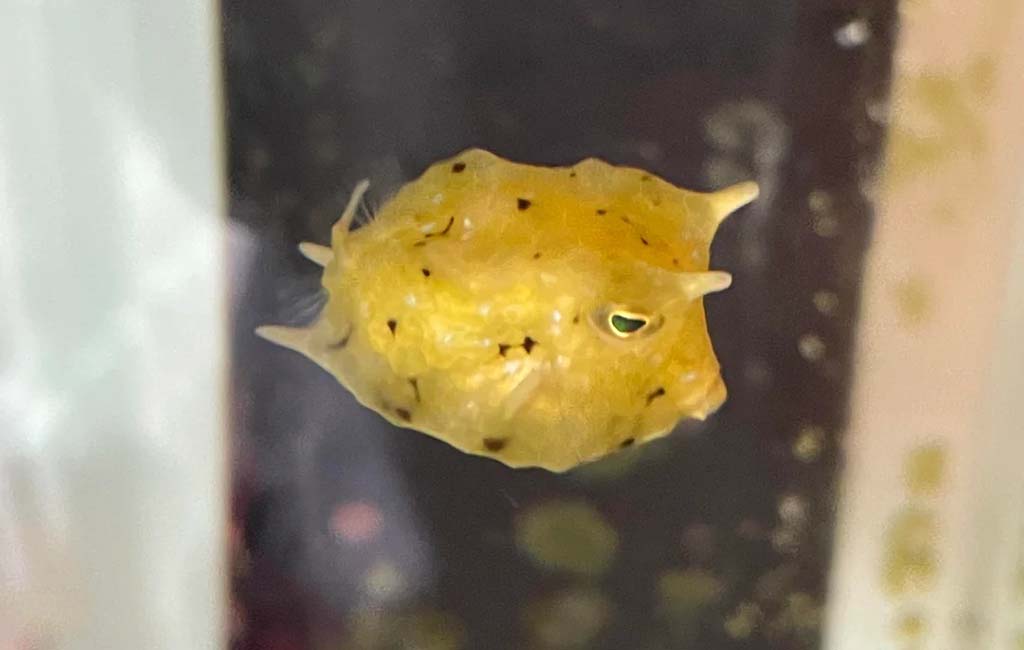
Growth in the longhorned cowfish follows a gradual but significant trajectory. Juveniles, which are frequently sold in fish stores at small sizes, typically measure around 2 to 4 centimeters when purchased. These tiny, bright yellow juveniles resemble floating geometric shapes, and many buyers purchase them without realizing how large they eventually become.
Stages of growth:
- Juvenile (0 to 6 months): 2 to 5 cm, bright yellow coloration, often with dark spots or flecks
- Sub-adult (6 months to 2 years): 5 to 25 cm, coloration begins to mellow and develop more complexity
- Adult (2 years and beyond): Can reach up to 50 cm (approximately 20 inches) in the wild
In home aquariums, most longhorn cowfish reach between 20 and 30 cm due to tank size constraints. This growth rate has real and practical implications for aquarium planning. A fish purchased at 3 cm will not remain that size, and underprepared owners frequently face the challenge of rehoming a fish that has outgrown its tank.
A minimum tank volume of 250 liters (roughly 65 gallons) is recommended for a single adult, with larger volumes being substantially better for long-term health and behavior.
longhorn cowfish
Are Longhorn Cowfish Poisonous
This section covers something genuinely important for anyone considering this species. The cowfish is capable of releasing a potent toxin called ostracitoxin (also referred to as pahutoxin) from its skin when severely stressed or after death. This toxin poses serious risks:
- It can kill other fish in the same tank, sometimes within a matter of hours
- It can affect the cowfish itself in a closed water system
- It remains active in the water even after the source fish has been removed
The toxin functions by breaking down red blood cells in surrounding fish. In the wild, the open ocean dilutes the substance rapidly, limiting damage. In a closed aquarium, however, a stressed or dying longhorn cowfish can devastate an entire tank community.
This does not make the species impossible to keep safely. It means that tank conditions must remain stable, that the cowfish should never be housed with aggressive fish that might harass it, and that any signs of distress require immediate attention. The risk is real and documented, not simply cautionary.
Are Cowfish Hard to Keep
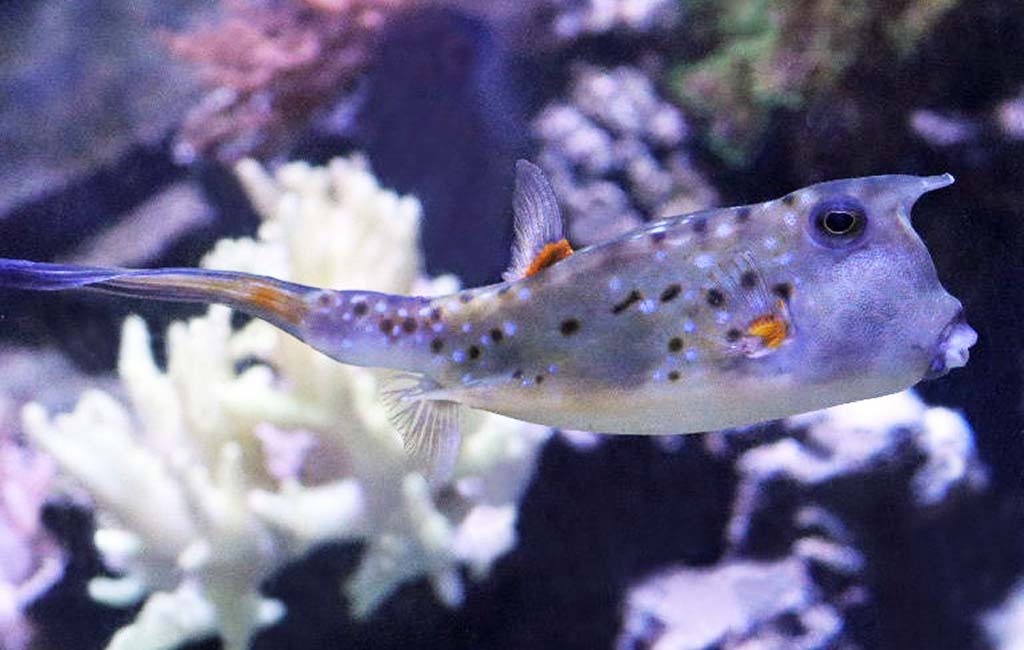
The honest answer is yes, more so than many beginner marine fish. The longhorned cowfish has specific needs that require attentiveness and reasonable experience with saltwater systems.
Primary challenges:
- Water quality sensitivity: This species does not tolerate ammonia spikes, fluctuating salinity, or inconsistent temperature. Parameters must remain stable at all times.
- Toxin risk: As noted above, stress triggers toxin release, which can harm or eliminate tank mates.
- Tank-mate compatibility: Aggressive or nippy species are not suitable tank mates. Peaceful fish of similar size work best.
- Size at maturity: A small, manageable juvenile will eventually require substantial tank volume.
- Dietary variety: A repetitive diet leads to nutritional deficiencies over time.
Are Cowfish Hard to Keep
What tends to produce good outcomes:
- A species-only setup or a community of very peaceful, non-aggressive fish
- Consistent water changes and strong biological filtration
- Gradual acclimation when introducing to a new system
- Minimizing physical disturbance and sudden environmental changes
The longhorn cowfish rewards patient, experienced aquarists who take its requirements seriously. For those new to marine fishkeeping, building general experience first before attempting to care for one is the more sensible path.
Interesting Long Horned Cowfish Facts
These long-horned cowfish facts tend to surprise even experienced fish enthusiasts who assume they already know what this species is about:
- The skeleton is external. Unlike most fish, the cowfish’s body is enclosed in a carapace built from fused hexagonal plates. This structure is so rigid that the fish cannot flex its body laterally the way most other fish do.
- The horns serve a different purpose than expected. Despite their striking appearance, the horns on a longhorn cowfish are not defensive weapons. Research suggests they may assist in substrate burrowing or play a role in species recognition among individuals.
- Juveniles drift with ocean currents. In the early larval stage, long-horned cowfish are planktonic, carried by ocean currents before eventually settling into reef and seagrass environments.
- Each individual has a unique spot pattern. Much like fingerprints in humans, the arrangement of spots on each cowfish is distinct to that individual.
- They produce sound. Cowfish generate low-frequency sounds, likely during territorial interactions or courtship displays.
- Color change signals internal state. A cowfish displaying darker or muted tones is often stressed, unwell, or responding to a perceived threat.
- The scientific name references the horns directly. Lactoria cornuta translates roughly to “horned milker,” reflecting the species’ distinctive, prominent projections above the eyes.
Among long-horned cowfish facts, the toxin mechanism and the external skeleton tend to generate the most surprise from people encountering this species for the first time.
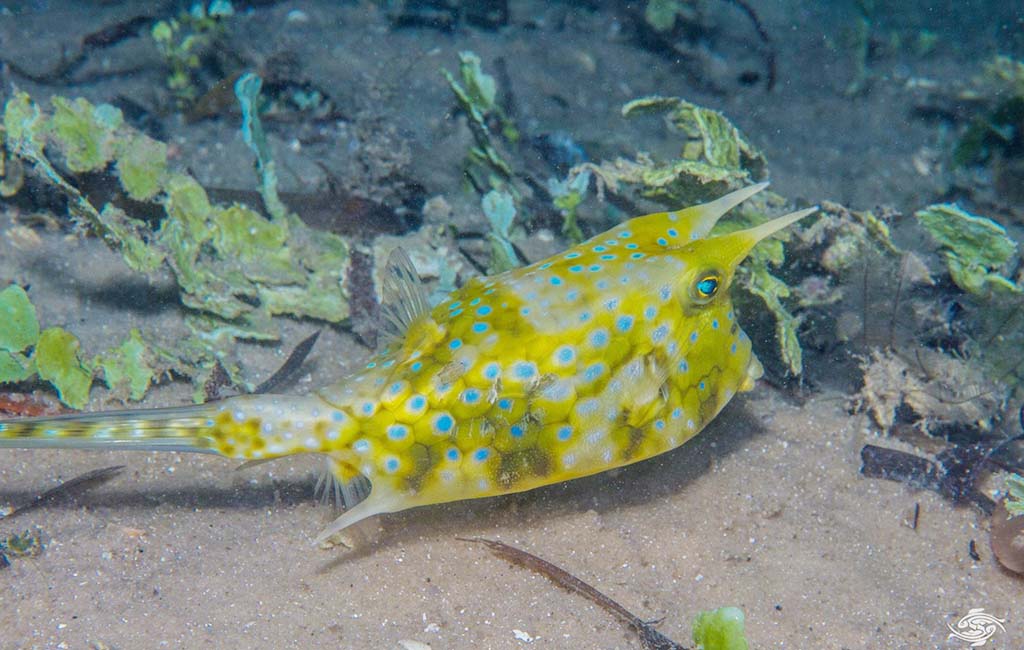
long-horned cowfish facts
Let’s Carry These Insights into Tomorrow
The longhorn cowfish is not a casual addition to a home aquarium. It requires genuine commitment, stable water conditions, and thoughtful tank planning from the very start. But for those who invest the effort, it offers something few fish can match: a genuinely distinctive presence that transforms a tank into something worth looking at twice.
The longhorned cowfish facts covered here are just the foundation. Whether the goal is responsible ownership or simple curiosity about marine life, the cowfish earns its reputation as one of the ocean’s most unusual and fascinating residents.
Related Products





Leave a comment