
Low-tech marine tanks are entertaining. However, it is interesting to learn about low-tech and high-tech marine tanks and different examples. You’ll learn it in the following: you will learn the advice for fish-only marine tanks and some easy reef tank setup advice. To do so, scroll down the page.
Content Table
What Are Low-Tech Marine Tanks?
A tank that uses the most basic equipment to keep the function that lives in a marine tank is called a low-tech marine tank. These tanks don’t have some advanced equipment, e.g., sumps, advanced filtration systems, or a protein skimmer. In other words, you can say these tanks function like the actual marine environment, as the sea has no protein skimmers or such other equipment. The Low-tech marine tanks require.
- Hardy fish
- Corals
- Simple hang-on-backor some other basic filtration system
- Live rock has natural filtration
- Frequent water changes
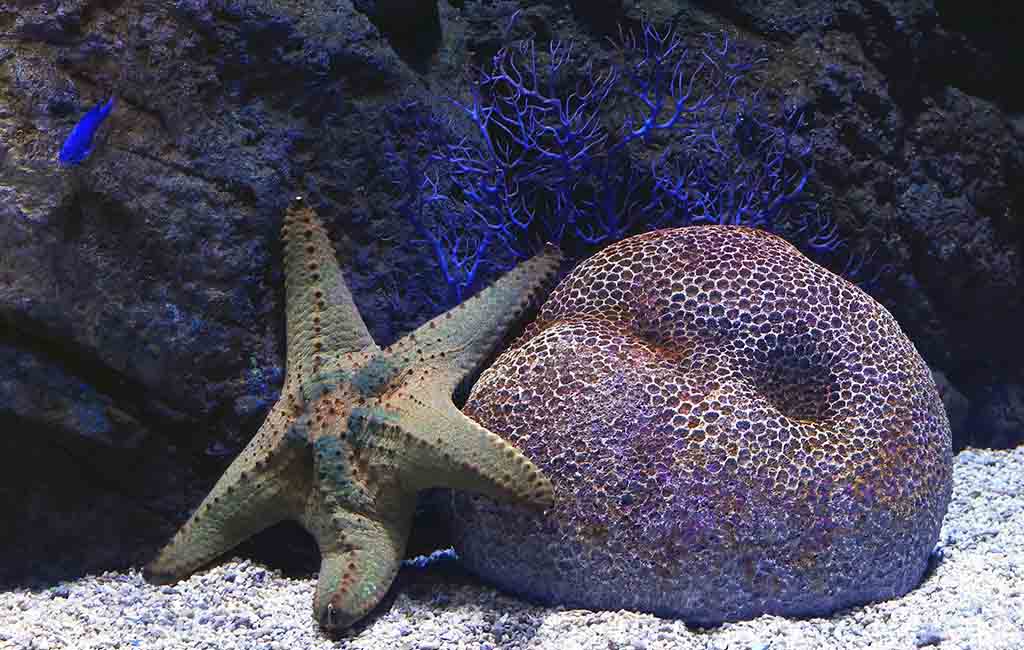
low-tech marine tanks
The Difference Between High-Tech and Low-Tech Marine Tanks
High-tech and low-tech marine tanks differ in equipment. Otherwise, both do the same thing, i.e., function in life. Success rate depends on your management, not on the equipment. Although they bring some ease, they require significant investment to set up and require regular maintenance. Here is the difference between a low-tech and a high-tech marine tank.
| Feature | High-Tech Marine Tank | Low-Tech Marine Tank |
| Equipment | Heavy & advanced | Minimal & simple |
| Cost | High | Low |
| Maintenance | Automated | Manual |
| Livestock | SPS/LPS corals | Soft corals, macro algae, hardy fish |
| Water Stability | Very stable | Moderately stable |
| Ideal For | Experienced aquarists | Beginners & budget setups |
| Light | Expensive | Very basic |
| Sterlizer | UV Purifying Light | Natural rocks |
Examples of Low-Tech Marine Tanks
You can go with various designs of low-tech marine tanks. Here are some examples with equipment, suitable livestock, and suitability reasons.
Soft Coral Nano Tank
This is a 10 to 20-gallon tank and works well for beginners. Moreover, it fills your space with coloration without too much upkeep.
Live stock
| Fish | 1 pair of goby fish |
| 1 goby + 1 pistol shrimp | |
| Soft Coral | Mushrooms |
| Xenia | |
| Zoanthids | |
| Snails | Torchus |
| Nassarius |
Equipment
You need some suitable equipment to upkeep the system.
- HOB filter with sponge + carbon
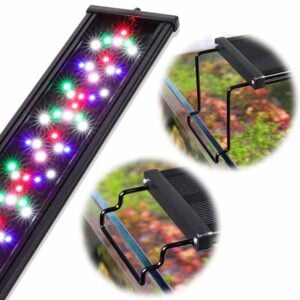
- Basic LED reef light
- Heater
- Live rock & live sand
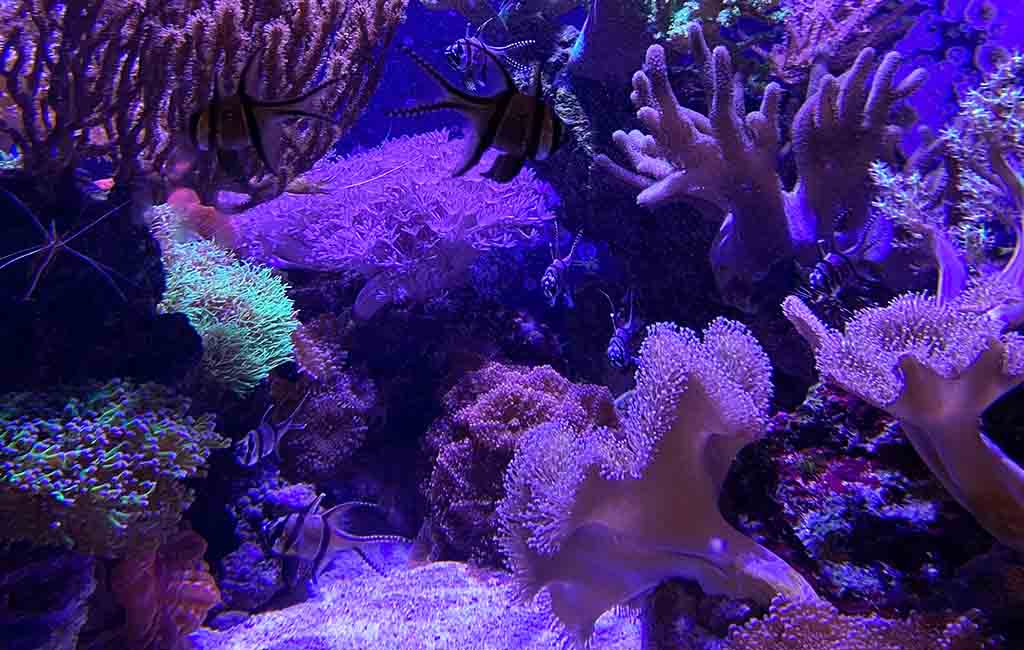
fish-only marine tanks
FOWLR Tank
A 30-gallon fish-only tank with live rock is another suitable option for a low-tech marine tank. It is a suitable option if you don’t like to manage corals. Moreover, they don’t look for perfect water conditions due to the absence of corals.
Livestock
| Fish | 2 clownfish |
| 1 firefish | |
| 1 blenny or goby fish | |
| Snail | Cleaner snails |
Equipment
- HOB filter or small canister filter
- Standard LED light
- Heater to maintain the water temperature
- Live rock
Macroalgae Lagoon Tank
This is another option that you can adopt if you have a 20 to 30-gallon tank. This setup offers a beautiful and peaceful outlook with a plantation. Moreover, this system doesn’t include the corals, so it is easy for beginners, as corals give some tough time to beginners.
Live Stock
| Macroalgae | Caulerpa |
| Red Ogo | |
| Halimeda | |
| Fish | 2 Goby fish |
| 2 clownfish | |
| Sea horse | If you have a large tank. |
Equipment
- HOB filter
- Moderate LED light
- Gentle wavemaker(optional)
- Live rock rubble
Soft Coral Reef Tank
If you have a mid-size tank, i.e., 40 gallons, it is a suitable option. Although corals give a hard time, a large space makes things easy.
Livestock
| Fish | 2 Clownfish |
| Gramma or dottyback | |
| Corals | Toadstool leather |
| Mushrooms | |
| GSP | |
| Cleaning crew | Snails |
| Cleaner shrimps | |
| Hermit crab |
Equipment
- HOB filter + sponge
- Budget LED reef light
- Live sand + rock
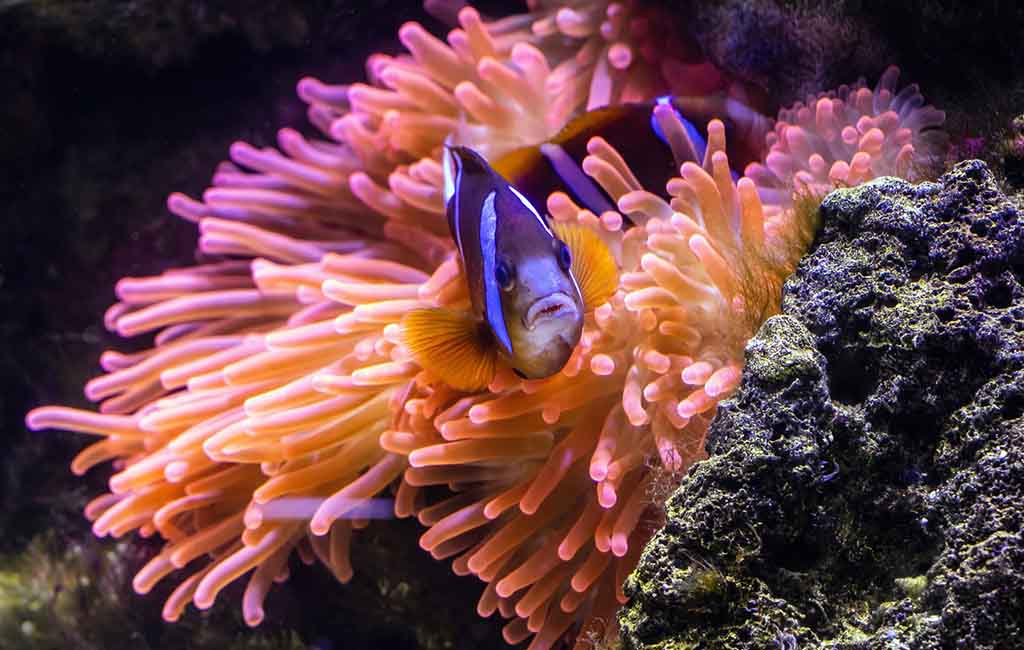
Low-Tech Anemone & Clownfish Tank
Low-Tech Anemone & Clownfish Tank
If you are inspired by Nemo’s look and have a 15 to 20-gallon tank, you can use this design. However, keep it natural and clean.
Livestock
| Fish | Pair of clownfish |
| Anemone | 1 bubble-tip anemone or some other hardy anemone |
| Cleaner crew | Crabs |
| Snails | |
| Cleaner shrimps |
Equipment
- HOB filter
- Moderate LED light (stronger than soft coral tank)
- Gentle flow
Low-Tech Easy Reef Tank Setup Advice for Beginners
Here is a step-by-step guide to setting up a low-tech reef tank for beginners.
Tank Selection
Select a relatively large tank instead of a small one. A tank with about 20 to 40 gallons in size is suitable, as it helps you to maintain a stable water condition. Having a 10-gallon or a small tank would be a hard nut to crack for beginners.
Rock Addition
Live rocks have bacteria that help to keep the water clean. So, have live rocks and add about 1 to 2 pounds per gallon of weight to the tank. Arrange the rocks according to your desired design. Moreover, leave some open space for fish.
Filtration
If you have a large tank and want to be fully assured about water filtration, go with the HOB filter. It will do mechanical and chemical filtration. The other option is more suitable and helped a lot as well. Use a powerhead or wave maker pump, which creates movement in the water. Live rocks will do the filtration as they have beneficial bacteria that help to break down the harmful material into less toxic forms.
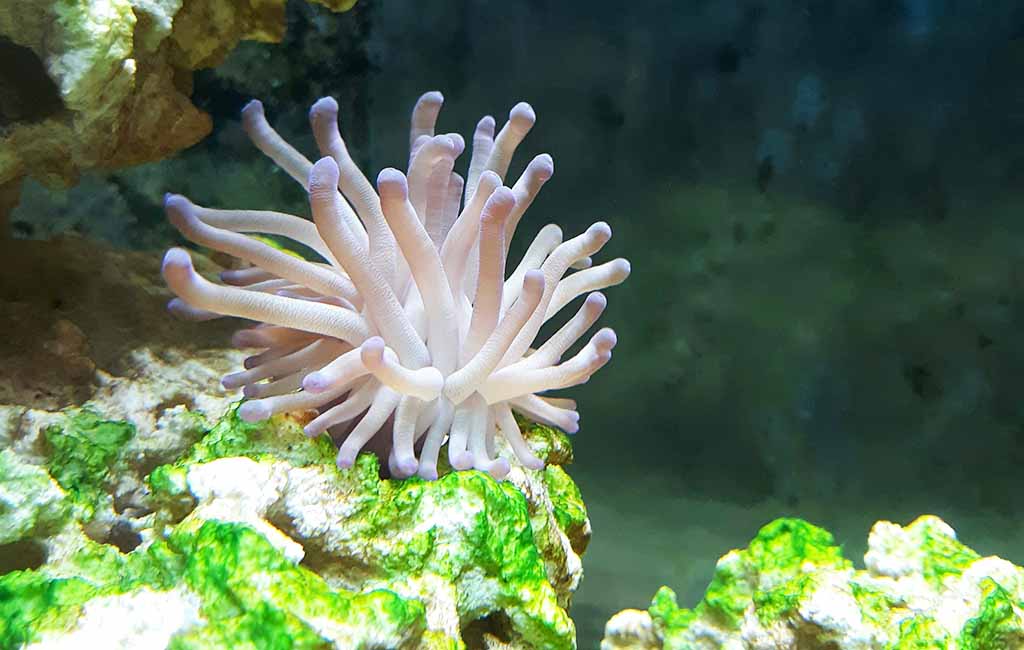
easy reef tank set up advice
Lighting
Lighting is important to maintain the day-night cycle. Moreover, they help corals to develop colors. Add a simple LED light according to the corals, instead of a fancy and colorful one. Turn it on for 8 to 10 hours daily.
Water and Cycling
Gently add the water and fill the tank up to 70% of its size. Once you are done with the water, initiate the cycling by adding some fish food or ammonia. Ammonia will create an ammonia spike in the tank. Regularly check the water parameters, especially ammonia and nitrite levels. After 4 to 8 weeks, you’ll see the 0ppm ammonia, which means your tank is fully cycled.
Tank Filling
Fill the tank with hardy fish and corals. Here are some suitable hardy fish and corals for your low-tech reef tank. Add fish with regular intervals, i.e., 2 weeks for introducing new quarantine fish in the tank.
| Fish | Corals |
| Ocellaris clownfish | Xenia |
| Blue-green chromis | Green star polyps |
| Royal gramma | Kenya tree coral |
| Yellow watchman goby | Zoanthids |
| Mushroom corals |
Maintenance
Once you are done with that, it comes to regularly maintaining your tank. Here are some maintenance tips.
- Change water up to 20% weekly.
- Regularly test water parameters.
- Feed the fish twice a day with such a quantity that the fish finish within 2 minutes.
- Remove algae from the tank.
- Top of the tank with freshwater.
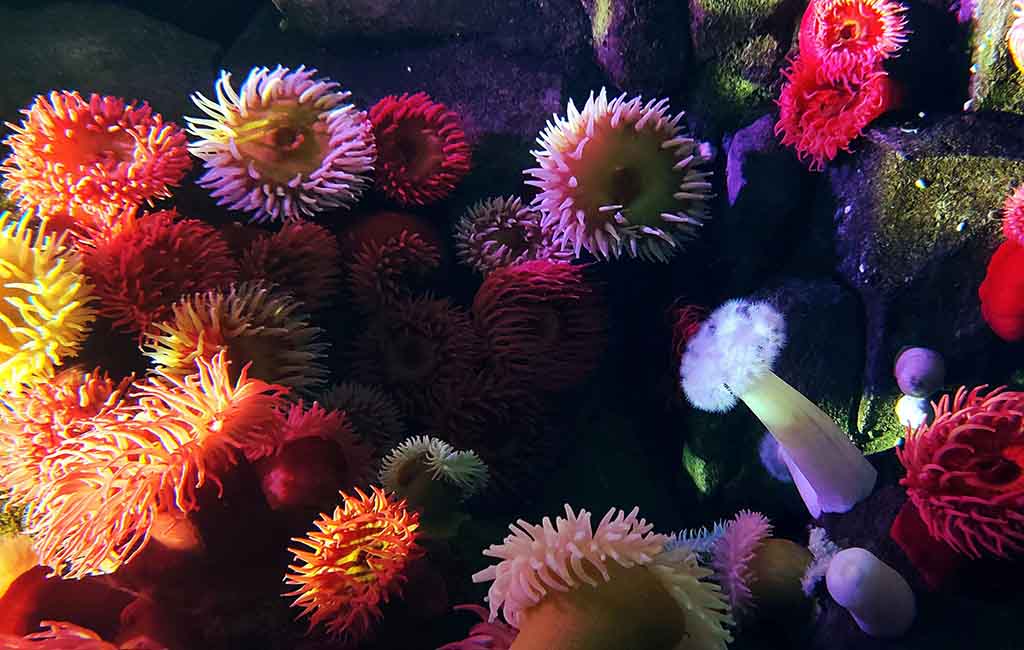
low-tech marine tanks maintenance
The Last Word
Don’t overthink, make a plan, follow the plan, regularly do the maintenance, and enjoy your fish-only low-tech marine tank. Use some hardy fish and coral to get a better result, and never lose patience.
Related Products

Leave a comment