
The Moorish Idol is one of the most visually striking saltwater fish in the ocean. Bold black, white, and yellow bands, a dramatic, elongated dorsal fin, and a self-assured swimming style make it an instant head-turner at any fish store.
Content Table
But the gap between admiring this fish and successfully keeping it alive is enormous. Moorish idol care is genuinely demanding, and most specimens do not survive long in home aquariums. This care guide covers what the fish actually needs and what has to be in place before adding one to a tank.
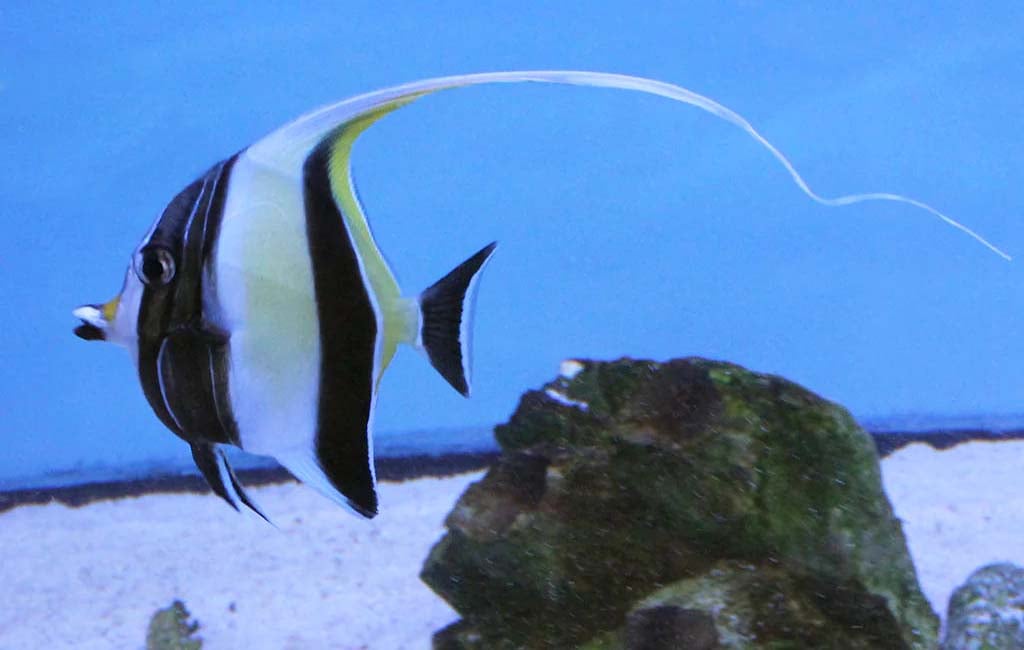
moorish idol care
Are Moorish Idols Hard to Keep?
Short answer: yes, and significantly so.
The Moorish Idol (Zanclus cornutus) is widely considered one of the most difficult marine fish to maintain in captivity. Most specimens collected from the wild refuse to eat prepared foods, and without solving the moorish idol’s feeding early, starvation becomes the most common cause of death within the first few weeks.
Part of the problem is dietary origin. In the wild, Moorish Idols graze heavily on sponges, tunicates, and benthic invertebrates attached to reef structures. These food sources are nearly impossible to replicate in a home aquarium. Even experienced marine aquarists report serious difficulty getting newly arrived fish to accept any substitute.
The second challenge is stress sensitivity. Moorish Idols do not tolerate shipping, abrupt water changes, or tank transfers well. A fish that appears healthy and active at the store may decline rapidly within a few days of entering a new environment.
That said, some aquarists have maintained Moorish Idols successfully for years. But it requires advanced experience, a mature reef system, and a genuine commitment to getting moorish idol feeding right from the very beginning. This is not a beginner fish under any circumstances.
Do Moorish Idol Fish Need a Lot of Light and Heat?
Temperature Requirements
Moorish Idols originate from Indo-Pacific reef zones where water conditions stay stable and warm year-round. For Moorish idol care to succeed at home, tank temperature should hold between 72°F and 78°F (22°C to 26°C). Fluctuations outside this range stress the fish and weaken its immune response over time.
Specific gravity should remain at 1.023 to 1.026, consistent with natural seawater. pH between 8.1 and 8.4 is standard for a healthy reef setup. Stable parameters matter far more than hitting a perfect number.
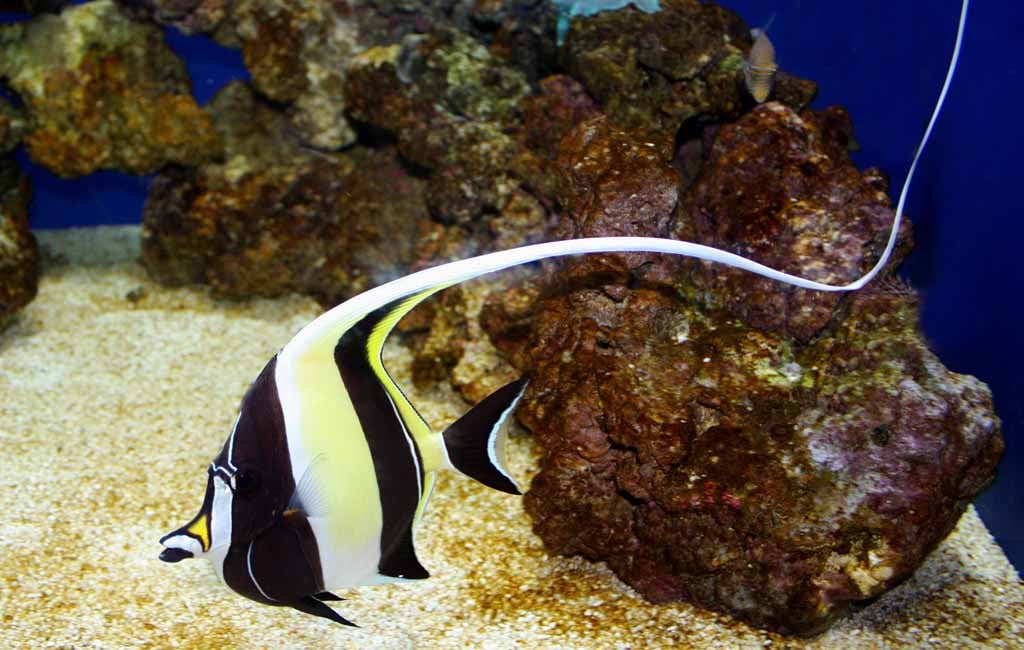
moorish idol feeding
Lighting Needs
Moorish Idols come from shallow reef zones that receive strong, consistent light throughout the day. A well-lit reef aquarium with a stable photoperiod of 10 to 12 hours suits them well.
The fish itself does not photosynthesize, but the sponge growth, coralline algae, and microfauna encouraged by strong lighting create a more natural grazing environment. This reduces stress and supports the exploratory foraging behavior the fish relies on.
A bare, dimly lit aquarium is not appropriate for this species at all.
About Moorish Idol Feeding
Moorish idol feeding is where most attempts at keeping this species collapse. Wild fish spend several hours each day grazing on sponges, coral polyps, and encrusting invertebrates. Captive specimens need to be guided away from this behavior gradually, which takes patience and consistency rather than force.
What to offer when establishing moorish idol feeding:
- Frozen mysis shrimp and enriched brine shrimp as a starting point
- Finely chopped clams and marine worms to stimulate feeding interest
- Nori sheets attached to a clip inside the tank for constant access
- Live rock covered in natural algae and microfauna, which encourages grazing throughout the day
- Commercial sponge-based foods that can be sourced
Target feeding with a small pipette or turkey baster helps direct food toward the fish without relying on competition from moorish idol tank mates. Feed small amounts two to three times daily rather than one large portion.
Do not expect immediate results. Some fish take two to three weeks before they accept anything. Watch body condition closely. A visibly sunken belly is a serious, urgent warning sign that the fish is declining.
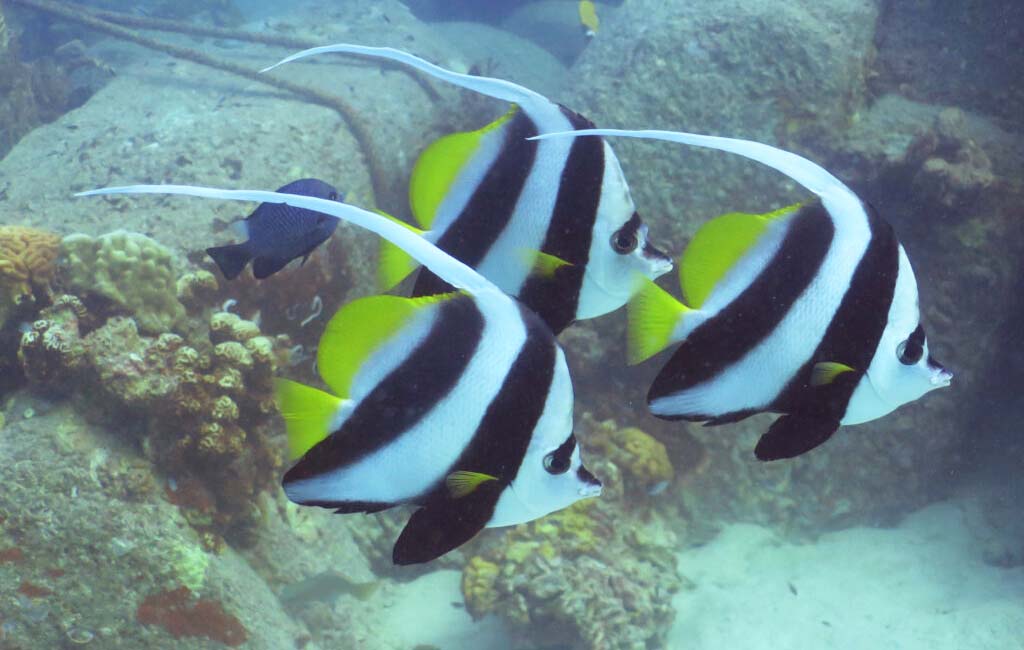
moorish idol tank mates
Moorish Idol Care Sheet
A clear reference summary for Moorish Idol care:
- Tank size: 100 gallons minimum, larger tanks are strongly preferred
- Temperature: 72°F to 78°F (22°C to 26°C)
- Salinity: 023 to 1.026 specific gravity
- pH: 1 to 8.4
- Diet: Sponge-based foods, frozen mysis, nori, live rock grazing
- Lighting: High-output reef lighting, 10 to 12-hour photoperiod
- Water flow: Moderate to high water flow, replicating shallow reef conditions
- Experience level: Advanced aquarists only
- Reef safe: Generally yes, though it may pick at certain coral polyps
- Lifespan in captivity: Highly variable and often under one year without proper moorish idol care
A mature, well-established reef tank with plentiful live rock is the best possible foundation. Newly set up or chemically unstable systems are not suitable for this fish, regardless of how experienced the aquarist is.
Who Are the Moorish Idol Tank Mates?
Selecting the right Moorish Idol tank mates takes more thought than it does for most reef fish. The Moorish Idol is generally peaceful toward species that do not resemble it, but can display aggression toward fish with similar body shapes or fin styles, particularly Heniochus species.
Compatible Moorish Idol tank mates include:
- Peaceful tangs such as the Yellow Tang or Kole Tang
- Anthias
- Clownfish
- Dartfish
- Firefish gobies
- Hawkfish (use caution with very small fish in the tank)
- Non-aggressive wrasse species
Fish to avoid as moorish idol tank mates:
- Other Moorish Idols, as territorial behavior between individuals is well-documented
- Heniochus species, since visual similarity to the Moorish Idol often triggers aggression
- Large, assertive angelfish that may outcompete the idol at feeding time
- Predatory species that view the idol as food
Dense live rock with clearly defined territories helps reduce conflict. Open swimming space matters, but so does the availability of physical shelter for every fish in the system.
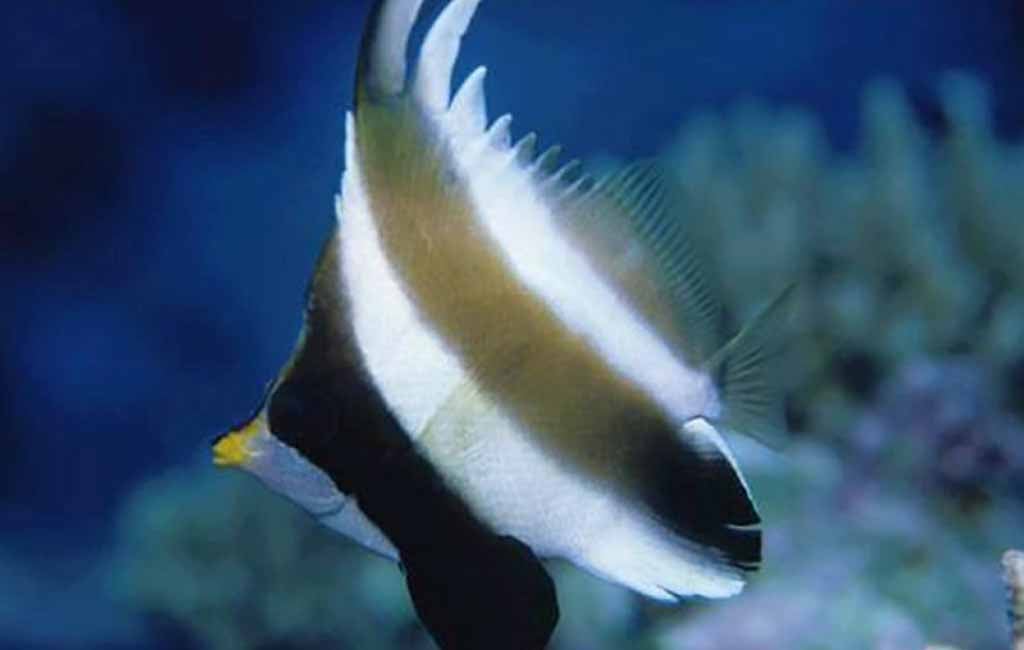
moorish idol vs bannerfish
Heniochus vs Moorish Idol vs Bannerfish
This comparison surfaces constantly among saltwater hobbyists because the three fish look strikingly similar at first glance. The elongated dorsal fin, the banded black and white body, and the reef habitat. But they are very different animals once the practicalities of keeping them are examined.
Heniochus vs Moorish Idol
Heniochus acuminatus, known widely as the bannerfish or pennant butterflyfish, belongs to the butterflyfish family. The Moorish Idol belongs to an entirely separate family, Zanclidae, with no close relatives.
In the heniochus vs moorish idol comparison, Heniochus wins on hardiness by a considerable margin. It accepts prepared foods without much persuasion, tolerates a broader range of water conditions, and adjusts to captive life far more readily.
For anyone drawn to the look of the Moorish Idol but without the setup and experience to support one, Heniochus is the practical and sensible alternative. The heniochus vs moorish idol decision for most aquarists really is that simple.
Moorish Idol vs Bannerfish
In the moorish idol vs bannerfish comparison, the visual differences are subtle. The Moorish Idol carries a more pronounced snout, sharper color contrast, and a slightly different fin structure. The bannerfish tends toward softer yellows and a less dramatic overall silhouette.
Beyond appearance, Moorish idol vs bannerfish is really a comparison between a challenging, specialized species and one that is genuinely accessible. Bannerfish thrive in standard reef setups with basic care routines.
Moorish Idols require advanced systems, targeted feeding strategies, and consistent observation to survive long-term. For aquarists new to keeping either fish, starting with the bannerfish builds the skills that make Moorish idol care achievable later on.
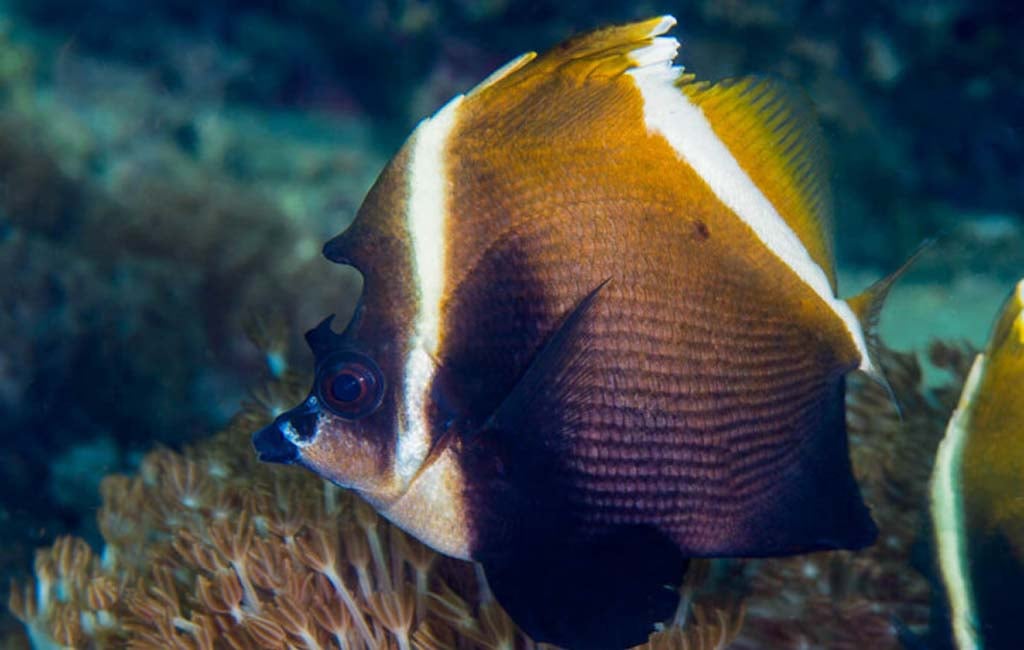
heniochus vs moorish idol
That Is Where the Careness Rests
Moorish idol care rewards preparation far more than enthusiasm.
The fish is beautiful. No argument there. But beauty alone does not make a species suitable for a home aquarium. Getting moorish idol feeding right, building a stable environment, picking the right moorish idol tank mates, and understanding where this fish stands in the Heniochus vs. Moorish Idol and moorish idol vs bannerfish discussions, all of that comes before the purchase, not after.
Start with easier species. Build the experience. Get the system running cleanly for at least a year. Then, when the conditions are genuinely ready, the Moorish Idol stops being a gamble and becomes a reward.
Related Products

Leave a comment