
Bottom-dwelling fish species are one of the aquarist’s favorites. These fish made the bottom of the tank also alive when other fish species most of the time swim at the top or middle level of the tank. If you are interested in keeping them in your tank, you will find the guidelines for 10/20/30/40 gallon tanks. Moreover, it is necessary to have bottom-dwelling species in the tank, and compatibility with other species is also important. Please scroll down the page to learn more.
Content Table
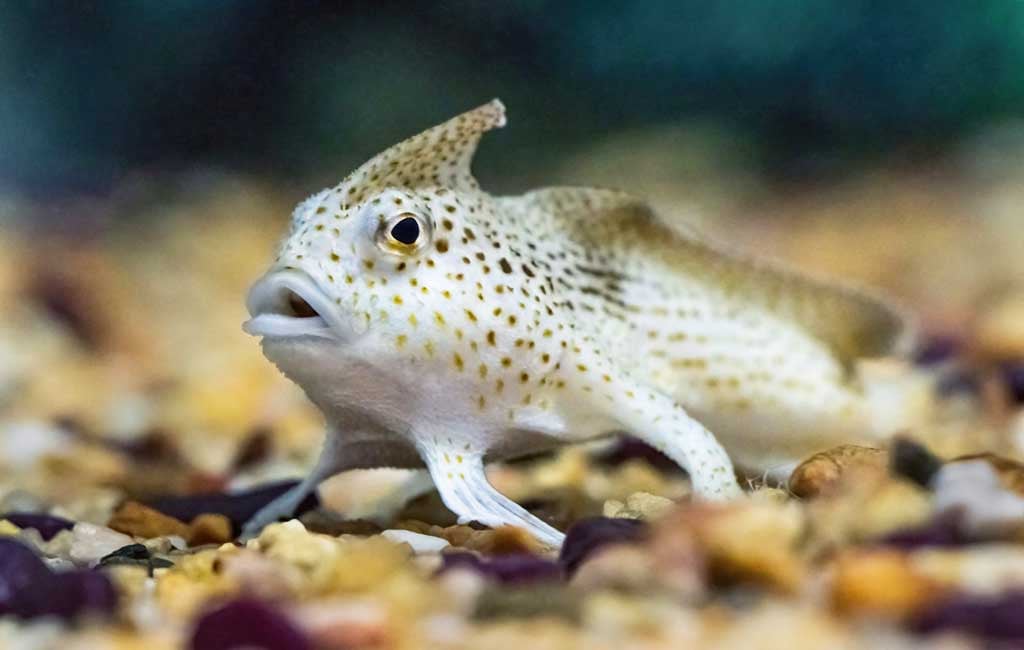
bottom-dwelling fish
What Is a Bottom Dwelling Fish?
Bottom-dwelling fish, or bottom dwellers, are such fish species that are adapted to live at the bottom of the tank or water bodies. These fish have evolved over millions of years to live on the bottom of the water bodies. They help to control algae growth in the water and aquariums. Moreover, they play a vital role in the food chain by recycling the nutrients in the water bodies.
Peculiarities
These fish have unique attributes compared to other fish species, i.e., top and mid-level swimmers.
| Peculiarity | Reason |
| Downward Face | They take their food from the ocean or the water body floor. |
| Barbels | These barbs help to detect the food in the dark. You can find the barbs in catfish and loaches. |
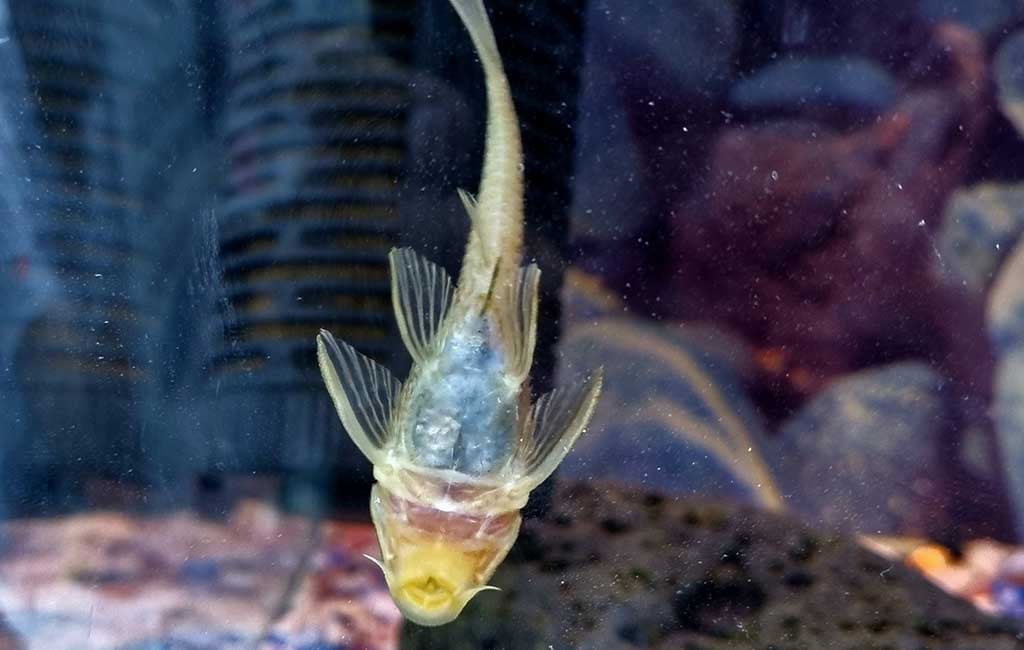
| Sucker like face | They use them to attach themselves to the surface and to graze the algae. Plecos and otocinclus are examples of this attribute. |
| Camouflaged Coloration | They have brown, gray, or spotted coloration. This coloration helps them hide themselves from predators and other purposes as well. |
| Compressed bodies | This body shape helps them to navigate through tight spaces. |
Bottom Dweller Fish Examples
Hundreds of fish species fall under the bottom-dwelling fish category. You can find them in freshwater, saltwater, and even in tropical water situations. Although there are many bottom-dwelling fish species, here are some common species.
Freshwater Bottom Dwellers
Freshwater bottom dwellers are abundant, and aquarists can find any temperament level of fish for their tank. They are available in a huge range of sizes, temperaments, and care levels. Here are some of the freshwater bottom dwellers that will help you to choose according to your desire.
| Name | Tank size | Temperament | Preferred Diet |
| Cory catfish | 10 | Peaceful | Omnivore |
| Bristlenose Pleco | 25 | Peaceful | Herbivore |
| Kuhli Loach | 20 | Peaceful | Omnivore |
| Otocinclus catfish | 10 | Peaceful | Herbivore |
| Yoyo Loach | 30 | Semi-aggressive | Omnivore |
| Hillstream Loach | 20 | Peaceful | Herbivore |
| Synodontis catfish | 30 | Semi-aggressive | Omnivore |
Saltwater Bottom Dwellers
Marine or saltwater bottom dwellers are present in large numbers. Hundreds of bottom-dwelling fish species find their food from the sea floor. In aquarium setups, they show excellence in reef and FOWLR tank setups. Here are some aquarium-suitable species with their preferred tank size and temperament.
| Name | Tank size | Temperament | Diet |
| Watchman Goby | 30 | Peaceful | Carnivorous |
| Jawfish | 30 | Peaceful | Carnivores |
| Sand sifting starfish | 55 | Peaceful | omnivores/scavengers |
| Dragonet | 75 | Peaceful | carnivorous foragers |
| Flathead Perch | 55 | Aggressive | Carnivore |
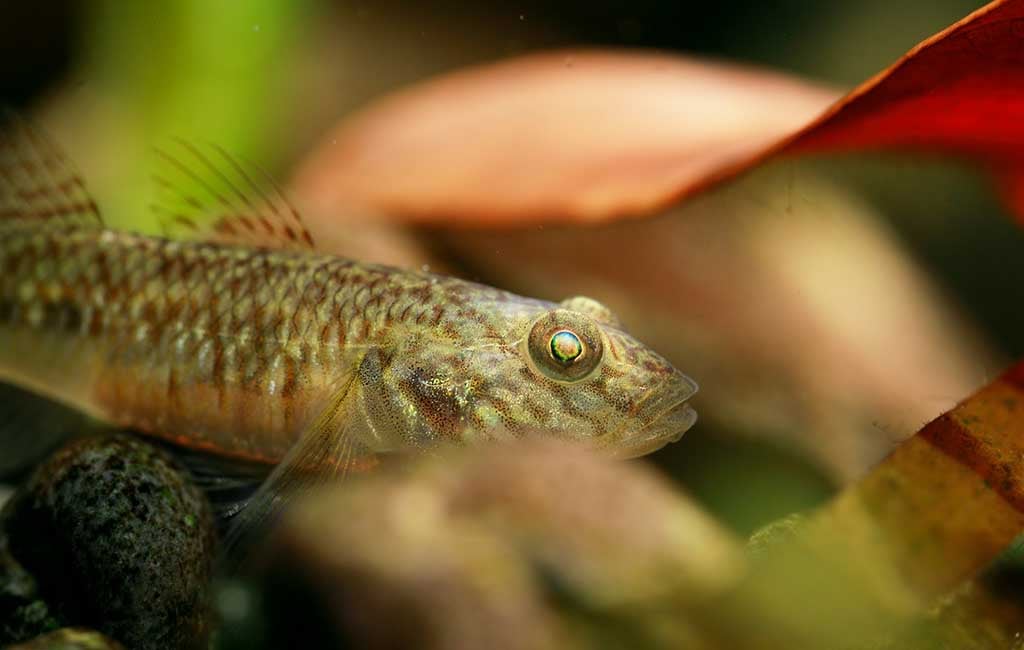
bottom-dwelling fish species
Tropical Bottom Dwellers
Bottom-dwelling fish species are also present in tropical environments. They live at the bottom of warm rivers and lakes. They are distributed around South America, Africa, and Southeast Asia.
| Name | Tank Size (Gallons) | Temperament | Diet |
| Dwarf Cichlid | 20 | Peaceful | Omnivorous micropredators |
| Peacock Gudgeon | 15 to 20 | Peaceful | Omnivores |
| Panda Garra | 20 | Highly active | Omnivores |
| Peaceful | |||
| Tiger Botia | 55 | Active | Omnivorous scavenger |
| Semi-aggressive |
Guide for Keeping Bottom Dwelling Fish in 10/20/30/40 Gallon Tank
The next important thing is how to keep the bottom dwellers in different tank sizes. Water parameters, group size, and many other things varied due to species differences. However, here is a general guide about how to keep them in different tank sizes.
10-Gallon Tank
10-gallon tanks cater to the bottom dwellers at an extremely basic level. This setup is usually suitable for beginners. Here are some recommendations for it.
Species Selection
Select small and relatively less active fish for this tank size. Here are some suitable options.
- Pygmy Cory Catfish
- Otocinclus Catfish
- Dwarf Suckermouth Catfish
Filtration
Filtration is the key consideration in small tanks. Small tanks are highly vulnerable to changes. Use a sponge filter or a hang-on-back (HOB) filter. Maintain a gentle flow in the tank.
Substrate
Sharp-edged substrate material is the worst idea for a bottom-dwelling fish tank. Instead, use sand or smooth gravel at the bottom of the tank. However, if you are going with substrate, add a layer of sand over the gravel.
Stocking Level
The stocking level varies among the selected fish species. If you are going to pygmy cories, 4 to 6 pygmy cories are enough. On the other hand, if you are planning for otos, 3 to 4 are enough.
Decor
They love to hide in the tank and under the surface. Therefore, it is suitable to introduce decor in the tank. Here are some suitable fish tank decorations.
- Caves
- Driftwood
- Live plant, e.g., Java fern

Bottom-dwelling fish for 10 gallon tank
20-Gallon Tank
A 20-gallon tank is another suitable option for bottom dwellers. It opens up more options. Here are guidelines to set up a 20-gallon tank.
Fish Selection
You can select relatively larger and active fish for this tank setup. Here are some suitable options.
- Standard Corydoras
- Kuhli Loaches
- Hillstream Loach
Don’t add bristlenose plecos as they are only suitable for 25-gallon+ tanks.
Stocking
Here is the suitable stocking level for a 20-gallon tank.
| Fish | Stocking |
| Standard corydoras | 6 to 8 |
| Khuli Loaches | 5 to 6 |
| Hillstream Loaches | 2 to 3 |
Flow Rate
Maintain the flow rate in the tank according to the fish species. Like hillstream loaches, live in fast-moving rivers. So, adjust the high flow rate in the tank.
Substrate
Preferably, add the sand as a substrate in the tank. Especially, if you are planning to stock loaches. Loaches love to dig in the sand. Otherwise, they will go under stress.
Decor
They love to hide in the tank and under the surface. Therefore, it is suitable to introduce decor in the tank. Here are some suitable decorations.
- Caves
- Driftwood
- Live plant, e.g., Java fern
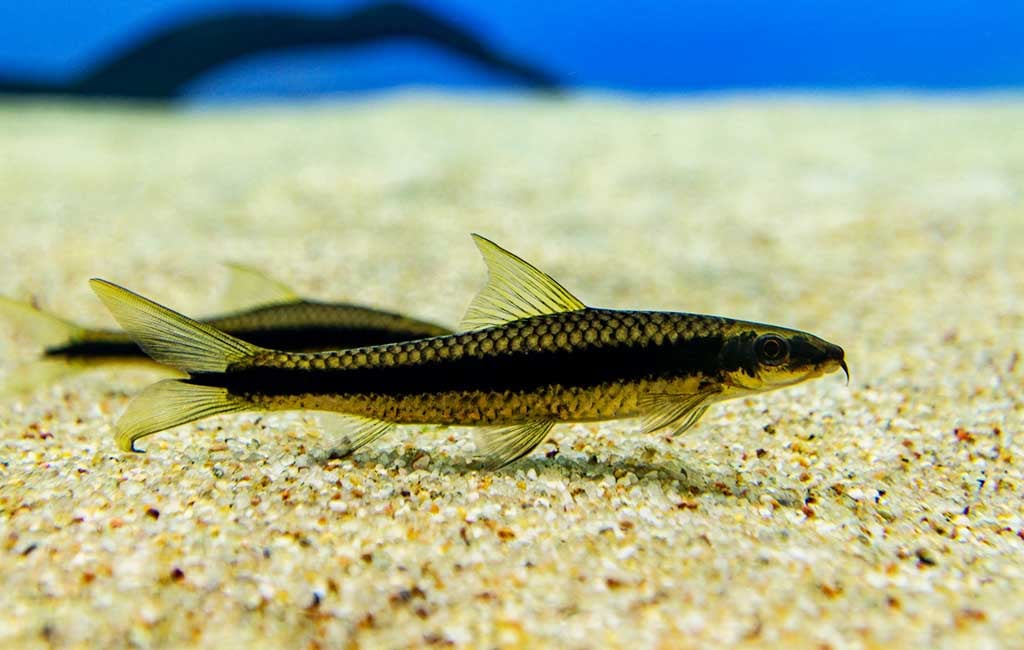
Bottom Dweller Fish Examples
30-Gallon Tank
A 30-gallon tank offers more flexibility. It is not only suitable for bottom dwellers, but you can turn it into a community fish tank by adding mid or top-level fish. Here are the development guidelines.
Fish Selection
Here are some suitable fish for a 30-gallon tank.
- Brestlenose Pleco
- Yoyo Loach
- Synodontis Catfish
- Khuli Loach
Other Guidelines
Use the 10 or 20-gallon tank guidelines for setting up a 30-gallon fish tank. It includes the decor, flow rate, and substrate selection.
40-Gallon Tank
A 40-gallon tank offers more fluidity to stock bottom dwellers. You can stock some popular species. Moreover, you can even stock more than 1 type of bottom dwellers.
Fish Selection
Here are some suitable fish species for a 40-gallon fish tank.
- Clown Loaches
- Larger Plecos
- Numerous Cory fish Species
Stocking
As mentioned, we can stock more than one fish bottom dweller. However, it is worth noting that only stocks of a similar nature to fish are considered. Moreover, stock more than one if specific bottom-dweller species occupy one specific area in the tank.
Other Guidelines
Use the 10 or 20-gallon tank guidelines for setting up a 40-gallon fish tank. It includes the decor, flow rate, and substrate selection.
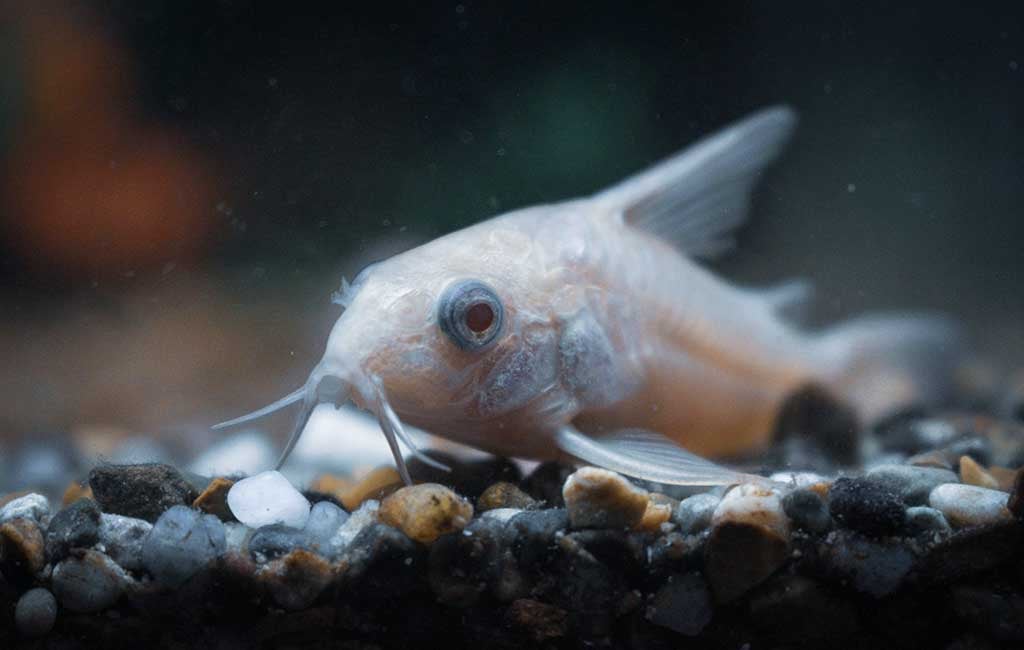
Do Aquariums Need Bottom-Dwelling Fish
Do Aquariums Need Bottom-Dwelling Fish?
The answer depends on your priority. If you have more than a 5-gallon tank and want to keep the bottom clean, bottom dwellers will help you. Otherwise, it is not compulsory to add the bottom dwellers to the tank. Here are some reasons why it is better to have bottom dwellers in the tank.
- They keep the bottom clean by eating the leftover food and maintain a nutrient balance.
- Many bottom dwellers are omnivores. Therefore, they help to keep the tank algae-free.
- They keep the substrate aerated as they dig the sand due to their nature.
- They fill the bottom area of the tank.
- It is entertaining to watch the bottom dwellers in the tank. Hiding, chasing, and digging at the bottom of the tank.
What Fish Can Live with Bottom Dwelling
It is mentioned that you can turn your 40-gallon tank into a community tank by adding various levels of swimmers’ fish in the tank. Here are some such species, their compatibility, moving zone, and an important note for stocking them with bottom dwellers.
| Tankmate | Water zone | Compatibility | Note |
| Neon Tetra | Middle | Cory Catfish and otos | Always keep the tetras in a group of 6, as they are schooling fish. |
| Harlequin Rasbora | Middle / Upper | All peaceful bottom-dwelling species | Suitable for a community fish tank. |
| Dwarf Gourami | Middle / Upper | Coreis and bristlenose pleco | Don’t stock with shy species |
| Zebra Danio | Upper | Loaches and cories | Super active fish. They require some space that matches their energy. |
| Mollies | Middle / Upper | Cories and plecos | Keep them slightly hard water |
| Guppies | Upper | Pygmy cories and otos | They are suitable for the starter tank, i.e., a 10-gallon. |
What Fish Can Live with Bottom Dwelling
To Summarize
Bottom-dwelling fish live at the bottom of the water bodies, and they help to keep the water bodies clean. You can find freshwater, saltwater, and tropical fish species. You can keep them in 10/20/30/40 gallon tanks with proper guidelines for various aspects, i.e., filtration, substrate, etc. If you have a large tank, you can keep them with other species after checking the compatibility.
Related Products

Leave a comment