
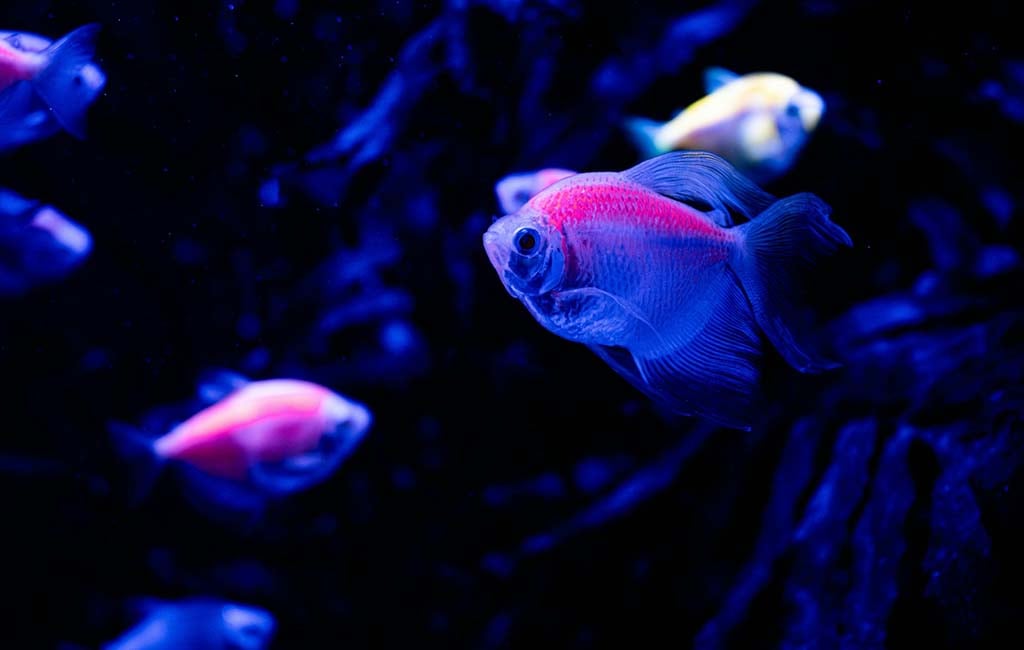
Glofish are unique and attractive to beginners due to their fluorescent colors under blue and dark conditions. This makes glofish unreal. This fluorescent fish is a lab experiment that converts into a market idea. Why, when, and where they were developed, and how they are treated, is one of the topics of this article. Their impacts on nature, whether it is ethical to keep them in your tank, and some facts about fluorescent fish are part of this article. Scroll to read the interesting topics with the aquarist’s point of view as well.
Content Table
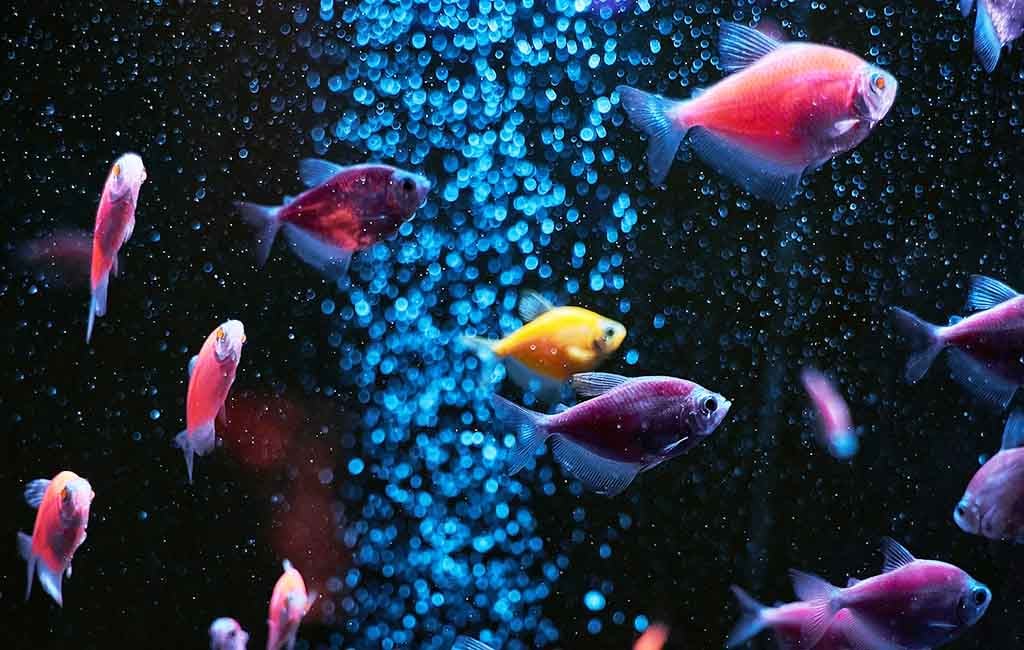
glofish
How Are Glofish Made?
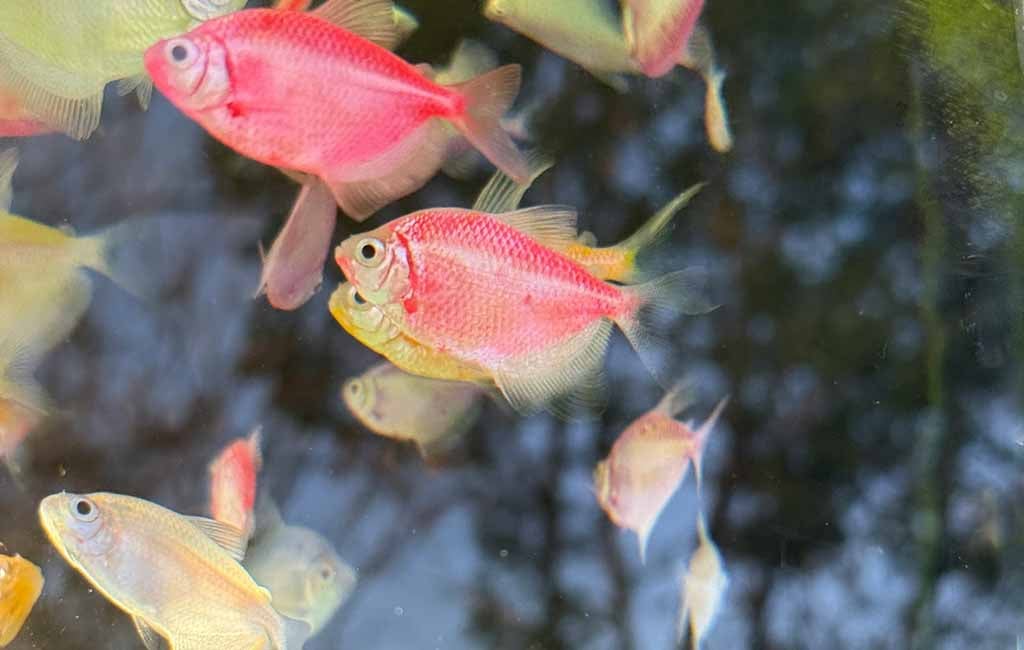
Glofish are a unique-looking fish species. At first glance, they are confused with dyed or artificial fish. In fact, they are live and genetically modified species. Scientists modified numerous species, such as Barbs, Zebra danios, Tetras, etc., to Glofish.
Modification Process
Scientists select a few fish species for an experiment. They extract marine creatures’ fluorescent genes and inject these genes into selected fish species’ eggs. After hatching, scientists get the fully modified Glofish species, i.e, glowing cells in their bodies. The glowing property is passed on from generation to generation.
History
Initially, these modifications were not intended for some decorative or aquarium species. Scientists made these modifications in 1999 to detect the pollutants in the water. The synopsis behind the modification was that when Glofish moves in pollutant water, it indicates the changes through its colors. However, later on, an American company saw these Glofish and took advantage of the opportunity in the aquarium field. In this way, they become popular among the aquarists.
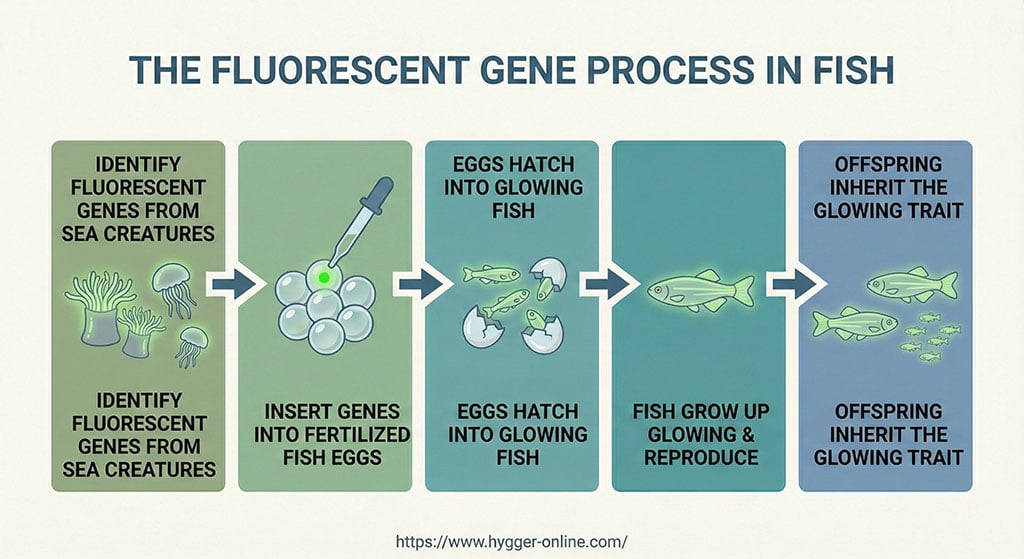
How are glofish made
Fluorescent Genes in Glo Fish
The secret behind the glow in Glofish is their DNA. DNA is like a recipe book. Scientists have added some new spices to the recipe. The rest of the dish is similar. Their coloration originated from other marine species. Green coloration is from jellyfish. Orange and red come from coral reefs. Until now, scientists have developed 5 to 7 fully modified Glofish in 6 colors.
- Electric Green
- Starfire Red
- Sunburst Orange
- Moonrise Pink
- Cosmic Blue
- Galactic Purple
Here are some common species and their original and modified available colors.
| Fish Species | Original Appearance | Available GloFish Colors |
| Zebra Danio | Silver with blue stripes | All six colors are available |
| Black Tetra | Silver with black stripes | All six colors are available |
| Tiger Barb | Gold with black stripes | All six colors are available |
| Rainbow Shark | Gray/black body | Galactic Purple only |
| Betta Fish | Various natural colors | All six colors are available |
The Current Life of Glofish
Glofish are spending their normal lives. They are the same age as their non-modified cousins. Modification does not harm the fish.
- The process does not involve pain as the modification is done at the embryo stage.
- They behave similarly.
- They require a bit of extra energy in terms of food.
- They are only suitable for controlled environments. In the ocean and nature, their glow makes them vulnerable to predators.
They eat similar food to the relative fish. They swim similarly to the original non-modified fish. They mate like their forefather.
Even under normal conditions, they display the same colors as their non-modified counterparts. One can observe the different colors under blue light and actinic light. In a nutshell, they are living their normal lives like non-modified fish species.
Controversy over Ornamental Fluorescent Fish
The modification has aroused controversy and divided the aquarists into two groups. Both groups present their arguments. Here are the arguments. Moreover, the legal status of this controversy is also as follows.
| Supporters | Opponents |
| The colors help to attract new hobbyists and children to the aquarium journey. | The aquarium journey should be based on natural ways, not ignited with some modified colors. |
| Glofish has the normal life with no risks. | Although there is no harm in the modification. However, who give the permission to humans to modify the fish and animals just for their pleasure? |
| Fish are born with their colors. No dye has been injected into their bodies. | Although no dye has been injected into their bodies, its modification crosses the moral lines. |
| Modification is safe and valuable for scientific research. | It can’t be encouraged to perform the same modification process with other animals, just for entertainment. |
| Environmentalists worry that when they are open to the wild, they may cause harm when they mate with wild species. | |
| Supporters believe that it is an evolution in aquariums and fish. It brings beauty. | Traditional aquarists believe that the original beauty lies in nature, not in some artificial and modified coloration. |
| We have been doing so for thousands of years, and this is one of the perfectly landed modifications. | We can modify the animals, but does this mean that we will continue to do so? |
Legal and Regulatory Issues
The controversy also split opinions at the legal and regulatory levels. Here are different opinions.
- In most states of the United States, it is legal to sell and buy Glofish.
- It is banned in California due to environmental issues.
- It is banned in the European Union.
- Canada and Australia also banned genetically modified fish.
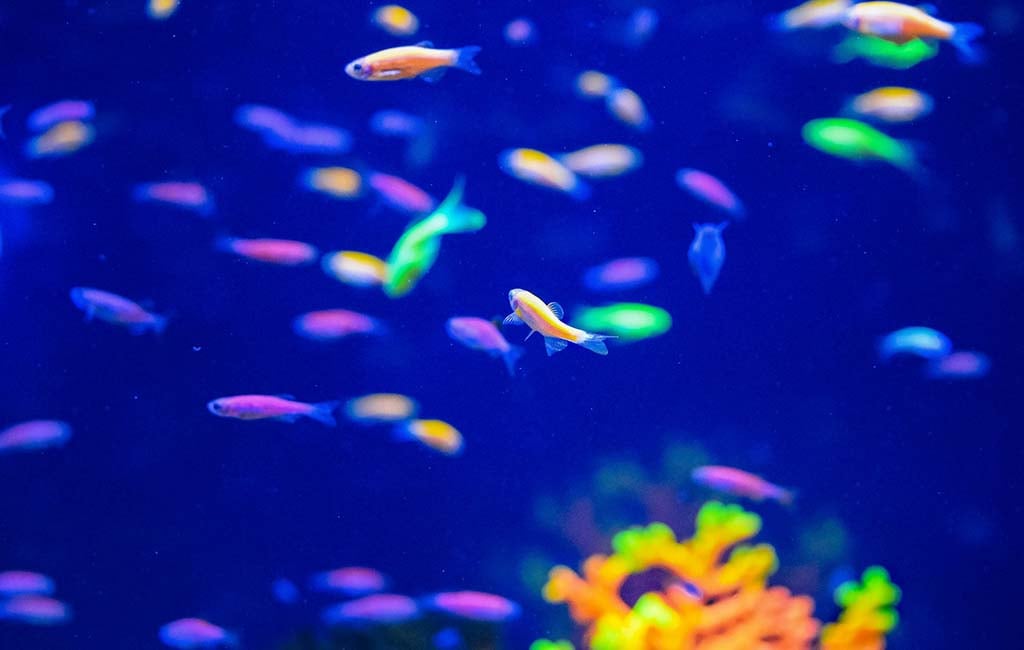
Impact of Fluorescent Fish
The Challenges and Impact of Fluorescent Fish on Traditional Ornamental Fish
The introduction of fluorescent fish has brought challenges and had a huge impact on the aquarium field. The impacts and challenges are multidimensional. Here are some of them.
Impacts on Traditional Fish Breeding
- Some breeders were working for generations to create colorful fish. This innovation suddenly killed the efforts of generations.
- It changed the reach to store time. Traditionally, new fish take a lot of time to reach the store. When this fish entered, it changed the dynamic suddenly and reduced the time to reach the store.
- It overshadowed the breeders’ hard work.
- It increased the competition in selling naturally bred fish.
- It increased the fear of killing natural breeding skills.
Impact on Market
- It sells well in the market.
- Beginners are attracted to these fish.
- They have a higher profit margin than traditional fish.
- Glofish gains more shelf space in pet stores.
- They gain a place in high-visibility t
- They suppress the other rare and amazing species in the market.
- They overpower the less flashy fish species in the market.
Educational and Cultural Impact
- It sparked an interest in genetics and biology.
- It is a real-time learning material for biotechnology students.
- It is normalizing the concept of animal modification that is not good.
- It is overpowering the natural beauty, as it represents artificial beauty that is almost impossible to achieve with normal breeding.
- People are using them as recreational pets.
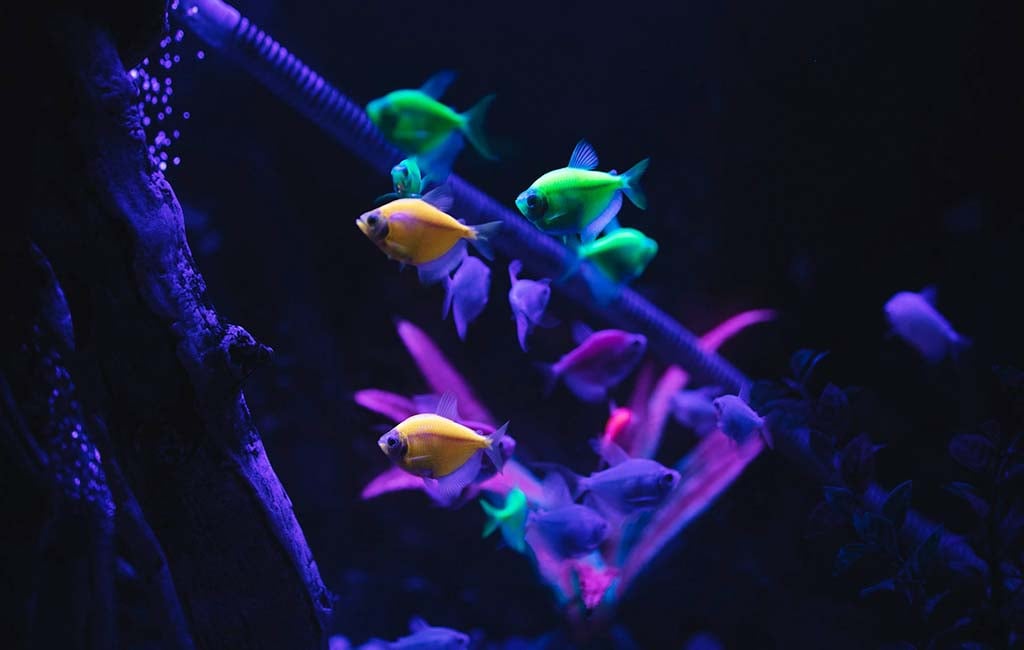
facts of fluorescent fish
The Facts of Fluorescent Fish
Here are some interesting facts about the fluorescent fish.
- They are not present in nature, as it is hard to survive in the wild due to predators.
- They appear colorful under normal lighting. However, they begin to radiate under the special lights. Aquarists buy such lights that help to radiate their coloration.
- Fluorescent fish don’t require extra care. They usually survive under the same conditions, pH, water hardness, and temperature.
- They have a similar lifespan to normal non-modified cousins.
- They don’t have some temporary glow. The glow property is in their genetics. So, they glow for their whole life.
- They can mate. The next generation will be radiant like their parents.
- It is illegal to breed the male and female fluorescent fish for commercial purposes as they are under patent.
- Initially, they were modified to identify the pollution in the environment. Later, they become a recreational pet.
- Fluorescent fish are available in 6 different colors: Starfire Red, Sunburst Orange, Electric Green, Cosmic Blue, Galactic Purple, and Moonrise Pink.
- They are restricted to freshwater aquariums. Not suitable for saltwater tanks or environments.
- Zebrafish was the first modified fish with jellyfish genes and became a Glofish in 1999. Now, 5 to 7 species are fully modified to Glofish.
Will You Breed the Fluorescent Fish?
Yes, you can breed the Glofish in your tank. When you have a male and a female fluorescent fish. Both are fully mature and in good condition; they can spawn like other species. Zebrafish usually scatter their eggs in spawning plants, nests, etc. On hatching the eggs, you will see the fry. The next generation will be Glofish, like their parents, as they inherit the genes from both sides.
Legal Issues
You can breed them at home, keep the babies in your tank, and give gifts to friends and relatives. However, it is illegal to breed at a commercial level due to the patent issue. Spectrum Brands, Inc. has Glofish LLC, which holds the patent. They can sue you in court.
Other Issues
You can breed them in your tank. However, you need to fulfil the following conditions.
- Have a mature male and female Glofish.
- Have a separate breeding tank. In a community tank, they can spawn. However, other fish will eat their eggs from the bottom.
- The separate tank should have spawning places.
- You should feed the parents high-quality food.
- Optimal water conditions in the breeding tank.
- Separate tank to raise the fry.
Think of Fluorescent Fish
What Some Fish Keepers Think of Fluorescent Fish
Here are some reviews of what fish keepers actually think about the fluorescent fish.
Bright Colors, Low Risk
“Globefish breed true. The original breeding stock had jellyfish pigment genes spliced into their genome as embryos, and it resulted in their trademark bright colors. Now, all they do to create more glofish is spawn their brood stock. The fry are hatched with the same fluorescent traits as their parents without any more human intervention.
While they don’t necessarily really appeal to a lot of fish keepers or me, I see no issue with what they are doing, honestly. The only thing I would be even slightly worried about is what happens if some escape into wild waterways, where they could establish feral populations? Even though that’s a concern I have, I’m sure that their bright colors would prevent them from lasting very long out there, as predators would be drawn to them like fishing lures. All in all, I think it’s just a harmless way to give people the option of having a fluorescent glow tank if they decide they want one.”
Tough companion
“My glofish is about 5+ yrs old. Well, it’s my wife’s. We had 2, but one passed a few yrs back. Bright pink!! Hated them at first, but not anymore. Think JayAlva has made the most of them and found a great dither fish for discus! They’re just colored tetras in the end.”
Cool Idea, Bad Execution
“I’m going to be one of the few who don’t mind them. From a scientific standpoint, they are really cool.
What I don’t like is how they are kept. They are treated as a decoration rather than living animals, and as such are in poor condition by the time they’re bought.
All of my experiences with them have been with unhealthy fish that don’t make it more than a few weeks. For that reason, I wouldn’t keep them.”
fluorescent fish
Not Every Tank Has to Look Natural
“I think if someone likes a fish, they should go for it and not worry about if other people think it’s tacky. I bet someone could make an *amazing* blackwater tank with some of the neon yellow glowfish.
I don’t think that something looking artificial has to be a bad thing in all cases. My personal opinion is that it is high time that aquascaping as a whole stops being so fixated on the idea that every tank should be a picturesque nature scene and tries some different aesthetics. Don’t get me wrong, those tanks are beautiful and great, but they’ve been done over and over, and there is tons of room to try something new. I want to see some experimentation with fakeness and color and a break from unrelenting tastefulness. I am not skilled or invested enough to undertake this myself, but I’d love to see what happens if a pro or five just go off the rails. I bet we’d all learn something from it.”
Conclusion
In a nutshell, Glofish are not naturally developed fish. Initially, they were developed for environmental monitoring. Later, some corporations found the opportunity to monetize these genetically modified fish species. They patent these fish. Until there are 5 to 7 fully modified species in 6 colors, some aquarists love to keep them, especially beginners. At the same time, others consider it immoral to keep them in their tank.
Related Products



Leave a comment