
If you see a single fish or many fish darting in different directions, and there is a situation of panic in the tank, you are observing a swarm. There are various scenarios under which fish exhibit this behavior. In this article, you will learn why fish swarm and especially the male fish swarm behavior. You will also learn the difference between the confusing concepts of schooling, swarm, and shoaling. Three common swarm theories and some key observations are covered in this article.
Content Table
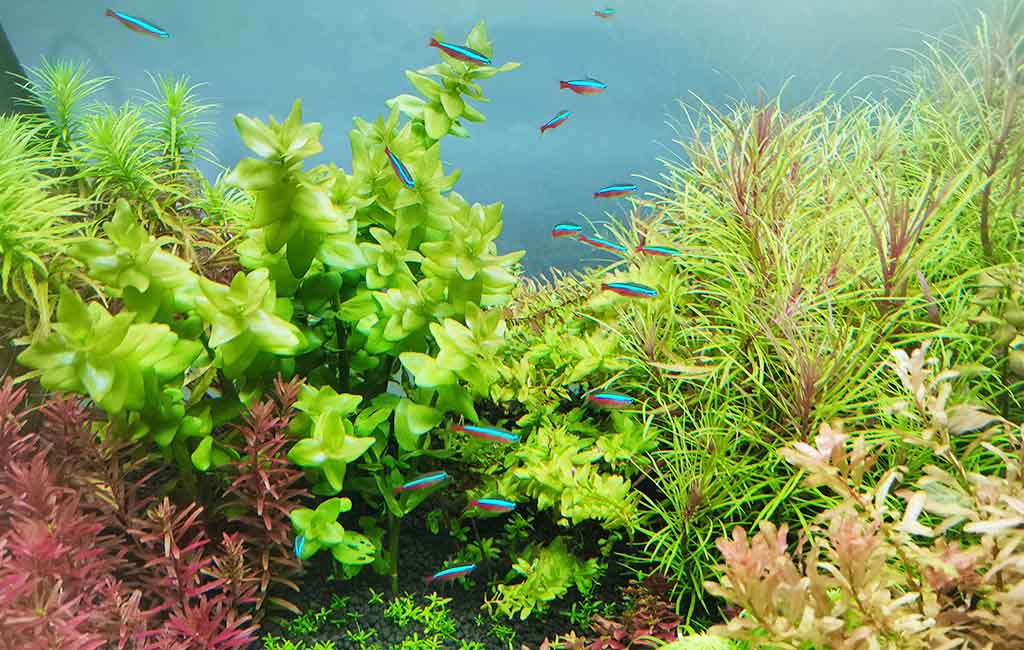
fish swarm behaviour
What Is Fish Swarm Behavior
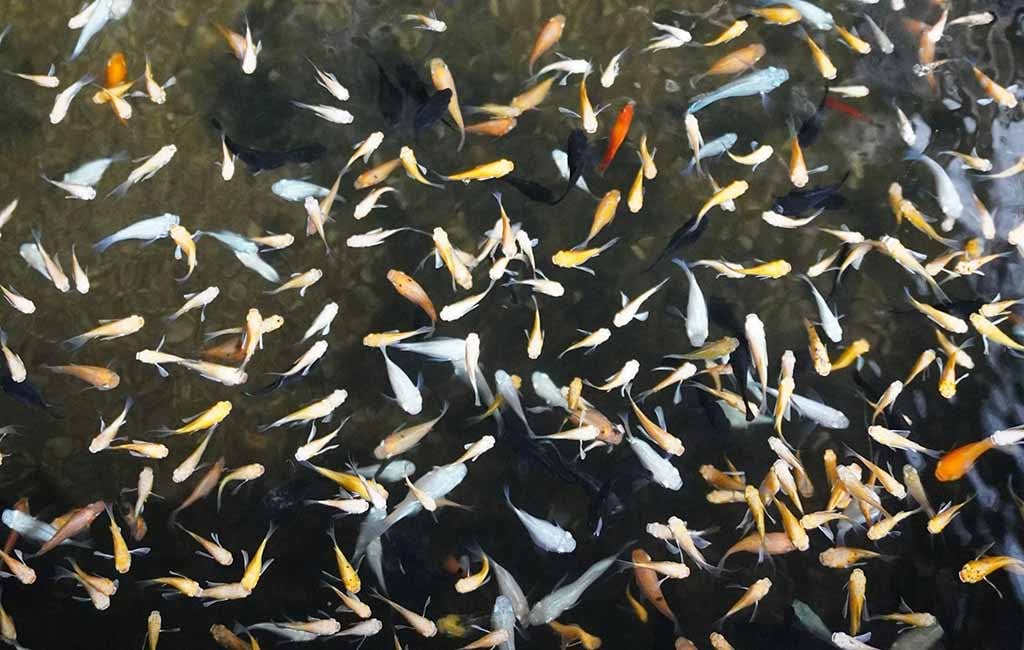
A fish swarm is a phenomenon in which a group of fish or a single fish begins to move without any direction. Swarm movement looks messy, urgent, and high-energy compared to natural, calm, and steady swimming. Swarm behavior includes zigzagging, spinning, darting to the water surface, and catching other fish around the tank.
For a novice, it might prove to be a problem. However, it is neither always a problem nor a good thing. It might be natural, and sometimes it requires you to put your attention to the problem. Here are some common swarm scenarios.
Common Swarm Scenario
Feeding Hours
You can see the swarm behavior in your tank near the surface during the feeding time. It is natural, and there is no need to worry.
Breeding Season
Females release pheromones. On sensing their smell, male lose their calm and begin to chase the female fish.
Stress
Various scenarios induce stress in the tank. In response to a stressful environment, swarm behavior triggers among fish. The details are coming in the following section.
Poor Water Quality
Poor water quality causes fish to dart toward the water surface. They do so due to a lack of oxygen.
Predator Direction
When some predators begin to chase, the fish school creates a swarm movement in the tank. They do so to avoid or confuse predators.
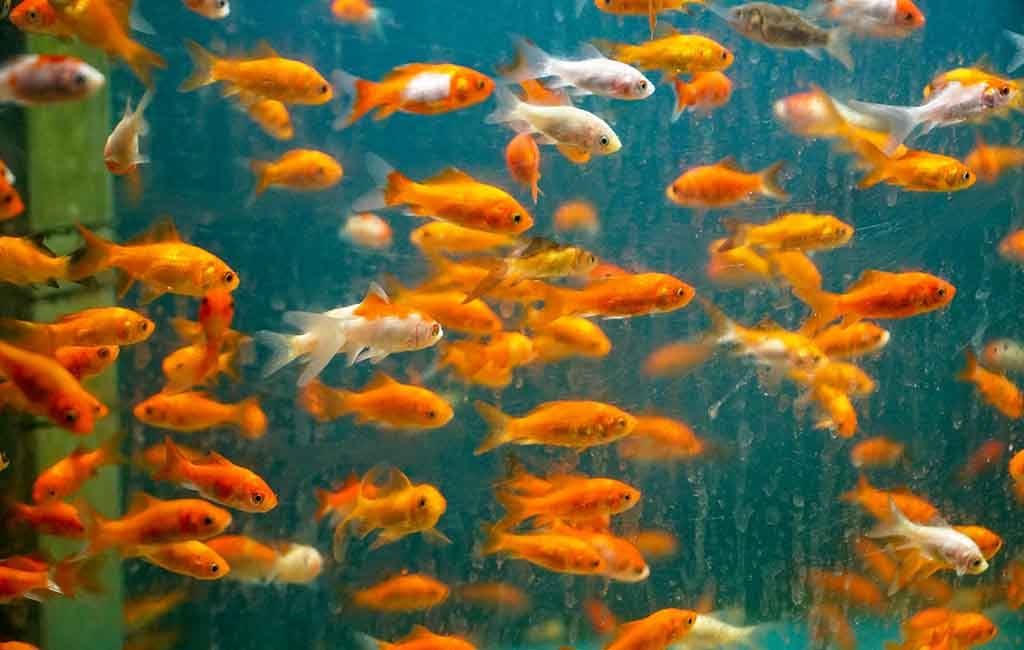
Fish Swarm Behaviour Vs Schooling Vs Shoaling
Fish Swarm Behaviour Vs Schooling Vs Shoaling
Sometimes, aquarists confuse the concepts of swarm, schooling, and shoaling as a single thing. In reality, all these scenarios are different. For a clear understanding, look at the following comparison table.
Difference Between Different Movements
| Behavior | Swarming | Schooling | Shoaling |
| Definition | Erratic, rapid, irregular movement. It is often triggered due to some stimuli. | It is fully coordinated. Each fish mirrors the others’ behavior. | Fish stay near each other. However, they don’t mirror others’ movements while swimming. |
| Movement Style | Fast | Synchronized | Loose |
| Chaotic | Uniform | Individual variation | |
| Multi-directional | Directional | casual | |
| Main Reason | Stress | Predator avoidance | Social comfort |
| Feeding frenzy | Energy saving | Safety in numbers | |
| Breeding | |||
| Common Examples | Cichlids show during spawning | Neon tetras | Goldfish |
| Guppies while feeding | Zebra danios | corydoras catfish |
Three Common Theories
There are 3 common theories to explain why fish show swarm behavior.
Predator Confusion Theory
Fish move in swarms. It makes it hard for predators to track one. Fast-moving swarms help to confuse and avoid the predator.
Hydrodynamic Efficiency Theory
When fish swim in a group, it reduces the water resistance. Schooling fish save their energy as each fish follows the front. It is similar to how cyclists save energy during a race.
Many Eye Theory
When there are numerous fish in a group, it allows the fish swarm to see in all directions. When any fish senses or finds danger from any direction, it transfers information to the swarm, and everyone becomes alert.

Why do fish swarm
Why Do Fish Swarm?
For various reasons, fish exhibit swarm behavior. It is worth learning about these reasons. So that you become alert to take care of your fish. Here is a table that will help you to learn about the cause, the type of swarm, the warning level, and whether any action is needed in this situation.
| Cause | Type | Warning Level | What To Do |
| Feeding excitement | Normal | None | No action needed |
| Breeding/mating behavior | Natural | Monitor females | Add hiding spots, plants, decorations, etc. |
| Separate them in case of severity or if you feel it necessary. | |||
| Stress from new tankmates | Behavioral | Mild concern | Rearrange decoration |
| monitor aggression | |||
| Low oxygen / poor water quality | Environmental | Urgent | Test water immediately to ensure water parameters are in the optimal range. |
| Improve aeration in the tank | |||
| Disease or parasites | Health | Urgent | Quarantine affected the fish |
| Consult a vet | |||
| Sudden light or sound changes | Reflex | Low | Maintain an optimal and stable light schedule |
| Overcrowding | Environmental | Moderate | Upgrade tank size |
| Reduce fish count |
Male Fish Swarm Behaviour
Out of all swarm conditions, the male fish swarm behavior is one of the most intense swarm behaviors. When female fish are ready to spawn, they release pheromones in the water. Pheromones have a certain smell that female fish release during the breeding season. On smelling pheromones, males lose all their calm.
Male fish actively and erratically swim all around the tank to find the female partner. They move corner to corner and look everywhere in the tank. This active and erratic behavior causes a swarm in the tank. This behavior looks dangerous, and in the case of a small tank, it becomes more alarming.
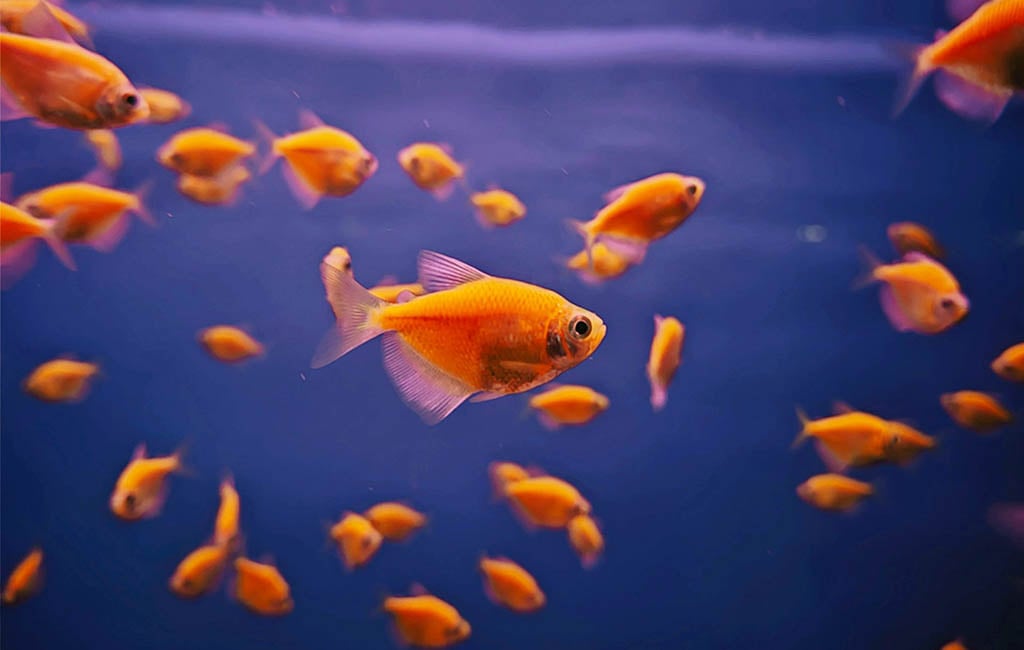
male fish swarm behaviour
Signs of Breeding Swarm Behavior
Here are several signs of male breeding swarm behavior.
Rapid Chase
One or more fish begin to chase a single female fish or a group of female fish. Male fish move tirelessly in the tank.
Fin Nipping
Male fish may nip the female fish’s fins to pursue them.
High Speed
Male fish begin to move faster than usual, and they move in circles or in a zigzag path.
Territorial Fights
It is another way to attract the female fish for spawning. They fight each other to get the female’s attention.
Color Change
Although it is not common among all fish, guppies and bettas change their color. They exhibit bright colors to attract the female fish.
Here is a list of such male fish that exhibit a strong swarm behavior for breeding, swarm intensity, and whether it is risky for female fish or not.
| Fish Species | Swarm Intensity | Risk to Female |
| Guppies | Very High | High. It can cause stress and exhaustion |
| Cichlids | High | Moderate. Female fish can see aggression. |
| Bettas | High | High. Male fish begin to bite female fish. |
| Goldfish | Moderate | Moderate. Female fish show signs of exhaustion. |
| Zebra Danios | Moderate | Low |
| Mollies | High | High. You can see the stress among female fish. |
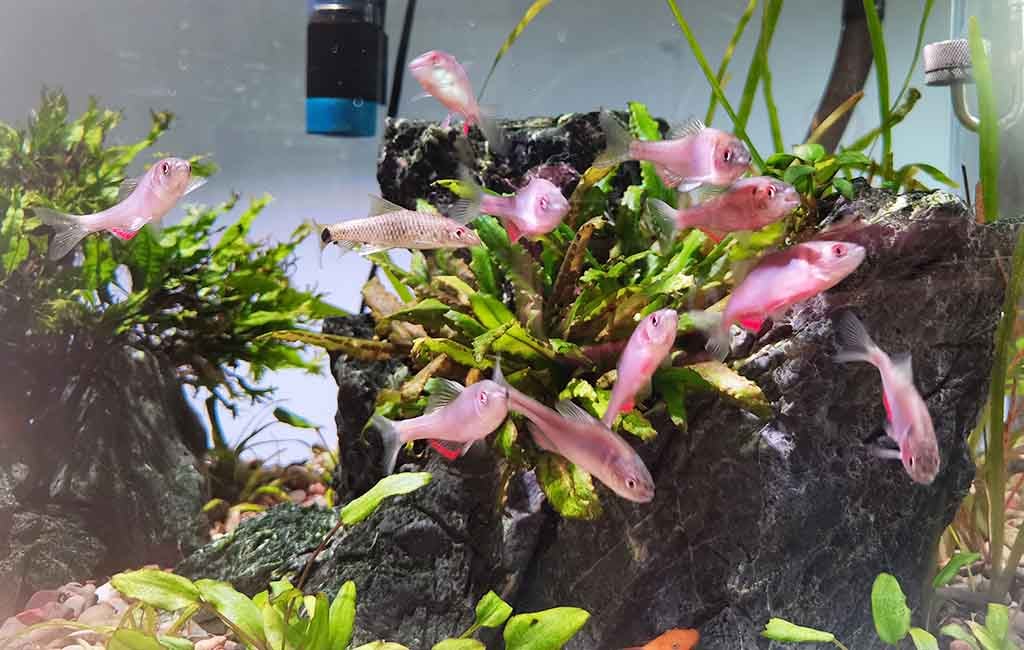
Fish Tank Observation About the Swarm
Key Points of Fish Tank Observation About the Swarm
There are three common fish behaviors, i.e., swarm, schooling, and shoaling. If you consider these three points, your observing point of view will be completely changed. Here are some key observation points.
Key Points Of Fish Tank Observation
Day Timing
At what time do fish show swarm behavior? Is it feeding time, or have you just turned on the light? Timing will help you a lot to understand the reason.
Who Is Involved?
While observing, check whether a single fish is causing the swarm or a group of fish is doing so. Moreover, it is only the male fish that are chasing the female, or the entire tank is panicking together.
Water Surface Behavior
If you are observing that the fish are darting toward the water surface and gasping, it is an emergency. It indicates that the oxygen level is low in the tank.
Duration
Check the swarm duration. Is it a short energy burst, or are they continuously spiraling around the tank?
New Or Old Resident
Check whether a newly introduced fish batch is swarming or if the old one is also showing a panic situation. If old residents are also showing similar behavior, you need to find the root cause.
Physical Appearance
If fish in swarms are taking injuries, it is a point of concern.
Look at the following summary table to learn about the behavior type and whether you need an action or not.
| Observation | Likely Behavior Type | Action Needed |
| All fish are darting at feeding time | Feeding swarm (normal) | None |
| Males chasing one female non-stop | Male breeding swarm | Add plants |
| Adjust male-to-female ratio | ||
| Fish swimming in a tight formation | Schooling (normal) | None |
| Fish are loosely grouped near the bottom | Shoaling (normal) | None |
| All fish are gasping at the surface | Oxygen crisis swarm | Immediate water change |
| Boost aeration | ||
| Single fish rubbing on rocks | Parasites / ich | Test water |
| Begin treatment |
FAQs of Fish Swarm Behavior
FAQs of Fish Swarm Behavior
Do all fish species swarm?
Not all fish species swarm. It is estimated that about 20% of fish species never swarm throughout their life. About a quarter of fish species exhibit swarm behavior once in their lives. Solitary, territorial, or apex predator fish rarely form a swarm in a group.
How do I stop excessive male swarm behavior?
Maintain a 2 – 3 females against one male ratio in the tank. It will help to avoid excessive male swarm behavior. It will also help to keep female fish stress-free. A large tank and separating the most energetic males from the tank are also other easy ways to stop excessive male swarm behavior.
Can swarming hurt my fish?
Yes. Especially during the breeding season. Males become territorial and begin to fight other male fish. Male fish also nip the fins of female fish to get their attention. If females are chased for a long time, they become exhausted, lose their scales, and develop fin rot. In severe cases, female fish can die due to higher stress levels.
What is the difference between fish swarming and schooling?
Swarming is irregular, highly energetic, and can cause injuries. While schooling is highly coordinated. It builds a sense of safety from predators due to many eyes. Moreover, during schooling, each fish mirrors the other fish.
Is Swarm Behavior Always Dangerous?
No, swarming is not always dangerous. Sometimes fish exhibit swarms due to natural behavior. However, in some cases, it proves dangerous.
Related Products





Leave a comment