
Shrimp death after a water change is alarming, and this usually happens with beginners. There are various reasons underlying this situation. This article covers these reasons, the usual death timeline table, and recommendations to avoid this condition. If you are experiencing something unusual, please let us know in the comments section.
Content Table
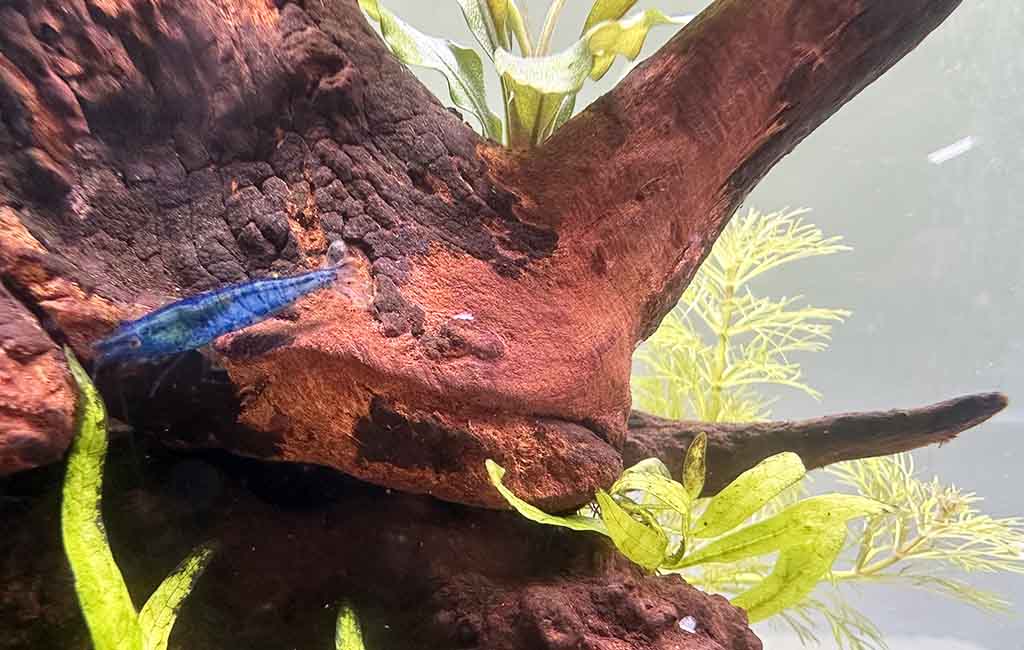
shrimp death
The Phenomenon of Shrimp Death
Shrimp death after a water change is a worrying thing. This often happens, especially with novices. The main reason is osmotic shock among shrimps. Some shrimps, especially freshwater shrimps, are sensitive. They balance the salt and other chemicals in their bodies according to the water pressure and its TDS. When a novice does a water change with varying parameters from the existing condition, it causes osmotic shock. This causes the shrimp’s death in the tank after a water change.
Moreover, a sudden change in water parameters also causes stress among freshwater shrimps. It raises the cortisol-equivalent hormone and suppresses immune function. This phenomenon leads to organ failure and causes shrimp death.
Common Timelines of Shrimp Death After a Water Change
Usually, understanding why shrimp die after changing water is crucial to learning the timeline and the possible reasons for shrimp death. Moreover, the severity level of the reason is also worth knowing. It will help you to save shrimp in the tank. Here is a timeline table for this purpose.
| Timeline After Water Change | Most Probable Reasons | Severity |
| 0 – 30 minutes | Severe osmotic shock | Critical |
| Temperature crash | ||
| Chlorine/chloramine poisoning | ||
| 1 – 6 hours | pH shock | Critical |
| Sudden GH/KH shift | ||
| Heavy metal contamination (copper) | ||
| 6 – 24 hours | Ammonia spike from disturbed substrate | Serious |
| Partial nitrogen cycle crash | ||
| 1 – 3 days | Bacterial bloom after microbiome disruption | Serious |
| Delayed osmotic stress | ||
| 3 – 7 days | Weakened immunity leading to secondary infection | Moderate |
| Lingering toxin exposure |
The Most Common Cause of Shrimp Death
Earlier, we discussed a few reasons for shrimp’s death in the tank, i.e., osmotic shock and sudden change in water parameters. Here are some other reasons that can cause shrimp to die.
Temperature Mismatch
If you are using cold tap water with a 4–5°F drop for water change in a warm tank, and vice versa. It sends a shock to shrimps. This temperature shock leads to a sudden death.
Untreated Chlorine and Chloramines
If you are using tap water, although it has the same temperature as the tank, it can also cause fish death. Usually, municipal tap water contains chlorine and chloramines to disinfect bacteria in the water. It is safe for humans, but these chemicals damage the shrimp’s gill tissue and kill beneficial bacteria in the tank.
pH and KH Swings
A sudden pH and KH swing also caused the shrimp’s death. It is harmful even within a safe range. It causes osmotic shock in shrimps. This case becomes even worse in varying carbonated hardness (KH) of the water.
GH and Mineral Content Differences
GH, or general hardness, counts the calcium and magnesium levels in water. These minerals are used in building shrimp’s shells and help in regulating other body functions. Adding soft RO water to a hard tank’s water or vice versa causes a failed osmoregulatory function. It causes a failed molt condition. Shrimps are unable to shed their shells properly, and they die trapped inside old shells.
Ammonia Spike
Sometimes the substrate, especially deep substrate, contains trapped organic matter. When vacuuming is done in the tank, it causes the release of hydrogen sulfide (H₂S) and ammonia in the tank’s water. Shrimps are sensitive to these chemicals, especially ammonia. Ammonia binds the shrimp’s gill tissues, and they die within a few hours due to suffocation.
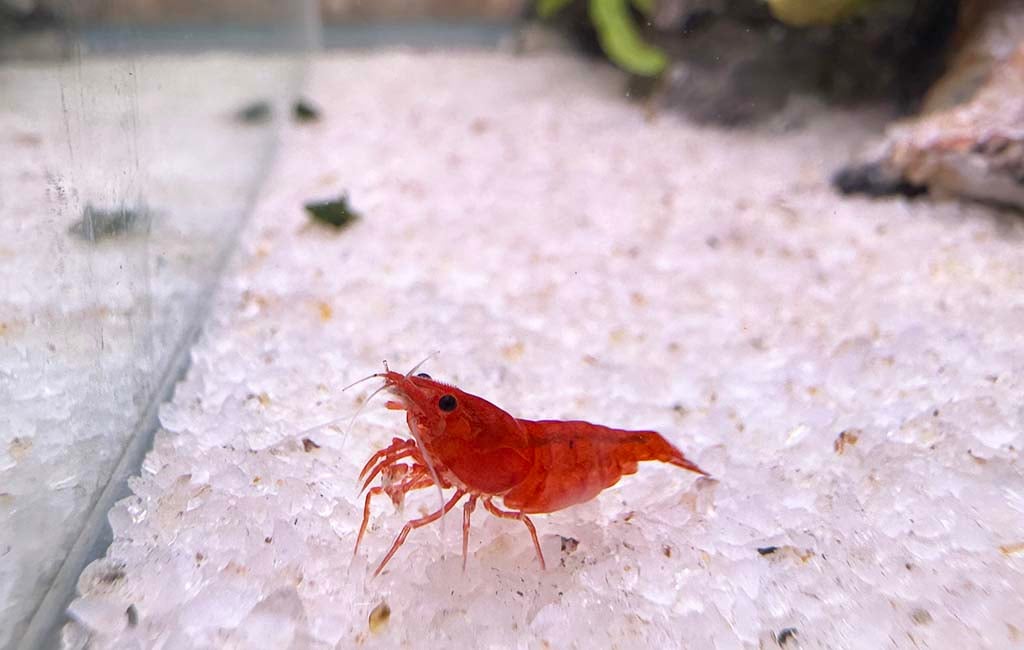
why shrimp death
Excessive Tank Cleaning Leads to Microbiome Collapse
Over-cleaning is one of the lead death among shrimp in a tank. An established tank contains a huge count of beneficial bacteria that control the nitrogen cycle. These bacteria convert ammonia to nitrite and then into nitrate up to a safe limit. Over-cleaning removes these bacteria from the tank and disturbs the nitrogen cycle.
Moreover, shrimps also depend on biofilm as it is a primary food source for shrimps. A biofilm contains a thin layer of bacteria, microalgae, and fungi. Especially, newborn shrimps feed only on this biofilm. Overcleaning causes disturbances in this food source and casue die of hunger.
Here are some places in a tank that hold these bacteria, and what happens when cleaning is done the wrong way.
| What You Overcleaned | What Happens if Done Wrong |
| Filter media | Beneficial bacteria die and lead to Ammonia spikes within 24–48 hours |
| Substrate (gravel) | H₂S and ammonia pockets are released, and then the shrimp’s gill damage |
| Tank glass | Biofilm stripped, and shrimplets begin to starve. In these conditions, shrimp also hide due to stress |
| Decorations | Surfactant residue and it cause a mass die-off within hours |
Diagnose the Specific Case of Your Shrimp
Establish a record sheet during water. It will help you to know the exact reasons for shrimp death in a tank. Fill this record sheet before and after a water change. Here is an example record sheet.
Example Record
| Date & Time | May 15, 2025 – 3:00 PM |
| Tank Size (gallons) | 10 gal |
| Volume Changed (%) | 15% |
| Water Source | Tap / RO / Remineralized |
| Tank Temp Before | 72°F |
| New Water Temp | 71°F |
| Tank pH Before / After | 7.0 / 7.2 |
| GH / KH (both) | GH 7, KH 4 |
| Ammonia / Nitrite | 0 ppm / 0 ppm |
| Dechlorinator Used? | Yes / No + product name |
| What Was Cleaned? | Front glass, spot-vacuumed |
| Shrimp Behavior After | Normal / Erratic / Hiding / Deaths |
In case of multiple deaths, cross-reference your record with the timeline table. The cross-referencing will help you to understand the cause of death. Once you find the reason, promptly address the issue.
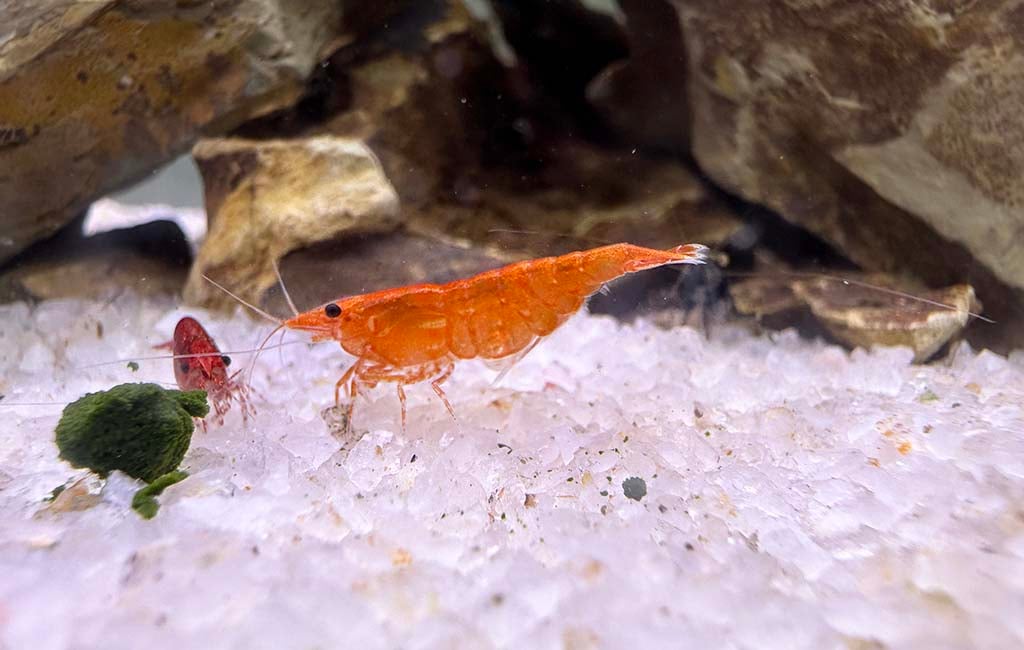
Prevention of shrimp death
Prevention Protocol
The following table will help you to understand the water changes in different tanks. You can use it as a prevention protocol for your tank.
| Tank Type | Recommended Frequency | Volume Per Change | Notes |
| Neocaridina (beginner, tap water) | Every 1–2 weeks | 10–15% | Match temperature |
| Dechlorinate | |||
| Drip acclimate the new batch | |||
| Caridina (RO + remineralized) | Every 7–10 days | 10% | Measure TDS before and after the water change |
| Keep TDS variation within ±10 ppm | |||
| Heavily planted, low bioload | Every 2–3 weeks | 10–20% | Requires dechlorinated water |
| It is less urgent | |||
| Plants absorb nitrates | |||
| New tank (under 3 months) | Every 5–7 days | 10% only | Cycle still establishing |
| Test ammonia every 48 hours | |||
| Overstocked or heavy feeder | Twice weekly | 10% per session | Two small changes are safer than one large one |
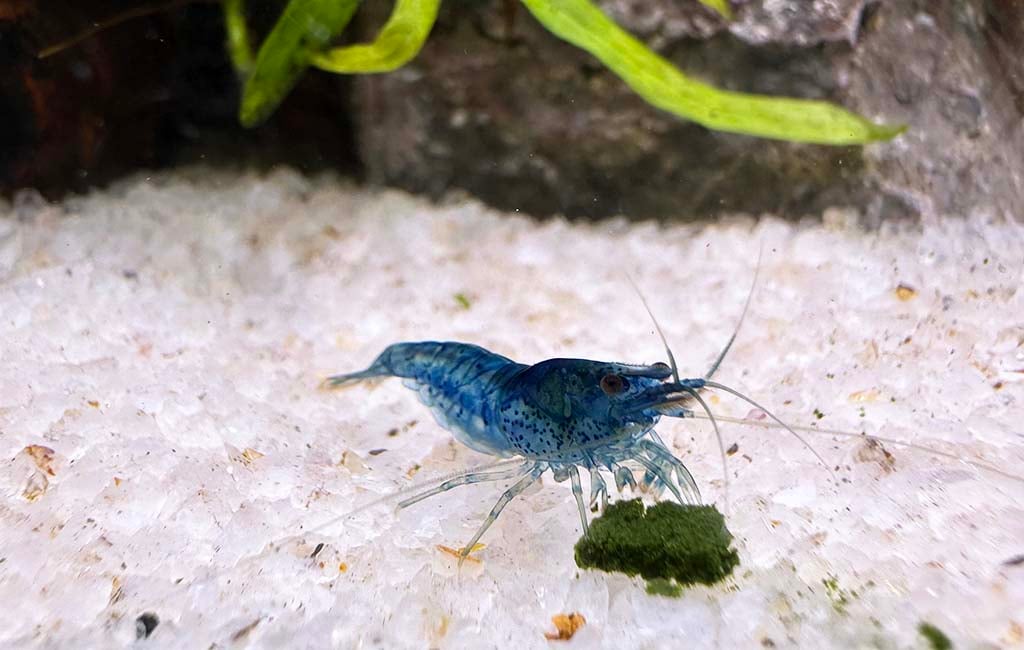
Improve your shrimp tank
Apply These Steps to Improve
- Before doing the water change, check the replenishing and being replenished water parameters. Try to match the replenishing water parameters with the established tank.
- Prepare the changing water in advance and leave it to mature for a while. It will help you to avoid shock among shrimps.
- Drip-acclimate the new water into the tank.
- Clean the substrate in batches. Never clean more than 25% substrate in one stretch.
- Clean filter media with the old tank’s water. Don’t use tap water, soap, or bleach to clean any biological filter media.
- Always use shrimp-safe mineral supplements in the tank.
- Closely watch the shrimp behavior for the first 6 hours after every water change. Healthy shrimps begin to eat within 30 to 60 minutes after a water change. After this time, if they are showing unusual behavior, i.e., hiding, sitting at the surface, or erratically swimming, test water parameters. Do a 10% water change with dechlorinated water. It will help to dilute any toxin in the water.
Related Products

Leave a comment