
Building a rainforest vivarium that actually looks and functions like a miniature ecosystem takes more than placing a few green plants inside a glass tank. The plant selection process determines whether the entire setup thrives or slowly deteriorates over weeks. Every species inside the enclosure competes for light, moisture, and root space, which means the choices made at the beginning carry long-term consequences.
Content Table
This article walks through everything from plant categories and selection criteria to proven plant combinations that work in real setups.
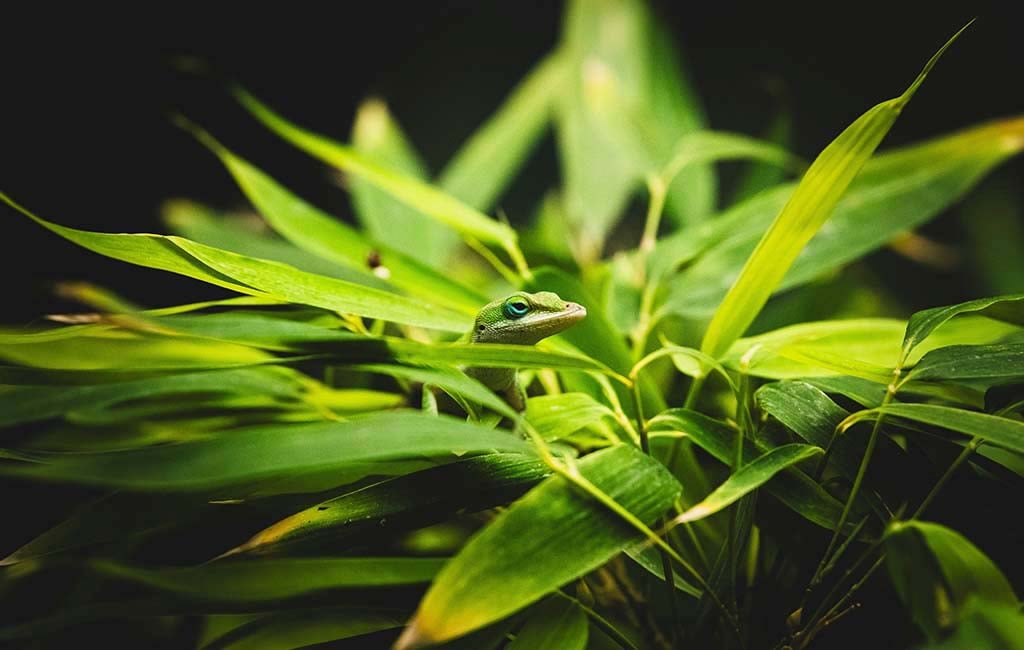
rainforest vivarium plant
What Are Plants for a Rainforest Vivarium?
Plants for a rainforest vivarium are living species selected specifically to survive and grow inside a closed or semi-closed glass enclosure that mimics tropical rainforest conditions. These are not standard houseplants placed in a tank and hoping for the best. They are chosen because they tolerate or actively prefer high humidity levels between 70 and 100 percent, low to moderate indirect light, warm, stable temperatures, and nutrient-lean substrates like ABG mix or coconut fiber-based soil.
The role of these plants goes beyond decoration. They regulate moisture through transpiration, provide microhabitats for dart frogs or other vivarium inhabitants, stabilize the substrate layer, and contribute to the biological cycling of nutrients inside the enclosure. A well-planted vivarium essentially becomes a functioning micro-ecosystem.
General Criteria for Choosing Rainforest Vivarium Plants
Not every tropical plant belongs in a vivarium. Several specific factors determine whether a species will perform well or become a problem over time.
- Humidity and Condensation Tolerance
Plants inside a rainforest vivarium experience near-constant moisture on their foliage. Species that develop fungal rot or leaf damage under high condensation, such as African violets, are poor candidates. Suitable plants have evolved in humid forest understories and handle wet foliage without issue.
- Light Requirements
Most vivarium setups use LED grow lights positioned above the enclosure. Plants near the bottom or in shaded corners receive significantly less light than those positioned at the top. Choosing species across a range of light tolerances ensures the entire tank stays planted effectively. Low-light species like Anubias or certain mosses fill shaded zones, while bromeliads handle brighter upper positions well.
- Root and Substrate Compatibility
Some plants produce extensive root systems that disrupt substrate layers or compete aggressively with neighboring species. Compact-rooted plants like miniature orchids or small ferns are far better suited to shared vivarium environments. The substrate itself, typically a drainage layer topped with a bioactive mix, should match the moisture retention needs of the selected species.
- Growth Rate and Maintenance
Fast-growing vines or ground covers can overwhelm a vivarium in a matter of months, requiring frequent trimming and replanting. Slow to moderate growers are generally preferred unless the design specifically incorporates a species for rapid coverage. Lower maintenance plants reduce disruption to vivarium inhabitants and preserve the aesthetic longer.
- Size at Maturity
A plant that reaches 60 centimeters at maturity has no place in a 30-centimeter-tall enclosure. Researching the mature size of each species before adding it prevents overcrowding problems that are difficult to correct without dismantling the entire setup.
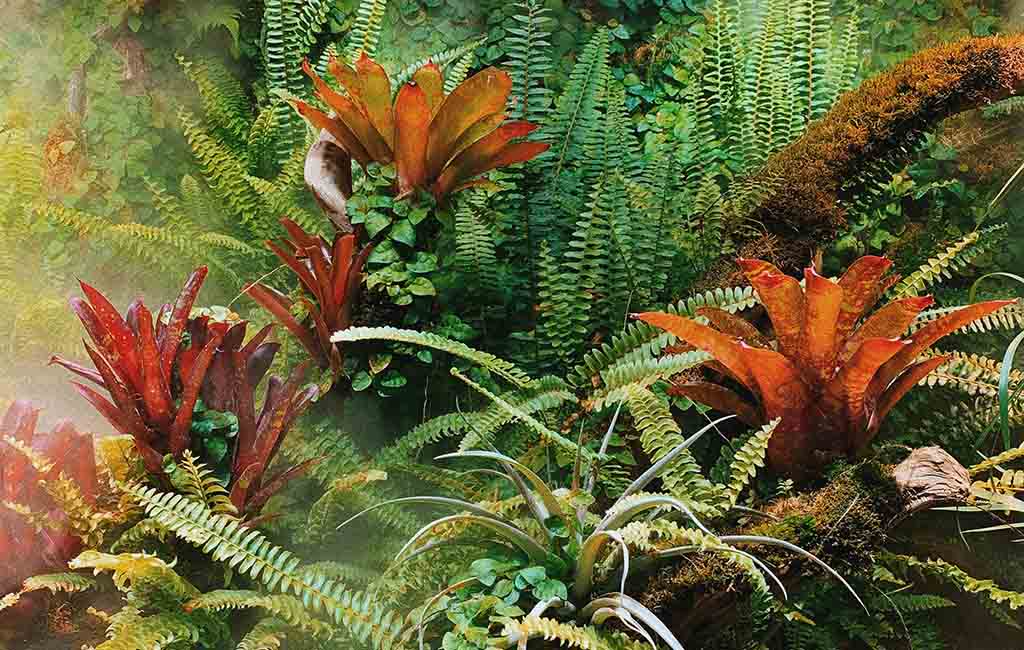
plant categories for rainforest vivarium
Plant Categories for Rainforest Vivarium
Understanding the main plant categories for rainforest vivarium setups makes it easier to build a balanced and visually layered design.
- Epiphytes: Plants like tillandsias, bromeliads, and certain orchids that grow on surfaces rather than in soil. They attach to cork bark, wood, or stone and absorb moisture from the air and surface condensation.
- Ground Cover Plants: Low-growing species that spread across the substrate surface, filling gaps and reducing exposed soil. Pearlwort (Sagina subulata) and certain mosses are common examples.
- Mosses: Probably the most versatile category. Sheet moss, cushion moss, and feather moss each offer different textures and work well covering background panels, substrate edges, and transition zones between hardscape and planting areas.
- Ferns: Small tropical ferns like Selaginella species or Maidenhair ferns add vertical texture and handle high humidity exceptionally well.
- Aroids: This broad family includes many small to medium species suited to vivarium life, including miniature Philodendron varieties and Monstera species kept compact through pruning.
- Carnivorous Plants: Nepenthes and certain sundew species can be incorporated into humid vivariums where they receive adequate airflow. They add structural interest and function naturally in these environments.
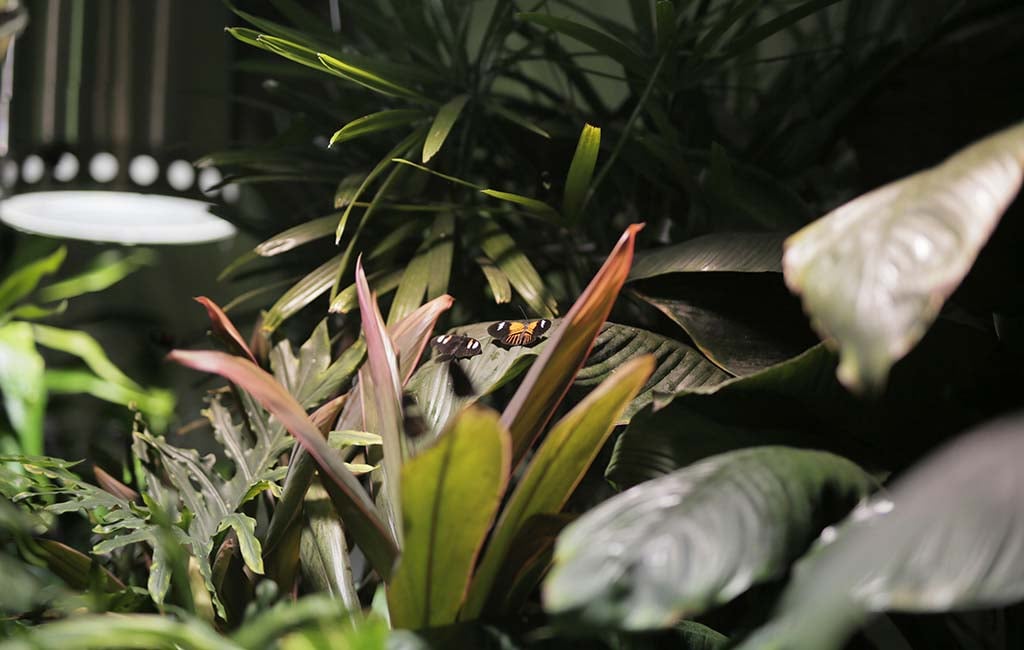
plants for a rainforest vivarium
First List of Plants for a Rainforest Vivarium
The following species are well-documented performers in rainforest vivarium setups, particularly for beginners establishing their first enclosure.
- Ficus pumila (Creeping Fig): A reliable ground cover and background climber that roots onto surfaces and spreads quickly. Best kept trimmed to prevent dominance.
- Pilea cadierei (Aluminum Plant): A compact, visually striking aroid-adjacent plant with silver-patterned leaves. Tolerates low light and high humidity without issue.
- Selaginella uncinata (Rainbow Moss): Despite the common name, this is a spikemoss rather than a true moss. It produces iridescent blue-green foliage and works exceptionally well as a ground-layer plant.
- Tillandsia ionantha: A small air plant that attaches to cork bark or branches, requires no substrate, and tolerates the humidity fluctuations inside vivariums better than many other tillandsia species.
- Peperomia rotundifolia (Trailing Jade): A thin-stemmed, small-leaved plant that drapes naturally over ledges and fills mid-level spaces without overtaking other species.
- Microsorum pteropus (Java Fern): Originally an aquatic species, it performs well in vivarium environments with consistent moisture and attaches to hardscape surfaces rather than requiring substrate planting.
- Marcgravia sp.: A climbing plant prized for its unusual spoon-shaped leaves and strong adhesion to vertical surfaces. It grows slowly enough to remain manageable.
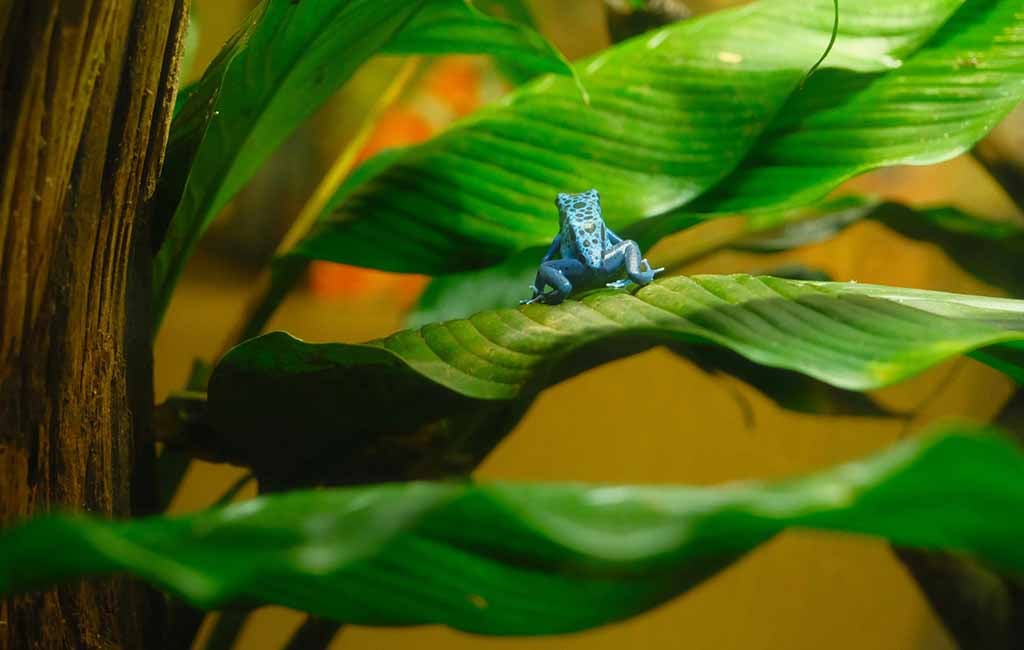
Recommended Rainforest Vivarium Plant
Recommended Rainforest Vivarium Plant Combinations
Rainforest vivarium plant combinations work best when they address different vertical zones, humidity tolerances, and growth rates simultaneously. Layering species across background, midground, and foreground positions creates depth and reduces competition.
Combination One: Naturalistic Forest Floor
Pair Selaginella uncinata as the ground cover with a mid-height fern like Adiantum raddianum, and mount a Tillandsia on the background panel. This combination covers three vertical zones, all of which prefer high humidity, and none of the three species will aggressively outcompete the others.
Combination Two: Aroid and Moss Setup
Use a sheet moss base across the substrate, add Peperomia rotundifolia trailing over a hardscape feature, and incorporate a compact Philodendron species at the back. The contrast in leaf size and texture creates visual interest while all three species thrive in similar environmental conditions.
Combination Three: Epiphyte-Heavy Design
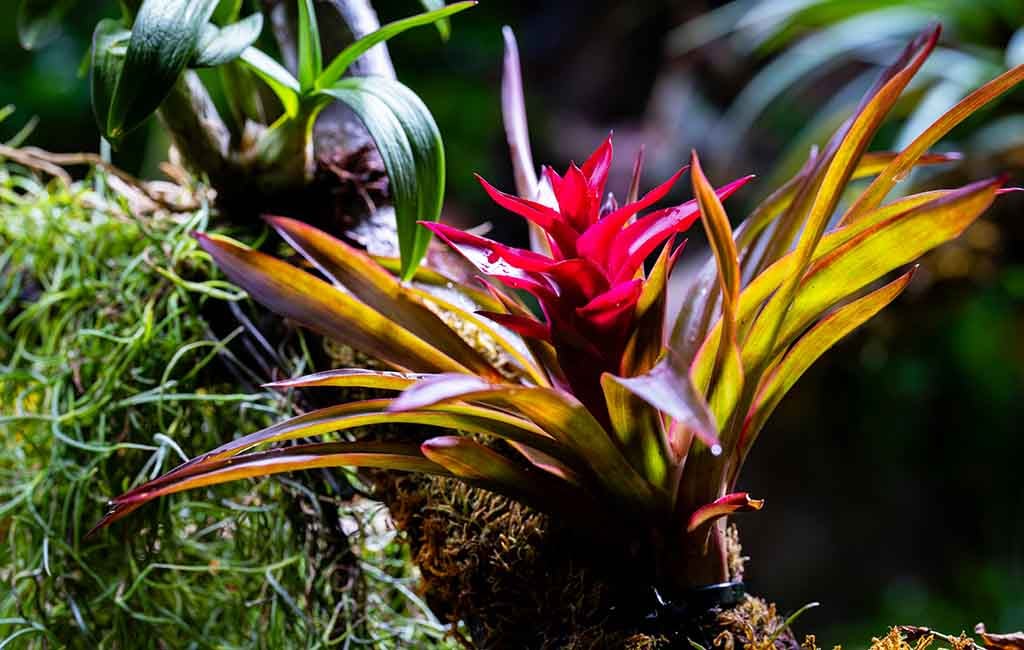
Mount several Tillandsia varieties and a small Neoregelia bromeliad onto cork panels at different heights. Use Ficus pumila to soften the lower edges of the hardscape and fill in the ground level with cushion moss. This combination suits vivariums housing small dart frogs because the bromeliads create water-holding cups that frogs use naturally.
Matching Plants to Your Vivarium
Matching Plants to Your Vivarium Style
The visual style of the vivarium should guide the final plant selection as much as the environmental requirements do.
- A biotope setupreplicating a specific region, such as the Amazon basin or Borneo lowlands, requires plants actually native to that region. Using a South American tillandsia alongside an Asian Marcgravia would break the biotope authenticity.
- A naturalistic designwithout strict biotope rules allows for mixing compatible species from different tropical regions as long as their care requirements align. This gives more creative freedom while still producing a cohesive look.
- A minimalist vivariumbenefits from one to three species chosen for contrasting textures rather than volume of planting. A single moss species, one epiphyte, and one ground cover can achieve a clean and deliberate aesthetic.
The Key to Success With Rainforest Vivarium Plants
The single most consistent factor in long-term vivarium success is matching every plant to the specific environmental parameters of the enclosure rather than selecting plants based on appearance alone. Temperature range, light intensity, humidity level, and substrate composition must align with what each species actually needs.
A rainforest vivarium plant that looks appealing in a supplier photo but requires conditions that the tank cannot provide will decline regardless of how carefully it is tended. Start with species that have established track records in vivarium keeping, build the right plant combinations from the beginning, and allow the ecosystem time to stabilize before making significant changes.
Related Products


Leave a comment