
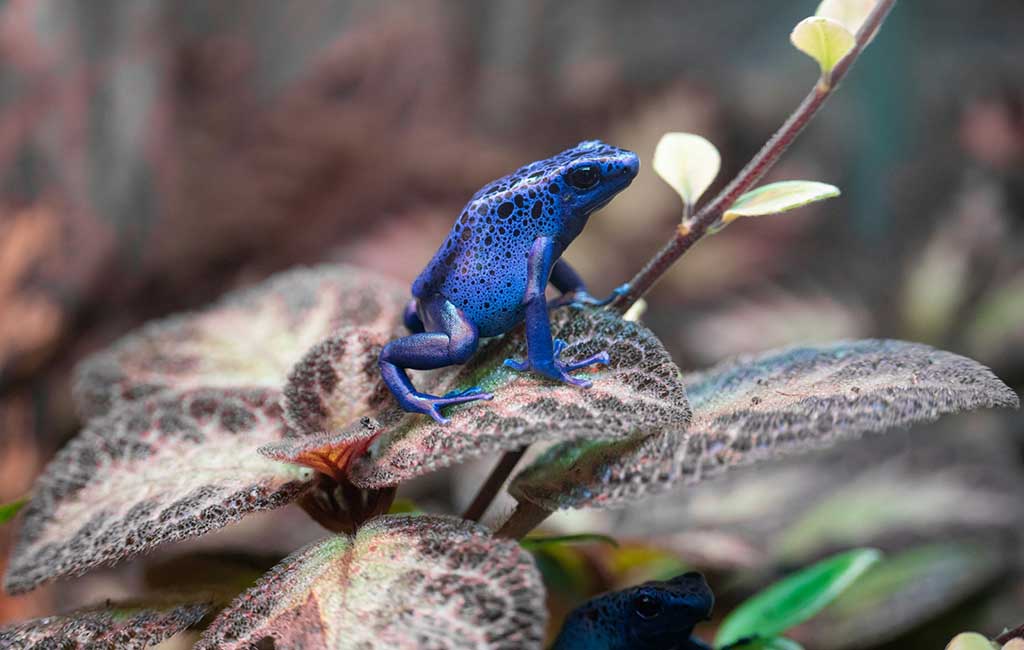
One of the colorful amphibians that you will ever come across is the dart frog. These tiny frogs are known for their bold, bright designs and add an ethnic flavor to a terrarium. They mostly inhabit rainforests in Central and South America, where they breed in the humid conditions. Dart frogs are beautiful animals, but they have unique needs and habits. In case you are wondering are dart frogs are good pets, or about their food, lighting, and care needs, this article will supply you with pertinent information.
Content Table
dart frog
Are Dart Frogs Good Pets?
Hobbyists who prefer to keep natural terrarium habitats often keep the dart frogs. Dart frogs, unlike conventional pets, have special needs in order to imitate their natural rainforest habitats. These are tiny and are usually between 0.5 to 2.5 inches in size, depending on the species. Captive-bred dart frogs would be entirely harmless to human beings, even though they have a reputation for being poisonous. The reason is that their toxicity is based on their wild food of ants, mites, and other small insects, which are not available in captivity.
Dart frogs are not very much of a pet, especially when it comes to behavior. They are more of aquarium fish, a type of fish that is to be observed but not touched. Their bold colors and their daytime habits make them perfect display animals. Dart frogs will make great providers when you like to build bioactive terrariums using living vegetation. But they are most appropriate to those experienced reptile and amphibian owners who are willing to invest in good setups.
What Do Poison Dart Frogs Eat?
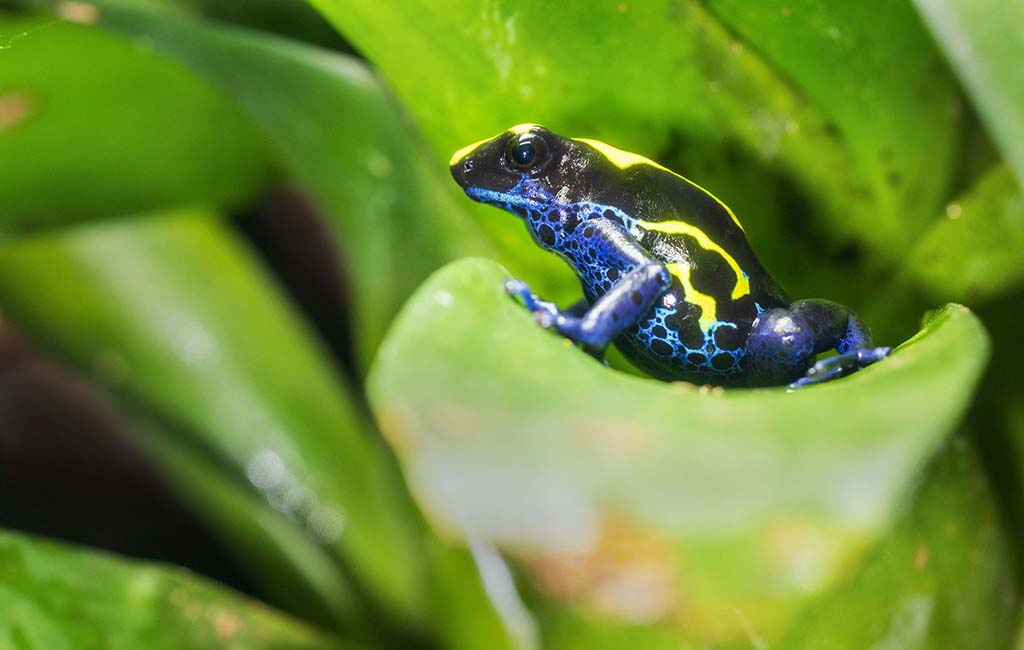
The diet of dart frogs is one of the factors that determines their health and survival. They are generalist predators that feed in the wild on a range of small insects, such as ants, mites, and termites. These food sources are alkaloid-rich, and the frogs transform them into toxins that make them poisonous. Because these insects cannot be kept in captivity, the pet dart frogs lose their toxin and thus can be kept in the home.
Dart frogs are generally fed fruit flies, springtails, pinhead crickets, and other small invertebrates in their terrarium environment. Fruit flies are often kept in large, living cultures so that they have an unlimited food source. Daily feeding is necessary, as dart frogs are high-metabolism reptiles and require regular feeding. Vitamins and calcium powders also come as supplements in order to avoid shortages.
It is important to give a diverse diet, as dart frogs are very active and use food to uphold the rich coloration they have. In a new keeper, flightless fruit flies are often the most convenient feeding system. They are small insects that are simple to rear, and dart frogs can be fed on them.
are dart frogs good pets
What Lighting Do Dart Frogs Need?
In captivity, lighting is important in ensuring the well-being of the dart frogs. Dart frogs exist in their wild rainforest environments in filtered sunlight, which is filtered through thick tree canopies. This produces a light ambiance that is soft and indirect and is conducive to both the frogs and the flora that surrounds them.
In terrarium designs, dart frogs need the same amount of light and shade. Natural conditions are frequently recreated using full-spectrum LED or fluorescent lights. These lights are also necessary to control the day-night cycle of the frog, but also to promote the growth of living plants inside the enclosure. Although dart frogs do not strictly require UVB light as do reptiles, a little UVB at low levels may help. It aids in the production of vitamin D3, which helps in the absorption of calcium and prevents bone problems.
It is advisable to keep the light and dark hours at approximately 12 hours each. Timers may be automated to maintain a constant cycle, and this will lessen the stress on the frogs. Also, misting of terrariums is recommended to keep the place very humid, since lighting is likely to dehydrate it.
How Many Dart Frogs Should Be Kept Together?
To keep dart frogs in a terrarium, one has to plan well to prevent congestion and stress. These frogs are territorial in nature, and the number of people you can keep, depending on the species, the tank size, and the ages. It is a good rule that beginners should begin with a small population of the same species in a large tank.
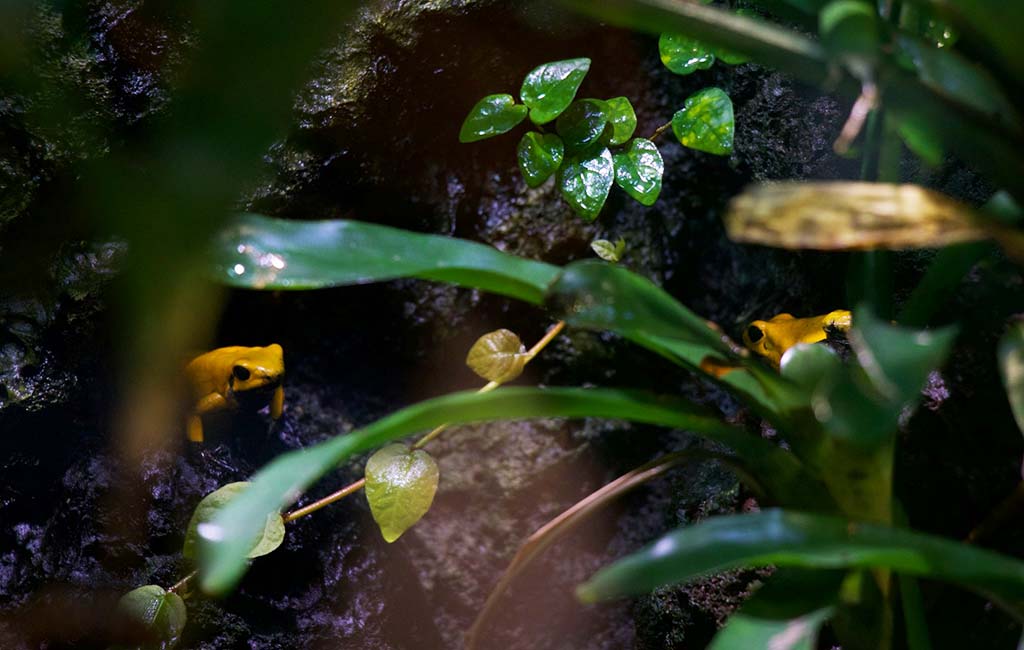
Approximately 10 gallons of space are needed by one dart frog as a rule. Another type of tank is a 20-gallon tank that can comfortably accommodate two or three; again, the species. Certain species of dart frogs, including Dendrobates tinctorius, are more violent and need to be housed in pairs. Others, such as Dendrobates auratus or Ranitomeya species, may exist in small groups provided there is sufficient space and concealment sites.
Age is also a variable that is significant in the stocking decisions. When young, frogs are more tolerant, but the aggressive behavior may grow as the frogs grow. Dense vegetation, hides, and several feeding spots are provided to minimize disputes over territories. Hybridization, stress, or even competition may occur in mixing up different species, which is not advisable.
what do poison dart frogs eat
Interesting Facts About Dart Frogs
Dart frogs are loaded with some interesting features that make them one of the outstanding amphibians. The following are just some of the facts that you might find interesting:
- Bright Colors as Warnings: They have bright patterns that alert predators that they are toxic in the wild. The colors act as a system of defense for nature and lower the number of attacks and survive.
- Incredible Parental Care: There are dart frogs that bring their tadpoles to water bodies on their backs. This incredible act complements the special tendering instincts of the amphibians.
- Small but Mighty: The golden poison dart frog is regarded as one of the most toxic animals. A single frog has enough toxins to have serious consequences for the predators.
- Diverse Species: More than 100 species are known, with different coloration and behavior. This variety makes dart frogs a popular amphibian among fans of amphibians all over the globe.
- Daytime Activity: Dart frogs do not sleep the day away like most amphibians; they can be fun to watch. People can see them and experience their constant movements.
- Long Lifespan: Dart frogs are able to survive 10 years or more in captivity, given proper care. Their bright colors and natural behaviors are determined by a healthy environment.
Poison Dart Frog Threats and Conservation
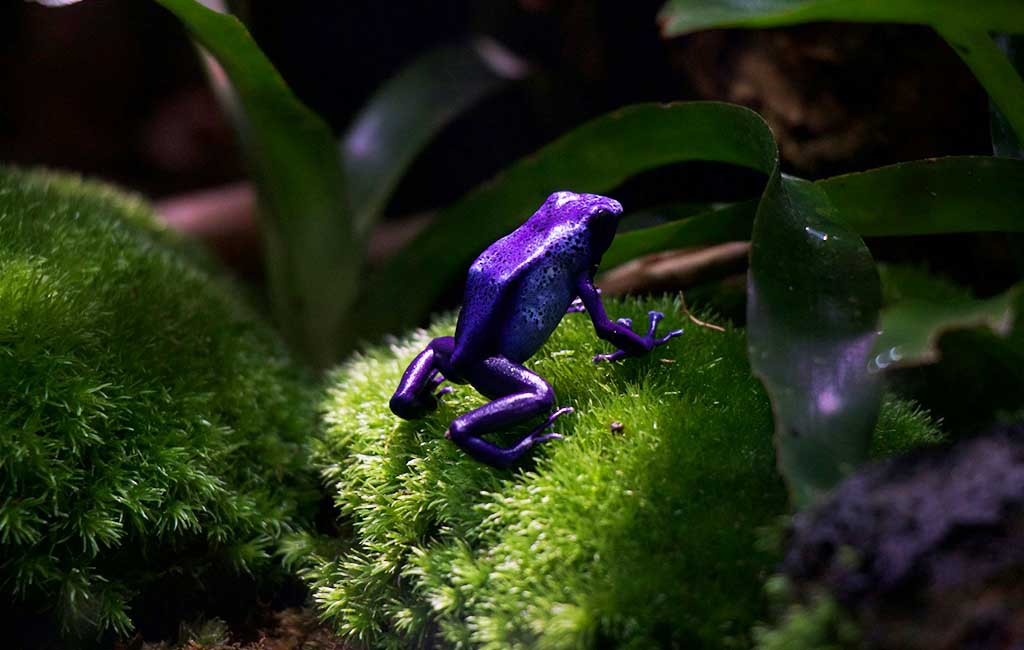
Dart frogs are highly threatened in their natural habitat, despite the fact that they are beautiful. Deforestation leads to habitat destruction, which is the most urgent problem as rainforests keep dwindling. Other causes have led to their decline, such as pollution, climate change, and illegal pet trade.
A second significant issue is that of chytrid fungus, which is a fatal infection of amphibians of global concern. The skin of the frogs is harmed by this fungus, and the skin is crucial to their breathing and water intake. Several dart frog species have already been wiped out by the disease, as some species have become nearly extinct.
There are conservation initiatives on dart frogs and their habitats. Intense wild collection can be reduced through captive breeding programs, and more hobbyists can easily obtain healthy captive-bred frogs. Organizations are also engaged in saving the habitats of rainforests and creating awareness about the conservation of amphibians. Your contribution to the survival of these amazing creatures will be facilitated by sponsoring these efforts.
poison dart frog
Summarizing the Key Insights
Dart frogs are unique amphibians, and they add color and life to the terrarium habitats. When their wild counterparts are poisonous because of their feeding habits, captive-bred dart frogs are harmless and good pets to maintain. They have special dietary needs, lighting, and stocking needs, so they can be seen as suitable for devoted hobbyists.
Knowing their behaviors and environmental requirements is very important in the development of a successful habitat. Dart frogs provide endless possibilities for learning and appreciation due to their amazing parental care, as well as their contribution to rainforest ecosystems. Nevertheless, conservation is reminding us of the threats that we are facing, e.g., the loss of habitat and disease.
Dart frogs are an excellent pet, but you must take the trip slowly and carefully. These colorful creatures should have a long and healthy life with proper care, and should serve as a window into the beauty of the rainforest to you.
Related Products




Leave a comment