
Many aquarists consistently seek innovative methods to enhance the beauty of their aquariums. A cascading waterfall effect is one of the most captivating and natural designs that can be added. Not only will this add to the aesthetic appearance of your tank, but it will also provide a relaxing and calming atmosphere for the fish and the audience.
Content Table
Aquarium waterfalls recreate the natural habitat, and many aquatic species are instinctive and would feel at home in such an environment. You will be enthralled with an artificial waterfall system or the natural one with trailing aquatic plants, seeing how things always turn out to be captivating.
This hygger guide will make you aware of the various types of aquarium waterfalls and the science behind the workings of a waterfall. And also build a step-by-step guide on how to build a cascade waterfall and place one in your home aquarium.

cascade waterfalls
What Is a Cascade Waterfall?
A cascade waterfall is the regulated movement of water, which seems to be flowing down in layers. The waterfall in nature would be as a result of the gravity that draws water from higher levels to lower levels. Aquarists achieve this effect in aquariums either mechanically with pumps or naturally with trailing aquatic plants.
The water is oxygenated in a cascading effect that provides a beautiful motion, which is enjoyed by the eye and the ear. Cascade waterfalls, in contrast to regular aquarium filters, are a feature of the aquarium that is created with aesthetic value in mind. And also, the effect that it creates is frequently a simulated miniature river, stream, or forest waterfall. These designs may be adapted to small tanks, medium aquariums, or even fancy planted aquascapes.
Types of Aquarium Waterfalls
Aquariums can be designed in diverse, distinct manners depending on the aspirations and tastes of the aquarist. Below are the main types used by aquascaping enthusiasts.
1. Pump-Driven Sand or Gravel Waterfalls
Waterfalls that are driven by pumps (in other words, powerheads) are pumped by air pumps to convey the water up. This circulation then enables sand, gravel, or any other substrates to fall, creating a waterfall illusion. It is common for the aquascapers who desire the realistic water motion effect without causing extreme turbulence to fish.
2. Foam Background Waterfalls
These waterfalls are formed by the incorporation of water channels into made foam or resin backgrounds. Water is pumped up and down smooth surfaces with ripples on them to imitate the cascade of rocks or cliffs. These backgrounds are used by many aquascapers in paludariums, where some portion of the scenery consists of both terrestrial and aquatic sections.

aquarium waterfall
3. Plant-Based Cascading Waterfalls
This form entails the employment of trailing water plants like the Bacopa caroliniana, Rotala plants, or creeping moss. When the plants are planted close at hand, they fall, forming a natural waterfall of green leaves. The technique pays more attention to the growth of the plants and the aesthetic appeal of the design instead of the mechanical water circulation.
4. Hybrid Waterfalls
Plant cascades are sometimes used together with pump-driven water flow to produce a dramatic effect by some aquarists. As an example, you can use moss-topped rocks that permit the water to pass slowly over them, and also, you can have creeping plants flowing downwards naturally. This gives a three-dimensional effect that resembles the rainforest streams.
Fish Tank Waterfall Effect
The fish tank waterfall effect is a name that is used to refer to water or plant cascades. A water-based effect typically entails a pump-driven system that produces an endless down-flow, imitating streams and miniature falls. Such a design enhances the circulation of water, improves oxygen, and makes a soothing sound.
Conversely, a vegetative effect is based on trailing plants, which resemble the image of a waterfall. Plants are not able to imitate the movement of water, but the natural growth pattern gives a perception of falling leaves. The two methods enrich aquascaping with a combination of both practical and aesthetic properties. Different fish react in various ways, according to the type: some prefer to swim in the flowing waters, others like to hide in the trailing vegetation.
In designing your waterfall effect, you have to consider your tank species. For your example, bettas like calmer water. Hence, a plant cascade could be more suitable. On the contrary, the danios or barbs prefer the fun of running currents, so cascades pump-driven are more appropriate.
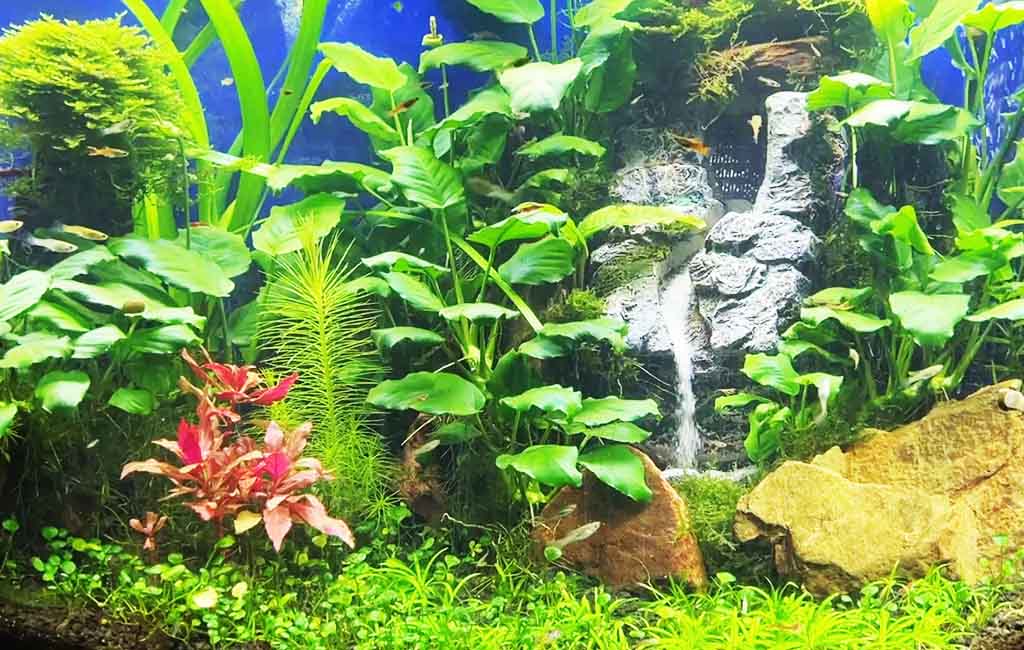
cascading waterfall
Creating a Cascading Aquatic Trailing Plants Waterfall Aquarium
A cascading trailing plant waterfall aquarium depends on the proper choice and location of plants. These waterfalls are purely vegetation-based and do not involve the use of mechanical pumps in order to produce the effect of flowing.
- Begin with the selection of plants that have trailing or creeping growth habits. Common ones, such as creeping Jenny (Lysimachia nummularia), pearl weed (Hemianthus micranthemoides), Bacopa monnieri, and mosses such as Taxiphyllum barbieri, are popular.
- Group hardscape features on elevated surfaces (e.g, rocks or driftwood). Put trailing plants on the highest part of these structures such that as they grow, they hang down in cascades of growth.
- The use of lighting and the balance of nutrients are very important in ensuring that the trailing effect is lush. Powerful aquarium lighting guarantees the growth of plants in a compact and colorful form.
- In the meantime, regular fertilization and CO2 enrichment are used to avoid the problem of the leggy growth that can destroy the effect of the waterfall. Frequent clipping also keeps it in a cascading form.
This kind of waterfall construction is especially efficient in aquascapes that are designed to resemble a mountain stream or a jungle riverbank.
Placed alongside background plants, midground structures, and carpeting species, a plant waterfall will give the aquascape depth and motion without disturbing the fish.
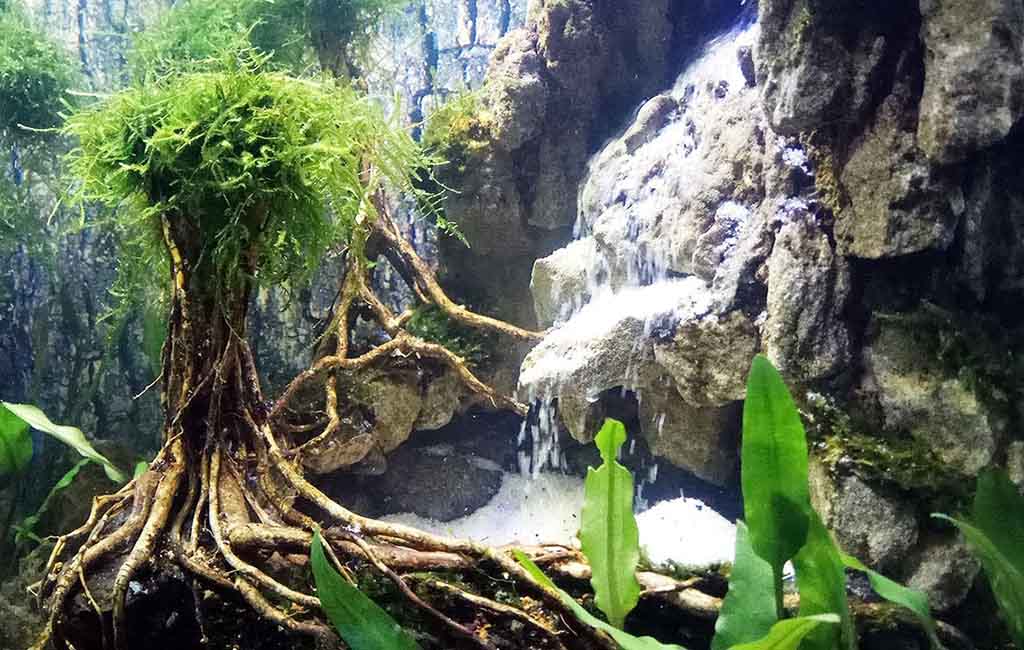
how to build a cascade waterfall
How to Build a Waterfall Inside a Fish Tank
It takes effective planning and specific installation to develop a successful waterfall in a fish tank. The following are stepwise directions for constructing a pump-driven running waterfall system.
Step 1: Plan the Design
Sketch your tank layout, including hardscape placement, waterfall structure, and flow direction. Decide on the location of the waterfall (at the center, in a corner, or on the back wall of the tank). Planning would avoid congestion and make sure your waterfall is incorporated into the natural places of plants and fish.
Step 2: Gather Materials
An air pump or a small water pump, tubing, substrate (sand or gravel), filter sponge, and some decorative pieces (rocks or driftwood) will be required. Make sure that all the materials used are not harmful to the aquarium and that they do not release harmful substances to the water.
Step 3: Build the Structure
Prepare a high platform out of rocks, foam backgrounds, or piles of driftwood. This construction will act as a hosting point where the water will fall. Attach the base with adhesives that are aquarium safe so that it will not collapse or be unstable.
Step 4: Install the Pump System
Install the pump or air-driven system at the foundation of your building. Install piping that will channel the water to the top and release it there on the waterfall. Tilts the outflow to allow the water to fall down naturally over the rocks or rough surfaces.
Step 5: Conceal Tubing and Hardware
Cover tubing and equipment with plants, mosses, or other rocks. This measure improves the appearance of the aquarium as it is natural, and it eliminates the interaction between the mechanisms and the fish.
Step 6: Test and Adjust Flow
Switch on the pump and watch the flow of water. Vary the flow rate to make the cascade appear natural without resulting in too much turbulence. Excessive current may overpower the fish, and insufficient current may destroy the effect of the waterfall.
Step 7: Add Plants and Decorations
Plant species around the waterfall structure using moss or trailing plants, or carpeting. This increases the perception of a natural setting and promotes the biological filtration. The artificial structures are also made soft using plants that blend into the aquascape.
Step 8: Maintain the System
Regularly wash pump filters in order to avoid clogging. Prune plants to ensure growth and shape. Follow up on the behavior of fish to make sure that the waterfall does not interfere with their natural behavior. Your waterfall can be left without dropping after years with proper care to keep on beautifying your aquarium.

Waterfall effect for fish tank
Summarizing the Key Insights
It is pleasurable to design a waterfall effect in your aquarium, as well as beautiful. Aquarists have the option of pumped waterfalls, foam-driven backgrounds, trailing waterfalls which are made of plants, or combined systems. The advantages of each type are different, such as better oxygenation and naturalistic design.
The waterfall effect on the fish tank may mean either running water or a cascading flora, depending on the style of your choice. Plant-based falls involve species that have creeping or trailing habits to simulate the look of natural falls. Waterfalls are recreated with pumping to provide sound and movement, and the addition of more water.
The waterfall construction in your tank takes appropriate planning, the use of safe materials, and proper implementation. An aquarium can be a miniature ecosystem that replicates the most beautiful aspects of nature with proper design. It is up to you to decide between cascading plants and flowing water. But either way will add depth to your aquascape and provide a relaxing atmosphere to both fish and audience.
Related Products



Leave a comment