
If you see a fish forming bubbles, and these bubbles are bonding together at the water surface. You are observing one of the most fascinating natural processes. These fish are known as bubble nest builders. This article is dedicated to these builders. You will learn about their introduction, characteristics, and when and why Fish make bubble nests.
Content Table
Moreover, a list of bubble-nest-building fish with brief overviews is included in this article. Moreover, how to identify the true bubble nest and whether it needs to intervene during the process are also interesting topics. To learn about them, scroll down the page.
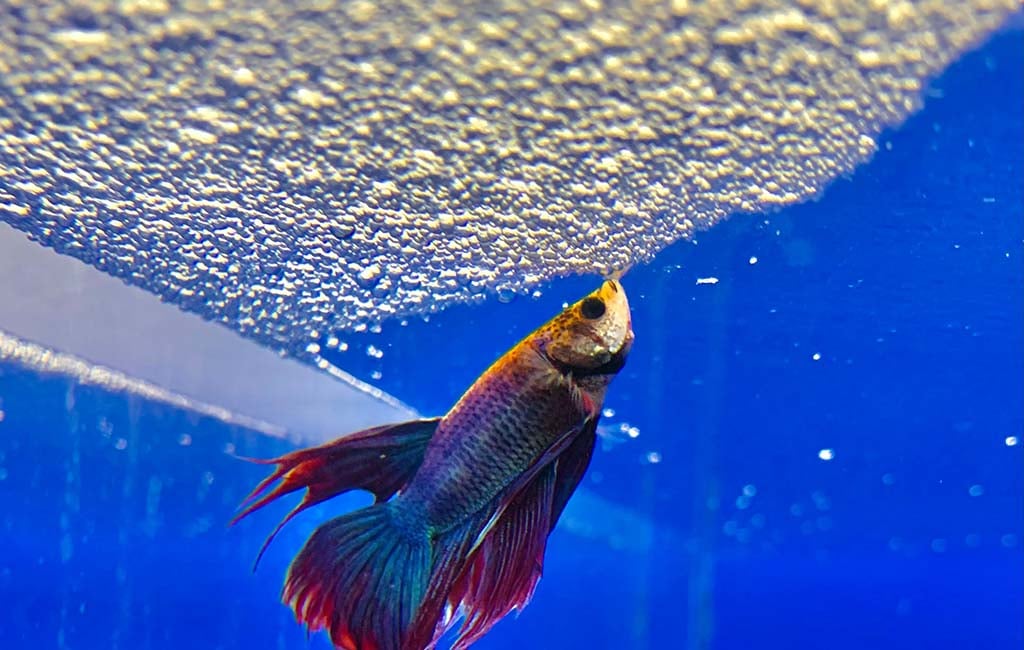
Fish make bubble nests
What Are Aquarium Bubblenest Builders
Bubble nest builders are a group of freshwater fish that build mucus-coated bubbles in tight formation, which usually float at the water surface. These small sticky bubbles stick together and form a nursery on the water surface. A bubble nest appears foamy and dome-shaped. These are a safe house for fish eggs. These nest-building fish put their eggs in these bubble nests instead of laying on rocks or plants. Eggs hatch inside these bubbles and fry spend their early days there.
Mostly bubble nest builders belong to a group commonly known as labyrinth fish, and they are males. These fish have a unique organ in their lungs, a labyrinth organ, to form bubbles. This organ helps in taking in air directly from the water surface. As a result, they are able to blow mucus-covered bubbles.
Characteristics
Here are some characteristics of aquarium bubble nest builders.
- These labyrinth fish often swim near the water surface to gulp air.
- Males guard these bubble nurseries during the breeding season.
- Labyrinth males have more striking colors than females.
- They can live in lower oxygen conditions in the tank.
- Natively, they are distributed around the slow-moving and warm waters of Southeast Asia and some parts of the African continent.
Why Do Fish Build Bubble Nests?
The core purpose of bubble nests is reproduction and protecting the young. Naturally, these fish live in shallow, warm, and murky water conditions. In such conditions, if they lay eggs at the bottom, several issues will occur.
- Predators will eat these eggs.
- Young ones will not survive due to low-oxygen conditions.
In floating bubble nests, fry will survive against the predators and will not suffocate due to low-oxygen conditions.
These bubble nests are strong and longer-lasting than ordinary bubbles. When males release the bubble, they are covered with saliva that makes the bubbles strong and helps them to stick together. Male fish release these bubbles in a tight formation, which makes binding easier.
Does A Bubble Nest Mean a Fish Is Happy?
Yes, when a male fish builds bubble nests, it largely means that they are happy. It indicates that fish are healthy and ready to reproduce. Moreover, it also informs about the optimal water parameters, temperature, and low-stress level in the tank. In short, you can consider your tank to be fully functional, and the fish are in optimal health conditions.
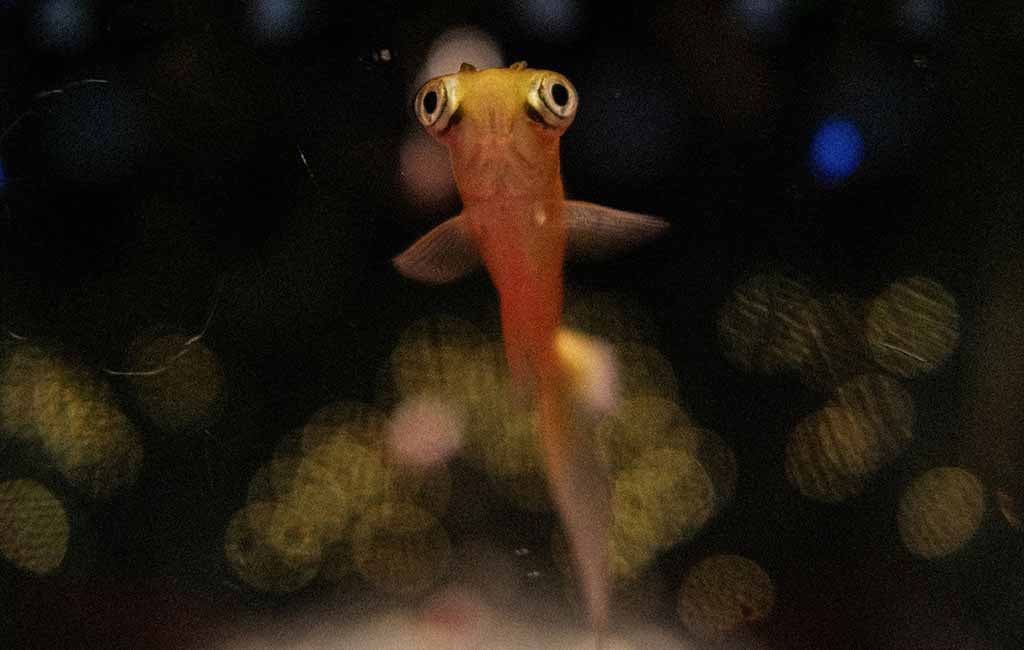
nest-building fish
When Will Fish Build a Bubble Nest?
Bubble nest building is not a common scenario that occurs daily. It happens due to certain environmental and biological triggers. It will help you to develop the right conditions in your tank for breeding. Moreover, it will also help you to understand the fish’s behavior. A fish starts building bubble nests at the age of sexual maturity, which lies between 3 and 6 months.
Key Triggering Factors
- Warm water, i.e., 76–82°F, is the most reliable trigger for fish to build bubble nests. In cold water, fish lose this instinct.
- Males build these nests on seeing or smelling the female partner. Males can smell female fish even though there is a divider in the tank. It is another great accelerator for this process.
- Optimal water conditions, i.e., stable pH (6.0–7.5 for most species) and soft-to-moderate water hardness, help to trigger this phenomenon.
- Absence of aggressive tank mates and low surface agitation also trigger the bubble nest building instinct.
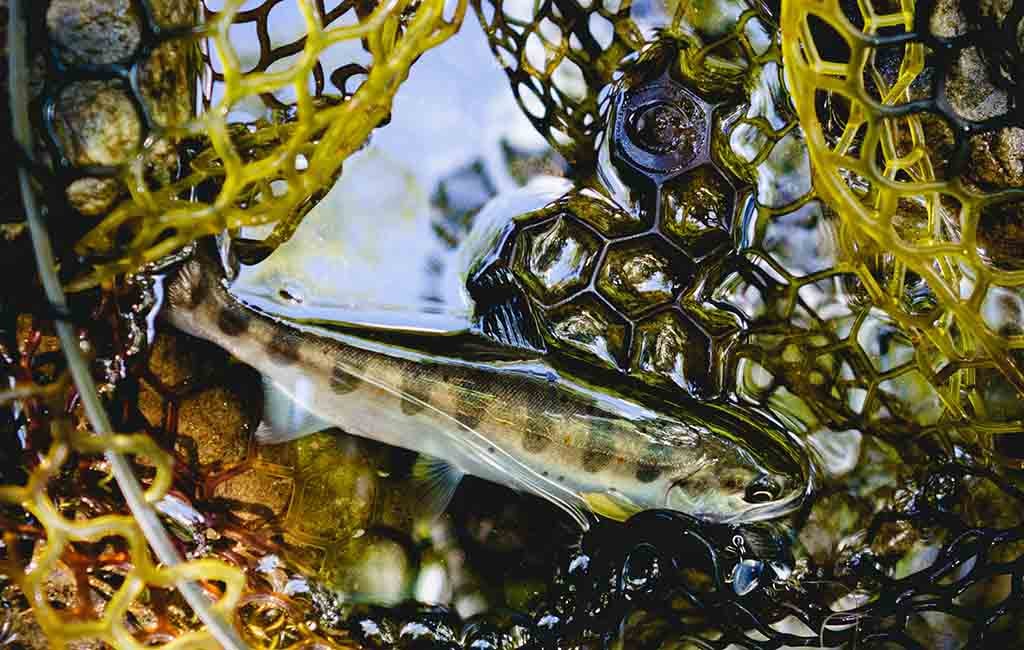
fish building a bubble nest
Common Bubble Nest Builder Fish
Several fish species build bubble nests. However, some of them are more common and well-known for this behavior. Here is a list of common fish with a brief overview.
| Fish Species | Scientific Name | Tank Size (gallon) | Temp (°F) | Difficulty | Notes |
| Siamese Fighting Fish (Betta) | Betta splendens | 5+ | 76 – 82 | Easy | Well-known |
| Keep males alone | |||||
| Pearl Gourami | Trichopodus leerii | 30+ | 77 – 82 | Easy | Peaceful |
| Builds large and elaborate nests with plant material
|
|||||
| Dwarf Gourami | Trichogaster lalius | 10+ | 72 – 82 | Easy | Compact and colorful |
| Vulnerable to Dwarf Gourami Iridovirus | |||||
| Honey Gourami | Trichogaster chuna | 10+ | 72 – 82 | Easy | Peaceful |
| Suitable for community tanks | |||||
| Sparkling Gourami | Trichopsis pumila | 5+ | 75 – 82 | Medium | Tiny |
| Builds nests in caves and under leaves | |||||
| Chocolate Gourami | Sphaerichthys osphromenoides | 20+ | 77 – 86 | Hard | Sensitive to water quality |
| Requires very soft and acidic water conditions | |||||
| Paradise Fish | Macropodus opercularis | 20+ | 61- 79 | Medium | Hardy |
| Among the earliest ornamental fish | |||||
| Blue Gourami | Trichopodus trichopterus | 20+ | 73 – 82 | Easy | Active builder |
| Semi-aggressive toward other fish of the same species |
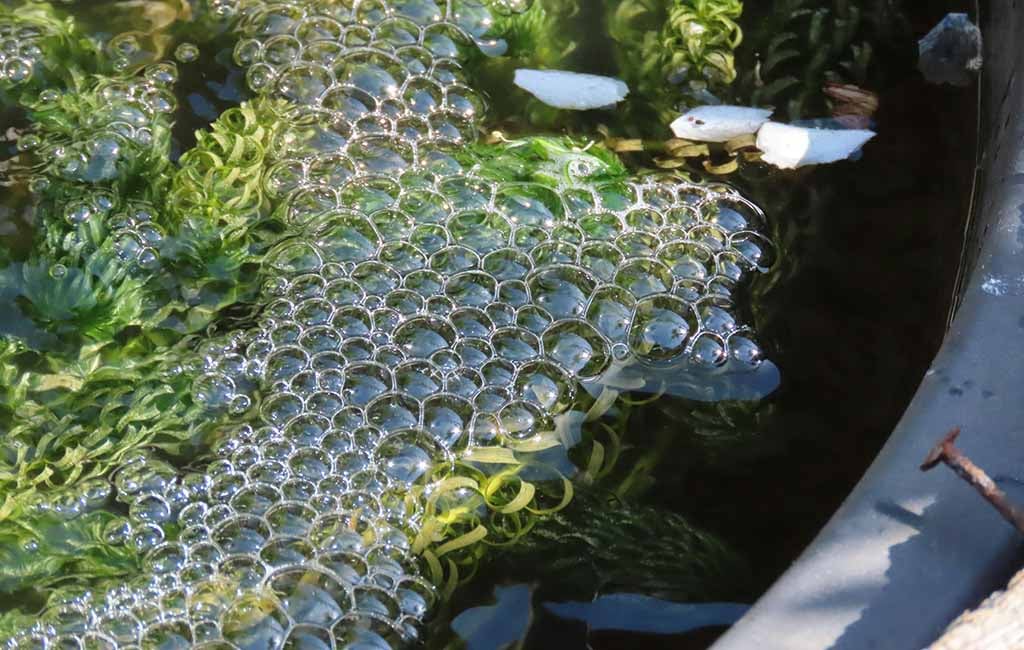
bubble nest builders
How to Identify Nest Buildings?
Bubble nests are foamy and bulging material at the water surface. Sometimes, they are confused with soap residue, protein buildup due to overfeeding, or some type of algae. Therefore, it is necessary to clearly differentiate between a real bubble nest and what it apparently looks like.
Here is how to identify a nest building.
Location
Bubble nests usually are at corners, near floating plants, or under a leaf.
Cluster Shape
Bubble nests are tight, dome-shaped, and evenly-sized bubbles.
Active Guarding
Male fish live under the bubble nests or repeatedly visit to guard this formation.
Durability
Bubble nests are spit-coated and long-lasting. If you see the tight dome-shaped cluster formation, which lasts for several hours or a full day, it means that this formation is a bubble nest.
Soap Or Protein Foam
Usually, the bubble nest’s formation due to soap or protein foam is fragile, thin, and oily-looking. It usually disappears after a few hours.
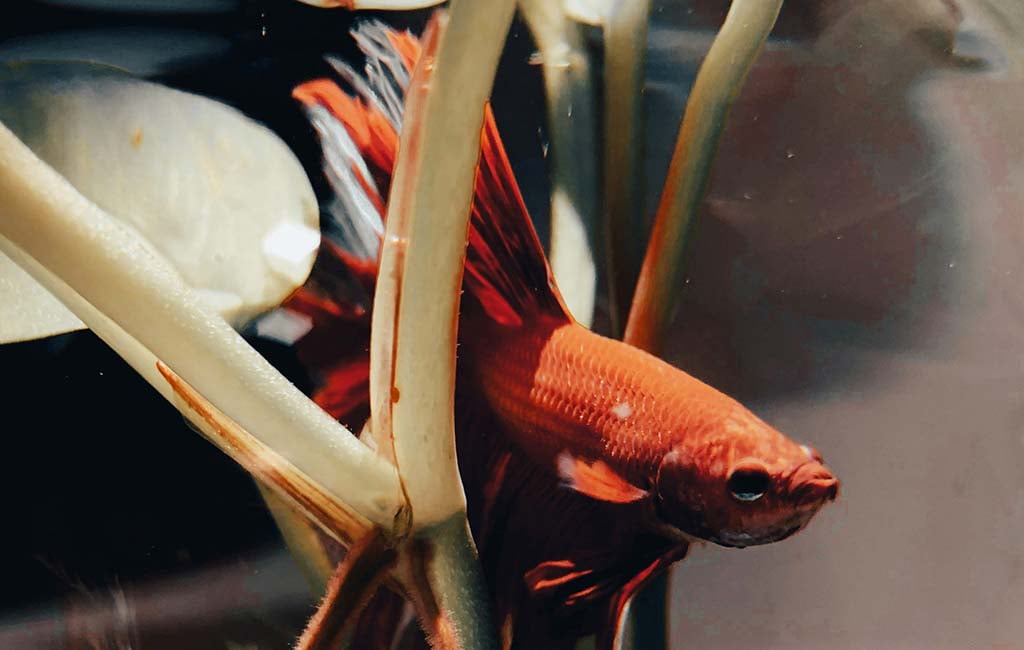
bubble nest builder fish
Does It Need to Intervene When Fish Are Building a Bubble Nest
There is no single answer to this question. The answers vary from situation to situation. Here are different situations, what’s going on, and whether you should intervene.
| Situation | What’s Happening | Should You Intervene? |
| The male builds a nest in the absence of the female. | It is a normal instinctive behavior | No action needed. |
| Fish is healthy and comfortable | ||
| Eggs appear in the nest | Breeding has occurred; | Do you need action: Yes
Reason: Remove the female to a separate tank. It will help to prevent aggression toward her. |
| The male will actively guard eggs. | ||
| The male attacks the female repeatedly. | Male bettas become aggressive during the post-spawning period. | Do you need action: Yes
Reason: immediately remove the female for the sake of protection. |
| Nest keeps collapsing | Too much water surface movement from the filter | Do you need action: Yes
Actions: Reduce filter flow Reason: add a floating cover to protect the nest area. |
| Not breeding but want fry | There are no ideal spawning conditions. | Do you need action: Yes
Action Detail: ● Gradually raise the temperature ● Do a small water change ● introduce a visual of a female. |
| Fry appear and fall from the nest | Newborn fry often fall, but the male retrieves them | Do you need action: No Reason: Let the male fish do his job for the first 3 to 5 days. |
| A male eats eggs or fry | Stress-related or first-time parent behavior | Do you need action: Yes
Action: Remove male if it is persistently eating or transfer fry to a grow-out tank. |
Start Observing
Bubble nests are unique and fascinating. It is more fascinating to see a fish building a bubble nest in your tank. Bubble-nest-builder fish build these structures to protect their eggs and fry for the first few days. Moreover, it also means male fish are healthy, water conditions are optimal, and they are ready to reproduce. Betta, Pearl Gourami, Dwarf Gourami, etc., are some examples of bubble nest builder fish. Clearly differentiate between bubble nests and other similar structures. Now take the initiative, look at them with a clear head, and decide whether you need action or not.
Related Products



Leave a comment