
Aquatic plants add to the storm of life in your aquarium. The Echinodorus quadricostatus often catches people’s eyes with its cover of greenery and special flowers. Most aquarists are surprised when this green plant produces delicate white flowers under the right conditions. This article will focus on this unique Echinodorus quadricostatus, including how it is related to other animals in tanks and how to help it blossom in your aquarium.
Content Table
Echinodorus Quadricostatus and Its Family
Scientific Classification:
- Family: Alismataceae
- Genus : Echinodorus
- Species: E.quadricostatus
- Common Name: Dwarf Sword Plant
Echinodorus quadricostatus is a simple plant from the Alismataceae family that plays a big role in aquariums. This family consists of many water and semi-water plants commonly seen in wet and shallow freshwater areas. This caterpillar originates from South and Central America, specifically Brazil, Peru, and some sections of Mexico. The plant prefers calm rivers, ponds, and marsh areas, where it can live below the surface as well as above it, based on the season.
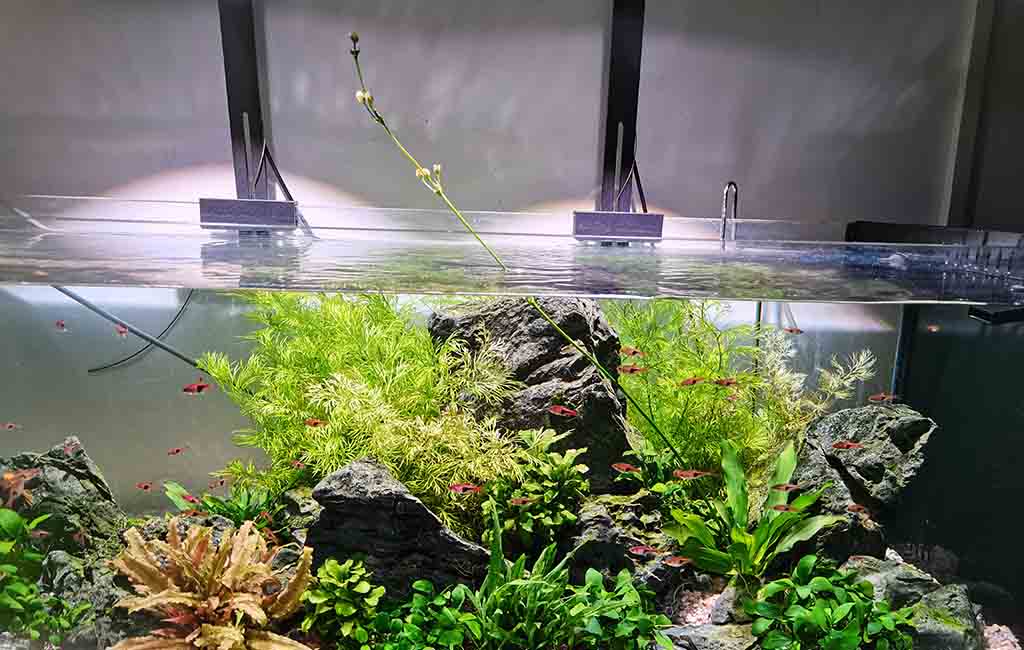
Echinodorus quadricostatus
Unique Characteristics:
- Size: Grows 5–10 cm tall, perfect for foreground planting
- Leaves: Bright green, lanceolate, often arching outward
- Growth Habit: Propagates via runners, spreading horizontally to form a carpet
- Light Sensitivity: More compact and lush in higher light conditions
- Temperature Range: 72–82°F (22–28°C)
Although E. quadricostatus looks much like the E. tenellus sword plant, it is generally smaller and a better choice for carpeting the front regions of nano aquariums or large aquascapes. They are resilient, enjoy the different environments provided in aquariums. A lot of aquascaping enthusiasts appreciate them for how they look and how quickly they form a carpet in aquariums.
Will Echinodorus Quadricostatus Bloom?
Even though it is rare, Echinodorus quadricostatus has been known to bloom in aquariums. Normally, plants flower after part of them comes out of the water, but with the correct tank conditions, some will flower even while still submerged.
Blooming Conditions
- Emersed vs. Submerged:
- In emersed growth, flowering is more common and natural.
- In submerged tanks, flowering is rare but possible with high light and nutrient levels.
- Time to Flower:
The plant may start developing a flower stalk 3 to 6 months after being planted, provided it’s healthy and growing vigorously. - Flower Appearance and Lifespan:
The flowers are small, star-shaped, and white with yellow centers. They typically bloom at the top of a vertical stalk.- Each flower lasts 1–2 days.
- Stalks may continue to produce successive blooms for about a week.
Though the flowers are tiny and short-lived, they are visually striking and a rewarding sight for dedicated aquarists.
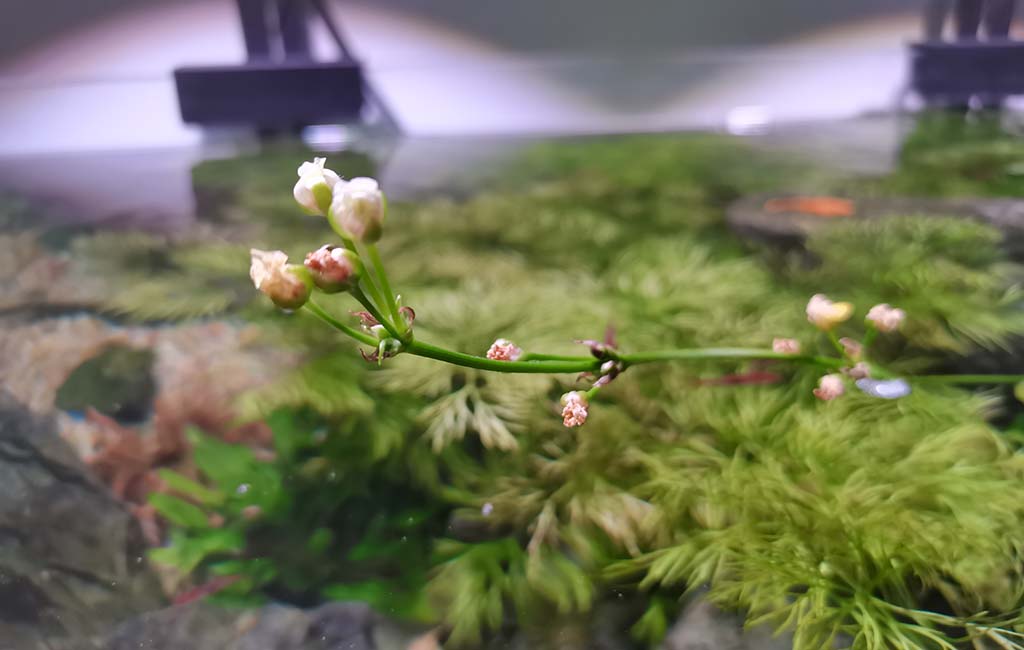
Echinodorus quadricostatus bloom
How To Make Echinodorus Quadricostatus Flower In Your Tank
If you’re determined to coax a bloom out of your Echinodorus quadricostatus, here’s a step-by-step method to follow:
Step 1: Optimize Lighting Conditions
This plant grows well under moderate to highlight (PAR 50–80). Employ LED lights that have the same light spectrum as sunlight to support plant photosynthesis. This helps your plants develop enough energy to flower.
- Photoperiod–10 hours/day
- Type of Light: Full-spectrum LEDs or T5 fluorescents
- Positioning: Ensure light reaches the plant without obstruction
Step 2: Use Nutrient-Rich Substrate
Storing energy and flowering require nutrients in plants. If you are using inert substrates, apply root tabs about every two or three months.
- Macronutrients: Nitrogen (N), Phosphorus (P), Potassium (K)
- Micronutrients: Iron, Magnesium, Manganese, and Zinc
Look for signs of deficiency—yellowing leaves or slow growth can hinder flowering.
Step 3: Maintain Stable Water Parameters
Consistency is key. Echinodorus plants thrive when water conditions remain stable:
- Temperature: 75–82°F (24–28°C)
- pH Level: 5–7.5
- Water Hardness: Soft to moderately hard (3–8 dKH)
- CO₂ Supplementation: Optional, but helps in submerged setups
Avoid sudden temperature drops or fluctuations in pH, as these stress the plant and delay flowering.
Step 4: Encourage Emergent Growth
This is the most reliable way to induce blooming. Use a shallow water setup with a partially exposed plant:
- Keep humidity high using a closed glass lid
- Use a gentle air pump or sponge filter for circulation.
- Mist leaves daily to prevent drying.
- Allow 2–3 hours of natural sunlight if possible.
In emersed setups, flowering usually begins in 4–8 weeks if other conditions are met.
Step 5: Provide Space and Trim Strategically
When you notice runners on your plant, thin them out and leave some space between them. If the flowers are crowded, they might not have enough energy for flower stalk growth.

Echinodorus Quadricostatus Care
Echinodorus Quadricostatus Care
Even if your aquarium is not filled with flowers, proper maintenance always results in Echinodorus quadricostatus growing thick and green. Thus, beautifying your environment and helping to clean the water.
General Care Tips (Detailed and Specific)
1. Planting and Placement
E.quadricostatus thrives when kept in the front or center of tanks of 10 to 75+ gallons. This plant needs to grow where it can be exposed to plenty of light. When planting: When planting:
- Grab the plants with tweezers and lower only the roots while leaving the crown above, to stop rotting.
- When putting the plantlets in the soil, separate them 1 to 1.5 inches apart to prevent them from crowding as they spread horizontally with runners.
- Be sure to position it where tall plants and any overhangs do not block the sunlight.
2. Substrate and Fertilization
Their survival depends on having enough food for their roots in the aquarium soil:
- Best substrate: Good options are always needed. Choose the right substrate according to your plants’ needs.
- When the gravel or sand you use is inert, set new root tabs close to the roots every six to eight weeks.
- To ensure lush green leaves, add iron fertilizers to the root system with both liquid and solid feeds. It should be fed twice or three times a week according to the plant’s weight and the aquarium conditions.
3. Water Parameters
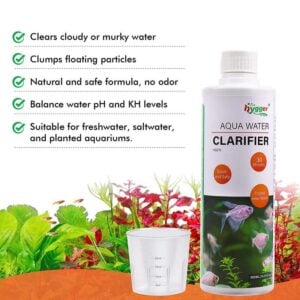
Maintaining consistent water chemistry encourages robust growth with the help of a water clarifier:
- Temperature: 75–82°F (24–28°C)
- pH: 5–7.5 (soft to slightly alkaline)
- GH/KH: Moderate hardness (4–8 dGH; 3–6 dKH)
- Nitrate: 10–30 ppm
- Phosphate–1.0 ppm
- Potassium: 10–20 ppm
- Perform weekly 25–30% water changes to prevent nutrient buildup and algae growth.
- Use a thermometer and water test kits to monitor water conditions regularly. Stability is more important than perfection.

Common plant issues
4. Light Management
Light is essential for photosynthesis, compact leaf growth, and healthy carpeting:
- Having full-spectrum LED lights in the range of 6000–7000K will provide the best results for DWC Euphorbia
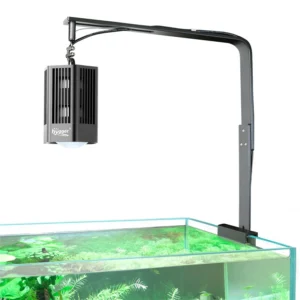
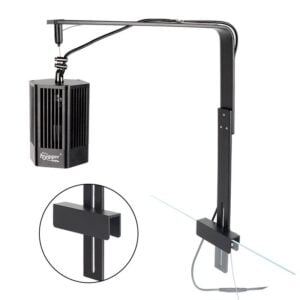
- Possible products are hygger 957, hygger 075and hygger 132 light.
- Use a timer to set the light schedule for 8 to 10 hours every day.
- Although CO₂ supplementation is not necessary, it significantly improves the growth, thickness, and number of leaves found in high-tech aquariums.
- If algae develop, dial down the amount of light you give and modify the supply of other nutrients.
5. Propagation Techniques
E.quadricostatus propagates via runners—horizontal stems that form new plantlets:
- Do not separate offshoots until they have 3 leaves, and you can see their roots.
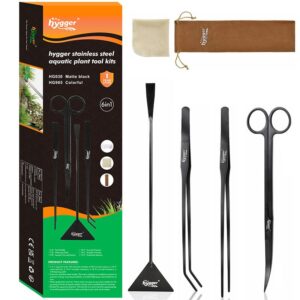
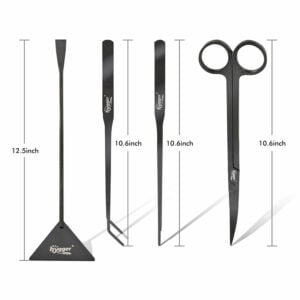
- Scissors or your fingers are the tools to use to cut the runner near the plantlet.
- Replant small grasses 1 inch apart so they have sufficient space to grow and fit close together.
- Frequent cutting of high or old leaves makes the plant dense and increases the growth of runners.
Pro Tip: Don’t remove every dead runner, as this could stop the natural cycle of energy in the tank.
6. Pests, Algae, and Health Management
E.quadricostatus is resistant to most pests, but problems may occur in imbalanced tanks:
- Algae (hair, BBA): Algae (hair, BBA) is often caused by too much light or an imbalance in the nutrients. Treat the affected area with 1 to 2 milliliters of water clarifier for every 26 gallons of tank water.
- Snail activity: Non-aggressive snails may be present in planted tanks. Snails are unlikely to harm Echinodorus, but you should remove any clusters of eggs from the leaves when necessary.
- Melting: Just after transplanting, some plants may lose their leaves until they adapt. If the crown is still hard, do not get rid of it.
Common Issues and Fixes
| Issue | Cause | Solution |
| Yellowing leaves | Iron or potassium deficiency | Does the comprehensive fertilizer with Fe |
| Slow growth | Low light or CO₂ deficiency | Increase lighting, consider CO₂ injection, or Excel dosing |
| Leaf melt post-planting | Transplant shock | Leave undisturbed; healthy roots will resprout new leaves within 1–2 weeks |
| Algae on leaves | Too much light, poor water quality | Reduce photoperiod, perform water changes, and balance nutrients |
| Pale new leaves | Nitrogen or magnesium deficiency | Does macronutrients or specialized trace mix |
| Leaves growing tall and leggy | Insufficient light at the substrate level | Upgrade to stronger lighting or reduce shading from hardscape |
As We Have Seen
In addition to adding beauty to the surroundings, the vigorous Echinodorus quadricostatus can surprise you with its lovely flowers. Setting up the tank well and caring for it can make flowering a possibility, even if your plants are grown in water. When everything is right for the tank, it can even bloom and add a beautiful white flower to your aquarium.
Related Products


Leave a comment