
Anaerobic condition helps in denitrification in an aquarium. However, excessive anaerobic conditions can cause various types of damage. In the following, you will learn about how it forms and its comparison with aerobic and anxious conditions. Moreover, it’s interesting to learn about the comparison of aquariums, aerobic vs anaerobic. Knowing where they need to be and how to prevent anaerobic zones or avoid excessive anaerobic conditions in a tank is worth learning.
Content Table
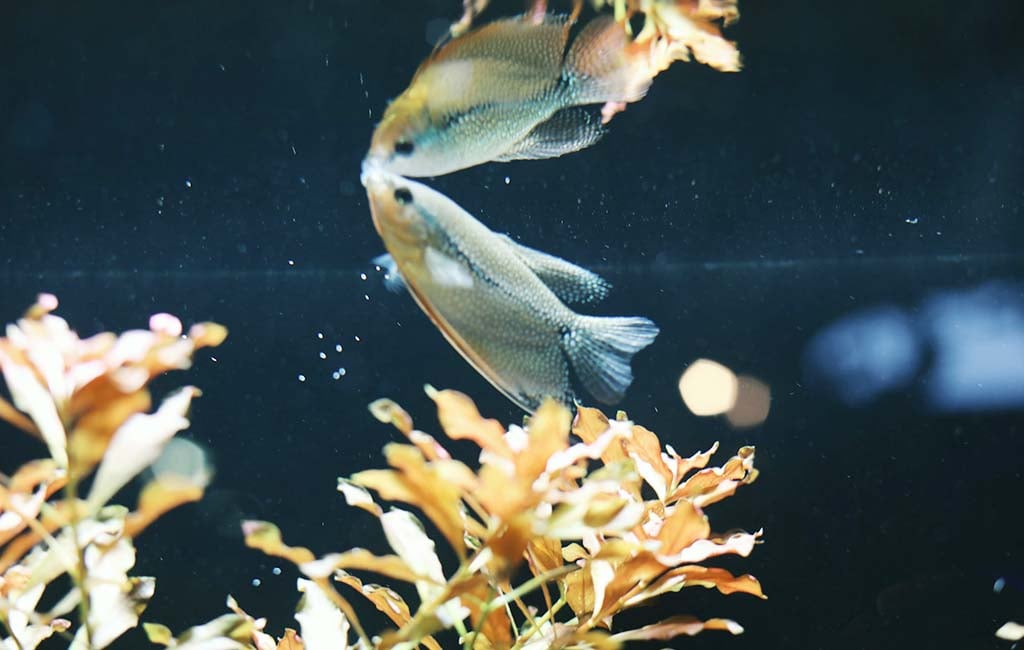
anaerobic bacteria
Anaerobic Zones in Aquariums
Anaerobic zones are areas in an aquarium without oxygen. These areas nourish anaerobic bacteria that help in the denitrification of a tank.
How Does It Form, and Where Does It Form?
It forms in aquariums where it is hard for oxygen to penetrate. It forms at various places in a tank. Here are the reasons for formation at specific zones.
Deep Substrate Layers
Oxygen is unable to penetrate deep into the bottom. It is usually restrained in upper layers, i.e., a few centimeters of sand, gravel, and soil, of substrate. Its density gradually decreases toward the bottom. Approximately, after 2 inches, it forms an anaerobic zone.
Poor Water Circulation Areas
The oxygen level directly depends on the water circulation. In areas where there is little or no water flow, it leads to anaerobic conditions. Usually, it forms under rocks, inside thick filter media, behind the decorations, etc.
Organic Waste Accumulation
Aquariums have fish waste, leftover food, and plant debris at the top of the substrate. Bacteria break down organic matter. During decomposition, bacteria consume oxygen, which results in anaerobic conditions at the bottom.
Filter Media
Canister filters have a compacted area because sponges or bio-media are tightly packed. It restricts the natural water flow. This restricted or no water flow causes anaerobic conditions in the filter.
Highly Populated Tanks
When a tank is overstocked, or you overfeed your aquatic pets, it can also lead to anaerobic conditions in the tank. Overfeeding and overstocking generate more waste, which causes higher bacterial activity. This accelerated bacterial activity consumes oxygen at a fast pace and forms anaerobic zones in the tank.
Aquariums: Aerobic Vs Anaerobic
Roles of Aerobic and Anaerobic in an Aquarium
| Aerobic Bacteria | Anaerobic Bacteria |
| It converts harmful materials, i.e., ammonia, to less harmful materials, i.e., nitrate, through the nitrification process.
Ammonia (toxic) → Nitrite (toxic) → Nitrate (less toxic) |
It converts the nitrates to Nitrogen gas that leaves the tank.
Nitrate (NO₃⁻) → Nitrogen gas (N₂) |
| It helps to maintain the water quality in the tank. | It helps to reduce frequent water changes as it avoids nitrate buildup in the tank. |
| It supports biological filtration of the tank. | It helps to maintain the natural balance in the tank. |
| It is the foundation of the nitrogen cycle in the tank. |
Comparison of Aerobic and Anaerobic Bacteria
| Feature | Aerobic Zones | Anaerobic Zones |
| Oxygen level | High | Very low/absent |
| Bacteria type | Nitrifying | Denitrifying |
| Bacteria name | Nitrosomonas and Nitrobacter | Bacteroids, Clostridium, and Bifidobacterium |
| Main process | Ammonia → Nitrite → Nitrate | Nitrate → Nitrogen gas |
| Where found | Upper substrate, filter media, circulating water | Deep substrate, stagnant spots, compact filter |
| Risk | None (safe) | Can produce hydrogen sulfide if unmanaged |
Anaerobic and Anoxic Conditions
The aquarium bottom has oxygen in the upper layer of 1 to 2 cm. It’s there due to water circulation and oxygen diffusion. However, after 5 cm, oxygen is hardly available. Here, two conditions form.
- Anaerobic
- Anoxic
Anoxic Conditions
This condition forms when the oxygen level reaches almost zero. Usually, this zone forms after 5 cm in the substrate. It also occurs in low or restricted water flow areas in the tank. These zones carry specific bacteria that consume nitrate for respiration. These bacteria reduce nitrate to nitrogen gas, which is released from the tank.
Anaerobic Conditions
It is a zero-oxygen condition in the tank. In this condition, strict anaerobic bacteria are present. Usually, this layer or state forms at higher depths at the bottom, i.e., > 10 cm, due to stagnant and compacted regions. Moreover, other stagnant or no-flow regions also turn into anaerobic conditions.
Anaerobic bacteria perform the denitrification process. However, denitrification is risky in anaerobic conditions, especially when the organic waste is high. In this case, they can produce toxic gases, such as hydrogen Sulphide.
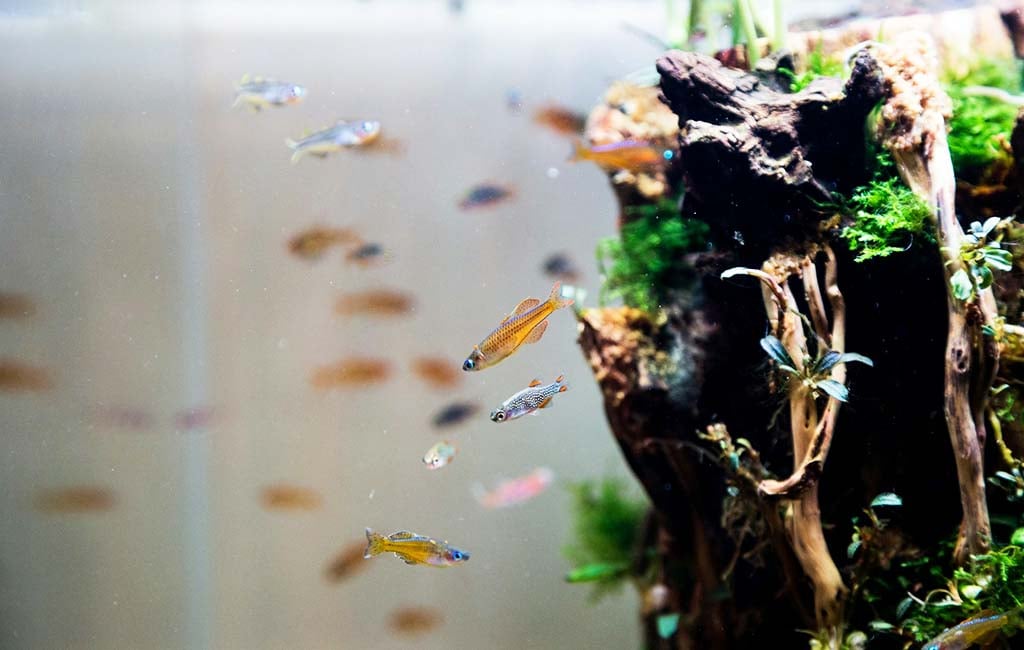
aquariums aerobic vs anaerobic
Do Your Fish Tank Inhabitants Need an Anaerobic Environment?
Usually, every tank requires some anaerobic zones. It helps in denitrification. However, the exact answer depends on various aspects. Here are some aspects.
Aquarium Habitat
Most of the aquarium’s inhabitants, i.e., fish, shrimp, snails, and similar other inhabitants, don’t like anaerobic conditions. They prefer a well-oxygenated tank for regular breathing. An anaerobic environment is largely not beneficial for these inhabitants because it produces Hydrogen sulfide and other toxic gases under higher organic waste.
Bacteria and Organisms
This environment is suitable for anaerobic bacteria. These bacteria help in the denitrification of the tank.
Reef tanks
Coral reefs don’t require any anaerobic conditions. However, aquarists lay a thick substrate layer to create anaerobic conditions at the bottom to support denitrification in the tank.
Planted Tank
Planted tanks have a relatively shallow bottom to support the plantation in the tank. Plantation keeps the tank well-oxygenated. However, such tanks have an anoxic zone at the bottom, i.e., better than an anaerobic environment in the tank.
How to Know If Your Tank Inhabitants Benefit or Not?
- If you have a freshwater tank, the tank inhabitants don’t need anaerobic conditions.
- If you have a marine or highly planted tank, controlled anaerobic conditions will help in denitrification.
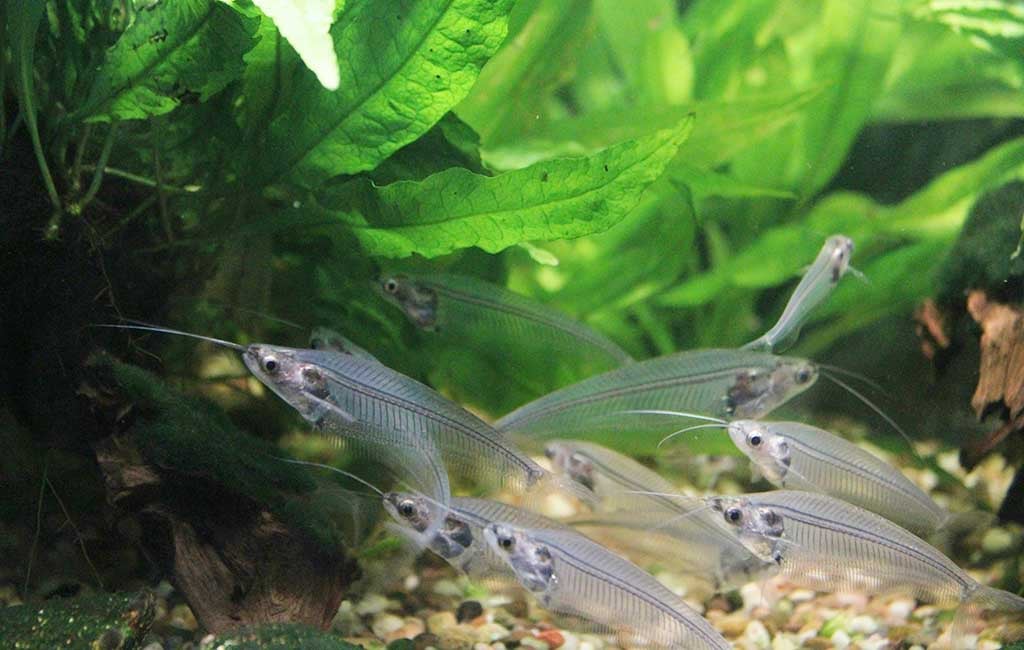
aquariums aerobic vs anaerobic
How to Prevent the Substrate from Becoming Anaerobic?
Anaerobic substrate can cause various issues in the tank, e.g., increased toxicity. Anaerobic condition indicates restricted water flow, low oxygen level, etc., in the tank. Here are some ways to prevent the substrate from becoming anaerobic in your tank.
Substrate Selection
Use sand and gravel substrate at the bottom. Gravel substrate usually doesn’t cause anaerobic conditions and is similar to sand due to higher porosity. However, in the case of sand, don’t lay a deep layer, i.e., keep it less than 10 cm deep. Always use medium-sized grains of sand and gravel for your substrate. Fine-grain size can easily compact and lead to anaerobic conditions.
Water Circulation
Improve the water circulation in the tank, especially in the filters. In large aquariums, you can increase the water circulation by using powerheads and air stones.
Burrowing inhabitants
Burrowing inhabitants improve the oxygen level in the substrate as they increase substrate porosity. Here are different options for both freshwater and marine tanks.
| Freshwater | Marine Tank |
| ● Corydoras
● Suckermouth catfish ● Betta ● Cherry barb ● Guppy ● Kuhli loach ● Nerite snail ● Bladder snail ● Celestial Pearl Danio ● Congo tetra ● Dwarf gourami |
● Diamond Watchman Gobies
● Engineer Gobies ● Nassarius snails ● Scarlet hermit crabs |
Substrate Maintenance
Schedule substrate maintenance, as some food particles get trapped in gravel and sand. Remove these particles regularly with gravel vacuuming. In case of a sand bottom, stir the sand.
Avoid Overfeeding
Overfeeding causes higher food leftovers at the bottom. When leftovers decompose, it causes oxygen depletion. Therefore, it’s wise to supply such a quantity that aquatic pets can consume within 2 minutes.
Plantation
Plantation benefits the tank in various ways, e.g., oxygenation and improving substrate porosity. Maximally, you can see the anoxic zone that is not harmful to any tank.
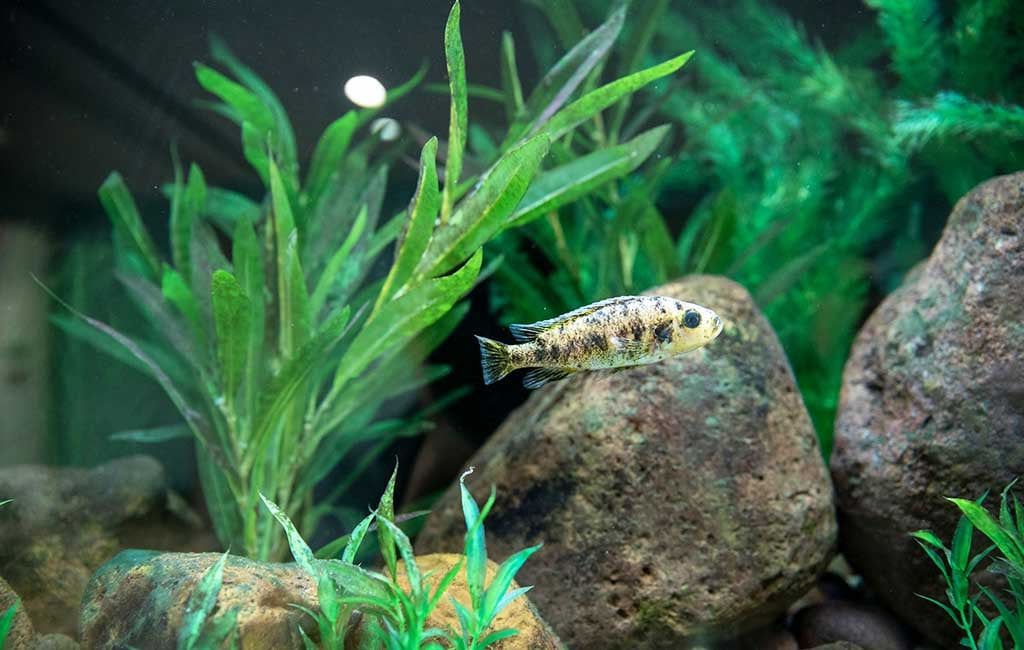
Prevent Anaerobic Pockets in Tanks
Concluding Remarks
Anaerobic condition forms in the absence of oxygen. Usually, it is formed at low or no water circulation. It helps in denitrification. However, excessive anaerobic conditions can cause toxicity problems in the tank. Unlike anaerobic conditions, anoxic conditions don’t cause toxicity in the tank. It formed due to a low oxygen level. You can avoid the anaerobic condition by increasing water circulation, burrowing inhabitants’ introduction, plantation, and controlled feeding.
Related Products


Leave a comment