
Tropical fish and plants really thrive when we recreate their natural warm-water habitats. The more you mimic those conditions, the happier and healthier your aquarium will be. For most tropical species, three key elements are crucial: warm, stable water, proper water flow, and clean, well-oxygenated conditions.
Content Table
In this hygger guide, we’ll dive into why currents matter, when you need a heater, how to simulate tropical currents without heat, and review the hygger HGY0009 2-in-1 heater and wave maker, which simplifies everything for hobbyists. Along the way, we’ll also share practical tips that make your tank healthier and more visually alive.
Tropical current
Basic Needs of Tropical Tank Inhabitants
Warm, Stable Water For Tropical Fish
Most tropical fish flourish in water around 75–80°F (24–27°C). Even small temperature swings can stress cold-blooded fish, lowering their appetite, weakening their immunity, and affecting their behavior. That’s why a reliable aquarium heater and thermostat are so important. They keep the environment steady and safe, even if your room feels warm most of the time.
It’s easy to underestimate how much temperature matters. Fish are ectothermic—meaning their body temperature matches the surrounding water. Inconsistent water can disrupt digestion, reduce growth, and even make fish more susceptible to parasites. Nights and seasonal changes cause dips, and a heater acts as insurance, giving your fish the stability they need to thrive.
Tip: Place your heater near a filter outlet or circulation pump so warm water spreads evenly. This avoids “hot spots” near the heater and cooler pockets elsewhere in the tank.
Good Water Flow and Oxygenation
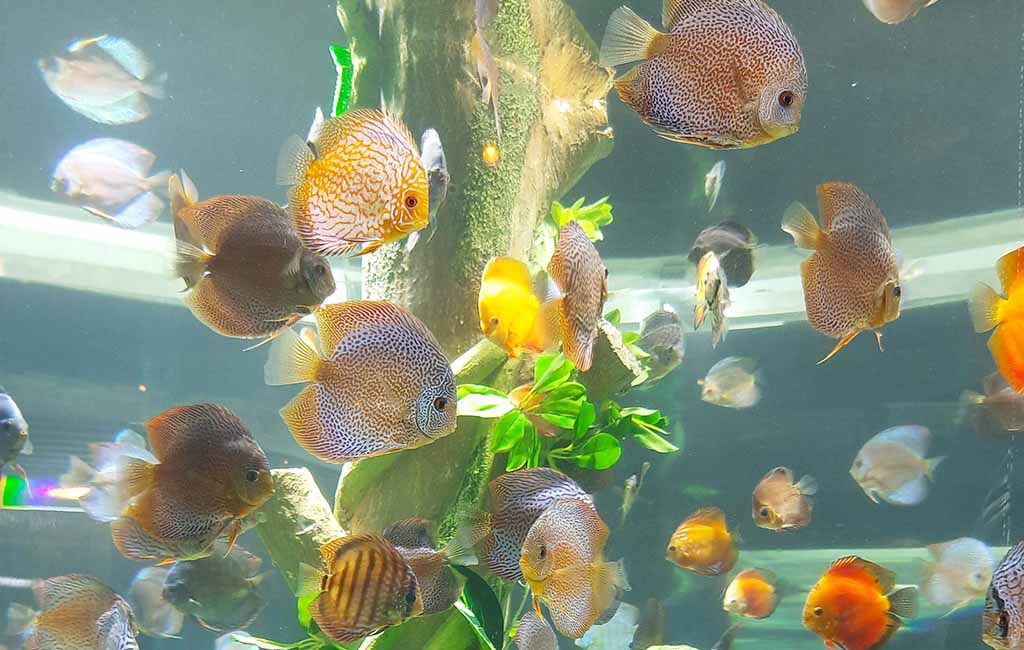
In nature, many tropical fish live in rivers, streams, or shallow coastal waters where currents are constant. Re-creating that gentle movement in your tank encourages exercise, brings out natural behaviors, and can even make fish show brighter colors.
Flow isn’t just about beauty—it’s also about balance. Water movement improves oxygen exchange at the surface and carries it through the entire tank. Without it, “dead spots” can form, where waste and debris settle, fueling algae and creating unhealthy pockets.
Why oxygenation matters: Fish absorb oxygen directly through their gills. If circulation is weak, oxygen levels drop, leading to sluggish behavior or gasping near the surface. A strong but gentle flow ensures your whole aquarium is breathable.
Tip: Match the flow to your fish. Fast-water species like hillstream loaches, rainbow shiners, or danios enjoy strong currents. Meanwhile, guppies, bettas, and tetras prefer softer, calmer waters. Overpowering small fish with too much current can cause stress.
Does your tank need a heat wave
Clean, Well-Filtered Water
Circulation doesn’t only supply oxygen; it also supports filtration. Moving water carries waste toward the filter and spreads nutrients evenly throughout the tank. Without enough flow, you’ll often see algae patches and uneven water quality.
By pairing strong filtration with good circulation, you’re essentially mimicking the natural balance of streams and rivers. Pumps, wave makers, or simply redirecting filter outputs along tank walls can break up stagnant zones. Even air stones can help boost movement while adding extra oxygen.
Maintenance tip: Clean your pump and filter intakes regularly. Debris buildup reduces efficiency, weakening both flow and filtration.
Does Your Tank Need a Heat Wave?
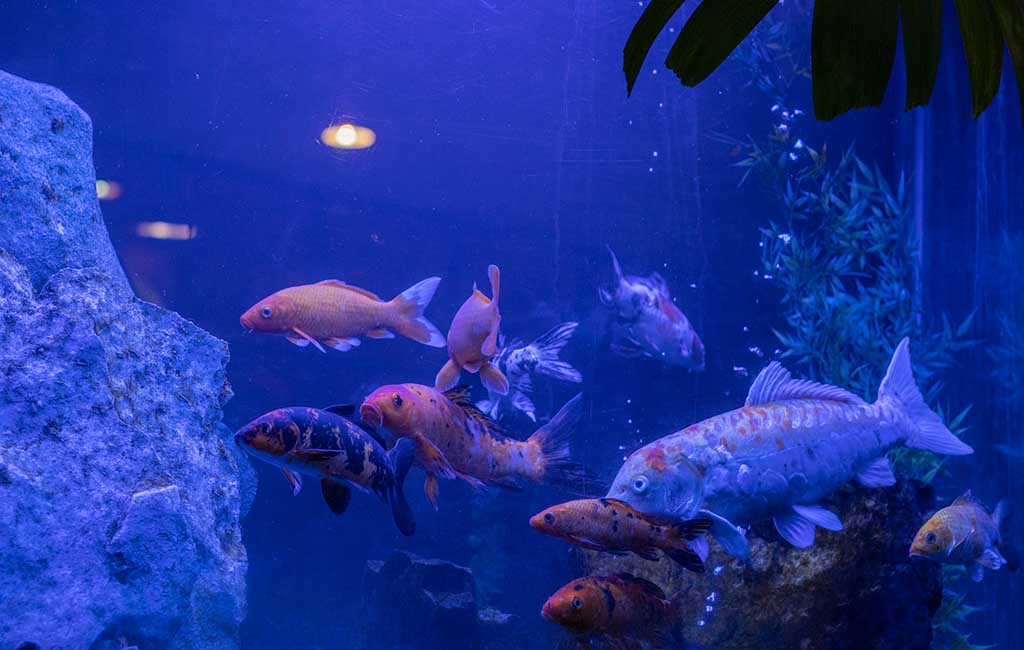
Whether you need a heater depends on your species and your climate. Popular tropical fish like tetras, bettas, and guppies rely on that 75–80°F range. If your room dips below it—even occasionally—a heater becomes essential.
Cold-water fish such as goldfish prefer temperatures below 70°F, but even they benefit from stability. A heater protects them during sudden cold snaps, reducing stress and preventing illness. Unless your home is consistently warm year-round, using a heater for a tropical setup is the safer choice.
Seasonal reminder:
-In winter, heaters prevent dangerous drops.
-In summer, heaters may cycle less often, but you still want them plugged in for consistency.
Does your tank need a heat wave
Simulating Tropical Currents Without Heaters
In hot climates or during summer, you may not need heating—but you’ll still need flow. Pumps and wave makers keep water moving, imitating the currents fish evolved with.
Options:
- Submersible Powerheads: Shoot a steady jet of water, creating constant movement.
- Dedicated Wave Makers: Switch on and off in pulses, mimicking river surges or coastal waves.
- Filter Outputs: Direct flow along glass or rocks to reduce “dead zones.”
- Air Stones: Gentle bubbles that boost both circulation and oxygenation.
Directing filter output along glass or combining pumps with different flow patterns makes conditions even more natural.
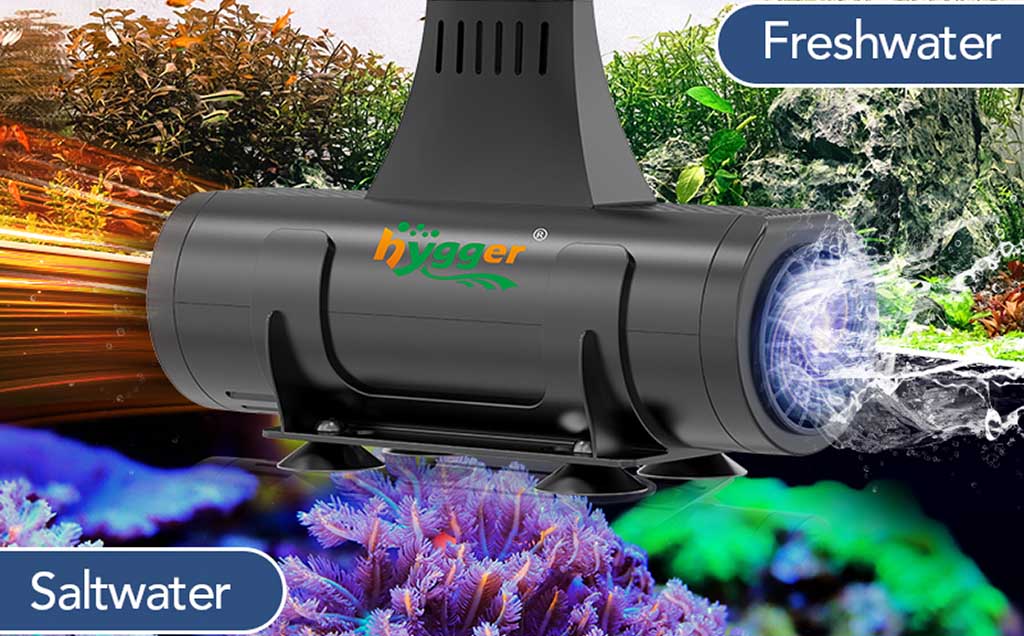
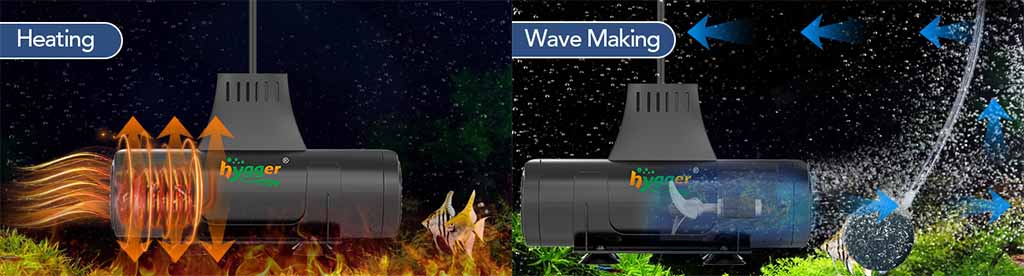
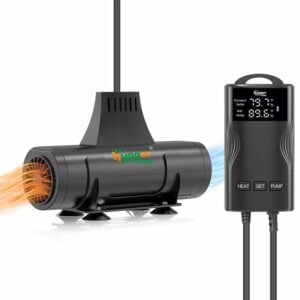
The hygger HGY0009 gives you flexibility: in summer, you can turn off the heater and keep just the wave maker running, maintaining healthy currents without warming the water too much.
Extra Tips for Perfect Flow
- Tank size matters: In small tanks, even a small wave maker can feel strong. In larger tanks, you may need two or more pumps placed at opposite ends.
- Aquascaping and flow: Plants, rocks, and driftwood can block the current. Position pumps to create circulation paths around obstacles.
- Observe your fish: If they’re constantly hiding behind decorations or struggling to swim, reduce the flow. If they hover at the surface gasping, increase it.
hygger HGY0009 2-in-1 Aquarium Heater With Wave Maker review
Product Review: hygger HGY0009 2-in-1 Aquarium Heater With Wave Maker
The hygger HGY0009 combines a heater and wave maker in a single submersible unit, making it a space-saving choice for aquarists who want both functions in one device. After looking at feedback from hobbyists and testing, here’s how it stacks up:
Pros:
- Maintains stable tropical temperatures, reducing stress and illness in fish.
- Gentle water currents improve oxygenation and circulation.
- Helps prevent debris buildup in “dead spots.”
- Saves space by replacing two separate devices.
- Safety features like auto shut-off if water overheats add peace of mind.
- Save your budget for more aquarium devices.
Cons:
- Pump output (around 52 GPH) may be too weak for large or high-flow tanks.
- Best suited for aquariums up to 260 gallons; bigger setups may need extra circulation.
- Limited control over wave patterns compared to standalone, high-end wave makers.
- Slight learning curve for new hobbyists when adjusting both heat and flow together.
Verdict:
The hygger HGY0009 is ideal for aquarists who want convenience and efficiency in one unit. While it may not satisfy those with very large tanks or species requiring strong currents, it’s a reliable, user-friendly, and money-saving option that simplifies setup and keeps tropical tanks healthy.
Alternatives and When to Upgrade
If you keep larger aquariums (260+ gallons) or fish that thrive in strong currents, you may want to pair the HGY0009 with a dedicated high-flow wave maker. Model like HG119 with programmable patterns that simulate ocean waves.
On the other hand, if you only need heating and your filter already provides good flow, a simple standalone heater may be all you need. The benefit of the HGY0009 lies in combining two functions neatly in one device.
Conclusion
Creating a thriving tropical aquarium isn’t complicated when you focus on the essentials:
- Keep the water warm and stable (75–80°F).
- Provide steady circulation suited to your species.
- Use strong filtration to keep the water clean and oxygen-rich.
- Simplify with tools like the hygger HGY0009if you prefer an all-in-one solution.
By balancing temperature, flow, and water quality, you recreate the natural environments tropical fish need. The result? Healthier, more vibrant fish, a cleaner tank, and an aquarium that feels alive with natural energy.
Related Products



Leave a comment