
A rainforest terrarium is one of those projects that looks complicated from the outside but actually follows a pretty straightforward logic once the layers click. The challenge is not finding the plants or the glass box. The challenge is understanding what a tropical forest actually does and then recreating it in a small, contained space.
Content Table
Get the structure right, and the whole thing runs with minimal intervention. Get it wrong, and the most beautiful setup will fall apart within months.
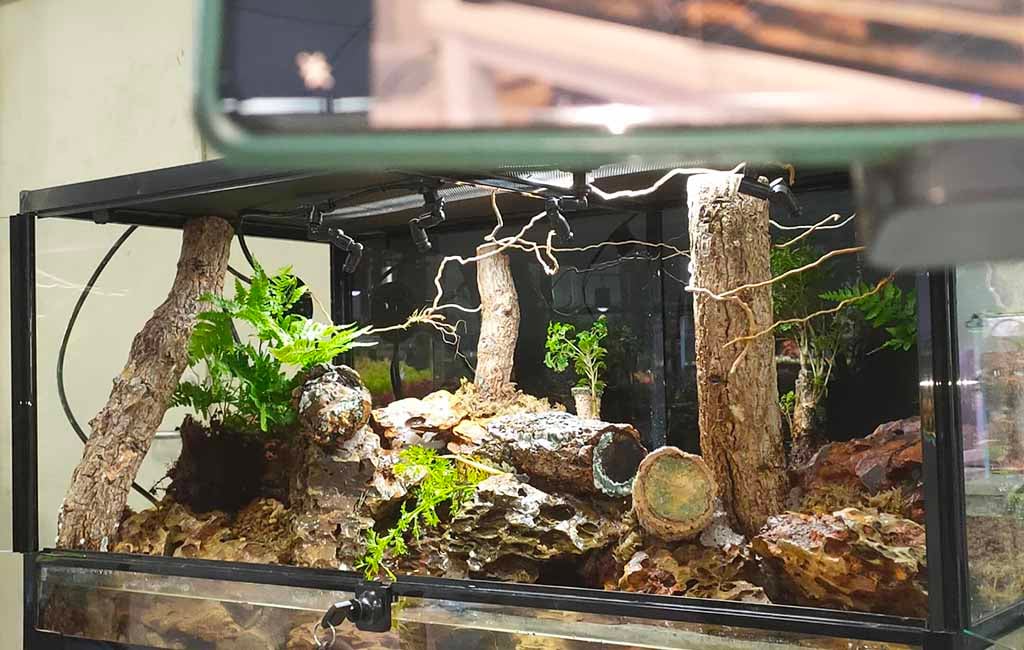
rainforest terrarium
A Rainforest Terrarium
At its core, a rainforest terrarium is a closed or semi-closed glass enclosure designed to replicate the conditions of a tropical forest environment. High humidity, warm temperatures, filtered light, and a layered substrate system that supports both plant growth and moisture retention.
What separates a rainforest tank setup from a standard terrarium is the intentional replication of an ecosystem rather than just an aesthetic. These builds are designed to be functional. The right substrate drains without drying out. The plants selected for the build pull double duty, looking good while also contributing to the internal humidity cycle. Some builds even support small animals such as dart frogs, geckos, and invertebrates.
The uses vary. Some people build them purely as living displays, a slice of something wild sitting on a shelf. Others use them as breeding enclosures for amphibians or insects. A few people build them as a botanical study, tracking how specific tropical plant species behave in controlled conditions.
Whatever the purpose, a well-built rainforest terrarium rewards patience. It does not look like much in week one. By month three, it starts resembling something real.
Types of Rainforests
Before committing to a rainforest tank setup, it helps to know which type of rainforest the build is meant to reflect. Not all tropical forests are the same.
- Tropical Lowland Rainforests
It sits close to the equator and experiences consistent warmth, usually between 24 and 30 degrees Celsius year-round, with rainfall distributed throughout the year. These are the forests most people picture. Amazon basin, Congo basin, Southeast Asian jungle. High biodiversity, dense canopy, very humid.
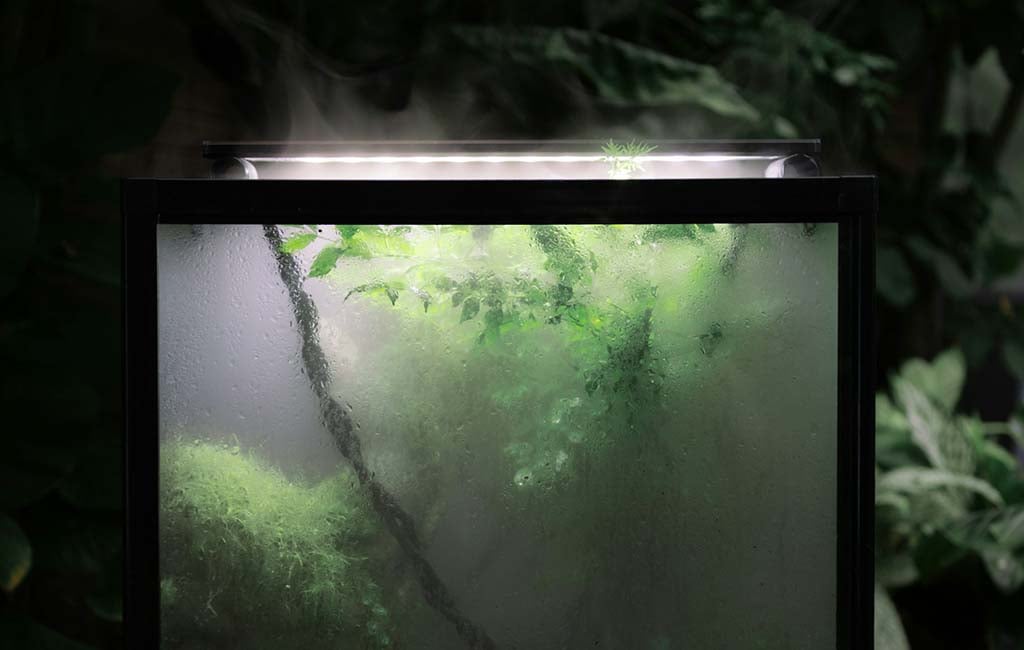
Types of Rainforests
- Cloud Forests
Cloud Forests exist at higher elevations, typically between 1500 and 3000 meters. Temperatures are cooler, often between 8 and 20 degrees Celsius, and the forest is frequently covered in mist rather than receiving heavy rainfall. Epiphytes, meaning plants that grow on other plants, dominate these environments.
- Monsoon Rainforests
Monsoon Rainforests experience a defined dry season. They are still humid and lush, but go through periodic dryness that affects which species thrive there. Plants in these forests have adapted to survive temporary moisture reduction, making them slightly more tolerant of inconsistent watering compared to lowland tropical species. That tolerance makes them a practical option for beginners.
For most hobbyists building a rainforest terrarium at home, tropical lowland or cloud forest environments are the most practical starting points. Each type influences which plants, substrate mix, and humidity levels the build should target.
Layers of the Rainforest Terrarium
A functional rainforest terrarium is built from the bottom up, and every layer has a job.
- Drainage Layer
This sits at the very base of the tank. Lightweight expanded clay aggregate (LECA) or hydroballs are commonly used here. The purpose is to hold excess water below the root zone so that plant roots never sit in standing moisture for extended periods. Depth typically ranges from 2.5 to 5 centimeters, depending on enclosure size.
- Substrate Barrier
A thin layer of fine mesh or horticultural fabric separates the drainage layer from the substrate above. Without this, the layers eventually mix, and the drainage layer loses its function.
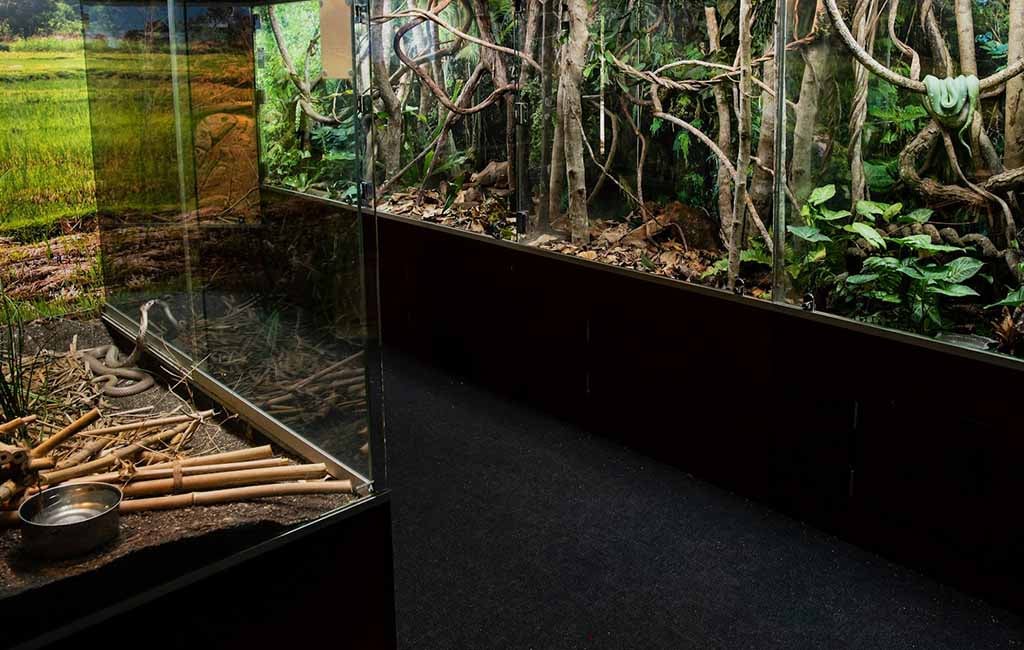
Layers of the Rainforest Terrarium
- Substrate Layer
This is where the plants actually live. A good rainforest terrarium substrate is porous, moisture-retentive, and nutritious. A common mix includes coconut coir, orchid bark, sphagnum moss, and a small amount of organic material. Some builders add worm castings for additional nutrients. Depth for most builds sits between 5 and 10 centimeters.
- Surface and Hardscape Layer
Rocks, cork bark, driftwood, and mosses make up the visible top layer. This is where most of the design work happens, but it is also functional. Surface cover helps retain surface humidity and gives plants and animals places to attach, climb, or shelter.
- Canopy and Background
Larger plants, climbing species, and background coverage fill out the upper portions of the enclosure. In a tall vivarium, this layer handles most of the visual impact.
Building a Tropical Rainforest Terrarium
Learning how to build a rainforest terrarium is a process best approached in stages rather than all at once.
Step 1: Choose the Right Enclosure
Glass terrariums with front-opening doors are the standard choice for serious rainforest tank setups. Front access makes maintenance far easier than top-only enclosures. Size matters more than most beginners expect. A 45 by 45 by 60 centimeter build gives enough room to layer properly and plant meaningfully. Smaller tanks are harder to stabilize.
Step 2: Build the Drainage and Substrate Layers
Add the drainage layer first, then the barrier mesh, then the substrate mix. Water the substrate lightly before planting to bring it to the right starting moisture level. It should feel like a wrung-out sponge. Damp but not dripping.
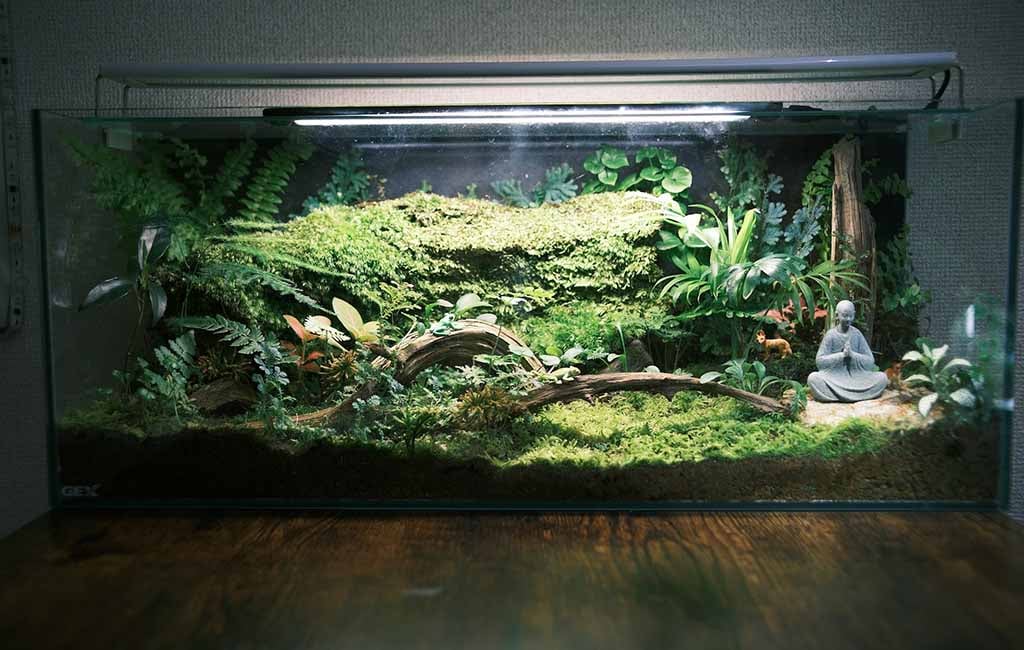
Building a Tropical Rainforest Terrarium
Step 3: Install the Hardscape
Place rocks and wood before planting. Hardscape elements anchor the design and give plants something to grow against. This step is worth taking time on because moving large pieces after planting causes unnecessary disruption.
Step 4: Plant Selection and Placement
For a tropical lowland rainforest terrarium, strong plant choices include:
- Fittonia (nerve plant) for ground cover
- Peperomia species for mid-layer texture
- Selaginella for dense moss-like coverage
- Bromeliads for canopy and structure
- Tillandsia (air plants) mounted on cork or wood
- Climbing Marcgravia for background coverage
Plant in clusters rather than evenly spaced rows. Real forests are uneven. Asymmetry reads as natural.
Step 5: Add Lighting and Humidity Systems
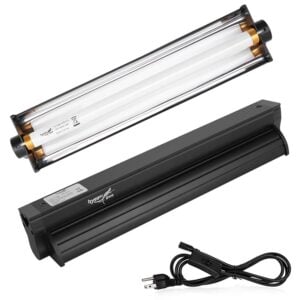
Full-spectrum LED lighting works well for most rainforest terrarium plants. Aim for a photoperiod of 10 to 12 hours. Automated misting systems handle humidity maintenance reliably, typically set to mist two to four times per day for 10 to 20 seconds per cycle.
A hygrometer inside the enclosure helps track whether humidity is staying in the 70 to 90 percent range that most tropical setups require.
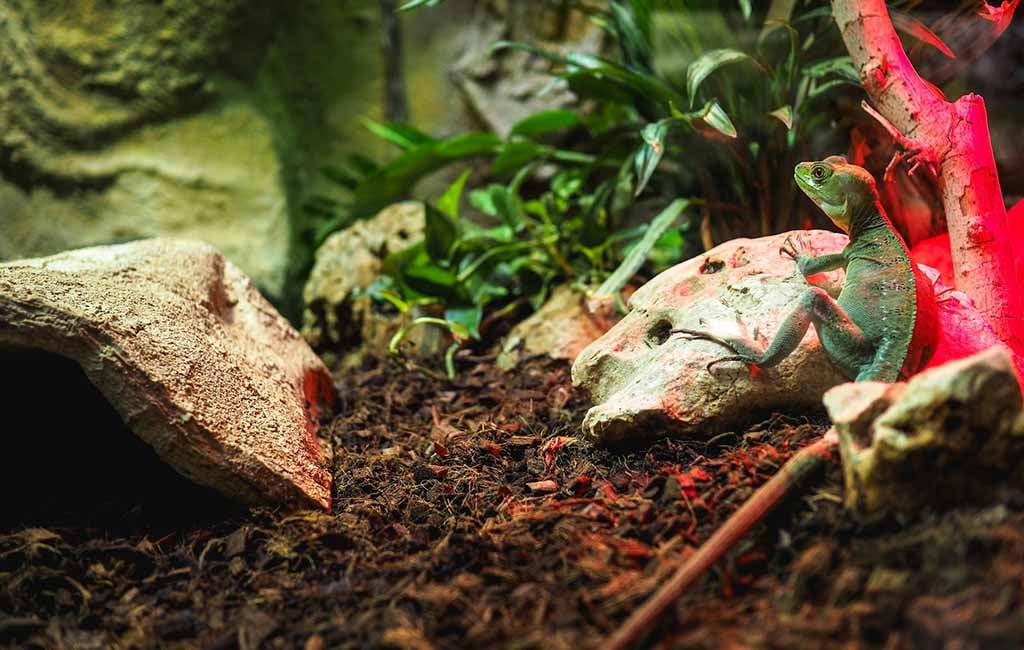
rainforest tank setup
Key Principles of Building a Tropical Rainforest Terrarium
A few things separate builds that thrive long term from ones that slowly deteriorate:
- Drainage first, always. Skipping or undersizing the drainage layer is the most common reason setups fail within the first year.
- Layer integrity matters. Each layer of the terrarium needs to stay distinct and functional, not merged or compressed.
- Match plants to the specific forest type. Cloud forest species and lowland tropical species have meaningfully different requirements.
- Start with a misting schedule and adjust based on observation. No preset timer works perfectly for every enclosure.
- Patience over intervention. A new rainforest tank setup needs weeks to stabilize before any significant adjustments are made.
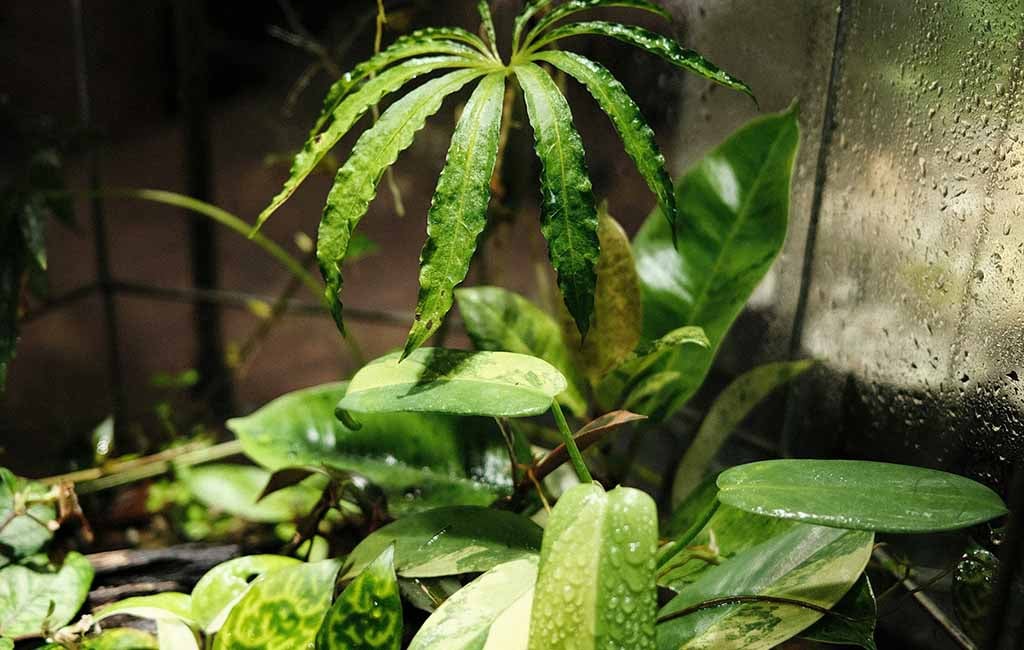
How to build a rainforest terrarium
Common Rainforest Terrarium Mistakes to Avoid
Even well-researched builds run into problems. These are the ones worth knowing about before starting.
- Using garden soil in the substrate. Garden soil compacts, holds too much water, and introduces pests. The purpose of mixed terrarium substrate is non-negotiable.
- Overpopulating the tank with plants immediately. Spacing matters. Overcrowding in the early stages leads to poor airflow, fungal issues, and root competition.
- Skipping ventilation. A sealed rainforest terrarium with no air movement develops anaerobic conditions. Most builds need at least a small mesh panel to allow gentle air exchange.
- Placing the enclosure in direct sunlight. Direct sun overheats glass enclosures quickly. Artificial lighting gives far more control.
- Choosing plants based only on appearance. A species that looks perfect for the build but requires different humidity or light will struggle and eventually fail.
Use These Tips to Get Started Today
Building a rainforest terrarium is genuinely one of the more rewarding long-term projects in the hobby. The first few weeks require the most attention. After that, a well-structured build starts doing most of the work on its own.
Every choice in a rainforest tank setup connects to something else: the substrate feeds the plants, the plants manage the humidity, and the drainage handles the excess. Understanding how to build a rainforest terrarium properly means understanding that sequence before picking up a single plant. Start with the structure. The beauty follows naturally.
Related Products


Leave a comment