
Comb jellies are one of the unique marine creatures that attract the attention of researchers. Comb jellies share numerous similarities with jellyfish. However, both are different. In the following, you will learn about the comb jelly’s profile, dietary preference, and role in the food web. Moreover, you’ll also know do comb jellies’ sting, how they prey, their similarities and differences with jellyfish. At the end, you’ll learn about their unique reproduction system, as they are hermaphrodites by nature. Scroll down and learn more about comb jelly.
Content Table
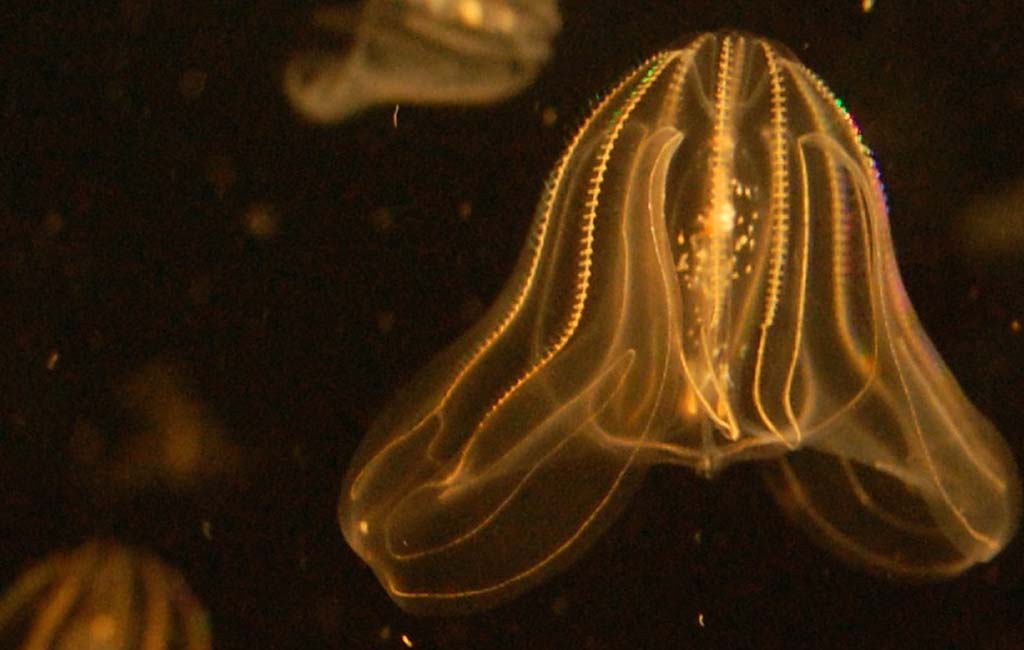
comb jelly
Comb Jellies Profile
Comb jellies are typically small planktonic organisms that have luminous bodies. They have a comb-like tentacle appearance that they use to maneuver in the ocean. Although comb jellies resemble jellyfish, they belong to entirely different phyla, i.e., Ctenophora. Apparently, one can confuse them with jellyfish, but they have various differences. Here is a profile that will help you understand Comb Jellies.
Profile
| Feature | Description |
| Common name | Comb Jelly |
| Venus’ girdles | |
| Sea gooseberries | |
| Sea walnuts | |
| Phylum | Ctenophora |
| Class | Tentaculata or Nuda. Their class depends on the presence of tentacles. |
| Species | 100 to 150 known species |
| Habitat | Globally present in oceans |
| Distribution | Live from surface to deep water, i.e., 8,000 meters |
| Symmetry | Oval or ribbon-shaped |
| Coloration | Transparent but exhibit iridescent coloration due to reflection of light. |
| Size | 1mm to 1.5 meter |
| Comb row | 8 comb rows |
| Tentacles | 2 long retractable tentacles |
| Brain | No brain but use nerve net |
| Digestive system | Simple gut with mouth and anal pores |
| Diet | Carnivores |
| Food | Small crustaceans |
| Other comb jelly species | |
| Fish larvae | |
| Plankton | |
| How the prey? | They use their sticky tentacles to catch and eat their prey. |
| Stinging cell | No |
| Defence mechanism | Use their bioluminescence to confuse the attacker. |
What Do Comb Jellies Eat?
Comb jellies are carnivorous. They prey on small and soft-bodied organisms. They help to maintain the marine food web with their dietary habits. Here are some feeding options for them.
| Type | Frequently Prey On |
| Zooplankton | Copepods |
| Small crustaceans | |
| Rotifers | |
| Fish larvae and Eggs | Herring |
| Cod larvae | |
| Anchovy | |
| Comb jelly | Small or same size comb jellies |
| Larval invertebrate | Mollusk larvae |
| Polychaete worms |
Role in Food Web Chain
* They help to control the zooplankton and fish larvae population in the oceans.
* They are food for large jellyfish, fish, sea turtles, etc.
* However, they have some invasive species that can potentially disrupt the ecosystem. Mnemiopsis leidyi is an example of such an invasive species.
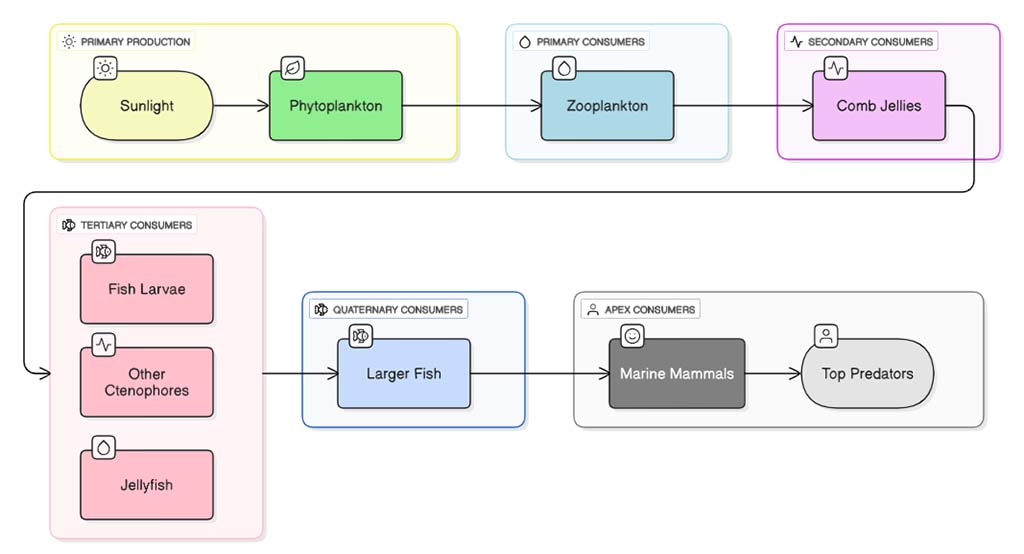
Comb Jellies Role in Food Web Chain
Invasive Nature of Mnemiopsis Leidyi
Mnemiopsis invaded the Black Sea in the late 1980s. They preyed on massive zooplankton and fish larvae, which resulted in the collapse of anchovy fisheries. Later, Beroe ovata ate these comb jellies and rest orated the balance.
Do Comb Jellies Sting?
Unlike some jellyfish, a comb jelly can’t sting. They are completely harmless to humans. Other than the stinging aspect, they differ from jellyfish in several ways.
Why Can’t Comb Jellies Sting?
They are different from jellyfish, as Comb jellies belong to the phylum Cenophora and actual jellyfish belong to the phylum Cnidaria. Comb jellies have no stinging cells, while actual jellies have stinging cells. Some jellyfish have venomous cells. Primarily, they use these cells for defense mechanisms. Comb jellies use their sticky tentacles to catch their prey.
How Do They Prey on Their Food?
Comb jellies have colloblasts, i.e., special sticky cells, in their tentacles. When they touch their prey, colloblasts release a sticky substance, and the prey sticks to this sticky fluid. After sticking, the prey becomes motionless, and the comb jellies enjoy their meal.
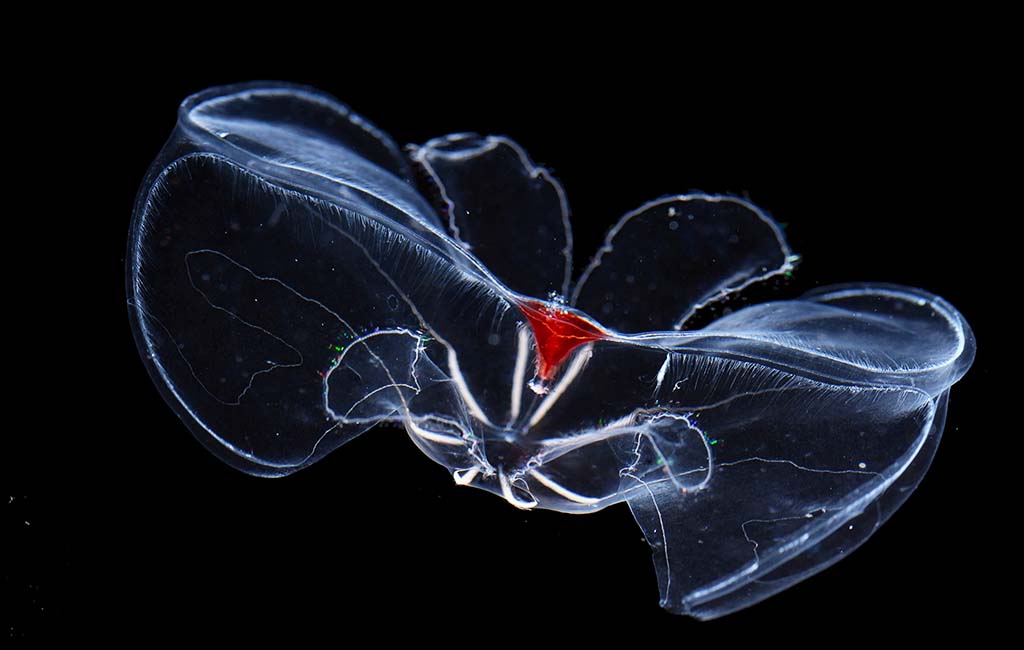
do comb jellies sting
Is Comb Jelly a Jellyfish?
No, Comb jellies are not true jellyfish. Although they share some similarities, both belong to different categories. Here is a difference table between Comb Jelly and Jellyfish.
Difference between Comb Jelly and Jellyfish
| Features | Comb Jellies | Jellyfish |
| Phylum | Cnidaria | Ctenophora |
| Body symmetry | Biradial symmetry | Radial symmetry |
| Locomotion | Move using 8 rows of ciliary | Drift with currents and have limited motion |
| Stinging cells | No | Yes |
| Venomeous | No | Yes |
| Preying | Use sticky tentacles to catch on their prey | Use stinging cells to paralyze their prey |
| Bioluminescene | Numerous species | Some species |
| Reproduction | Mostly hermaphroditic | Usually, distinctive males and females |
| Are dangerous to human | No | Yes, but some species can cause pain and agony |
| Evolutionary relation | Not closely related to cnidarians | Related to corals and sea anemones |
Similarities That Can Cause Confusion
- Soft, gelatinous, and transparent bodies.
- Share the same habitat and are carnivorous.
- They are mostly planktonic and drift in water.
- They lack a true circulatory system and have no brains.
- Skeletonless bodies.
- They have statocysts to balance their bodies.
- They are food for fish, turtles, and other gelatinous predators.
- Both play vital roles in the food web of the ocean.
Hermaphrodites Comb Jellies
Most comb jellies are hermaphrodites, i.e., individuals that act like male and female simultaneously. This makes them unique, as they can produce eggs and sperm simultaneously. A single comb jelly can start a new generation.
Here is the reproduction process of comb jellies.
Reproduction System in Comb Jellies
Gamete Production
A single comb jelly can produce sperm and eggs at a time. They release them from pores near their mouth.
Fertilization
Usually, they do external fertilization by releasing sperm and eggs into the surroundings. They can also do self-fertilization. However, this phenomenon is rare. It happens when their population is very low.
Egg Development
Fertilized eggs develop into cydippid larvae. They go through direct development and resemble adults.
Rapid Growth
Larvae grow up real quick. They reach their reproductive maturity within two weeks.
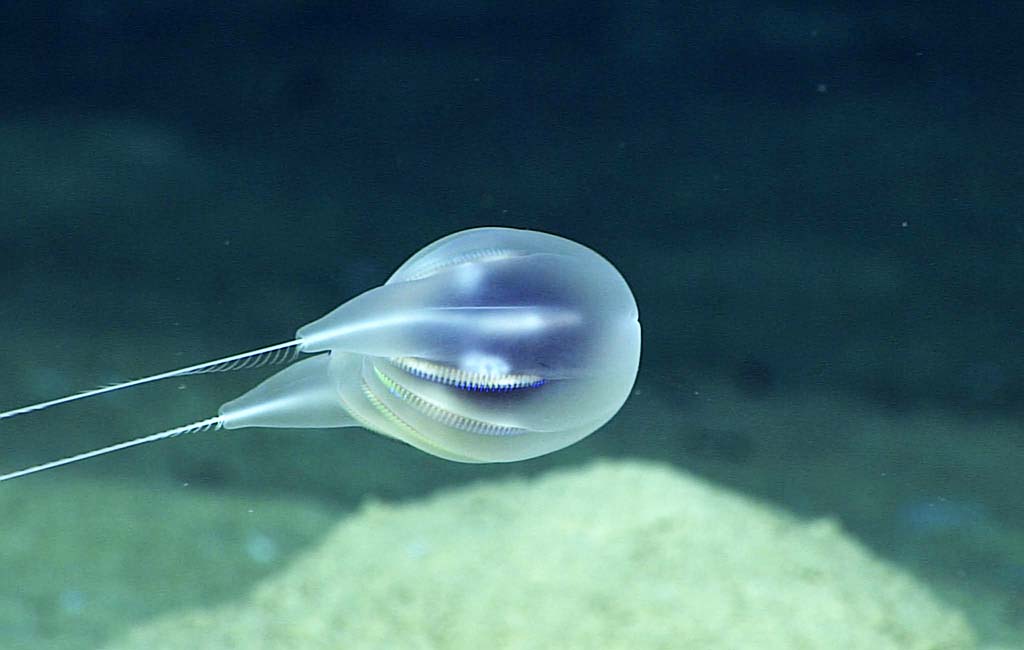
Interesting Facts about comb jelly
Interesting Facts about Their Higher Reproductive System
- Even a single hermaphrodite comb jelly can build a colony.
- They reach reproductive ability age within 2 weeks.
- Under favorable conditions, a comb jelly can lay eggs daily.
- With favorable food and water, they can lay 2,000 to 3,000 eggs at a time.
- Gem mate production depends on food availability.
- Comb jelly eggs hatch within 20 hours.
Concluding Remarks
Comb jellies have a symmetrical and illuminating body. They live in the oceans from the surface to the deep waters. Their carnivorous nature compels them to feed on soft-bodied, small, or similar-sized creatures. They use their luminance to distract the attackers. Their shape, reproduction system, preying method, and many other aspects make them very special and unique. Do you know anything interesting about comb jellies? Let us know in the comments section.
Related Products




Leave a comment