
All-in-one reef tanks are popular among beginner aquarists for several reasons, including their ease of management and compact size. If you are a beginner and want to experiment with or set up your entire reef tank, this article will guide you through the setup and maintenance of a reef tank. Moreover, you’ll also know about the necessary supplies to set it up and maintain your tank optimally. So, scroll down and learn how to do an all-in-one reef tank setup at home.
Content Table
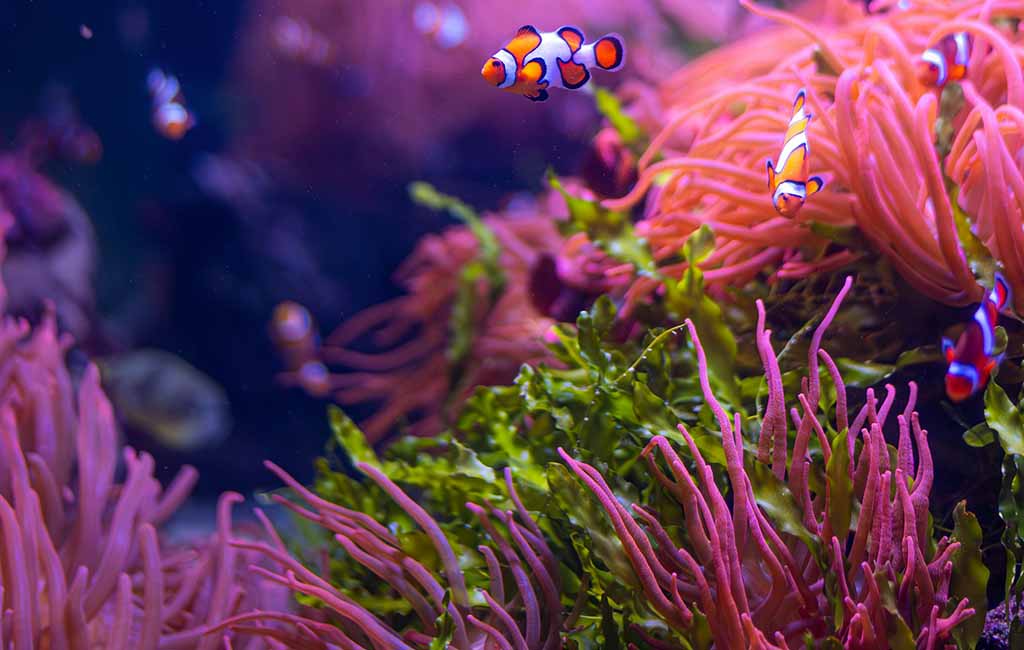
all in one reef tank
What Is an All-in-One Reef Tank
It is a type of saltwater aquarium that contains a filtration system, sump, and return pump within the tank. A false wall in the tank often hides this system. It provides a compact and easy-to-use package. Moreover, it’s easy to use, beginner-friendly, and features a minimalist aesthetic.
All-in-One Reef Tank Compartments
- Built-in filtration chamber
- Return pump compartment
- Protein skimmer compartment
- Heater compartment
- Auto top-off reservoir
Reef Tank Supplies
An all-in-one reef tank requires several essential supplies to keep operations running smoothly. Here is a list of these supplies.
Essential supplies
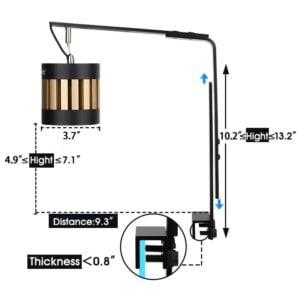
- Lighting
- High-quality and adjustable heater to maintain optimal temperature.
- An extra circulation pump to avoid dead spots in the tank.
- If your all-in-one reef doesn’t include a protein skimmer, buy one. It’ll help to remove the organic waste from the tank. It is essential for large setups.
- An auto top-off system to maintain the alkalinity.
Filtration and Maintenance Supplies
- Filter socks
- Activated carbon media needs to be replaced every month
- Water parameter testing kit
- Refractometer
- RO/DI water system
Water and Salt Supplies
- Reef salt mix
- Mixing container
- Powerhead for mixing saltwater
Livestock And Coral Care Supplies
- Coral glue
- Coral dip
- Fish net
- Feeding tools
Cleaning & General Maintenance Tools
- Algae scraper or magnetic cleaner
- Siphon or gravel vacuum
- Towels and buckets
- Extra containers for quarantine
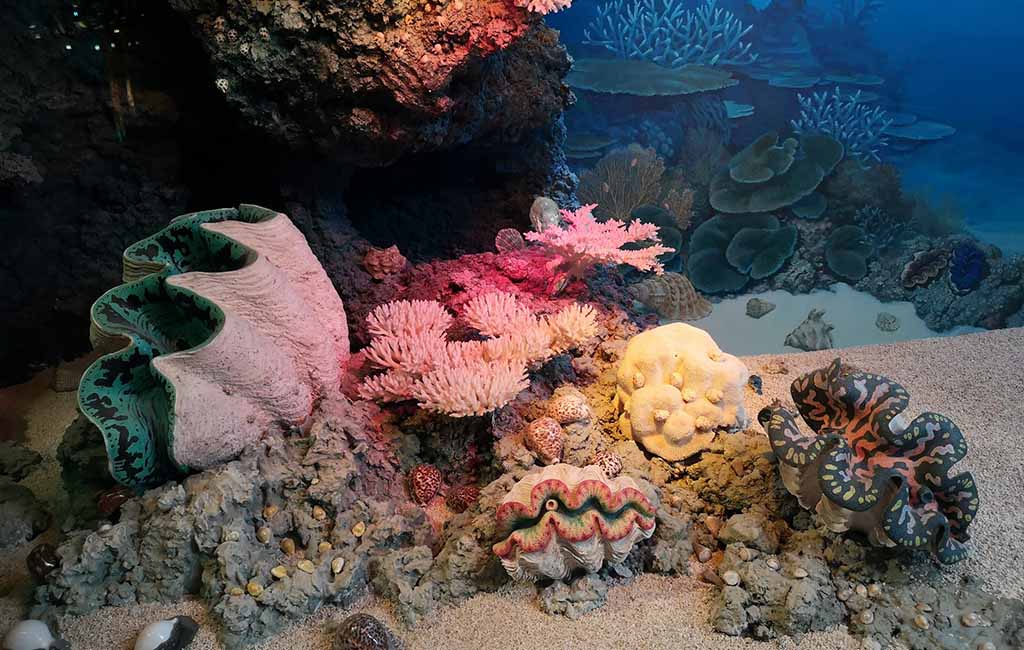
marine reef tank setup
Marine Reef Tank Setup Step by Step
Planing
Make a complete plan about every single aspect. For convenience, make a to-do planning list of everything. Decide about
- Tank shape
- Tank size
- Tank placement location
- Decide about the stocking, i.e., fish type, decor, plants, etc.
Gather Equipment and Essential Supplies
- Tank
- Tank stand
- Optimal lighting
- Heater
- Filtration (sump or AIO chamber)
- Protein skimmer
- Wavemaker
- RO/DI water
- Refractometer
- Water testing kit
- Salt mix
- Salt mixer
- Substrate
- Dry rocks
- Live rocks
- Tank decor
Tank Setting up
- Place the tank stand on a sturdy, level surface.
- Place the tank on the leveled surface.
- Install a filtration system
- Install heater
- Install wavemaker
- Install lights
- Install and set up the RO/DI unit
Substrate and Rock Addition
- Add a 2- to 3-inch-deep substrate at the bottom. Substrate thickness can vary according to the requirements of different fish and other aquatic pets.
- Add live rocks for aquascaping.
- Ensure that rocks are stable. In case of any instability, make them stable. Stable rocks are necessary for coral placement.
Salt Mixing and Tank Population
- Mix the desired quantity of salt in RO/DI water in a separate container. Leave it for 24 hours to allow it to stabilize.
- After 24 hours, check the salinity. It should be about 1.025 SG. Otherwise, meet the target.
- Slowly fill the tank. Ensure that it does not disrupt anything.
Cycling Period
- Turn on ATO, heater, and pumps up to desired parameters.
- Let the tank cycle. In this procedure, you can use a raw shrimp or bottled bacteria.
- Regularly check the water parameters, especially ammonia, nitrite, and nitrate.
- The cycling period lasts for up to 2 months. It is complete when the ammonia and nitrite levels reach zero and the nitrate level is very low.
Addition of Cleaning Pets
After cycling is done, add natural cleaning pets to control early algae growth. Some natural cleaning pets include
- Snails
- Algae eaters
- Hermit crabs
Fish and Coral Introduction
After adding the cleaning crew, it’s time to add the fish.
- Quarantine the new fish.
- Acclimate the quarantine fish.
- Slowly introduce fish into the tank. Try to add 1 or 2 hardy fish at a time.
- After everything is fine, add beginner corals, i.e., mushrooms, soft corals, and zoanthids.
Coral Supplementation and Water Parameter Testing
- Test the calcium, alkalinity, and magnesium levels in the tank.
- In case of any deficiency, add the required supplements to the corals.
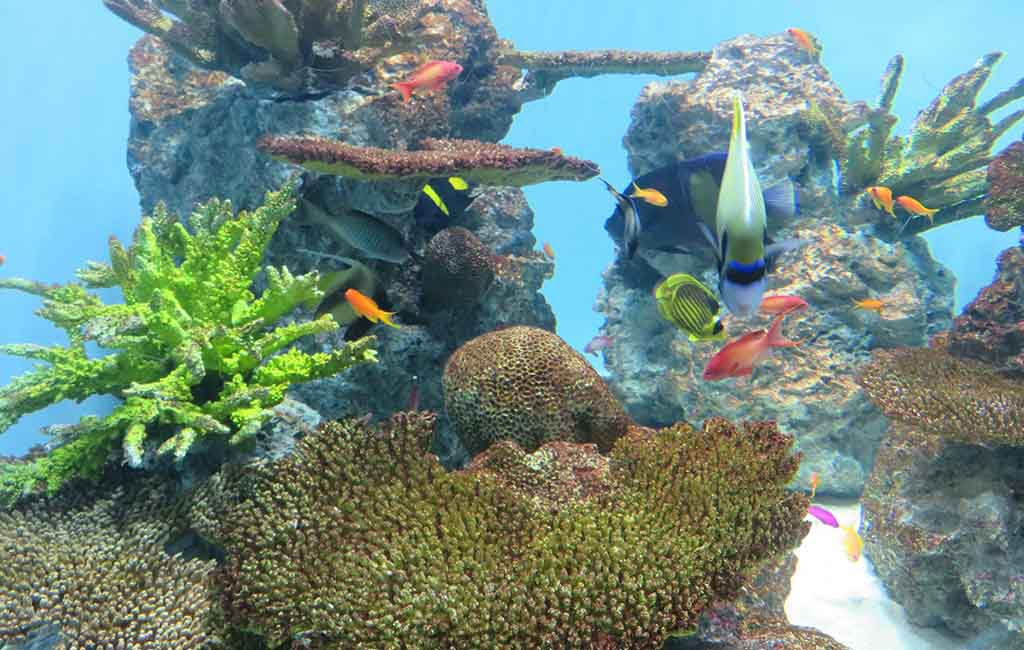
reef fish tank
After Reef Fish Tank Set up
Once you set up the entire tank, it comes to runs smoothly. Here is a step-by-step procedure to ensure everything is running smoothly.
Water Parameter Inspection
Water parameters are crucial for maintaining a smoothly running tank. Here are the optimal parameters for an all-in-one reef tank. Check these parameters weekly or bi-weekly to keep them under control.
| Parameter | Value |
| Temperature | 77–79 °F |
| pH | 8.1 to 8.4 |
| Salinity | 1.024 to 1.025 |
| Ammonia | 0 ppm |
| Nitrite | 0 ppm |
| Nitrate | Less than 10 ppm |
| Phosphate | Keep it low |
| Calcium | 400 to 450 ppm |
| Magnesium | 1250 to 1350 ppm |
| Alkalinity | 142 to 215 ppm |
Maintenance Routine
Weekly go for
- 10 to 20% water change.
- Clean glass with a magnetic scraper or an algae scraper.
- Clean the filter media
- Top off evaporated water with RO/DI.
Algae and Pest Inspection
At early stages, you can observe the algae growth, diatoms, and cyanobacteria. They are reduced or controlled over time with the help of a cleaning crew. Moreover, these things were also left in the tank after maturity. Always use a natural method to control the algae or other pest problems. However, if they get out of control, use different methods according to the problem.
Equipment Inspection
Check the ATO system, lights, heaters, powerhead, return pump, etc., once a month. In case of any issue, resolve the problem as soon as possible.
Follow a Schedule
Make a daily, weekly, bi-weekly, monthly, quarterly, and yearly maintenance schedule and adhere to it. Always be patient and consistent with your schedule.
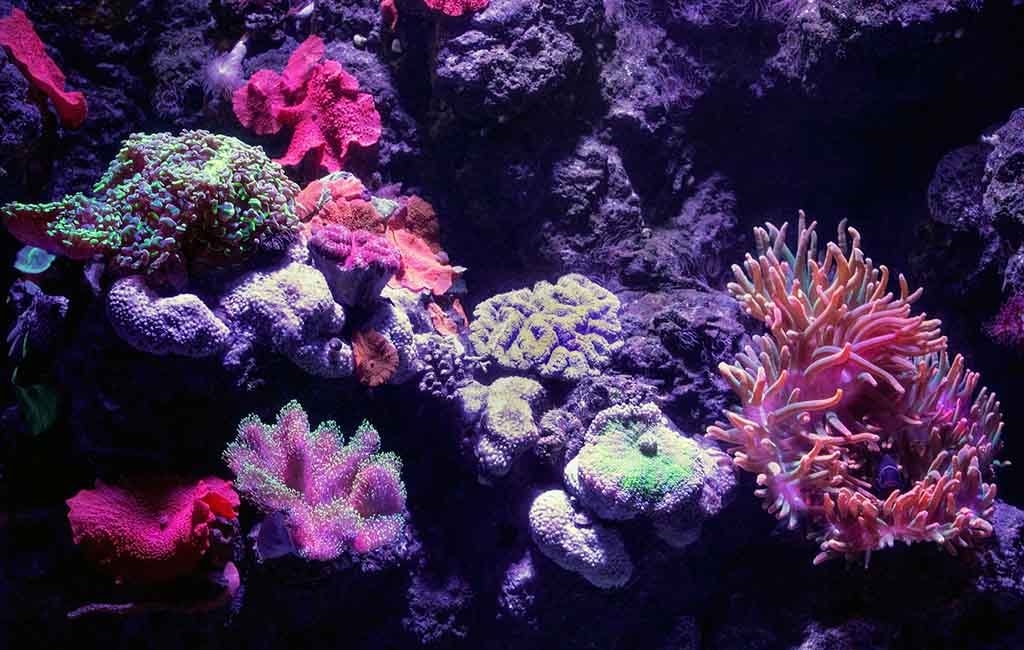
After Reef Tank Set up
A Call to Action
Up to this point, you have learned a lot about what is in a complete reef tank, its specialty, how to set it up, and how to run it properly. After reading, it’s time to set a live action. Follow the step-by-step procedure and enjoy it with your all-in-one reef tank. If you face any issues, please let us know in the comments section below.
Related Products




Leave a comment