
Squids are unique marine animals. They are distributed from top to bottom and have various mysterious and unique aspects. This article will cover these aspects. Moreover, you’ll learn about why you can’t keep true squids in an aquarium. Bobtail squids are also part of the discussion. Scroll down and enjoy the learning of the squid legend.
Content Table
True Squid in Aquarium
It is almost impossible to keep a true squid in an aquarium. If you fulfil their requirements, they can only live for a short duration, e.g., for the exhibition. For a long duration as a pet, it’s impossible to keep them alive and healthy in your tank. Here are reasons why you can’t keep them in your tank.

squid
Reasons Why You Can’t Keep a True Squid as a Pet
- They grow very fast and large, and fulfilling their space requirements is very hard.
- Their skin and mantle are extremely fragile. Even a slight injury can prove worse.
- They move very fast, and the tank’s wall can cause damage.
- They require constantly living food, and it’s almost impossible to fulfill their requirements for a long time.
- True squid are sensitive to stress.
- They require high oxygen levels in the tank as they move constantly.
- They are fast to escape, even through a small hole.
What Will Happen if They Live In the Fish Tank?
They will be short-lived or die there for the following reasons.
- Lack of oxygen
- Starvation due to high food demand.
- Injure themselves due to sharp aquarium edges at high speeds
- Falling under stress due to a lack of space.
- They will try to escape from the vicinity.
A Sort of Exception Bobtail Squid Group
Bobtail squid are not true squid. They are closely related to the cuttlefish group. They are named for their short, rounded mantles and stubby appearance. Usually, they live around the coastal regions throughout the world. Unlike the true squid, aquarists can keep them in their aquariums. Here is a brief introduction to bobtail squid.
| Feature | Short explanation |
| Size | 1 to 8 cm |
| Body shape | Small, round, and stubby appearance |
| Color | Change according to the situation |
| Bioluminescence | Yes, as they have symbiotic bacteria, i.e, Vibrio Fischer in their light organ |
| Habitat | Shallow sandy or muddy bottom |
| Nocturnal | Yes |
| What do they do in a threatening condition? | They release ink |
| Life span | 3 to 12 months. They die shortly after reproduction. |
| Diet | Small crustaceans
Small fish, but it is specific for some species. |
| Species | 68 |
Why Are They the Exception Group?
Here are several reasons why they are an exception to true squid.
Small Tanks Requirement
They can grow up to 8 cm, which is quite small. Therefore, they can easily fit in a fish tank. A small single bobtail requires about a 20-gallon tank. A 40 to 60-gallon aquarium can hold several bobtail squids. It’s unlike the true squid that needs a spacious setup, i.e., a 190-gallon spherical aquarium for an adult, which seems quite impossible to acquire and manage.
Calm Nature
True squid are often restless and continually moving at a high speed. Therefore, they require more space and a special aquarium setup. Bobtail squids spend most of their time sitting on the sand.
Burrowing Ability
Bobtail squids burrow themselves under soft sand. It helps them to overcome stress. Moreover, they do so due to their nocturnal nature, as they are only active during dark hours.
Short Lifespan
Most of the bobtail species can’t live more than 1 year; they typically live up to 9 to 10 months. They die after reproduction and leave the space for the next generation.
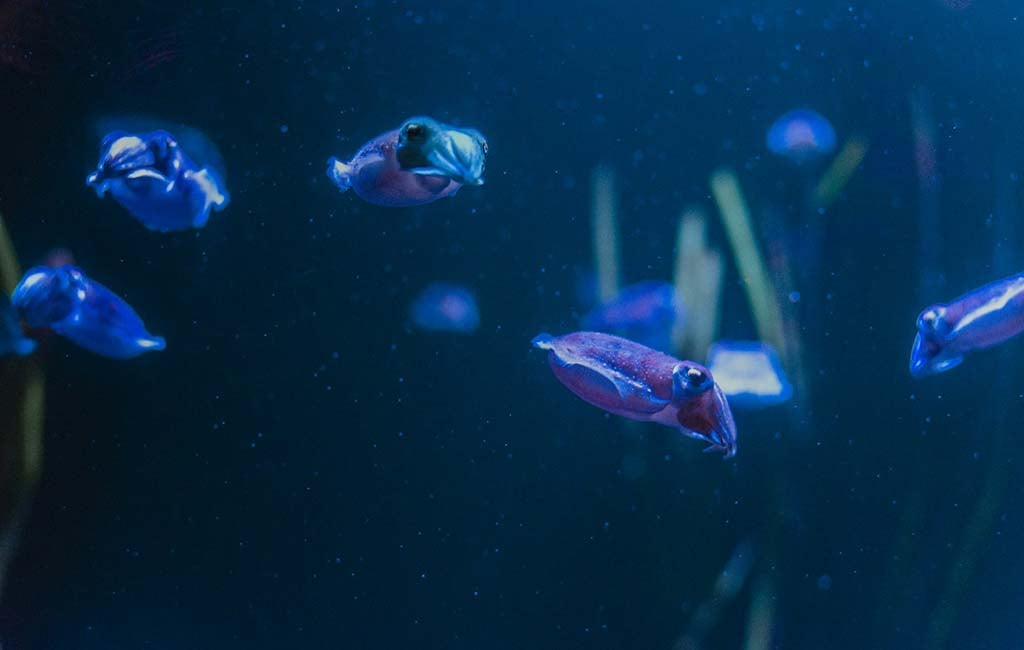
Bobtail Squid Group
The Squid Legend in Aquariums
Squids are mysterious. They have several anecdotes. Here are some anecdotes about the squid.
A Three Heart Specie
Unlike humans, squids have three hearts. Two of them, i.e., branchial hearts, pump the blood to the gills where it picks up oxygen. The third, i.e., systemic heart, pumps the oxygen-rich blood to the entire body. This unique feature helps them in their higher energy requirement for higher activity levels.
Chameleon of the Ocean
Squids are considered a chameleon of the ocean, as they change color within the blink of an eye. They do as they have specialized chromatophore cells. They contract or expand these cells to display the various coloration. This ability makes them a master of disguise. Moreover, they use it for squid communication, expressing emotions, and camouflage in case of danger.
Squid Ink
Other than color-changing ability, they have another added defense layer. Under stress or attack, they release ink as a smoke screen. This ink creates darkness and helps to buy some time to escape. Moreover, it’s also found that this screen kills the smelling sense of predators other than the visual smoke screen. Humans have used this ink for writing and medicine. Moreover, Italian and Spanish chefs cook some delicious recipes with Squid Ink.
Largest Eye
The colossal squid, a cousin of the giant squid, is known for its eye size, i.e., 11 inches. This eye size helps them to detect even the faint light in the twilight zone and follow their prey in that zone.
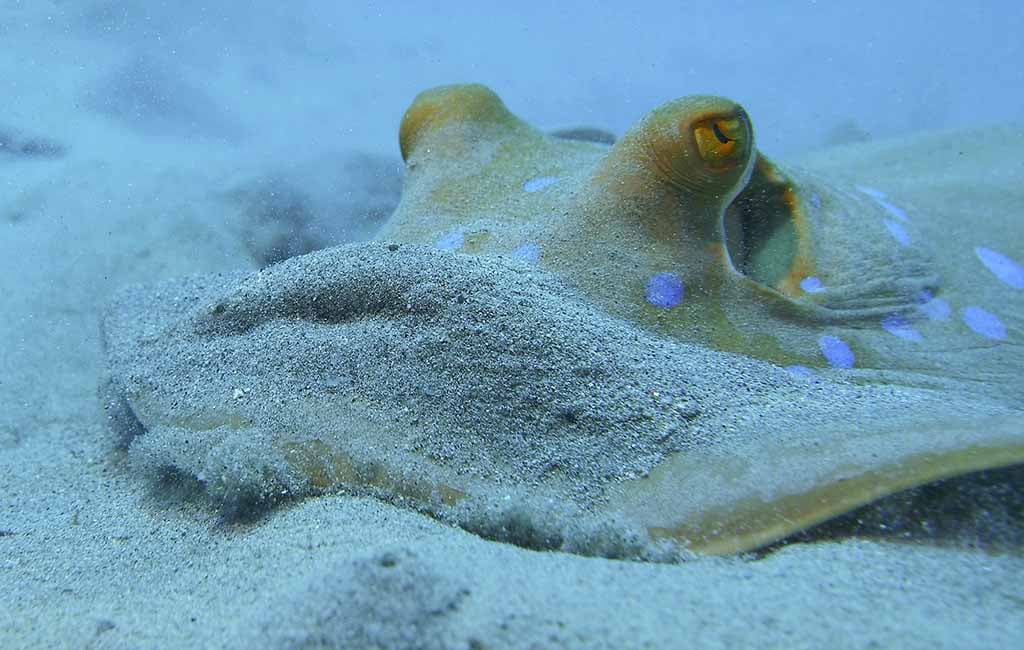
squid legend
High Speed Swimmers
Squids are the fastest-moving ocean creatures, i.e., 25 miles per hour. They achieve this speed with a propulsion mechanism. They intake the water into their mantle cavity and use specialized tubes, a siphon, to eject that water. This water ejection gives them high propulsion. They can move in any direction, i.e., forward, backward, and sideways. They just need to set the direction of the siphon tubes.
When they are in a real hurry, they can even jump out of the ocean for a while. Sailors have been observing this unique squid phenomenon for centuries. They are distributed in the subtropical waters of the Atlantic, Pacific, and Indian Oceans.
Doughnut Shape Brain
They have a unique brain shape, a doughnut shape. When they eat food, food literally passes through the middle of the brain and reaches the stomach. Although they have a unique shape, they are considered one of the most intelligent ocean creatures. They learn from their previous experience and adapt new methods to prey.
Exceptionally Large Size
You might have heard the stories of the huge kraken or watched it in the famous movie series, Pirates of the Caribbean, as Davy Jones’ pet kraken. However, these stories and movies are just fictional. Although the size is not enormous as mentioned, it is still ridiculously large, i.e., 13 meters.

true squid in an aquarium
The Mating Practices of Squid
Squids mate sexually, i.e., male and female partners. Male squid use their modified arm, i.e., hectocotylus, to transfer sperm to females. Usually, they fertilize in two ways, i.e., internally and externally. In external mating, the male partner deposits spermatophores on the female’s mantle or inside a special cavity. Some species do it externally by inserting into the female’s mantle cavity.
Mating Strategies
They use various mating strategies. Here are some of them.
- Large males guard females and protect them. However, some small species use their stealth and size to slip through the guards and mate with the guarded females.
- Sometimes, they perform mass mating; many squids mate at once. This results in the creation of clouds of sperm and eggs.
Multiple Partners for a Female
Females have their choice of partners. Sometimes, a single female mates with numerous male partners and stores the sperm of all males to fertilize the eggs. This brings diversity to the next generations.
Laying
After fertilization of eggs, the female lays gelatinous egg capsules. These eggs range from hundreds to thousands. These gelatinous egg capsules attach to the surrounding rock, seaweed, or seabed. Once they are laid, eggs don’t need parental care. They hatch on their own.
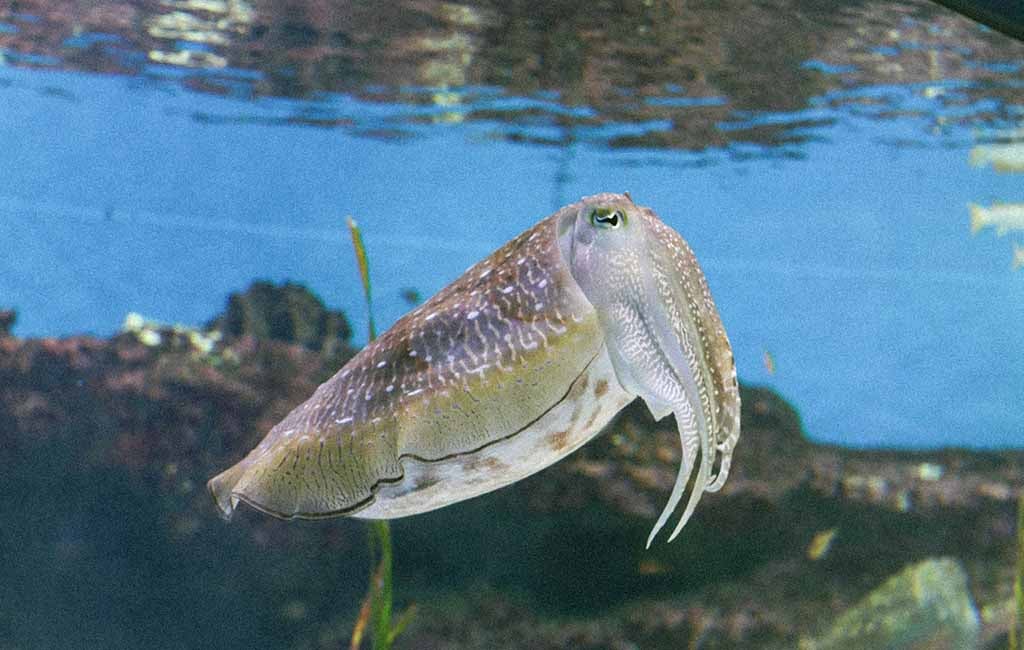
Mating Practices of Squid
Death After Lying
Not all, but most of the squid species have a very short lifespan, i.e., semelparous. Once they lay eggs, both partners die within a week. Usually, these species live for less than one year.
Giant Squid Mating
Giant squids have a different mating method than the prescribed method. These large squid might stab spermatophores into the female’s flesh and make it pregnant. However, their mating process is still a mystery as they live at higher depths of the oceans.
Semelparous and Iteroparous Squid
Here is a comparison between semelparous and iteroparous squids.
| Comparison Feature | Semelparous Squid | Iteroparous Squid |
| Reproduction | Once and then die | Multiple |
| Lifespan | Less than 1 year | Higher than a year |
| Species | Market squid
Japanese flying squid European squid |
Humboldt squid
Some ommastrephid squids |
| Population Portion | Higher species | Lesser species |
Lasting Impressions
True squids can’t be kept in the fish tank due to their higher activity, large size, and delicate mantle. However, bobtail squids have some other story, as you can keep them in your aquarium, but they are not true squids. Squids have various anecdotes, i.e., three hearts, lightning speed, enormous size, etc. Most of them die after mating with their partner. However, it’s not a generalized scenario. I hope you enjoyed the article, especially the anecdote section. If yes, type your favorite anecdote in the comment section.
Related Products



Leave a comment