
When establishing a fish tank, equipment, fish choice, and water quality gain the attention of many aquarists. These aspects are really important, but there is a forgotten detail about the tank level zones’ layout. A healthy aquarium not only appears beautiful. But it also keeps fish in good behavior, plants growing, and the environment well-balanced.
Content Table
Tank level zones will keep all species in terms of having enough space to grow, and will make the habitat look natural. All the tank level zones that point through to the substrate are distinct in their contribution to the creation of the ecosystem in the aquarium.
This article will take you through learning more about the types of tank level zones, creating leaf and substrate areas, and adding a driftwood zone in fish tanks. And even using the golden ratio in aquascape. At the end of it, you will have an idea of how these strategies are interconnected to give you a harmonious and functional design of a tank.
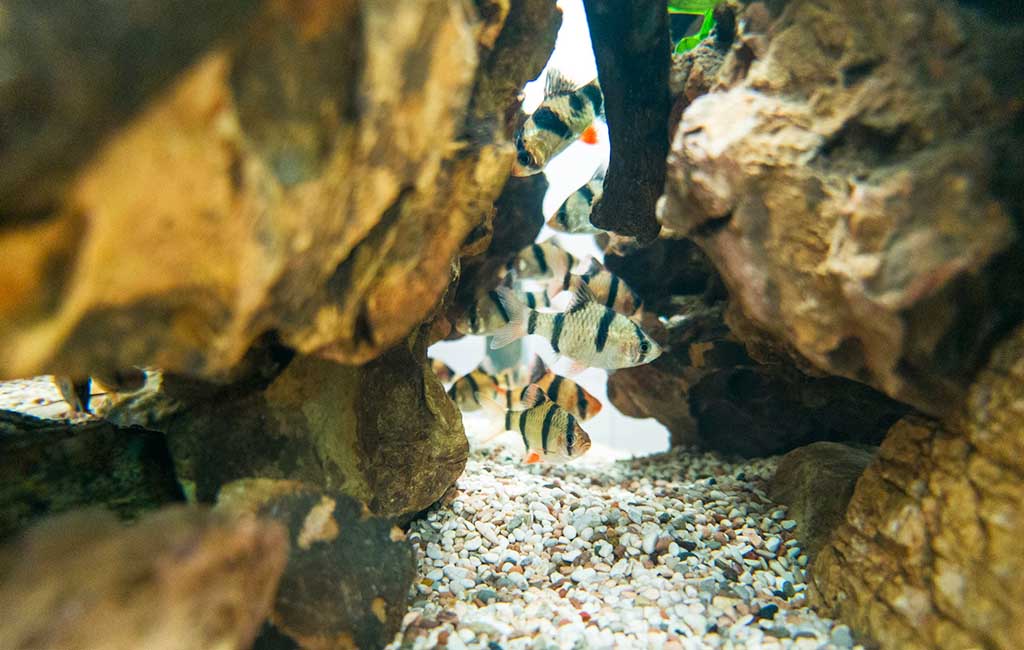
tank level zones
Fish Tank Level Zone
A tank level zone is a certain vertical/horizontal range inside an aquarium in which certain fish and items exist naturally. When in their natural habitat, marine life is synchronized according to their feeding pattern, body form, and comfort zone in layers of water. Replicating this layering in a fish tank will provide each species with a sense of security and avoid overcrowding.
A successful aquarium maintains a balance among these zones, and thus each species has its niche. This eliminates conflicts about territory, encourages natural tendencies, and results in the overall visual harmony of the tank.
Aquarists typically divide tanks into three vertical zones:
- Top Zone: This is the area of the water surface upon which fish that like to swim free or feed at the water surface are active. Such are hatchetfish, guppies, and bettas. These can aid in the support of floating plants, which can offer shade and a sense of security.
- Middle Zone: The fish in this region tend to like open water swimming as well as schooling. Tetras, barbs, and rasboras do well here and provide much movement to the focal point of the tank.
- Bottom Zone – The bottom feeders, such as catfish, loaches, and corydoras, spend their time scavenging near the substrate. These fish like hiding places, caves, and smooth gravel to explore in safety.
Along with vertical layers, certain aquarists also differentiate horizontal zones with left, center, and right-hand parts of the tank. The configuration of these zones can create a balance and flow, and none appear crowded or empty. As an example, driftwood may occupy the left side, plants may be adjusted to the left side, and a free-swimming area remains in the middle.
Adding Leaf Zone with Fish in the Tank
The other good point worth noting is the zone of leaves. There are loads of fish that are found among leaf litter, branches, and rotting plants in the wild. Recreating this atmosphere in an aquarium is not only aesthetically pleasing. But it also has great benefits to fish, which thrive on protection and a feeding habitat.
Can you add a leaf zone with fish in the tank?
Yes, you can put fish in a leaf zone in your tank. To achieve this, use aquarium-safe, aquarium-approved leaves like the Indian almond leaves (catappa), guava leaves, or oak leaves.
These leaves, over time, will slowly drop tannins into the water. This may help lower the pH and create a natural soft-water habitat. These conditions are ideal for many species, including dwarf cichlids, bettas, and shrimps.
To create a leaf zone:
- Choose one side or corner of the aquarium as the leaf area.
- Add a layer of dried, clean leaves directly on the substrate.
- Secure them with small stones or driftwood to prevent floating.
- Replace decayed leaves gradually to maintain water quality.
This area is not only good at providing hiding but it also promotes natural foraging activity. Biofilm will grow on the leaves and then be grazed upon by the shrimp and bottom dwellers. Moreover, the gentle tannins that are released reduce stress and resemble natural river environments. Introducing this feature, aquarists secure a calm, natural habitat for their fish.
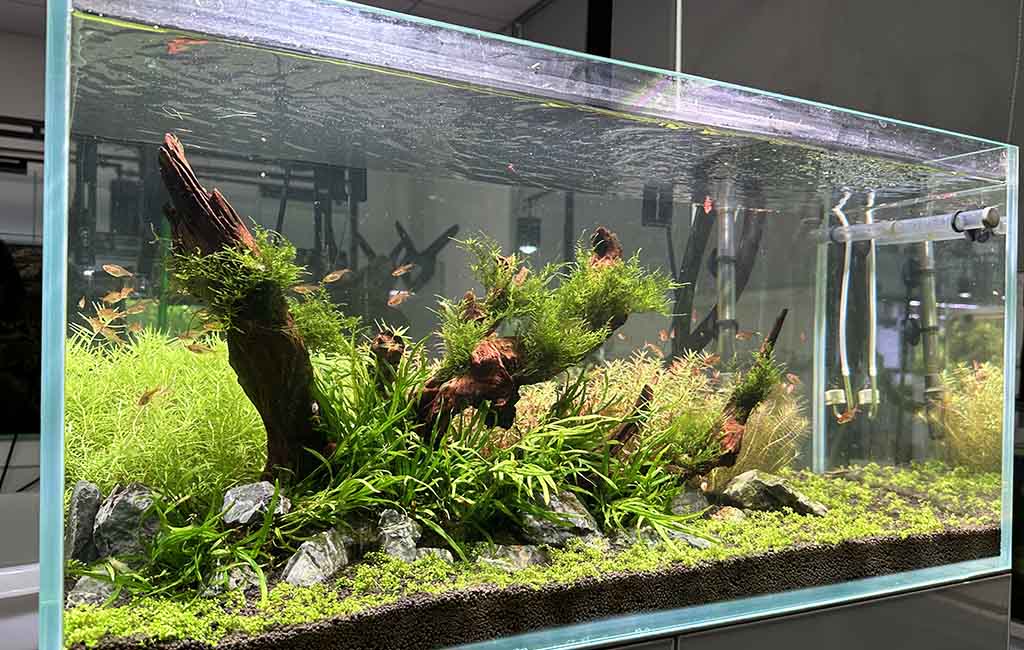
types of substrate zones
How Many Types of Substrate Zones in a Fish Tank
Any aquarium is built on substrate. It keeps the plants in position, harbours useful bacteria, and gives natural behavioural areas to fish. Substrate divisions can make a tank more functional and better looking.
The main types of substrate zones include:
1. Gravel Zone
The gravel is adaptable and suited for the majority of community tanks. It enables the circulation and sustains colonies of bacteria. Gravel is used by many aquarists in open surfaces where bottom feeders feed.
2. Sand Zone
Fine sand substrate is an excellent shelter for fish such as corydoras, loaches, and rays. Naturally, these species filter through sand, and this makes them remain healthy. A center or front sand zone can be made to be seen clearly.
3. Planted Soil Zone
Soil zones specialised aquarium dirt will support plant growth and provide supplements. A planted zone is typically in the back or sides of the tank, where tall plants can go deep into the substrate and make dense backdrops.
4. Rock and Pebble Zone
The larger pebbles or a combination of substrates produce a natural riverbed result. They may be positioned under driftwood or on one side, so they are in contrast.

Divide areas for tank building
How to divide these areas for the tank building?
Here are several practical methods to divide substrate zones during tank building:
- Layering Technique
You can layer the nutritious soil on the bottom and cover it with sand or fine gravel, instead of having all variants of substrates side by side. This enables rooted plants to get nutrients and prevents the top from being messy and creating an unfavorable environment for fish.
- Hardscape Barriers
Create modesty via rocks, driftwood, or rockery. For example, a large piece of driftwood can separate a sandy area for bottom dwellers from a soil-rich zone for plants. These barriers aid in avoiding the mixing of substrates, besides adding aesthetic endeavour.
- Sloping Design
By making the slopes, perspective is created in the aquarium. To give an example, you may leave the substrate elevated in the back using soils rich in nutrients and slop to the front with sand or gravel. This is not only beneficial in keeping the taller plants at the back, but it also offers an open foreground area to schooling fish.
- Zoning with Plants
Natural barriers between various substrate zones can be provided by tall-stemmed plants or their carpets of foreground vegetation. As an example, a thick wall of hairgrass may separate a sandy section from a gravel one.
- Transition Areas
Rather than establishing abrupt edges, use transition material, either by mixing a bit of gravel into the sand or by throwing a few pebbles in the outer perimeter of soil areas. This forms a natural transition that appears more like a riverbank or lake wall.
- Foreground, Midground, Background Planning
Put fine sand in the foreground to see better, and the bottom dwellers. Add the nutrient soil in the mid group to small to medium plants. Moreover, a richer substrate in the background is required for tall-rooted plants. This is not only intuitive to natural depth perception but also maintains an overall balance to the tank.
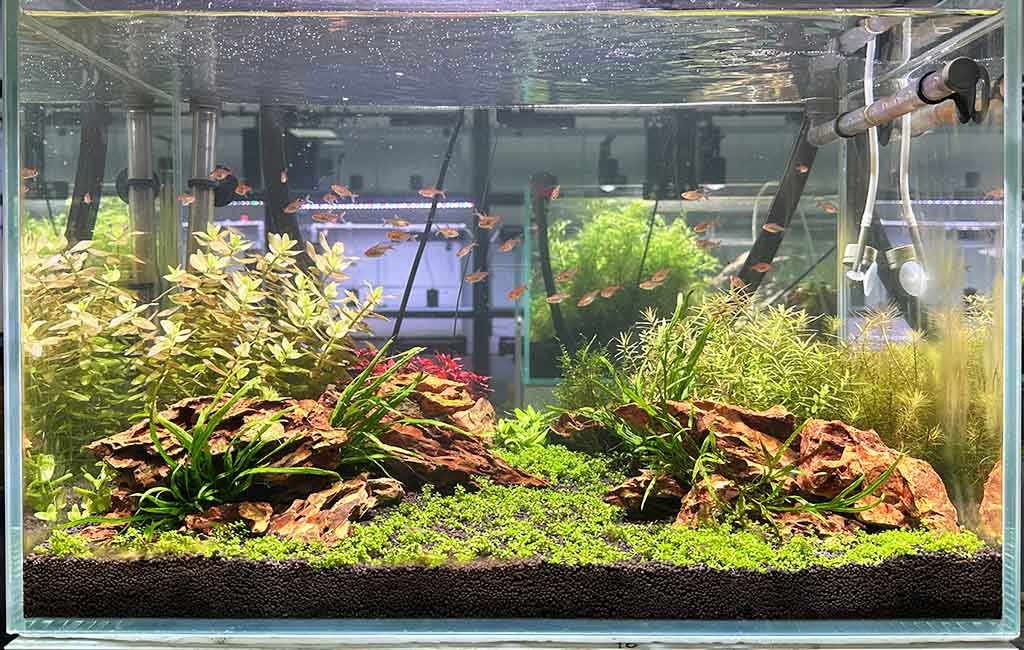
Driftwood zone in a fish tank
Driftwood Zone in Fish Tank
Having a drift zone will enable aquarists to provide structure and natural beauty in the aquarium. It creates hiding places, emits useful tannins, and gives plants such as Anubias, mosses, and ferns places to attach themselves.
Types of driftwood zones include:
- Central Driftwood Zone: A large driftwood is set in the middle, and it forms the center of the focus. Schooling fish can move about it, and bottom dwellers can sleep in shaded places underneath.
- Corner Driftwood Zone: Slotting the driftwood on a left or right corner evens out the space between the work without eliminating the swimming space. This is fine with a schooling fish tank that requires unlimited roaming.
- Vertical Driftwood Zone: Trees have tall driftwood branches that grow up like the tree roots. This form designs vertical appeal and enables naturally climbing fish (such as plecos) to roam around.
- Scattered Driftwood Zone: It recreates riparian areas or the forest floor using numerous smaller pieces distributed in a tank. The arrangement is an advantage for the shy fish that prefer having several hiding places.
Do not overcrowd the tank when setting up driftwood regions. Rather, anchor driftwood, substrate, and leaf zones to achieve a balance.
Considering the Golden Ratio in Aquariums
Another concept related to art and architecture that can apply to aquariums is the golden ratio. It is a mathematical proportion (about 1:1.618) that yields visually well-balanced and pleasing layouts. It is commonly used by aquascapers to determine the location of focal points such as driftwood, rocks, or clusters of plants.
The golden ratio should be observed when computing the tank level zones. Place features to a slight degree off-center on the ratio rather than smack in the middle of it. As an example, we can talk about a driftwood object that is set approximately one-third to the left-hand side, thereby inviting the gaze.
With the aid of the golden ratio, it is possible to balance the top, middle, and bottom zones. In case a tall plant needs to be brought to the surface, a piece of driftwood or a rock at the other side can make the bottom half balanced.
Bringing It All Together
Constructing an effective fish tank is much more than selecting the equipment and then filling the tank with fish. The factor of tank level zones is crucial to the application of an environment within which the species coexist peacefully and act naturally. Top, middle, and bottom zones, leaf, substrate, and driftwood are some of the types of zones in the ecosystem with their special function.
The golden ratio can also be used by aquarists to enhance their design by balancing and beautifying it in all views. Well-planned tank design is low-stress on fish, conducive to the growth of plants. This creates a beautiful presentation to the aquarist.
It is always important to sketch out such zones when planning your aquarium and then add the water and fish.
You need to consider improving the arrangement:
- What species are going to be in what level
- How the plants and hardscape can be used to separate space, and
- What natural concepts, such as the golden ratio
These aspects combine to form not only a fish tank but an active living ecosystem that portrays the essence of nature in a home environment.
Related Products

Leave a comment