
Sometimes, aquarists pile up multiple tanks. All of these tanks serve a specific purpose. Every tank needs maintenance and proper care. If you are trying to manage them individually, it’ll be hard for you. If you manage them systematically, it will be fun and easy. This is the main topic of this article.
Content Table
You will learn about multiple tank syndrome, the pros and cons of having multiple tanks, and how to build with multiple tanks. Specifically, how to connect 3 tanks is quite interesting. Scroll to learn about this and many other things related to multiple tanks and how to connect them.
Multiple tanks syndrome
Multiple Tanks Syndrome
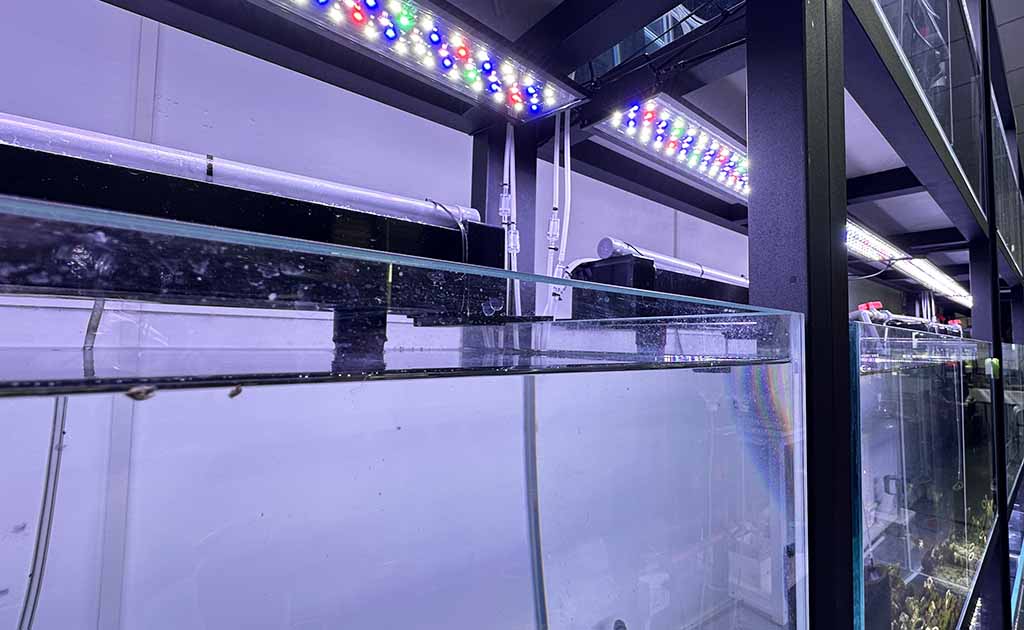
Like many other tank syndromes, multiple tank syndrome is not a medical condition. It is a funny concept in the aquarium world. It is a situation in which an aquarist has the urge to move from one tank to another and from another to one more. Although it is often considered a joke, in reality, it represents a significant shift. This shift requires time, cost, space, and icing at the top of the maintenance.
Evolution of Multiple Tank Syndrome
If you are curious about how it starts, it starts very innocently. Like aquarists think that they have a community tank. After having a community tank, they need a quarantine tank to avoid disease spread and a new fish house. A shrimp tank is also a nice thing to keep. What about having a fry tank to keep them safe from predators? Breeding tank and a spare tank. These tanks fill every spare corner in the room or space.
Is It Good or Bad?
It is neither good nor bad. It depends on who is dealing with the situation. It is a night mere if,
- Maintenance is killing the joy.
- Structural limits are ignored
- Electrical limits are ignored
- The tank’s adding speed to stock is higher than the cycling limit.
If you are not falling into these things, you are good to go.
Cycling Multiple Fish Tanks at the Start
Starting cycling simultaneously is better than cycling individually. Here are some optimal practices for cycling multiple fish tanks at the beginning.
- Use the share filter media from the established tank. It will speed up the process as the filter media already has a beneficial bacterial colony.
- Do fishless cycling. It means cycle your tank without any fish load. It will prevent your fish from ammonia and nitrate stress.
- Use a centralized sumpto cycle all the tanks at once.
- Use a seeded sponge filter. These filters act as a catalyst in the tank cycling process.
Most Optimal Approach
There are some practical methods. However, if you are looking for an optimal approach, here is the most suitable method.
- Cycle one tank completely and set it as a primary tank.
- Once the cycling of the primary tank has completed, use its seeded media in other tanks. This seeded media can include the sponges or ceramic rings.
- Check the water parameters regularly. Introduce fish to completely cycled tanks. Start with hardy fish species.

building with multiple tanks
The Pros and Cons of Multiple Tanks
As mentioned earlier, MTS is neither good nor bad. It has both sides, i.e., good and bad. Here are some advantages and disadvantages of having multiple tanks.
Pros
- It offers species-specific care. Like different fish species require different water parameters. Tetras need soft water, bettas love warmth, live beards look forward to hard water, and goldfish need cold water. Multiple tanks allow you to cater to different species accordingly.
- Separate tanks offer better disease control. It avoids the risk of disease spread and death of every fish in the tank.
- Multiple tanks provide isolation. This isolation helps to prevent the bullying of aggressive fish toward the polite and non-aggressive fish. Moreover, breeding pairs and sick fish have some space. The separate quarantine tank also helps to cater to the new fish.
- Design Flexibility is another advantage that you can enjoy with multiple tanks. Multiple tanks allow you to experiment with different aquascaping styles. You can build biotope setups and nano displays for different room arrangements.
Cons
- It requires extra effort in tank maintenance.
- The number of tanks is directly proportional to power usage. Each tank setup requires lighting, filtration, oxygenation, etc. These things add cost to a hobby.
- It requires a sturdy structure to hold multiple tanks.
- It can lead to burnout risks.
multiple fish tanks
Building with Multiple Tanks
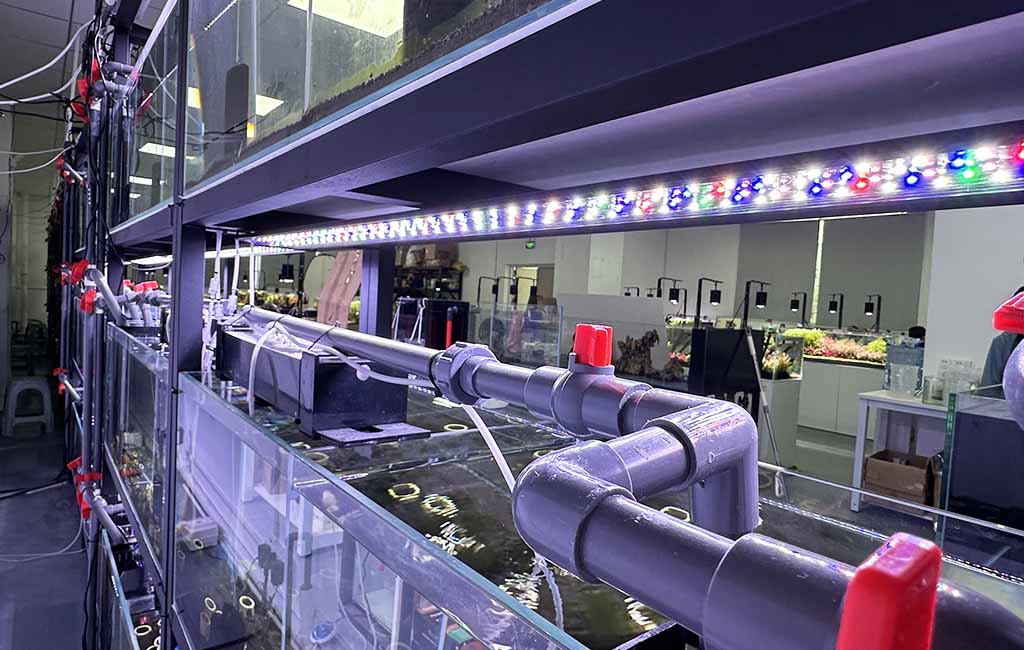
It is not a simple task to build multiple tanks. It requires us to pay attention to various aspects. It includes structural support, space efficiency, maintenance, and connectivity among tanks. In the following, you will learn about these aspects.
Structural Support
This is the most basic aspect of building a tank. Water carries weight. Increasing weight requires a sturdy structure that can handle the water weight. Moreover, each tank also carries extra weight of substrate, decorations, equipment, bio-load, etc. For better understanding, look at the following table.
| Tank Size | Approximate Weight |
| 10 gallons | 45 kg (100 lbs) |
| 20 gallons | 90 kg (200 lbs) |
| 40 gallons | 180 kg (400 lbs) |
Structure Guidelines
- Place the heaviest tank near the ground. It will lower the center of gravity and avoid possible damage.
- If you are using shelves to carry your tanks, use heavy-duty brackets to avoid tripping.
- Heavy-duty wood or steel shelves are the most durable option for carrying the aquarium’s weight.
- Place large aquariums beside load-bearing walls. Foundation walls work perfectly as load-bearing walls.
- Place your tank perpendicular to the floor joists. It will equally distribute the weight at various supports.
Space Efficiency
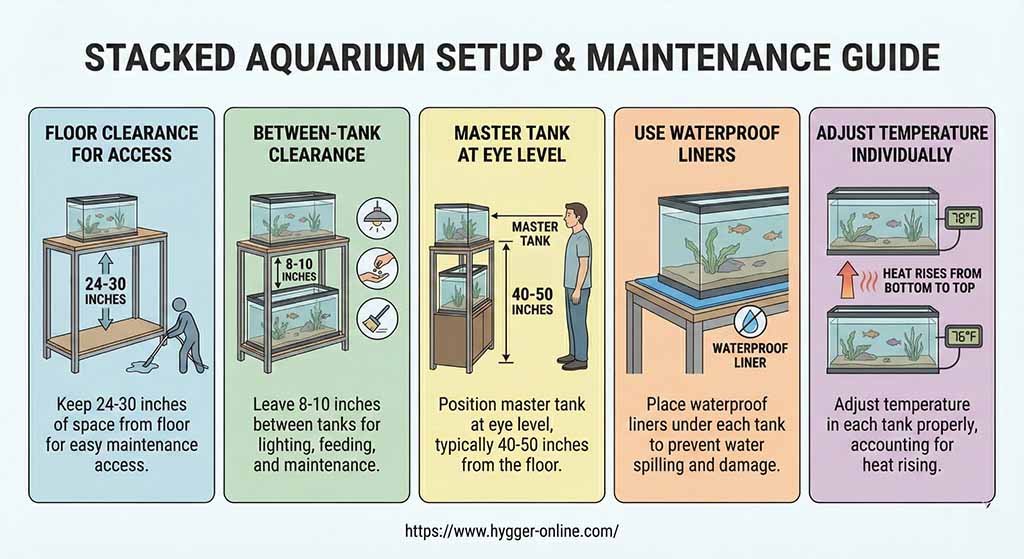
The other key aspect of having multiple tanks is efficient space-availability. The most efficient way is to properly stack the tanks in vertical format. It will carry maximum volume in minimal space. Here is some stacking-related information.
Stacking Suggestions
- Keep at least 24 to 30 inches of space between the floor and the bottom of the tank. It’s necessary for maintenance access.
- Leave about 8 to 10 inches of clearance space between 2 stacking tanks. It’ll create ease for lighting, feeding, and maintenance.
- Keep the master tank at eye level. It is usually 40 to 50 inches from the floor.
- Don’t forget to use waterproof liners or mats under each tank. It will avoid water spilling.
- Adjust the temperature in each tank properly. Temperature rises from bottom to top.
stacked aquarium setup
Connectivity
Here are varying guidelines for solitude and connected tanks. If you are using independent stacking, then there is no guideline for connectivity. Otherwise, you can use the connected sump, exchange the filter media, share water change, etc. Here is a general connectivity suitability suggestion table according to the aquarist’s experience.
| Method | Best For |
| Individual systems | Beginners |
| Linked filtration | Intermediate hobbyists |
| Central sump system | Advanced setups |
Water Storage and Accessibility
When you are building a multiple-tank system, water storage is crucial. It will help you store water that is readily usable during weekly water changes or other maintenance. Here are some suggestions regarding this point.
Suggestions
- Have at least a 55-gallon drum or tank to store and age the RO water very well.
- Install a floor drain near the tank setups to easily remove water.
- Use a garden hose for easy refilling of water to tanks.
- Have clear access paths. It’ll help in an emergency.
How to connect 3 tanks
How to Connect 3 Tanks?
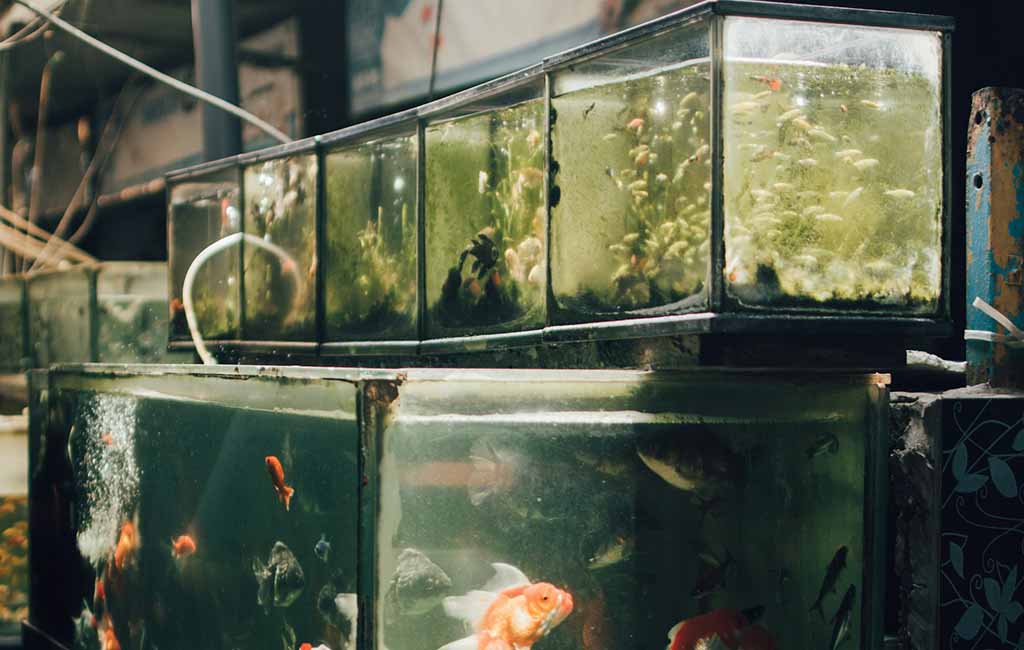
Connecting 3 tanks requires an efficient way to make things work seamlessly. You can connect the tanks in various ways. Here are some of these methods.
Central Air System
This is the cheapest connecting method. In this system, air is distributed to multiple sponge filters via PVC pipes.
Material
- High-output air pump
- ½ to ¾ inch PVC pipe
- Individual air control valves for each tank
- Airline tubing to sponge filters
- Pipe straps to secure PVC to the wall
How to Build the System
- Drill evenly spaced holes in the PVC pipe
- Insert air valves with a tight friction fit
- Mount the pipe above the tank level. It’ll avoid the backflow during power outages.
Connecting via Siphon Tubes
It helps to maintain an equal water level in all three tanks.
Setup
- Build U-shaped siphon tubes using PVC elbows and straight sections
- Submerge the tubes in each tank to avoid air from syphoning into pipes.
- Fill tubes with water and flip them into position between tanks.
- Place the canister filter in the first tank and return filter to the last or third tank for efficient filtration.
Sump Base System
The sump base system filters the water at a central tank. It is complex but offers long-term stability. This system is suitable for advanced hobbyists.
Installation Steps
- Drill overflow holes in each tank.
- Connect the overflow to a shared sump with pipes.
- Install ball valves on each drain.
- Use the signal return pump size for the entire system that caters to the total volume.
- Add check valves. These valves will prevent back-siphoning when there is no power.
Sump Capacity & Safety
- Size the sump to hold all overflow water during power loss
- Keep 20–30% extra capacity above the normal water level
- Account for drainage from all connected tanks to prevent flooding
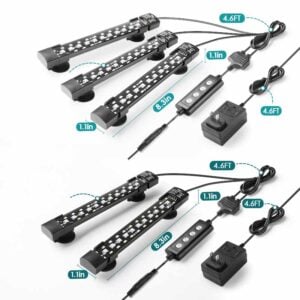
Light Linkage
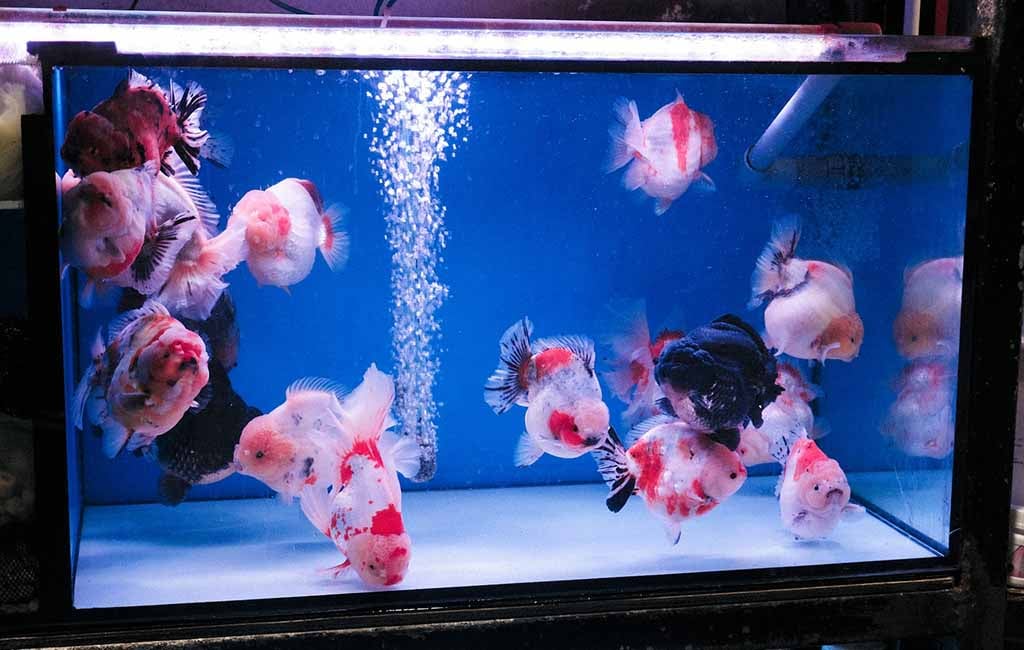
Using a single light strip or programmable linkage lighting to build a linkage across the tanks.
How Many Tanks
Equipment Coordination
- Use the linkage lighting across the tanks.
- Always use GFCI outlets to ensure electrical safety near water.
- Maintain the room temperature instead of individual tanks.
- Don’t forget to label the tanks. It’ll make the maintenance easy.
- Don’t forget to add the back to all equipment.
How Many Tanks Are Too Much?
There is no concrete answer to this question. However, if you feel the following symptoms, it means that you are overwhelmed.
- Water changes feel overwhelming
- Missed maintenance schedules
- Rising electricity bills
- Tanks start to look neglected
Tank Limits
This is the tank limit for an average aquarist.
| Experience Level | Recommended Max |
| Beginner | 1–2 tanks |
| Intermediate | 3–6 tanks |
| Advanced | 8–12 tanks |
| Breeder | System-based, not count-based |
In a nutshell, until you are enjoying any number of tanks, things are under control and moving smoothly, you can keep them. Moreover, the number of tanks is not as important as the system that connects the tanks.
Rounding Out the Discussion
A multiple-tank system is not bad if you are managing them systematically. You can coordinate the system with syphons, a central sump system, a central air system, and a linkage lighting system. Lay a solid foundation for the system. If you manage the points mentioned under building with multiple tanks, MTS is not a nightmare for you.
Related Products

Leave a comment