
Blackwater aquariums hold a quiet, mysterious beauty that feels very different from bright community tanks. When you first see a blackwater setup, the tea-colored water, soft lighting, and calm fish movements immediately stand out. This type of aquarium closely mimics natural river systems found in South America, Southeast Asia, and parts of Africa. Many aquarists choose blackwater tanks not just for aesthetics, but for fish health and natural behavior.
Content Table
Certain species thrive only when their environment reflects these dark, tannin-rich waters. Understanding blackwater helps you create a tank that supports sensitive fish, reduces stress, and brings out natural colors and behaviors.
This article explores what blackwater biotope is, how it forms, the biotopes it represents, types of blackwater biotopes, suitable plants, and why it may be the right choice for your aquarium.
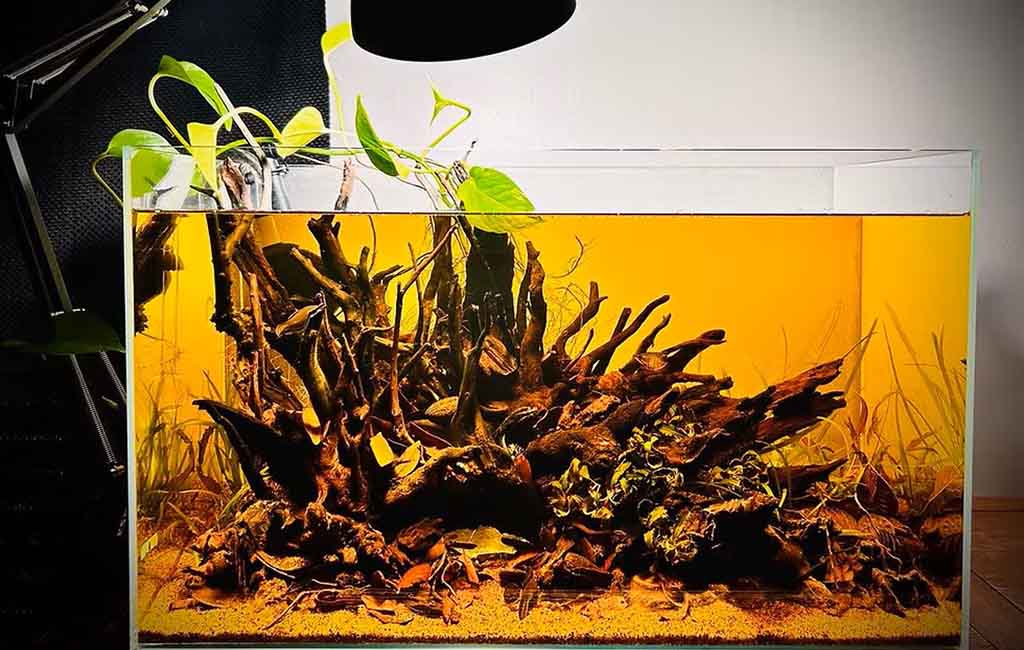
What is blackwater
Summary of Blackwater
What is Blackwater?
Blackwater refers to freshwater that appears dark brown or amber due to dissolved organic compounds. This coloration does not come from dirt or pollution, but from natural materials breaking down over time. In nature, blackwater rivers flow through dense forests where leaves, wood, and plant matter constantly fall into the water. As these materials decompose, they release tannins and humic substances, staining the water. Despite its dark appearance, blackwater is often very clean and low in nutrients.
Composition of Blackwater
Blackwater is chemically distinct from clear or white water systems. It contains high levels of tannins, fulvic acids, and humic acids released from decaying organic matter. These compounds lower the pH, making the water acidic, often ranging between pH 4.0 and 6.5.
Blackwater is usually soft, meaning it has low mineral content, particularly calcium and magnesium. Conductivity and hardness are typically very low. This unique composition affects fish metabolism, immunity, and behavior in ways that standard aquarium water cannot replicate.
Why Special Fish Species Need Blackwater
Many fish species evolved specifically in blackwater environments and struggle in neutral or hard water tanks. Fish like discus, angelfish, cardinal tetras, wild bettas, and certain dwarf cichlids depend on acidic, soft water for proper health. Blackwater reduces stress by mimicking their natural habitat and lowering harmful bacteria levels.
The tannins also provide mild antibacterial and antifungal properties, which help protect fish with delicate skin or fins. Fish kept in blackwater often show improved coloration, stronger immune systems, and more natural breeding behavior.
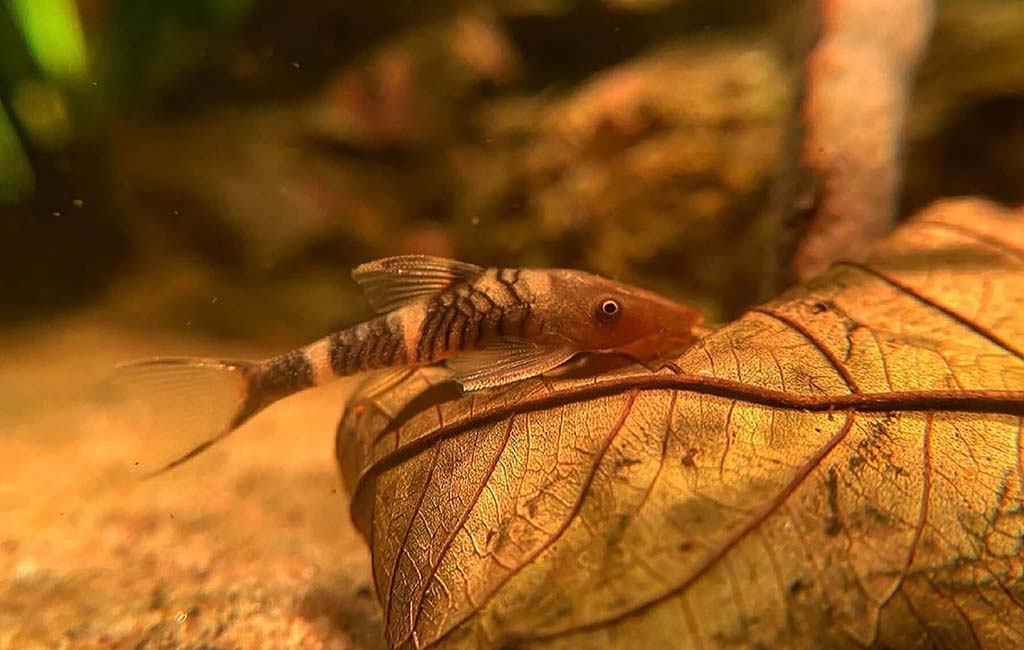
blackwater biotope
How Blackwater Forms in Aquariums
1. Natural Process Behind Blackwater
In the wild, blackwater forms slowly over time as organic material accumulates and decomposes. Fallen leaves, seed pods, tree bark, and driftwood release tannins into slow-moving water. Rainwater flowing through forest floors adds more organic acids, further softening and acidifying the water.
Limited water movement prevents these compounds from dispersing quickly, allowing the dark coloration to develop. This natural process can be replicated in home aquariums with careful planning and patience.
2. Creating Blackwater at Home
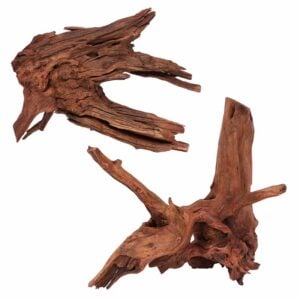
To create blackwater in an aquarium, you need to introduce safe organic materials that release tannins naturally. Driftwood is the most common starting point, especially Mopani wood, Malaysian driftwood, or spider wood.
These woods slowly leach tannins into the water, darkening it over time. Indian almond leaves are another popular choice, as they release tannins quickly and provide shelter for fish. Other natural materials include oak leaves, beech leaves, alder cones, and seed pods designed for aquarium use.
3. Preparing Materials Safely
Before adding organic materials, proper preparation is essential. Driftwood should be soaked or boiled to remove excess tannins and prevent floating. Leaves should be dried naturally and rinsed before use. Avoid collecting materials from polluted areas or roadsides, as contaminants can harm fish. Aquarium-safe botanicals purchased from trusted sources ensure consistency and safety. Gradual addition is recommended, allowing you to control water color and chemistry changes without shocking fish.
4. Water Parameters and Filtration
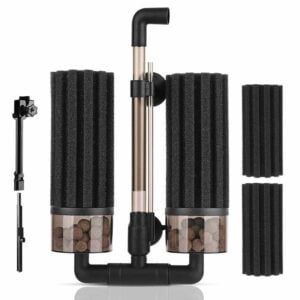
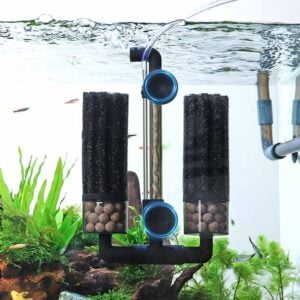
Blackwater tanks require attention to filtration and water parameters. Gentle filtration is ideal, as strong currents disrupt the calm environment many blackwater fish prefer. Sponge filters or low-flow canister filters work well. Activated carbon should be avoided if you want to maintain tannins, as it removes them from the water. Regular testing helps monitor pH, hardness, and conductivity, ensuring stable conditions. Small, frequent water changes using soft or reverse osmosis water help maintain balance.
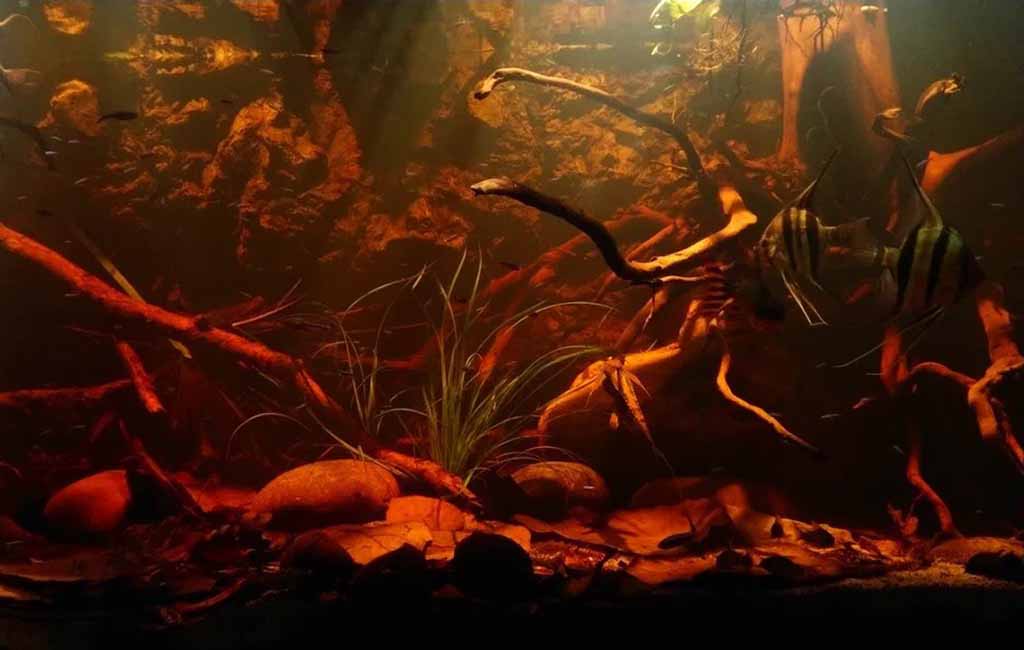
blackwater
Types of Blackwater Biotopes
1. Amazon Blackwater Biotope
The Amazon Basin hosts some of the most famous blackwater rivers, including the Rio Negro. These waters are extremely soft and acidic, with deep amber coloration. Fish species include discus, cardinal tetras, and rummy nose tetras. The environment features submerged roots, fallen branches, leaf litter, and minimal plant growth. Replicating this biotope focuses on open swimming areas, dark substrate, and gentle lighting.
2. Southeast Asian Blackwater Biotope
Blackwater habitats in Southeast Asia support species like wild bettas, gouramis, rasboras, and snakeheads. These environments often include peat swamps and forest streams with dense leaf litter. The water is acidic and stained dark brown, with floating vegetation and submerged roots. Aquariums replicating this biotope benefit from heavy use of leaf litter, floating plants, and low lighting. Fish from these regions are often shy and appreciate visual barriers and hiding spots.
3. African Blackwater Biotope
Some African river systems also exhibit blackwater conditions, supporting species like Congo tetras and certain killifish. These environments tend to have slightly higher mineral content than Amazon blackwater but still maintain acidity and tannin presence. Driftwood, seed pods, and gentle flow help recreate these habitats. African blackwater setups often balance open swimming space with shaded refuge areas.
4. Mixed Blackwater Community Tanks
Not all blackwater aquariums strictly follow a single biotope. Some aquarists create mixed blackwater community tanks using compatible species from similar water conditions. This approach focuses more on water chemistry and atmosphere than on geographic accuracy. While not biotope-pure, these tanks still provide the benefits of blackwater, including reduced stress and natural behavior.
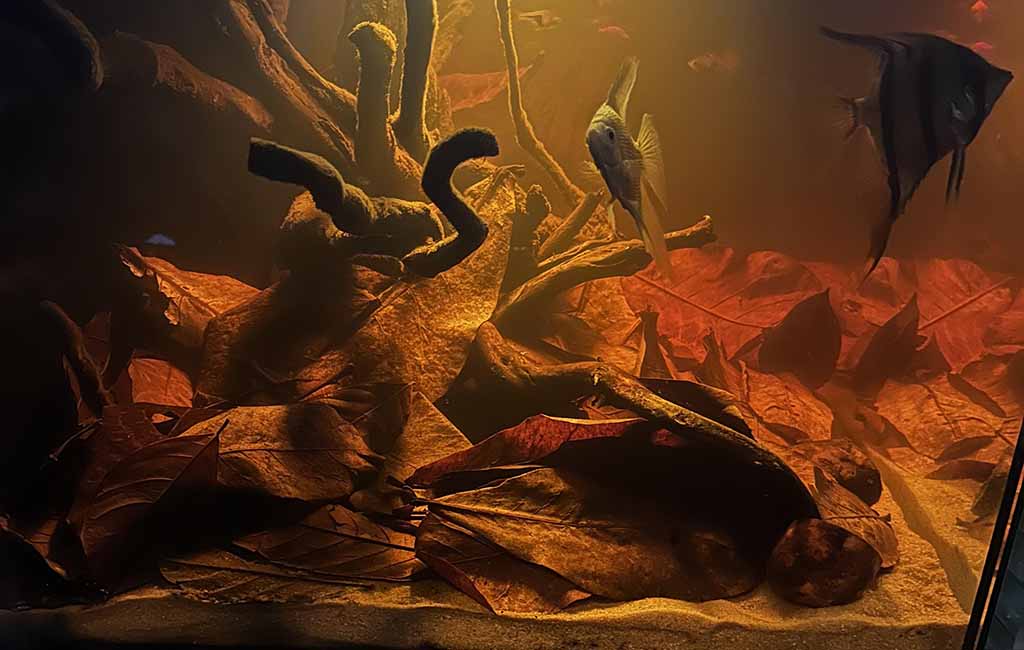
types of blackwater biotopes
Plants That Can Grow in Blackwater Biotopes
1. Challenges of Plant Growth in Blackwater
Blackwater environments are naturally low in nutrients and light, which limits plant growth. Many blackwater habitats rely more on leaf litter and submerged wood than dense vegetation. In aquariums, plant selection must account for low light, acidic water, and soft conditions. Not all aquatic plants tolerate these parameters, but several hardy species adapt well.
2. Low-Light Plant Options
Plants like Anubias, Java fern, and Bucephalandra are excellent choices for blackwater tanks. These plants attach to driftwood or rocks and do not require nutrient-rich substrates. They tolerate low light and acidic water, making them ideal for shaded environments. Their slow growth also aligns well with the calm nature of blackwater aquariums.
3. Floating Plants for Blackwater Tanks
Floating plants play a crucial role in blackwater setups. Species like Amazon frogbit, Salvinia, and water lettuce diffuse light and provide surface cover. This helps reduce stress in shy fish and enhances the natural look of the tank. Floating plants also absorb excess nutrients, supporting water quality in low-maintenance systems.
4. Mosses and Specialized Plants
Aquatic mosses such as Java moss and Christmas moss adapt well to blackwater conditions. They provide shelter for fry and microfauna while thriving in soft, acidic water. Some crypt species, like Cryptocoryne wendtii, can also adapt over time if water conditions remain stable. Patience is important, as plants may take longer to adjust in blackwater tanks.
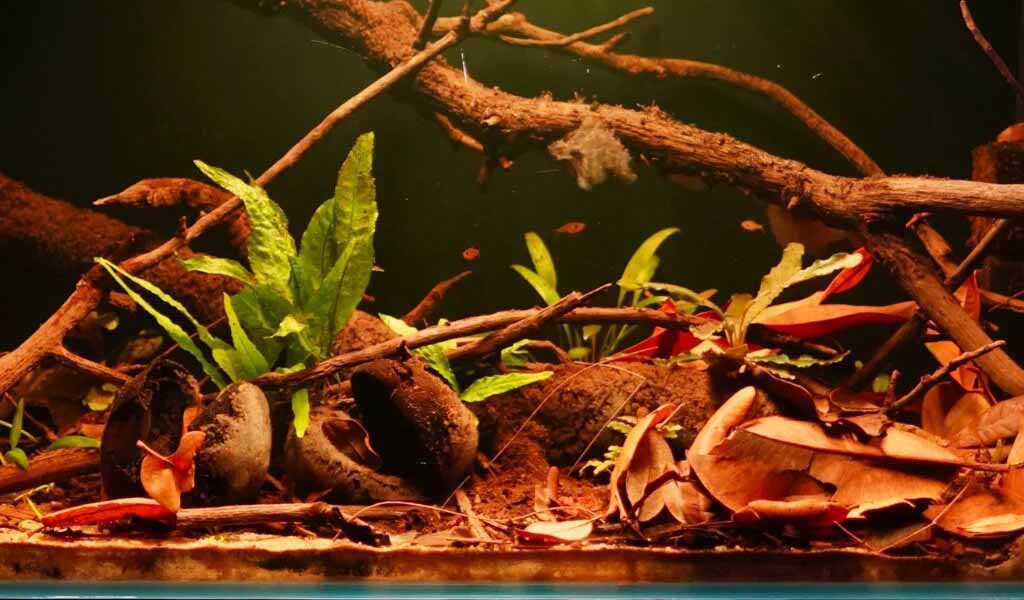
Plants in Blackwater Biotopes
Parting Thoughts
Blackwater aquariums offer a unique and rewarding experience that goes beyond traditional fish keeping. Their dark, calming appearance reflects some of the most pristine aquatic habitats on Earth. By understanding what blackwater is, how it forms, and which species depend on it, you can create a tank that supports natural behavior and long-term fish health.
Building a blackwater aquarium requires patience, careful material selection, and attention to water chemistry, but the results are worth the effort. Fish display richer colors, calmer behavior, and stronger immunity when kept in environments that match their origins.
Whether you choose an Amazon blackwater biotope or a Southeast Asian-inspired setup, blackwater tanks provide a peaceful, authentic, and visually striking aquarium experience.
Related Products


Leave a comment