
The appearance of your aquarium might be transparent, yet it is not necessarily a clean and healthy aquarium. To keep your fish alive and in good health, it is necessary to solve the aquarium water quality problems and maintain the proper water quality. Regardless of the type of guppies, goldfish, or cichlids, water chemistry has a direct impact on their life span, development, and stress.
Content Table
But do you really want to change the water in your fish tank regularly? We will discuss technical causes of aquarium water changes and their effect on the nitrogen cycle in the aquarium, and the solution to achieving ideal water chemistry using the latest technology and care products.
aquarium water quality problems
Aquarium Water Quality Problems
The issue of aquariums on water quality arises due to the closed nature of the biological system of aquariums. Your tank does not have natural inflows and outflows, such as rivers or lakes, to dispose of wastes. It all stays inside: fish waste and old food, and plant debris.
These organic materials decompose and give out ammonia (NH3) to the water. Ammonia is very toxic, and it is able to burn the gills of fish, damage internal organs, and weaken the immune system. Stress becomes visible even at a low concentration of 0.25 parts per million (ppm).
In a properly cycled tank, beneficial nitrifying bacteria convert ammonia into nitrite (NO₂⁻) and then into nitrate (NO₃⁻) through the nitrification process. However, nitrates, while less toxic, still accumulate over time. If nitrate levels exceed 40 ppm, your fish may develop fin rot, poor appetite, or reproductive issues.
Other common water quality issues include:
- pH instability: Because of dissolved wastes and carbon dioxide, over time, the pH drops, making the water more acidic.
- Water hardness imbalance: Soft minerals such as calcium and magnesium are either exhausted or accumulated.
- Low dissolved oxygen (DO): Organic waste absorbs oxygen, hence fish breathe with difficulty.
- Algae blooms: The cause of excess nitrates, phosphates, and light.
Poor quality of water also encourages the presence of harmful anaerobic bacteria that produce hydrogen sulfide gas, a poisonous compound that has a rotten egg smell. Constant check-ups are useful in the prevention of such harmful imbalances.
aquarium water changes
In-Depth Explanation of Aquarium Water Changes
A water change is not merely an act of removing dirt, but it is a chemical reset. By adding fresh water over a part of the old water, you replenish oxygen, eliminate toxins, and replenish trace minerals that are needed by fish.
Technically, water changes regulate three major aspects:
- Biological balance: Keeps ammonia and nitrite concentrations at zero.
- Chemical balance: Maintains stable pH, GH (general hardness), and KH (carbonate hardness).
- Physical clarity: Removes dissolved solids and particulate matter.
The effectiveness of a water change depends on:
- Tank size: Smaller tanks (under 20 gallons) require more frequent changes because pollutants accumulate faster.
- Stocking density: Heavily stocked tanks produce more waste per gallon of water.
- Filtration strength: Even strong filters can’t remove dissolved nitrate — only water changes can.
Ideal water change schedule:
- Lightly stocked tanks: 25% every two weeks.
- Moderately stocked tanks: 20–30% weekly.
- Heavily stocked or breeding tanks: 30–40% weekly.
Technical water change steps:
- Measuring water parameters before change. Record ammonia, nitrite, nitrate, and pH.
- Electrical appliances such as filters and heaters should be turned off to avoid damage.
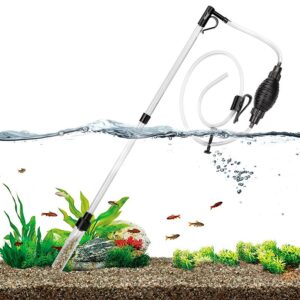
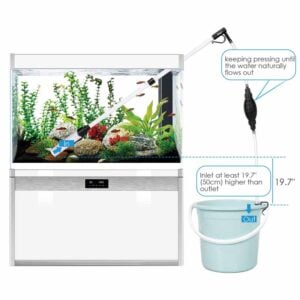
- Remember to clean the substrate by aquarium usage of a gravel vacuum or siphon. This gets rid of detritus pockets, which can produce ammonia.
- Gently sprinkle plants and decorations with tank water. It is not recommended to use soap or tap water.
- Add dechlorinated water that matches the tank’s temperature and chemistry (±1°C difference is ideal).
- Recheck parameters after refilling. Make sure pH and temperature remain stable.
Never do a 100% change of water unless there has been some contamination of the water in your tank by medication or chemical spillages. This will kill the beneficial bacteria colonies and lead to a perilous rise of ammonia.
Water Chemistry and Water Testing
Are Water Changes Really Necessary?
Theoretically, yes, since in a closed system, water cannot clean itself. The bio filter merely processes nitrite and ammonia into nitrate. It is unable to remove the accumulation of nitrates or restore the levels of trace minerals such as calcium and potassium.
However, the frequency and amount of water changes depend on your system’s stability.
You must change water when:
- Ammonia or nitrite is above 0 ppm.
- Nitrate levels exceed 30–40 ppm.
- pH drops or fluctuates by more than 3 units.
- Dissolved oxygen drops below 6 mg/L(detectable with a DO meter).
- Algae growth or cloudy water appears.
You can delay water changes when:
- The aquatic vegetation is abundant, with the plants absorbing ammonia, nitrite, and nitrate to generate food.
- It has a deep sand bed or bio-media reactor, which facilitates anaerobic denitrification (reduction of nitrate to nitrogen gas).
- You use an automatic top-off (ATO) system that stabilizes evaporation and salinity in marine tanks.
More sophisticated systems, such as the Walstad-style planted aquariums or biotope tanks, can allow the more sophisticated hobbyist to go weeks without making any change. As they depend on the plants and microorganisms to do all the natural filtration.
But in even such systems, depletion of trace elements takes place. In the absence of partial water replacement, minerals that are used in osmoregulation (such as potassium and magnesium) gradually disappear. Thus, it impacts fish metabolism and plant development.
Optimal Water Chemistry and Water Testing
Fish keeping depends on the scientific basis of water. You are trying to recreate the natural habitat of your fish and yet stay on your feet.
1. Key Water Parameters
| Parameter | Ideal Range | Description |
| Ammonia (NH₃) | 0 ppm | Toxic even at trace levels. |
| Nitrite (NO₂⁻) | 0 ppm | Indicates incomplete nitrification. |
| Nitrate (NO₃⁻) | < 40 ppm | Manage through water changes and plants. |
| pH | 6.5–7.5 (freshwater) | Affects metabolic and bacterial activity. |
| GH | 4–12° dGH | Controls mineral content and osmoregulation. |
| KH | 3–8° dKH | Buffers pH against sudden drops. |
| Temperature | 75–80°F (24–27°C) | Species-specific; tropical fish prefer warmer water. |
| Dissolved Oxygen | 6 mg/L | Essential for respiration and nitrification. |
2. Water Testing Tips
- Use liquid reagent test kits for precise readings, or a water meter is quick and more
- Test weekly, especially after feeding, adding new fish, or cleaning filters.
- For planted tanks, test phosphate (PO₄)and CO₂ levels, as imbalances can fuel algae.
- Log your results to observe trends over time — this helps identify slow chemical drifts.
3. Adjusting Chemistry Safely
- Use crushed coral or aragonite to raise KH and stabilize pH.
- Add driftwood or peat moss to lower the pH naturally.
- Supplement GH using mineral salts for aquariums.
- Always change chemistry gradually, not more than 0.2 pH units per day.
Perfect chemistry is less desirable than a stable one. Fish are more accustomed to stable parameters rather than a sharp change that occurs frequently.
Aquarium Water Care
Adding Aquarium Water Care Products
Contemporary aquarium products may help you to be more accurate and effective in maintaining your water. They are beneficial when they are applied in the right manner as they stabilize chemistry, enhance bacteria, and guard fish against toxins.
Here are some essential product categories and their technical roles:
1. Water Conditioners
- Neutralize chlorine and chloramine, which kill beneficial bacteria.
- Some advanced types also detoxify ammonia and nitrite temporarily.
2. Bacterial Starters and Boosters
- Contain strains like Nitrosomonas and Nitrospira, which accelerate biofiltration.
- Useful after cleaning filters or setting up a new tank.
3. Buffer and pH Stabilizers
- Maintain carbonate levels (KH) to prevent acid crashes.
- Ideal for soft water or planted tanks with CO₂ injection.
4. Trace Mineral Supplements
- Replenish calcium, magnesium, and potassium that fish and plants consume.
- Prevent osmotic stress and support fin growth.
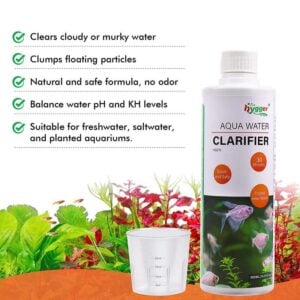
5. Water Clarifiers
- Bind micro-particles into larger clusters that filters can trap.
- Best for polishing water after gravel cleaning.
6. Ammonia and Nitrite Detoxifiers
- Convert free ammonia into ammonium (NH₄⁺), which is less toxic.
- Provide emergency relief during filter failure.
Always follow the manufacturer’s dosage instructions. An excess of this may result in bacterial killing or chemical instabilities.
To achieve the highest possible results, these products should be used in association with a proper maintenance routine – regular feeding, regular washing of filters, and changes of the water.
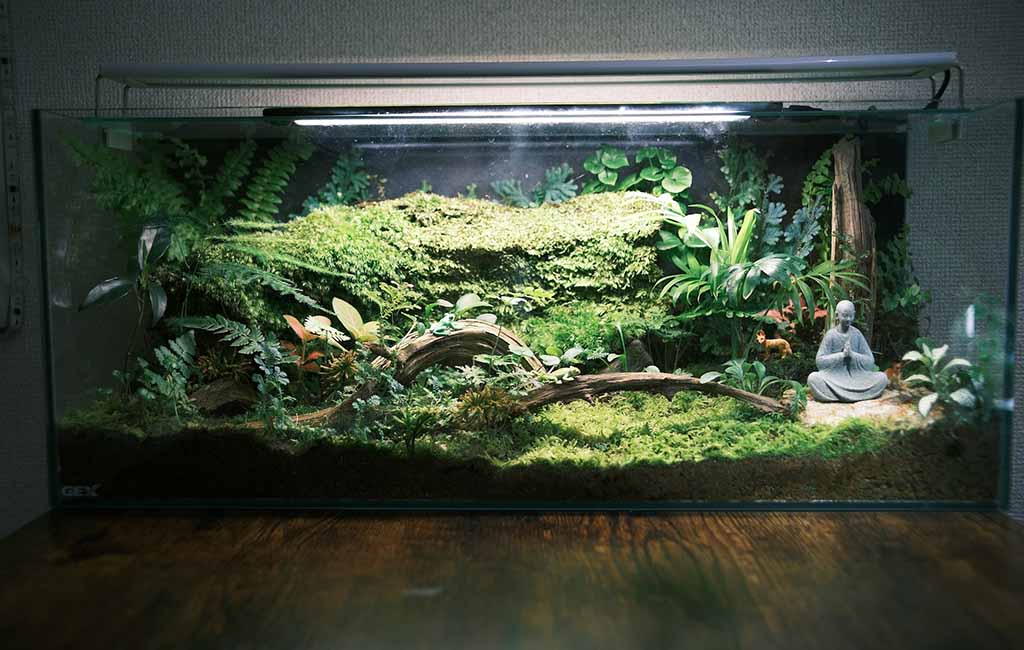
Does a fish tank need a water change
Bringing It All Together
Then, do you mind if your fish tank gets water changed? Theoretically and practically, yes. The basis of the stability in water chemistry and fish health lies in water changes.
They regulate the accumulation of nitrates, replenish the minerals, and keep the bacterial ecosystem in your tank in balance. Imagine them as the natural replenishment of your aquarium.
Here’s your technical care checklist:
- Monitor ammonia, nitrite, nitrate, and pH weekly.
- Perform 20–30% partial water changes regularly.
- Match replacement water temperature and chemistry to tank conditions.
- Use dechlorinators and bacterial supplements to maintain biological balance.
- Keep oxygen levels above 6 mg/L using air stones or surface agitation.
- Log test data to track gradual trends in your water chemistry.
The keeping of an aquarium is a kind of balance between biology and chemistry. After learning the effect of water quality on the behavior, appetite, and color of your fish, it is easier and more gratifying to maintain.
Remember, your tank is a miniature ecosystem, and every water change helps it breathe a little better.
Related Products


Leave a comment