
It is relaxing to see small waves crashing in a fish tank. These movements not only make beauty, but they also make a great contribution to the health of your aquarium. The circulation of water makes the environment dynamic and balanced, regardless of whether it is freshwater or saltwater fish. It aids in the oxygenation of all the corners of the tank and the even dispersion of the nutrients.
Content Table
These natural water currents have been easily reproduced in modern aquariums using wave makers. All you have to do is a single click, and you can feel like you are in the ocean in your tank. We shall discuss what waves are, what is their importance, and how you can easily create waves in a fish tank with the help of the hygger 172 Aquarium Wave Maker DC Pump.
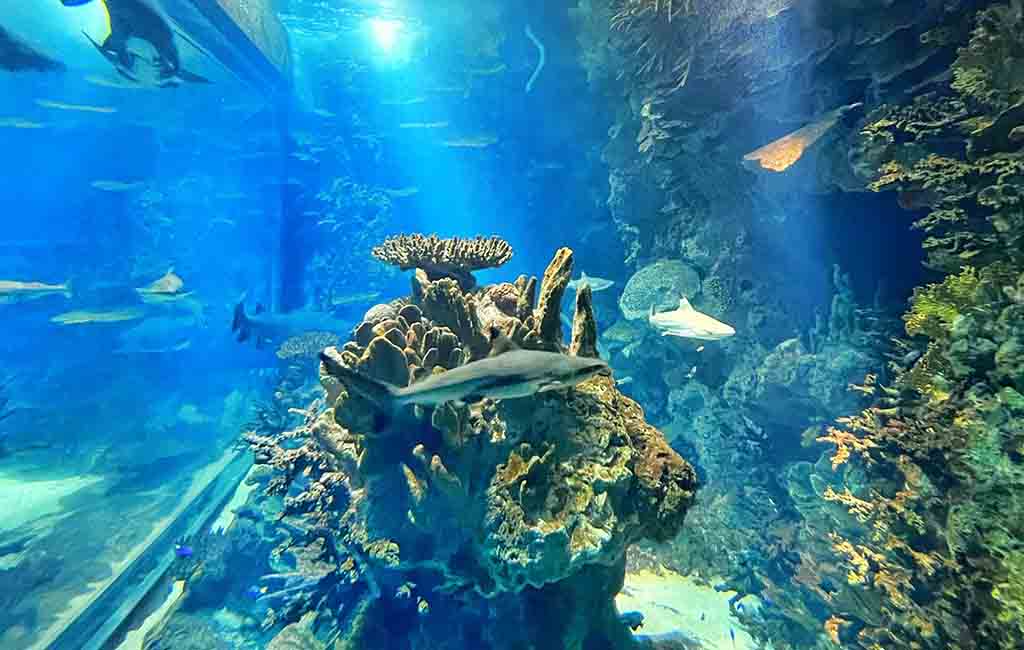
create waves in a fish tank
The Waves in the Fish Tank
When we refer to waves in an aquarium, we mean the regulated movement of water, which is analogous to the natural flowing of water in a river, lake, or ocean. These waves assist in reproducing the natural environment in which fish live in the world.
Water flow in nature provides oxygen, eliminates waste, circulates food, and nutrients. The losses of these advantages may be observed in a still aquarium, where the oxygen level is low, and the debris is deposited at the bottom. Waves, however, are good to keep a healthy ecosystem in which fish are more active and are no longer stressed.
Making waves is also a way of putting visual life in your aquarium. It is not stagnant water, but there is a flow that maintains your interest as well as that of your fish. It also works well to avoid dead spots where the water stagnates and causes a proliferation of algae growth or unhealthy bacteria growth.
In summary, therefore, ocean waves are not only beautiful, but they are also very useful to your tank: to create balance and health as well as happiness.
Does My Fish Tank Need the Waves?
Not all tanks require continuous water activity, but the majority of aquariums can use it. When you have naturally flowing water fish, like tetra, barbs, or ocean creatures, and want to put them in your home aquarium, a wave maker will make them feel right.
You can tell your tank might need waves if:
- You notice debris collecting in certain spots.
- Fish seem less active or stay near the water surface.
- The tank has uneven oxygen levels.
- Algae grows quickly on still surfaces.
In case some of them sound familiar, it will make a considerable change to complement them with controlled waves. Waves are used in distributing oxygen, carrier of nutrients, and in dispersing food particles.
Nonetheless, more docile fish such as Bangaii Cardinalfish (Pterapogon kauderni) or Lawnmower Blenny (Salarias fasciatus) can be found in cooler water. Then you can have your wave maker at a gentle or intermittent level. This is why it would be ideal to have a feature such as the wave maker that can be customized, such as the hygger 172 DC Pump. The strength and the frequency can be regulated to fit various species and sizes of tanks.
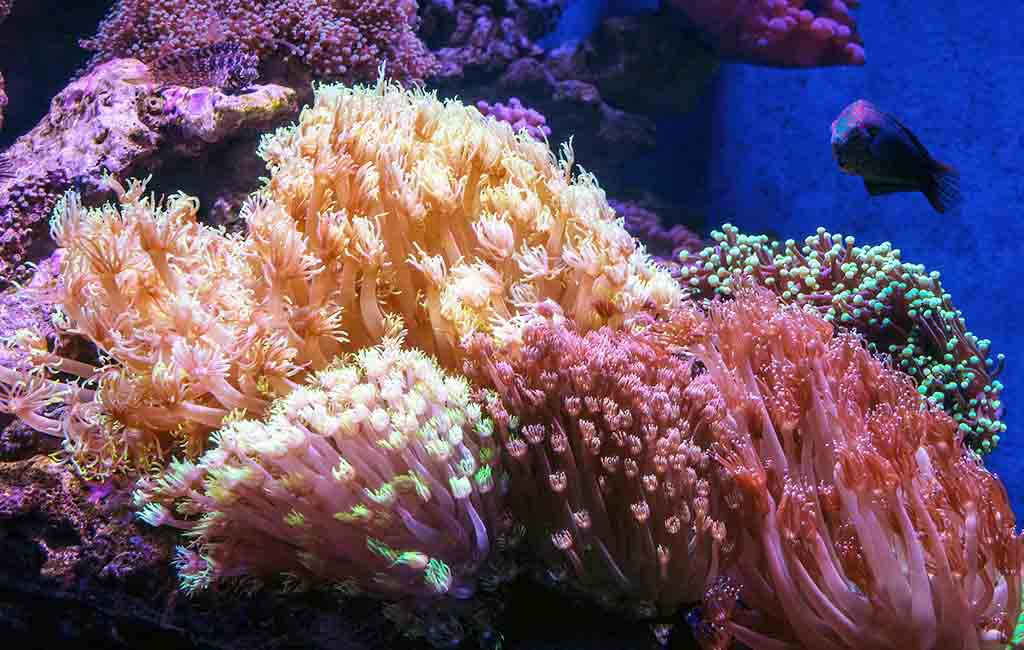
Does My Fish Tank Need the Waves
hygger 172 Aquarium Wave Maker DC Pump Review
hygger Lite Aquarium Wave Maker DC Pump is considered to be one of the most efficient and convenient solutions available to aquarium lovers nowadays. It is small, strong, and lets you have full control of the behavior of waves in your tank.
Let’s take a closer look at what makes it special:
1. Compact and Smart Design
hygger 172 has a clean and space-saving design that does not disrupt the appearance of the aquarium. It is easy to conceal it behind decorations or behind the glass wall. It produces a good and steady flow when used in tanks of 4–120 gallons, although it is quite small.
2. Safety DC Pump
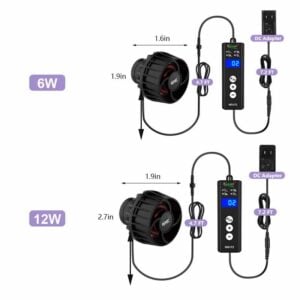
This wave maker is powered by a DC 12V 6W/12W powerhead, so that its max flow rate can be 792 GPH (6W) or 2114 GPH (12W). The DC motor is also energy efficient and therefore generates low noise; thus, it is ideal in homes or offices.
The hard cover intake shield is one of its greatest safety provisions, as a result of which the small fish or invertebrates cannot be sucked into the pump. This is why it cannot be accommodated in freshwater and coral reef aquariums.
3. Four Wave-Making Modes
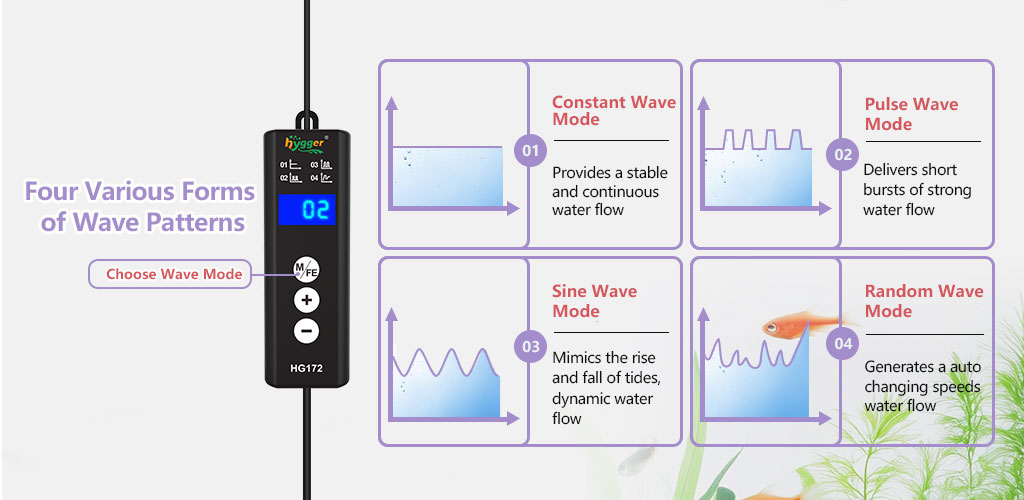
Here is where hygger 172 comes in. It provides 4 wave modes, which are constant, pulse, sine, and random. All channels reproduce various kinds of natural water movement.
- Constant Mode: Provides a steady, even current across the tank.
- Pulse Mode: Creates rhythmic waves for a natural flow effect.
- Sine Mode: Simulates gentle rolling movements like ocean tides.
- Random Mode: Mixes all patterns for the most dynamic and realistic water motion.
These modes let you experiment until you find the perfect rhythm for your aquarium.
4. Customizable Speed and Frequency
The digital controller is easy and intuitive, with options to make changes to the wave intensity and frequency. The constant mode will enable 10 flow speed levels (F01-F10) with pulse, sine, and random mode enabling 10 wave frequency levels (P01-P10).
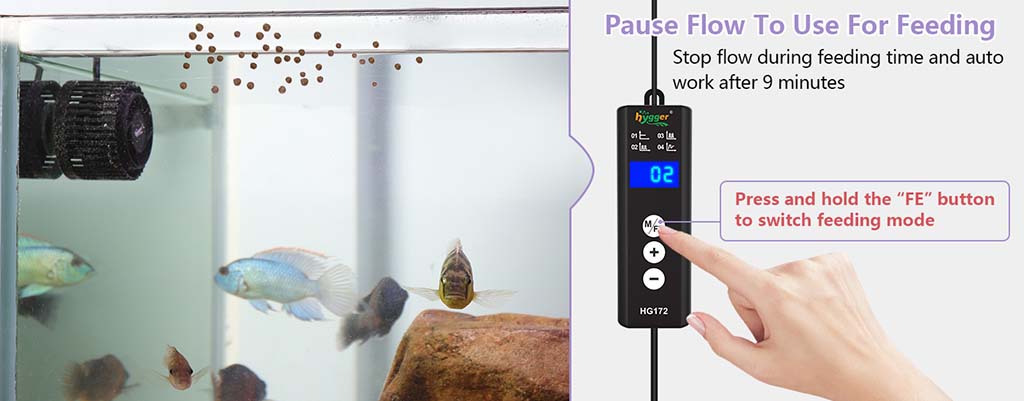
It even has a 9-minute feeding mode, which stops the wave activity so that your fish can also eat without the food floating away.
5. Strong Magnetic Hold
The HG172 has a magnetic bottom, which ensures that the pump is firmly fixed to the wall of the tank. It supports up to 6 mm (in the case of the 6W model) or 8 mm (in the case of the 12W model) of glass thickness. This maintains the steady positioning even with high flow rates.
6. Easy Maintenance and Cleaning
It is easy to clean because of its detachable nature. The outer cage can be readily taken out in case the impeller is blocked or soiled. The components are easy to handle, and one can easily access the parts in cases of cleaning without disassembling the tank itself.
7. Ultra-Quiet Operation
The hygger 172 runs on a DC motor and thus is quite different from other wave makers that produce the annoying sound of humming. It maintains the calmness and serenity of your aquarium, ideal for relaxing at night.
HG172 Wave Maker DC Pump Review
Creating the Right Wave Patterns for Your Tank with One Click
The aquarium is one of a kind, and so are the waves. The hygger 172 makes it too easy to make ideal water movement that is appropriate to your tank.
First off, select the wave mode that you would like to use through the controller button denoted as M. Thereafter, speed or frequency can be changed by the use of either the + or the – buttons. It is so intuitive that within a few minutes, a variety of settings can be tested.
Here’s a simple way to find your ideal wave pattern:
- When a fish likes soothing movement (such as guppies or bettas), then the sine or constant mode at slower speeds (F01-F03) should be used.
- In moving waters, pulse or random mode of medium frequency should be used when using active or swimming fish (P04-P07).
- In case you have corals or living plants, you are supposed to turn the flow to mix the nutrients throughout the tank.
You will see instant advantage, use of your fish, production of waste will be lessened, and the circulation of oxygen will increase.
And the best part? The smart controller allows you to change the pattern you use in a single click. You have the option of a relaxing morning wave or an exciting afternoon wave; the hygger 172 is flexible enough to offer you what you desire.
Creating the Right Wave Patterns
Maintaining the DC Wave Maker for a Long Life
Your wave maker should be checked in time, just like any other aquarium equipment. Luckily, it is made easy by the hygger 172 wave maker.
The following are some of the fast maintenance tips that can be used to keep it running smoothly:
- Clean the Impeller Monthly: The central part of the pump is the impeller. Take off the outer cover and, using a soft brush, clean it softly but effectively to take off dirt or algae buildup.
- Inspect the Intake Cover: The hard cover does not allow the fish to get trapped. Test it to make sure that it is clean and well secured.
- Avoid Running It Dry: This is to ensure proper use of the pump and ensure that it is perfectly submerged before it is turned on. Making it run out may harm the motor.
- Recheck Magnetic Hold: This is occasionally done to check that the grip of the magnet is firmly in place on the glass wall. So that the wave maker does not fall off.
- Adjust Flow Settings Periodically: It is important to switch the mode of wave (occasionally) so that the ecosystem in the tank is dynamic. It also eliminates accumulation in dead zones.
- Use Feed Mode When Feeding Fish: In order to stop waves during the feeding period, use the 9-minute feeding stop. It keeps the uneaten food in a circular tank.
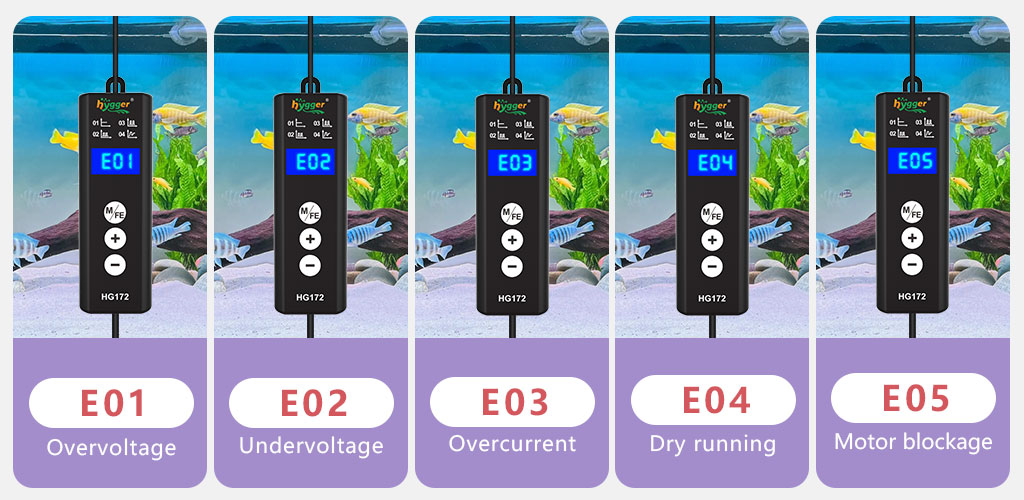
Maintaining the DC Wave Maker
Closing Remarks
Waving water in your fish tank not only means that you have enhanced the aesthetic appeal of the tank, but it can also be seen as one of the means of making your aquarium come alive. All types of water environments can be reproduced using the right wave maker, water quality can be improved, and the well-being of the fish can be improved.
All this is effortlessly done by the hygger Wave Maker DC Pump. You are in complete control of the movement and the mood of your tank with four different wave models and settings, adjustable speed and frequency, and as few as one click controller.
It is secure, silent, and small, which makes it popular among the inexperienced and the seasoned aquarist. It can be installed with ease, cleaned within a few seconds, and it should be able to give you the type of waves you want to make within a second.
Therefore, when you feel like transforming your aquarium into a more natural place, the hygger 172 is the solution. Enough of making your fish dance to artificial water flow, and do it by a single click, and make a splash in your fish tank.
Related Products


Leave a comment