
Planted low-tech aquariums are one of the unique planted aquariums. Rather than relying on various equipment, you need only a few items and enjoy the greenery in your tank. In the following, you’ll learn about low-tech aquarium plants, how to build a low-tech aquarium, and some optimal plants to grow in the planted aquarium low-tech setup. Scroll down and enjoy the process.
Content Table
What is a low-tech planted aquarium?
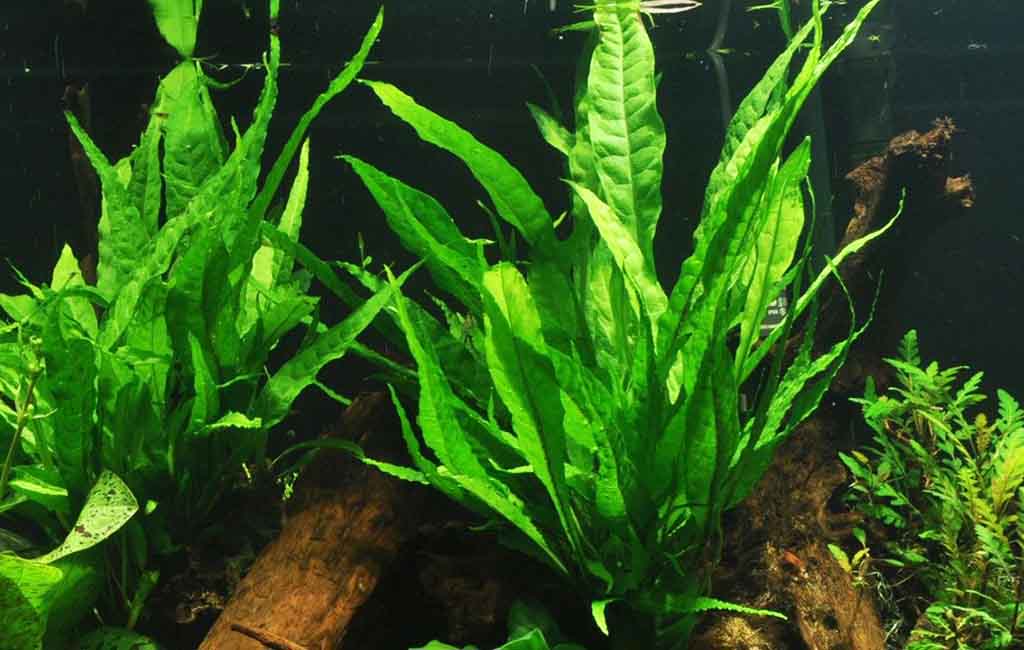
What are low-tech Planted Aquariums?
A low-tech system does not heavily depend on advanced tech systems and supports the plant naturally. It does not use CO₂ injection, intense lighting, specialized fertilization, etc., for proper functioning.
These tanks offer simplicity and sustainability as they have few pieces of equipment, e.g., a basic filtration system, standard lighting, and a suitable substrate to grow the plant. If they are well-balanced, you can grow diverse plants in your tank without supplemental CO₂ and other technologies.
For many reasons, such systems are suitable to start the planted tank journey. Like, they are more forgiving. Moreover, you’ll observe the natural growth rate of the plants, which will also help with maintenance and trimming frequency.
Parts of the Low-Tech Tank
- Substrate
- Standard lighting
- Basic filtration system
- Decors (if needed)
Great for Low Tech Planted Aquariums
An ideal low-tech tank contains suitable plants, fish, stable water, decor, etc. Here are the details of each necessary item, with many things that will help to optimize the tank.
Essential Equipment
| Equipment | Purpose | Recommendation |
| Tank | To house everything | 10–40 gallons is a deal for stability. It can go to 75 gallons, but it will be difficult to manage. |
| Lighting | Supports plant photosynthesis | Moderate LED light, i.e., 20-40 PAR that remains on for 6 to 8 hours daily. |
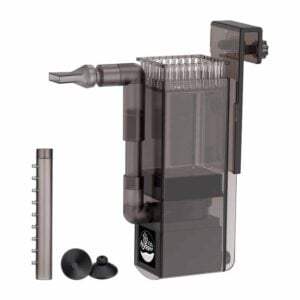
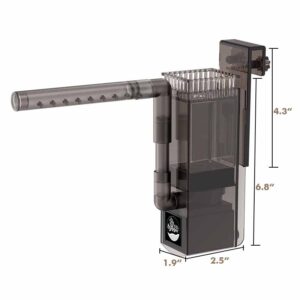
| Filtration | Water quality maintenance | Sponge filter, hang-on-back filter, and canister filter that don’t create excessive current in the tank. |
| Heater (Optional) | Temperature stabilization | It helps to avoid temperature variations and try to keep the temperature between 24 and 28°C for optimal conditions. |
| Substrate | Base for the plantation | Rich in nutrient substrate (Aqua soil, Fluval Stratum, or sand + root tabs), and lay a substrate of 2 to 3 inches deep to support the rooting. |
Plantation in the Tank
In your low-tech planted tank, you can grow various plants at the front, middle, back, and top. Here are some suitable plant options for your low-tech tank.
| Type | Suitable Plants | Optimal Placement |
| Foreground | Java Moss | Front |
| Cryptocoryne parva | ||
| Dwarf Sagittaria | ||
| Midground | Anubias | Middle |
| Cryptocoryne wendtii | ||
| Java Fern | ||
| Background | Vallisneria | Back |
| Hornwort | ||
| Water Wisteria | ||
| Amazon Sword | ||
| Floating | Duckweed | Surface |
| Frogbit | ||
| Amazon Frogbit | ||
| Salvinia |
Fish Selection
Fish selection is a very crucial part of any low-tech tank. Here are some suitable fish for low tech aquariums and various tank sizes.
| Fish Type | Fish | Tank Size |
| Small Community Fish | Neon Tetras | 10–20 gal |
| Zebra Danios | ||
| Guppies | ||
| Harlequin Rasboras | ||
| Bottom Dwellers | Corydoras | 20 gal+ |
| Kuhli Loach | ||
| Otocinclus | ||
| Algae Eaters | Amano Shrimp | Any |
| Siamese Algae Eater | ||
| Nerite Snails | ||
| Centerpiece Fish | Betta | 5–20 gal |
| Honey Gourami | ||
| Dwarf Gourami |
Water Parameters
Water parameters decide the stability of a tank. Therefore, it is necessary to keep them in optimal condition. Here are different optimal water parameters. Never forget to change about 20 to 30% of the water in your low-tech planted tank weekly.
| Parameter | Ideal Range |
| Temperature | 22–28°C (72–82°F) |
| pH | 6.5–7.5 |
| Hardness | Soft–moderate |
| Water Changes | 25–30% weekly |
Fertilization
Low-tech plants don’t require fertilization too often. They take up the fish waste, food waste, and plant waste. But it will be beneficial to fertilize them in the root feeder.
Steps to Build a Low-Tech Planted Aquarium Quickly
If you are a beginner and want to build a low-tech planted tank from scratch. Here is a step-by-step procedure.
Tank Selection
You can go with any rectangular tank from 10 to 30 gallons. However, a large tank is better as it offers higher water stability.
Gather the Items
Make a list of the material, gather it, before jumping into the building. Here is a list of materials.
- Substrate
- Hardscape
- Plants
- Filter
- Light
- Dechlorinated water
- Hardscapes
- Heater with thermostat (optional but recommended)
Lay Substrate
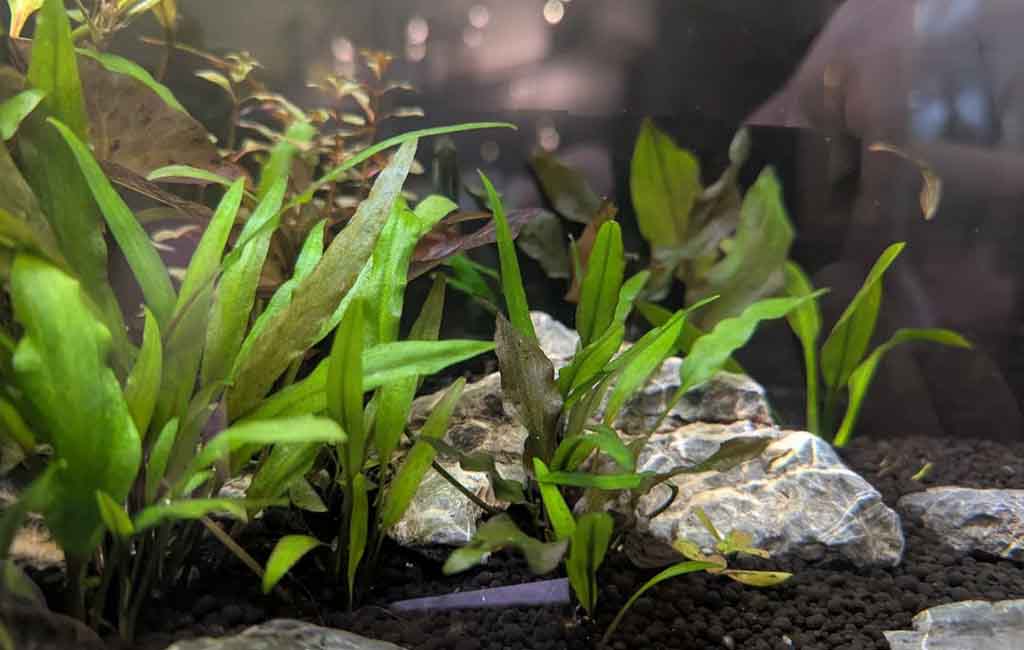
Rinse the tank before laying a layer of substrate. After that, add 2-3 inches of deep, nutrient-rich substrate to the tank. Lay the substrate in such a way that it is higher at the back and lower at the front. This slope will help to add depth features to your tank.
Hardscaping
Prepare a map for the hardscape and spread the items, e.g., driftwood, rocks, and other hard decor. Only create one focal point in the tank, and don’t forget to provide ample space for fish to swim.
Fill the Tank
Spread a plastic sheet over the decor, gently add water, and fill the tank to 70 to 80%. Use dechlorinated water. Once you are done with the water, install the filter and turn it on to make the water crystal clear.
Planted aquarium low-tech
Plantation
Use tweezers to transfer the plant to the tank. Plant large plants at the back and small plants at the front.
Lighting
Install moderate lighting according to the plants and fish. Using a timer to regulate the lights will be really beneficial to counteract algae and plant melting problems.
Tank Cycling
After that, cycle your tank for up to 8 weeks. In other words, simply until the stabilization of the parameters and nitrite level reaches 0 ppm. Start the cycle by introducing bacteria into the tank. Initially, you’ll see the ammonia spike, and later on, it’ll reach zero. When it reaches zero, it’s a sign of stabilization.
Add Fish
Add the fish to the tank. Start with 2 to 3 hardy fish and increase them later on according to the tank size.
Maintenance
| Task | Frequency |
| Water change | 25–30% weekly |
| Trim plants | Every few weeks |
| Feed fish | Once or twice daily |
| Clean the filter sponge | Monthly |
Low Tech Aquarium Plants
Java Moss
This is one of the easy-going options for your low-tech planted tank. Attach to the surface, thrive in any lighting condition, and produce lush green carpet. Java moss requires occasional trimming as it grows faster. Offers hiding spots to shrimps and fry. Tie it with a fishing line to driftwood or a rock, and just wait.
Amazon Sword
Sword-shaped leaves and 12 to 30 inches tall, the Amazon sword is another option for a low-tech tank. It can bear with low to moderate light and does well as a background plant. If your tank has a nitrate problem, it’ll also help to solve it by uptaking it.
Cryptocoryne Species
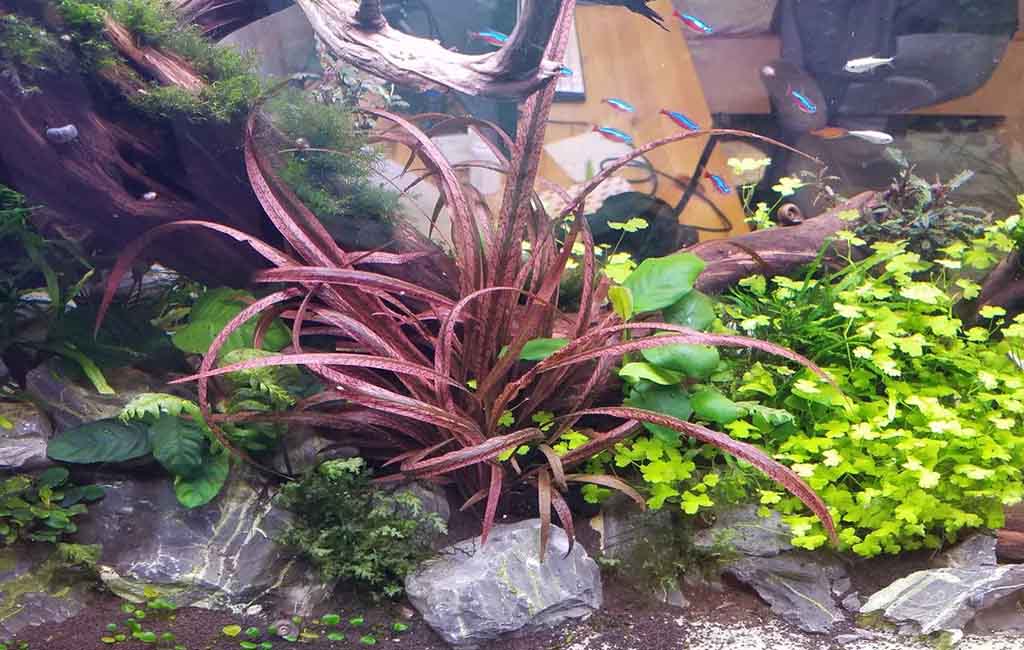
If you want to see green, bronze, and red coloration, go with the Cryptocoryne species. It is hardy and can bear various conditions. However, drastic changes can melt it, but it recovers. It grows about 4 to 12 inches and is suitable for front and mid-ground placement.
Low-tech aquarium plants
Anubias
Anubias have numerous low-tech tank species. These are among the ideal types, as they grow slowly and don’t require frequent trimming. It produces one leaf per month. Attach it to the rock or other hardscape to avoid root rot. Moreover, it’ll survive the fish attack due to its thick leaves.
Java Fern
You have varying water conditions and irregular lighting, so go with Java Fern. It is hardy and can grow up to 8 to 13 inches high at a slow rate. Due to its height, it is suitable as a midground plant. Don’t bury the rhizome, as it is prone to rot when buried. However, attach it to the driftwood or rock and enjoy the process.
Looking Ahead
Gather the limited but necessary items, follow the step-by-step procedure, and enjoy your low-tech tank.
Related Products

Leave a comment