
Green water is one of the more stubborn problems in aquarium keeping. It comes back despite regular water changes, despite proper feeding schedules, despite doing everything right. A UV aquarium filter is built to handle exactly that kind of problem. It sterilizes the water column, clears algae blooms, and reduces harmful bacteria. The challenge is that not every UV unit suits every tank.
Content Table
This aquarium kits guide covers what UV filtration actually does, how to choose UV filters for different setups, and a complete review of the HG293, one of the more versatile submersible units on the market today.
UV aquarium filter
What Is a UV Aquarium Filter?
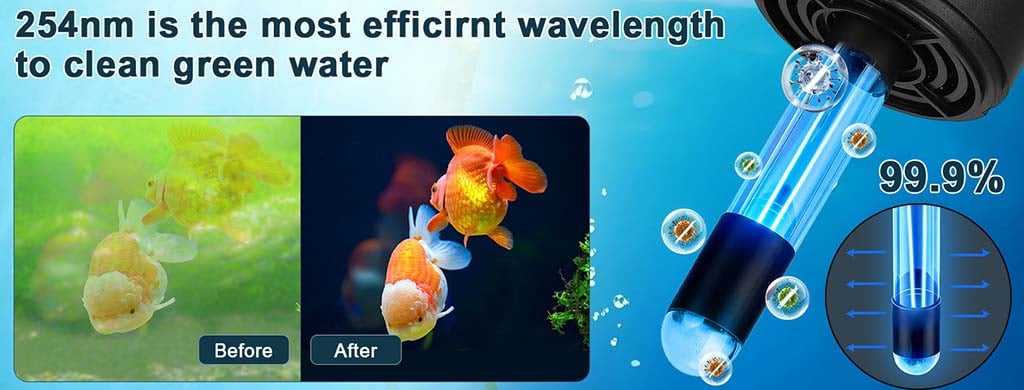
A UV aquarium filter passes tank water through a sealed chamber where an ultraviolet bulb irradiates it. The most effective wavelength for sterilization is 254nm. At that level, the UV light disrupts the DNA of free-floating microorganisms, algae spores, and certain parasites, stopping them from reproducing in the water column.
One thing worth being clear about: a UV aquarium filter is a sterilizer, not a mechanical filter. It does not trap particles. It neutralizes living organisms that pass through the water. That is why it performs best alongside sponge filtration or other physical media, not as a standalone device.
Roles of UV Filtration in the Aquarium
What UV Filtration Actually Handles
- Free-floating green algae are the main cause of pea-soup water in closed tank systems.
- Waterborne bacteria and pathogens circulate in the water column.
- Certain parasites during their free-swimming lifecycle stage.
- Overall water transparency in both freshwater and marine setups.
Common Misconceptions
UV light does not harm beneficial bacteria. The bacteria responsible for breaking down ammonia and nitrite live in biofilms attached to filter media surfaces, not freely in the water. UV sterilization targets only what flows through the water column, leaving the biological filter cycle intact.
UV filtration also cannot treat fish already attached to fish. It only interrupts the free-swimming stage of the parasite, which helps prevent spread but does not resolve an active infection. Understanding this distinction matters when deciding how to choose UV filters for a tank that needs comprehensive disease management.

How UV Filtration Works
How UV Filtration Works in an Aquarium
Water enters the UV chamber and moves past the bulb at a controlled flow rate. The slower the flow, the more exposure time each drop of water receives, which increases the sterilizing effect. A pump that moves water too quickly through the chamber reduces UV contact time and limits the results noticeably.
Key Parameters That Affect Performance
- Wavelength: 254nm is the standard for effective aquarium sterilization.
- Flow rate: Must be matched to the rated capacity of the UV unit.
- Bulb condition: UV intensity drops over time, even when bulbs still visibly glow; replacement. Every 6 to 12 months is the standard recommendation.
- Pre-filtration: Cloudy, particle-heavy water scatters UV light; running mechanical filtration before the UV stage improves penetration significantly.
Why Do You Need a UV Aquarium Filter?
Situations Where UV Filtration Makes a Real Difference
- Tanks with recurring green water despite consistent maintenance routines.
- Community setups where disease spreads quickly among multiple fish species.
- Saltwater systems house sensitive coral, fish, and invertebrates with limited tolerance for pathogens.
- High-bioload tanks produce more waste and bacteria than standard filtration alone can manage.
When to Use UV Filtration With Caution
A UV aquarium filter is not a substitute for proper tank cycling or regular water change schedules. It also reduces the effectiveness of probiotic bacterial supplements added directly to the water column, since the UV light will neutralize them before they colonize the media. For tanks in active disease treatment, medication protocols take priority, and most treatments require turning the UV unit off temporarily.
Key Indicators for Choosing UV Filters
The Key Indicators for Choosing UV Filters
Knowing how to choose UV filters means looking beyond brand names and focusing on specifications that actually match the tank.
Core Parameters to Evaluate
- Wattage matched to tank size: Each UV unit lists a compatible gallon range. Running a low-wattage unit on a large tank produces minimal effect; oversizing wastes money without meaningful added benefit.
- Flow rate compatibility: The unit needs a flow rate that allows sufficient contact time with the bulb, typically listed in the product specifications.
- Freshwater and saltwater compatibility: Confirm suitability for marine setups if applicable
- UV chamber safety: Sealed builds with protective sponge layers prevent UV light from escaping into the surrounding water and exposing livestock directly.
- Independent controls: The ability to run filtration separately from the UV light allows flexible scheduling for daily maintenance versus active treatment periods.
Freshwater vs. Saltwater Considerations
For freshwater tanks, the primary benefit is algae and bacterial control, which directly improves water clarity. For saltwater setups, pathogen reduction adds another layer of protection for high-value livestock that are more sensitive to water quality fluctuations. The process of choosing UV filters for a reef tank places greater emphasis on wattage precision and sealed chamber builds.
HG293 review
HG293 Current UV Aquarium Filter Review
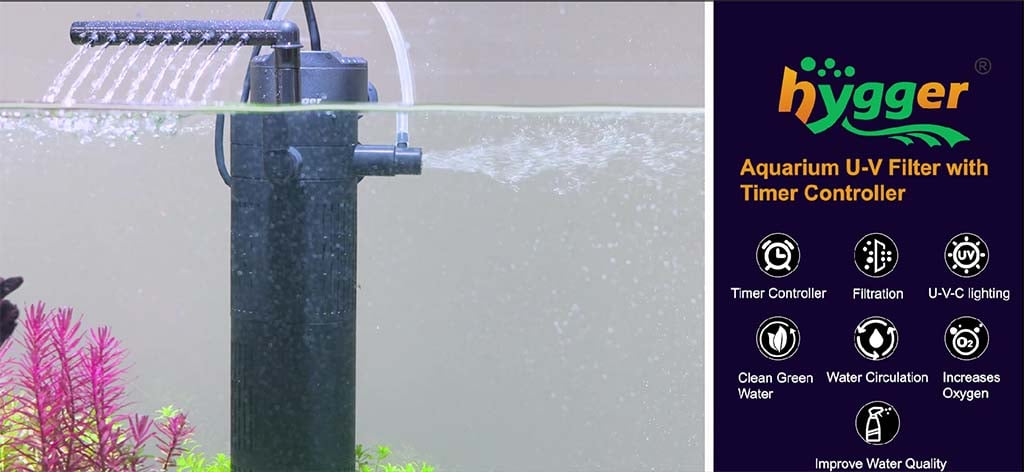
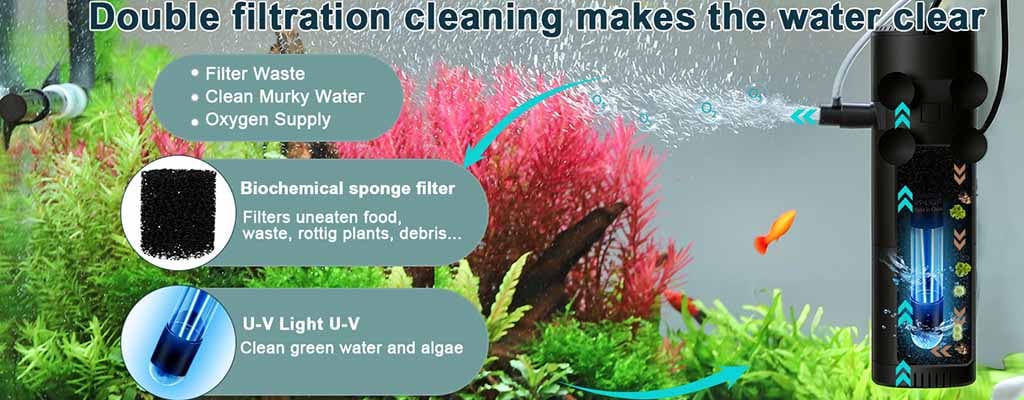
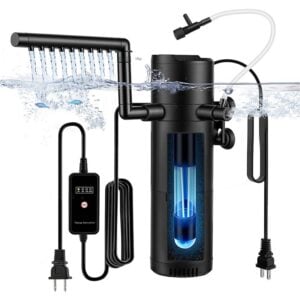
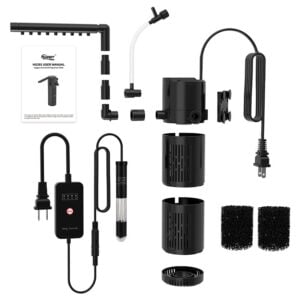
The HG293 review starts with the basics. The hygger Current UV Aquarium Filter is a submersible, 4-in-1 unit that combines mechanical filtration, UV sterilization, oxygenation, and water circulation in a single housing. It operates at a 254nm UV wavelength and comes in four wattage options to cover tanks from 10 to 130 gallons.
Specifications at a Glance
- Pump power options: 8W, 12W, 18W, and 25W.
- Product size: 2.52 x 2.52 x 8.62 inches (8W/12W) or 3.07 x 3.07 x 10.91 inches (18W/25W).
- Tank compatibility: 10 to 130 gallons, depending on wattage selected.
- Maximum water depth: 3.28 feet.
- Timer settings: 4, 8, 12, and 24 hours (UV light controlled independently).
- Compatible with both freshwater and saltwater.
What Stands Out in This HG293 Review
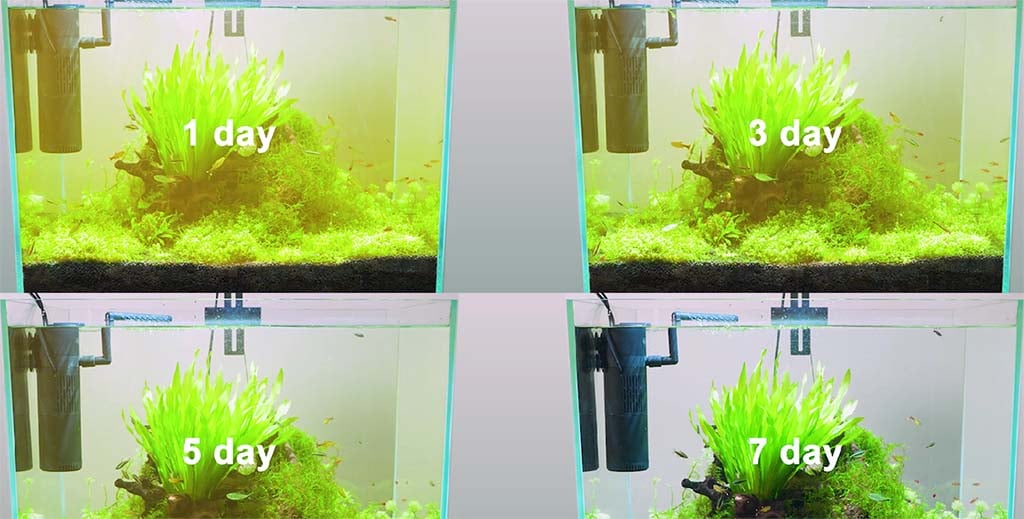
The independent switch for the pump and the UV light is a feature that genuinely changes day-to-day usability. Running filtration continuously while scheduling the UV light for 4 hours of daily maintenance protects both the tank inhabitants and the bulb lifespan. During a green water treatment phase, switching to the 24-hour setting for 3 to 5 consecutive days clears algae blooms within 3 to 8 days, depending on tank size and water quality.
The observation window allows the user to confirm whether the UV bulb is active without disassembly. The combination of the sealed shell and surrounding sponge prevents UV light from leaking into the tank water, which protects fish and invertebrates from direct UV exposure.
How to Set Up the HG293
The setup is modular. The package includes suction cup bases, a rain shower pipe, an air hose, and the filter sponge assembly. Two outlet modes are available:
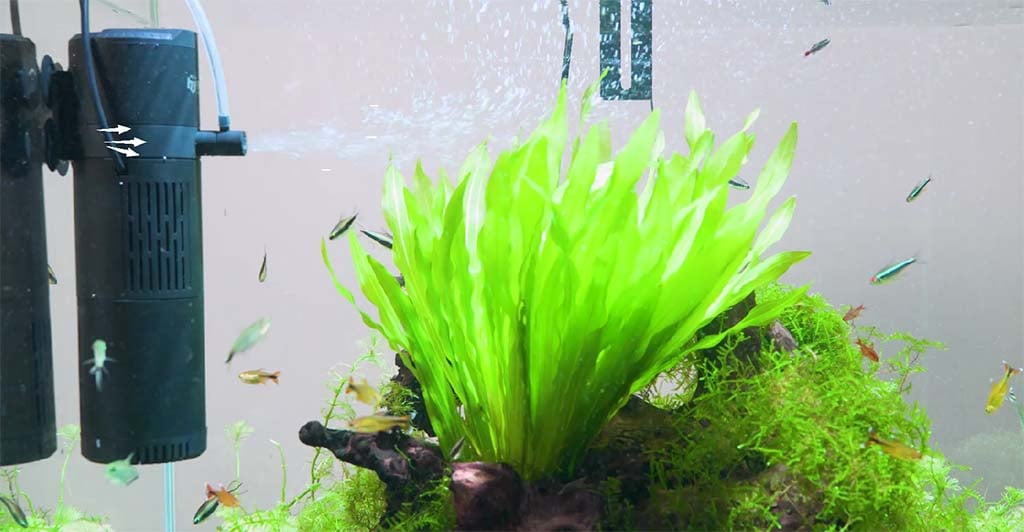
- Rainfall mode: Connect the tubing to the “A” outlet for a spray bar effect that promotes surface agitation and oxygen exchange.
- Aerating mode: Use the venturi system to add dissolved oxygen directly without the spray bar effect.
To reduce operational noise, capping the “A” outlet with the included end cap and running only the aerating function is the simpler approach. The biochemical sponge handles physical debris, including uneaten food, fish waste, and decaying plant matter. The UV light then addresses what the sponge cannot capture: free-floating algae and waterborne microorganisms.
UV Aquarium Filter vs. Other Filtration Types
UV Aquarium Filter vs. Other Filtration Types
| Filter Type | Primary Role | Sterilizes Water Column | Captures Physical Debris |
| UV Aquarium Filter | Sterilization | Yes | No |
| Mechanical Filter (sponge) | Particle removal | No | Yes |
| Biological Filter | Nitrogen cycle support | No | No |
| Chemical Filter (carbon) | Toxin absorption | Partial | No |
No single filter type replaces the others. A UV aquarium filter fills a specific gap: it handles what mechanical and biological media cannot, which is free-floating microbial life. The HG293 addresses this directly by combining the sponge and UV functions in one housing, reducing the number of separate devices the tank requires.
How to choose UV filters
All Things Considered
A UV aquarium filter is a specific tool for a specific problem. It clears green water, reduces waterborne pathogens, and supports water transparency in ways that standard filtration simply cannot replicate. Knowing how to choose UV filters comes down to matching wattage to tank volume, verifying flow rate compatibility, and confirming that the UV chamber is properly sealed.
The HG293 review points to a unit that covers a wide tank range, offers independent timer controls for the UV light, and integrates oxygenation and circulation in one submersible device. For tanks dealing with recurring algae or persistent bacterial issues, it is a practical, well-structured solution worth considering seriously.
Related Products

Leave a comment