
Building your first aquarium is a fun and fulfilling experience. Novices waste time on the selection of fish species, tank size, and filtration systems, and forget the role of live plants. The aquarium plants do not merely form the ornamental part of the surroundings but also have vital functions to play in the formation of a balanced and healthy ecosystem. When a beginner acquires an aquarium, it is possible to select suitable, easy-to-maintain aquarium plants, making the process significantly simpler.
Content Table
Aquarium plants are known to have health benefits to fish, as well as enhancing the appearance of your tank. They decrease toxins and provide hiding spaces, which make the aquariums natural and stress-free. The most interesting thing is that you do not require any sophisticated knowledge or equipment to cultivate some beginner aquarium plants. Numerous species are user-friendly, hardy, and need minimal care. This aquarium article will also help you know why plants are important, the easiest ones to start with, and the best species to start with in your first aquarium.
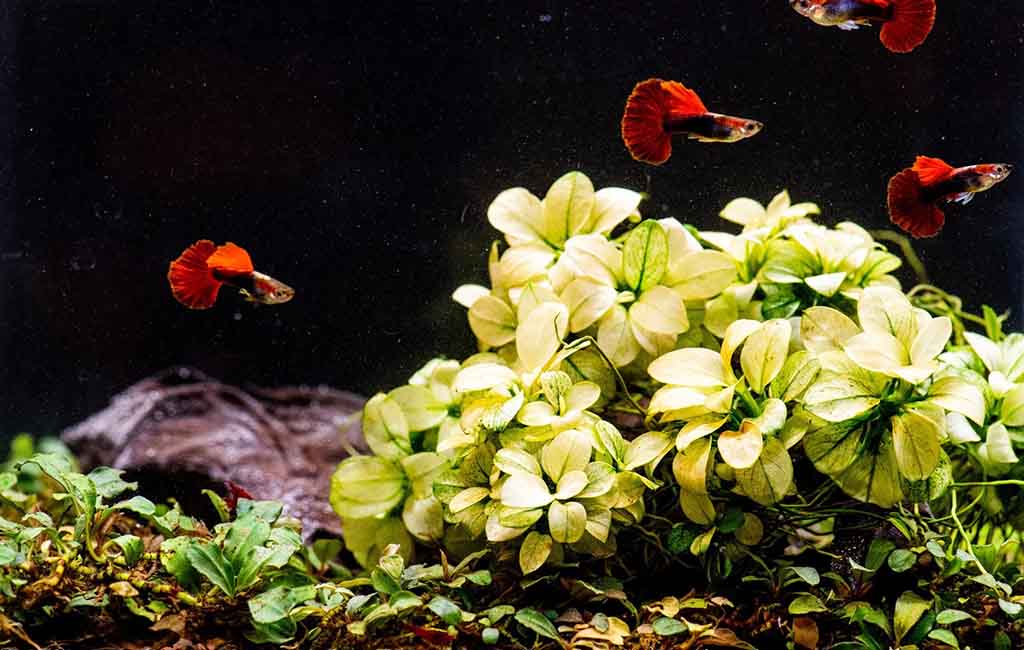
White Anubias
Why Add Plants to a Fish Tank
When you put plants in a fish tank, you do not just give it a decoration. Plants add much to the biological balance of your aquarium. They absorb the toxic substances like ammonia, nitrites, and nitrates that are created out of fish excrement and the rest of the food. These substances may accumulate very rapidly in the absence of plants and cause stress or even damage to your fish.
During the day, live plants also raise the oxygen level by photosynthesis, which is helpful in the respiration of fish. Live species are also unlike artificial plants, as they are useful in adding to the natural ecosystem. These assist in stabilizing pH, competing with algae, and clearing up the water in the long run.
The other important reason is that they are comfortable fish. Most fish species, like the tetra and betta, would be safer with places to hide. Plants help to relieve stress and promote natural activities such as sexual activity and swimming. Plant cover is also a favorite resting place of bottom-dwelling fish such as corydoras or loaches.
Aquarium plants add depth, contrast, and movement to your tank visually. They enable aquarists to create attractive aquascapes that can be in the form of rivers, lakes, or jungle streams. The outcome is not an operating aquarium but rather a work of living art.
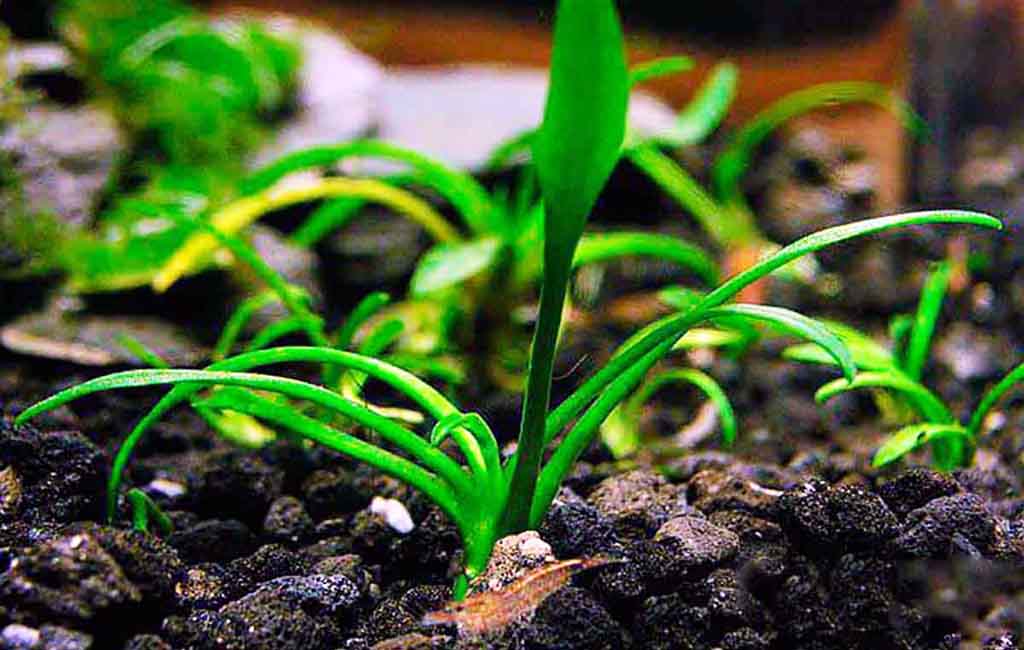
Cryptocoryne Parva
Beginner Aquarium Plants Types
To begin with, hardy plants that can withstand the various conditions are the best place to begin as a beginner. Such plants do not require the use of rigid lighting programs, CO2, or excessive doses of nutrients. We can take a glance at the principal categories of plants that can be used for beginners.
- Floating Plants – They are thrown over on the surface of the water, and they block surplus light. They inhibit the growth of algae and provide shelter to fish that like dark places. Examples: Duckweed, Amazon Frogbit, and Water Lettuce.
- Rooted Plants – These anchor in the substrate and absorb nutrients through their roots. They require sand, gravel, or aqua soil for proper growth.
Examples: Amazon Sword and Cryptocoryne species. - Rhizome Plants – These grow in the ground and absorb food with the roots. Sand, gravel, or aqua soil is essential to their growth.
Examples: Java Fern and Anubias. - Moss Plants – Mosses are very versatile, and they can grow on almost any surface. They are great to use in an aquarium to shelter shrimp and fry.
Example: Java Moss. - Stem Plants – These plants are fast-growing and may need pruning to stay in shape. They are good absorbers and algae preventers.
Examples: Hornwort and Water Wisteria.
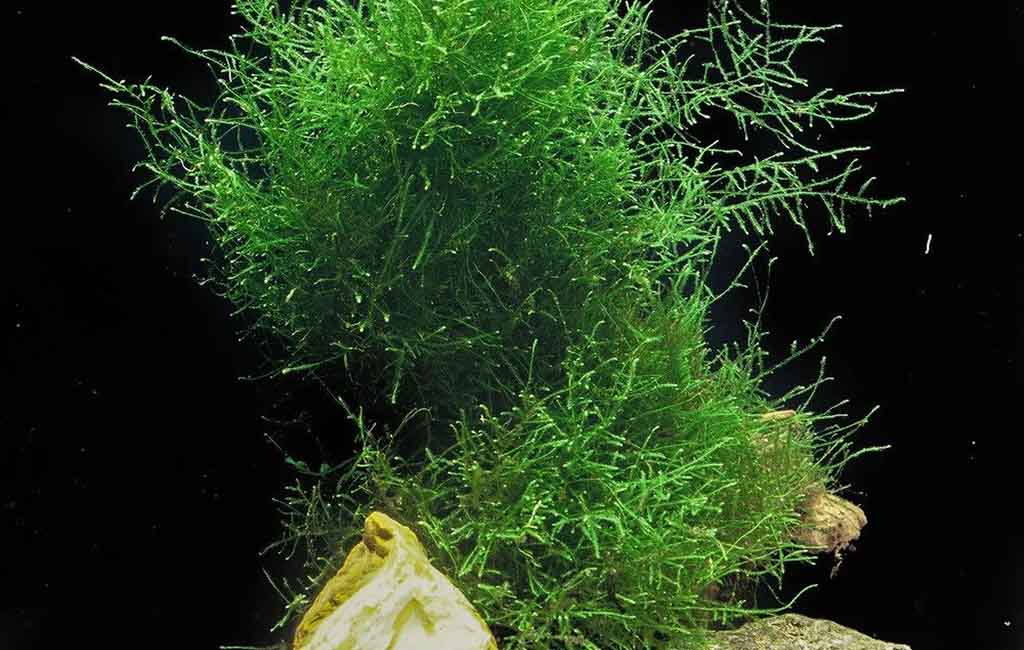
Java Moss
Top 10 Good First-Time Aquatic Plants
Here are ten excellent beginner plants that balance beauty, ease of care, and functionality.
1. Java Fern (Microsorum pteropus)
Java Fern is a resilient plant and hence popular among novice plants. It prospers in low light and does not need a nutrient-enriched substrate. Rather, you may tie it down to driftwood or rocks with fishing line or thread. Gradually, its roots naturally penetrate the surface.
The plant is an indigenous species of Southeast Asia, where it grows in rivers and shaded streams. It has a detachable, green covering that makes your aquarium look forest-like. It is slow-growing, hence does not need to be trimmed often, and thus is suitable in low-maintenance setups.
2. Anubias (Anubias barteri)
Anubias is a tough, low-maintenance plant that is able to withstand a great number of conditions. It does not thrive well when covered over the substrate, but only when attached to rocks or decorations. Anubias has wide and thick leaves, which do not allow herbivorous fish, such as cichlids, to damage them.
Anubias is a native of Africa that grows in medium and low-light tanks. It is slow-growing and is not easily infested with algae and seldom needs trimming. It gives depth and contrast to aquariums, especially when combined with finer leaf plants.
3. Amazon Sword (Echinodorus amazonicus)
The Amazon swords are huge, rooted plants that take up the background of the aquariums. They need a high-nutrient source to thrive well, and so this is ideal in tanks that have soil or root tabs.
It is native to the Amazon Basin, and its broad and sword-shaped leaves provide fish with excellent shelter. Amazon Sword can fit into medium and large-sized tanks due to its size. It has moderate light requirements and can be fertilized by roots occasionally to become a centerpiece plant.
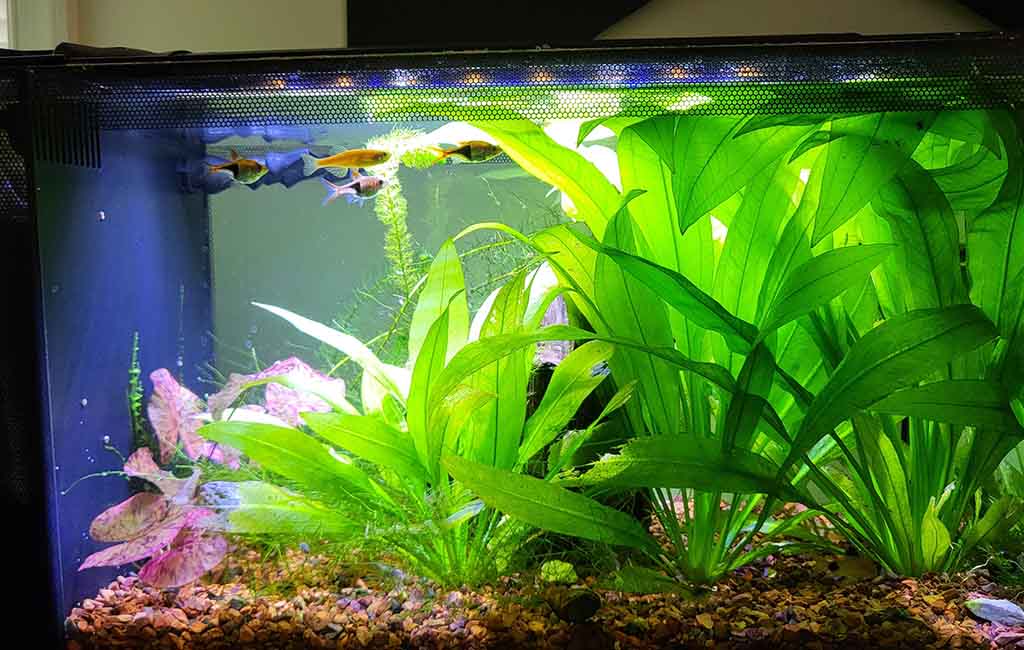
Amazon Sword
4. Cryptocoryne (Cryptocoryne wendtii)
Crypts are some of the plants that can be introduced to beginners and are characterized by the capacity to adjust to varied environments. They grow slowly and gradually, and they need moderate light and water conditions to survive.
Sri Lanka is home to these plants, which are very diverse in terms of the shapes and colors of the leaves, and they can be green or bronze. They can work well in the middle of the ground and produce a natural and tender look in the aquarium. The initial introduction of crypts might cause a crypt melt, but they tend to become stronger after an adaptation.
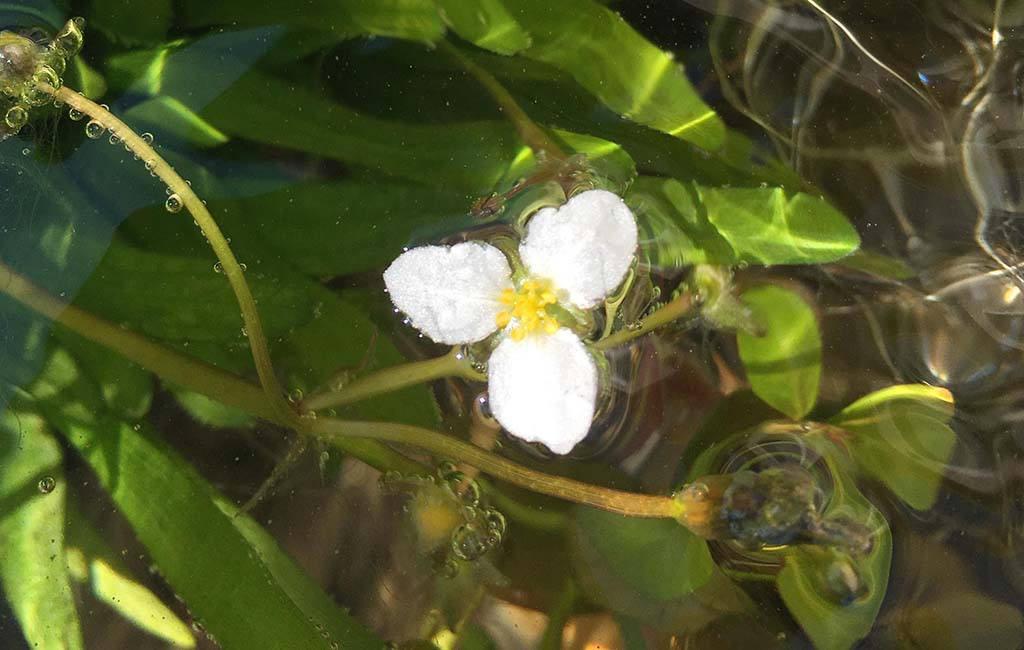
Sagittaria subulata
5. Java Moss (Taxiphyllum barbieri)
Java Moss is a very adaptable and strong plant that is ideal in aquascaping and breeding tanks. It may be fastened on drifting mats, rocks, or on nets to form green walls or carpets.
Java Moss is a native of Southeast Asia and is a low-light plant that does not need any special attention. It is very popular with shrimp keepers as it gives them areas to graze and hide. It is also a good shelter for fish fry due to its thick growth.
6. Hornwort (Ceratophyllum demersum)
Hornwart is a quickly growing plant that is the best nutrient absorber, hence limiting the growth of algae. It may either get attached to the substrate or be suspended on the surface of the water.
It is a native freshwater plant in the global waters and is easy to acclimate to different environments. Its feathery leaves provide good hiding places for small fry and fish. Due to its high rate of growth, Hornwart needs to be trimmed out, but it also contributes to clarity in water.
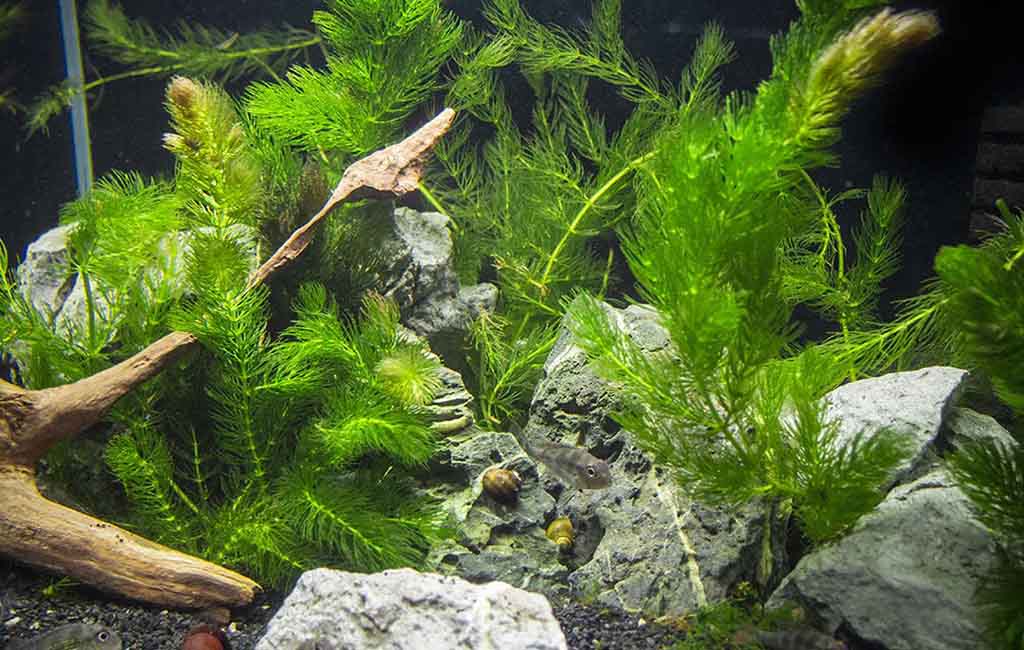
Hornwort
7. Water Wisteria (Hygrophila difformis)
Water Wisteria is a beautiful, fast-growing plant with special patterns of leaves. It may either be rooted or floating, thus flexible when it comes to aquascaping.
Water wisteria is a native plant of South Asia, and it grows very fast, absorbing excess nutrients. This assists in decreasing the algae outbreaks, and it is a practical option among amateurs. It grows well in moderate light and forms a luminous and green background to aquariums.
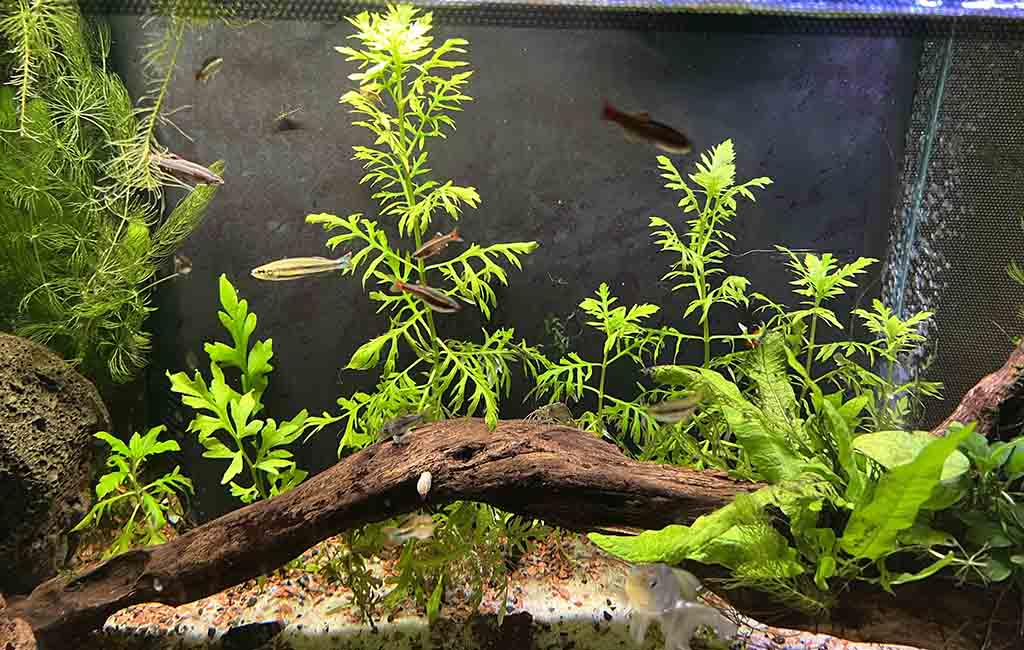
Water Wisteria
8. Duckweed (Lemna minor)
Duckweed is a water plant that has small, circular leaves that cover the water surface. It expands quite rapidly and therefore needs regular maintenance to contain its expansion.
Duckweed is indigenous to ponds and lakes all over the world, and offers shade and algae control. It is particularly applicable in tanks that have fish that favour low light. They must be handled by beginners with a lot of care since they may be impeding an excess of light to other plants.
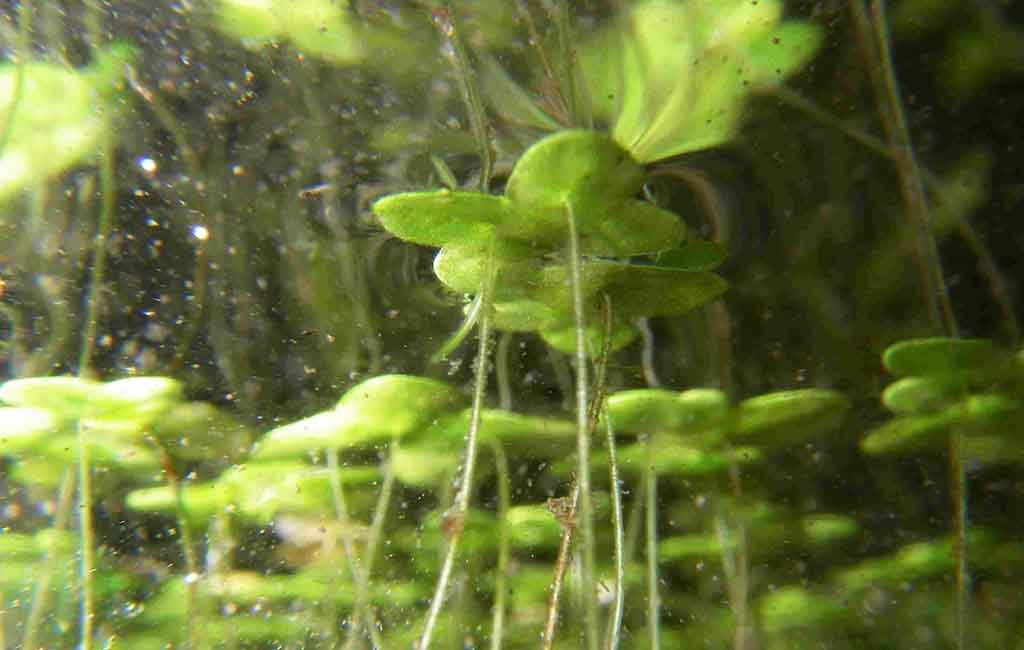
Aquarium Duckweed
9. Dwarf Sagittaria (Sagittaria subulata)
Dwarf Sagittaria is a grassy plant that grows rich carpets in aquariums. It grows decently in moderate light and nutrient-rich substrates and propagates promptly using the runners.
It is an indigenous South American plant that is robust and adapts to various configurations. It gives a more natural and grassy appearance in foregrounds or mid-grounds, and it is ideal when used by beginners in aquascaping. It is regularly trimmed to keep it carpet-like.
10. Vallisneria (Vallisneria spiralis)
Vallisneria or eelgrass is a traditional aquarium plant that is covered with long ribbon-like leaves. It propagates fast and blooms with runners, hence covering the background well.
Vallisneria, which is native to Asia and North America, grows under low to moderate light. Its long leaves are beautiful to move in water streams, making water-scapes look more dynamic and vivid. It propagates easily, and thus it is most preferred by novices who desire quick outcomes.
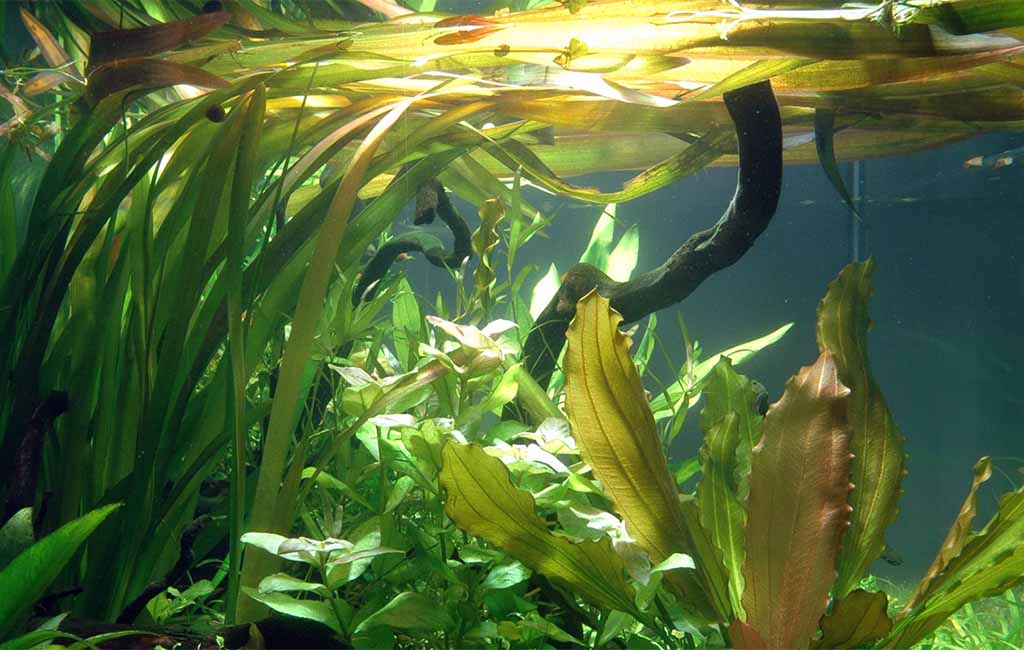
Vallisneria
Extra Tips for Success with Beginner Plants
- Apply aquarium-safe root tabs of rooted plants and liquid fertilizers of other plants.
- Make sure the lighting is adequate, as the vast majority of novice plants will grow on low to medium LED lights.
- Java Fern rhizomes or Anubias should not be buried since they can rot.
- Perform regular trimming to maintain shape and prevent overcrowding.
- Include a variety of plant species in an aquarium to have a foreground, midground, and background cover. Take a reference from the Aquascape aquarium and the golden ratio part one.
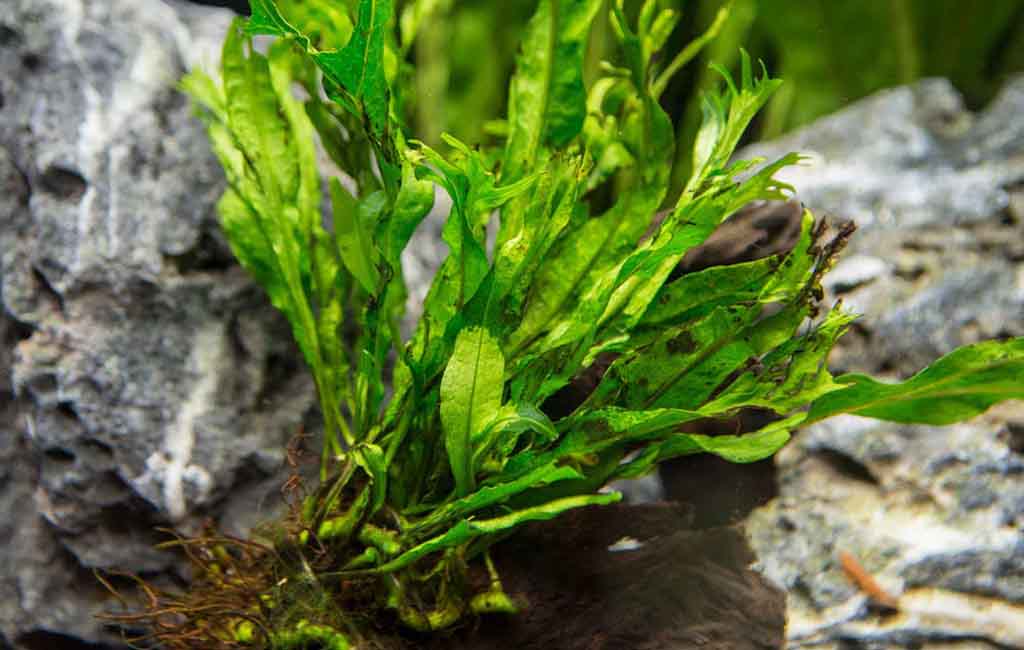
Java Fern
Concluding Remarks
One of the most appropriate choices that new aquarists make is to start with beginner plants in the aquarium. They not only make your tank pretty, but also make the water and fish healthier. With the help of resilient species such as Java Fern, Anubias, and Amazon Sword, you can create a successful underwater ecosystem with minimal effort.
With time, you can experiment with more advanced methods of aquascaping and more challenging plants. Nevertheless, you can begin with the easy by making sure you are successful and your aquarium is entertaining. Keep in mind, each aquarium is unique, and one of the fun things is to test various plants, as well as design. Through patience and carefulness, you can transform your tank into a beautiful water garden and be a source of peace, tranquility, and unending enjoyment.
Related Products



Leave a comment