
An aquarium is not simply a glass box with water but a window into a little world, a living art. Plants are important components of this watery universe. Although carpet plants or background stems have been the priority of many aquarists. There is one interesting style that has come to be the favorite: trailing aquarium plants on hardscape. These falling greens cover rocks and wood, imitating the beauty of nature and adding depth, textures, and colors to an aquascape.
Content Table
This hygger blog talks about the art of planted aquarium hardscapes, presents trailing plants that grow on wood and rocks, and helps hobbyists redesign their tanks with natural underwater landscapes.
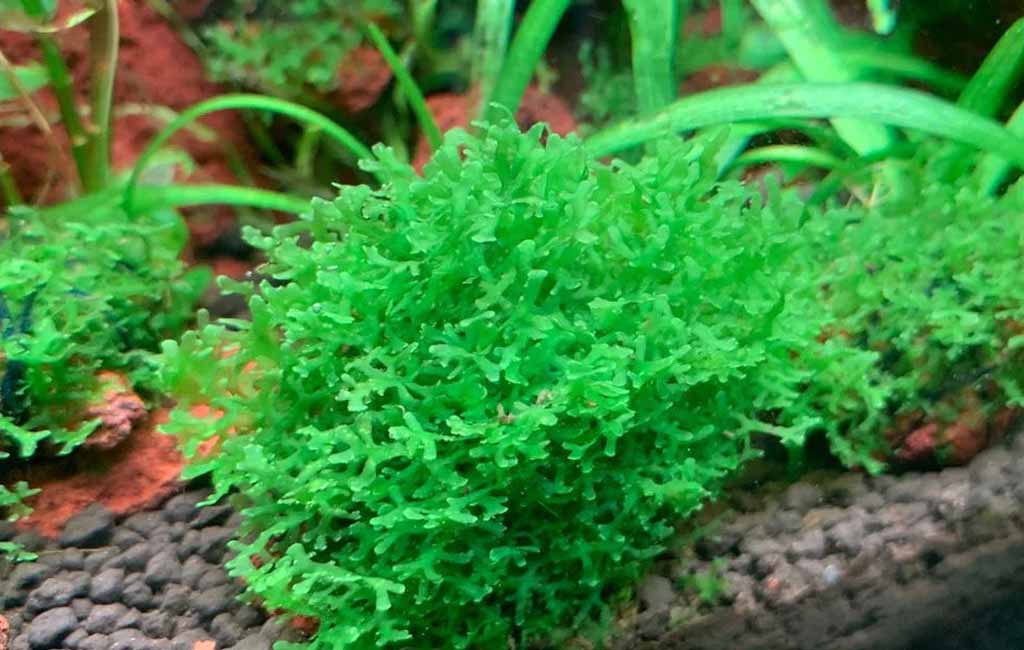
hardscapes plants
Hardscape Plants: Nature’s Climbers and Drapers
Hardscape plants are those species that are perfect to be attached to non-substrate properties such as driftwood, stones, or ornaments in an aquarium. In contrast to plants with deep roots that anchor the plant to the substrate, the hardscape plant is usually epiphytic. Some of them in the wild grow on rocks and tree barks, taking their nutrients out of the water column and surrounding moisture rather than the soil.
These plants have developed specialized roots that attach to textured surfaces and, therefore, make them perfect for aquascaping. Their interesting aspect is their versatility; most of them grow well in different light intensities, require less CO2, and do not require advanced skills. They are also visually attractive, being small and often creeping or trailing. They can be used to good effect to cushion hard edges or to emphasize dramatic objects within a tank.
Planted Aquarium Hardscape: Building Underwater Landscapes
The hardscape in the aquascaping world is the structure of a tank, which includes rocks, driftwood, and other decorative items. It is the backbone of the aquascape, and it forms and shapes your aquatic dream. Combined with plants, the foundation is no longer a frame; it becomes a living, breathing ecosystem.
The planted aquarium hardscape is very unlike the landscapes of a garden on land. Design options in an aquarium are affected by gravity, buoyancy, water current, and fish activity. For example, the rocks must be stacked so that they will not collapse, and the driftwood must be soaked or anchored to remain underwater.
The plants included in the hardscape should be capable of growing in reduced substrate cover and with continuous moisture, changing light, and water. The hardscaping with plants creates a natural and engaging picture when applied correctly. Vines crawling over an old tree or mosses covering the stones in the river are the perfect example of it.
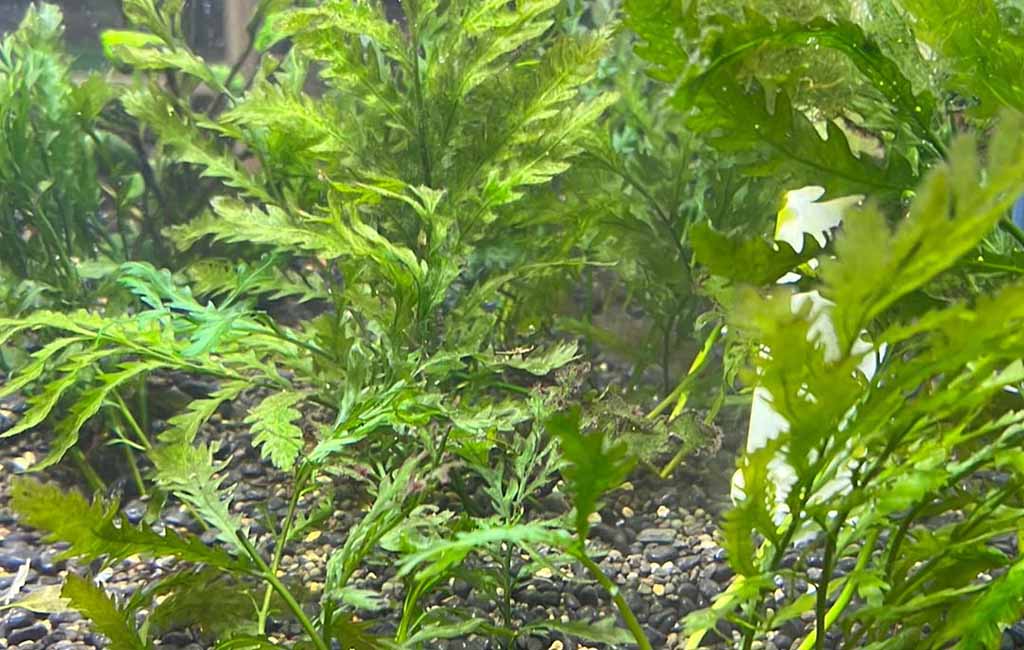
Hardscape Aquarium Plants
Hardscape Aquarium Plants: 10 Ideal Choices
To get a trailing effect and make your aquarium look lush, it is necessary to choose the appropriate plants. The epiphytic species are ideal for attachment to rocks, wood, or non-substrate surfaces. It is ideal for those aquascaping enthusiasts who value open substrate or minimalist design. Most of them also prevent the growth of algae by covering the surfaces and soaking up the extra nutrients.
The following are ten aquarium plants that prefer hardscape, improve the aesthetics with their growth pattern, and require minimal maintenance.
- Anubias Nana ‘Petite’
This mini Anubias is one of the favorites of aquascapers. It is a good foreground rock or driftwood plant because of its compact growth. It does not require strong light, and it grows slowly; hence, it is easy to maintain. Since it is easily subjected to rhizome rot in the ground. It must always be bound or plastered onto hard surfaces instead of being planted in the substrate.
- Bucephalandra spp
Bucephalandra is a hardscape plant that is known to have bright colors and glistening leaf textures. There are numerous types of them, and they can be bound or glued to stones and wood. These plants can work well in low-tech and high-tech environments. They are also slow, clumping growers. Thus, they make them ideal nano tanks or accent plants in larger setups.
- Java Fern (Microsorum pteropus)
Java Fern is a traditional one that adheres to wood or rock. They fill spaces and, with time, give side shoots. Other varieties, such as Windelov or Trident, have even more distinctive leaf patterns. They like being in indirect light and grow at all levels of water, so that they are suitable both for beginners and experts.
- Bolbitis Heudelotii (African Water Fern)
The fern is lace-like and soft with thin fronds. It grows in soft, slightly acidic water. It is ideal in the mid-ground or the background of hardscape, and its low rate of growth fits in a mature arrangement. To achieve maximum results, ensure that there is a gentle flow and CO2 addition to promote lush growth.
- Riccardia Chamedryfolia (Coral Moss)
Beautiful liverwort which looks like coral, but miniature. It grows as branching mats when attached to a hardscape, giving a detailed texture to rock or driftwood. It takes time to grow and requires stable water parameters and soft light.
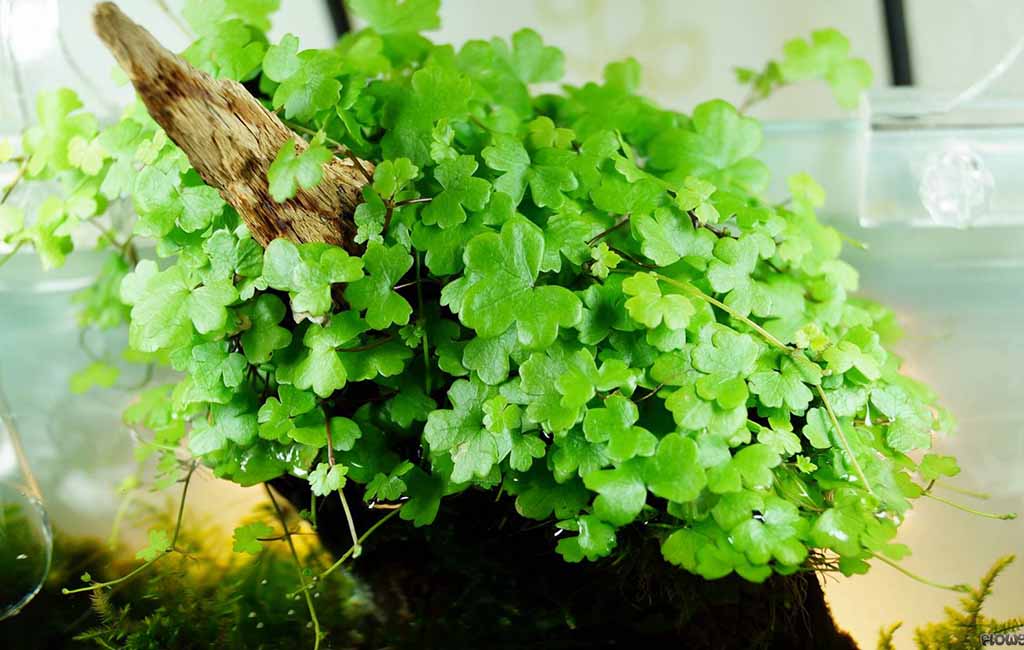
Hydrocotyle Tripartita Japan
- Christmas Moss (Vesicularia montagnei)
Christmas moss is basic to attach and propagate, and is perfect to make a weeping, trailing look. When bound to wood, it falls like a green cascade, particularly in smooth currents. It is beautiful when it is used to represent canopies of trees or aquascaping in the forest style.
- Flame Moss (Taxiphyllum ‘Flame’)
It is a vertical-spiraling moss that presents a fiery appearance when cultivated on driftwood. It introduces an upright contrast with more trailing plants. It works excellently in providing structure to nanoscapes and does best in medium light.
- Hydrocotyle Tripartita Japan
This plant has small leaves similar to clover, and thus it may creep and trail across hardscape. It requires more than mosses, moderate light, and nutrients, but the effect is worth it. It is creeping, which makes it perfect to make soft green mounds or to interlace various hardscape elements.
- Java Moss (Taxiphyllum barbieri)
Java moss is easy to grow and very flexible. This makes it the preferred choice of mossy hardscape among newcomers. It is fast-growing and can be snipped and clipped to suit. It can survive almost everywhere, and it is commonly deployed to make natural hideouts for the fry and shrimp.
- Pellia (Monosolenium tenerum)
This liverwort forms cushion-like mats and can be effortlessly attached to rocks. It has a rich color of deep green that brings contrast and color to any hardscape design. Compared to other mosses, Pellia is softer in texture, and this creates a new dimension to textured scapes.
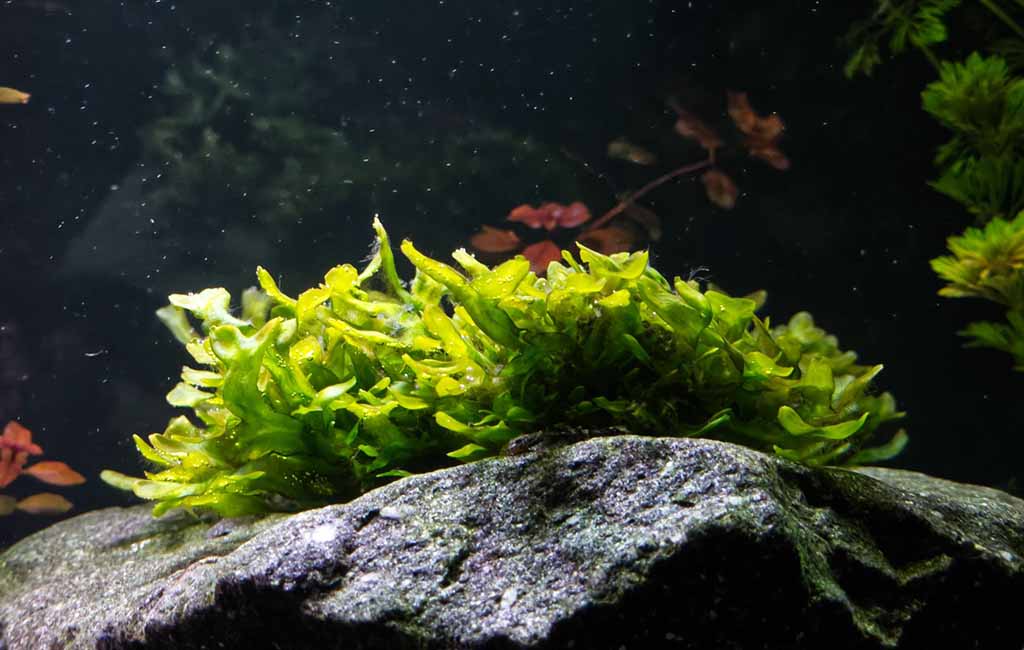
hardscapes Pellia
Planted Aquarium Hardscape Ideas
Planted hardscape is an art-science combination. It comes more to the way you use plants than to which plants you use.
- Nature-Inspired Hillside
Assemble the driftwood to look like fallen branches on a hillside, then fix the Java Moss and Anubias along the wood. Plant smaller plants such as Hydrocotyle or Riccardia to resemble ground cover running down the slope.
- Tree Canopy Aquascape
Make a tree of driftwood that is branching upwards. To represent foliage, cover the branches with Christmas Moss or Flame Moss. Combined with free space below, it has a canopy effect.
- Canyon Layout
The rocks are stacked up into tall and thin canyons. Put mosses and Bucephalandra in the crevices to have a weathered, overgrown appearance. This arrangement is particularly spectacular in high tanks.
- Cliffside Drop
Make a cliff of slate or lava rock and allow plants such as Java Moss and Riccardia to flow down the vertical surface. This gives the impression that there is a green waterfall underwater.
- Root-Tangled Forest
Use several roots intertwined to create an illusion of a forest floor. Soften the hardscape with ferns and trailing mosses to have an overall effect of blending the textures.
To Summarize
Hardscapes involve trailing plants, which add a phenomenal aspect to planted aquariums. These plants include Java Moss, Bucephalandra, and many others, which not only increase the aesthetic value of the aquarium but also offer protection to fish and improve the water quality.
Hardscape objects such as stones and driftwood gain a new life once covered with plants and vegetation, creating the illusion of natural ecosystems. Be it a moss-covered canyon, a root-bound jungle, or just a peaceful hillside, the correct selection of hardscape plants can take your aquascaping to an entirely different level.
The next time you are planting a new tank or refilling an old one, think about the power of trailing plants. Let them spill, creep, and cascade over your hardscape and see your aquarium turn into an underwater masterpiece.
Related Products



Leave a comment