
Air pumps are crucial for fish tanks, especially super-quiet air pumps. They bring various benefits. However, pump selection is a difficult task. In the following, you’ll find the air pump benefits and a proper selection guide of noiseless aquarium air pumps. Moreover, different methods to make your fish tank super quiet are worth knowing. If you have a large tank, knowing about the HG138 super quiet air pump is a blessing. In the following, you’ll also learn about it.
Content Table
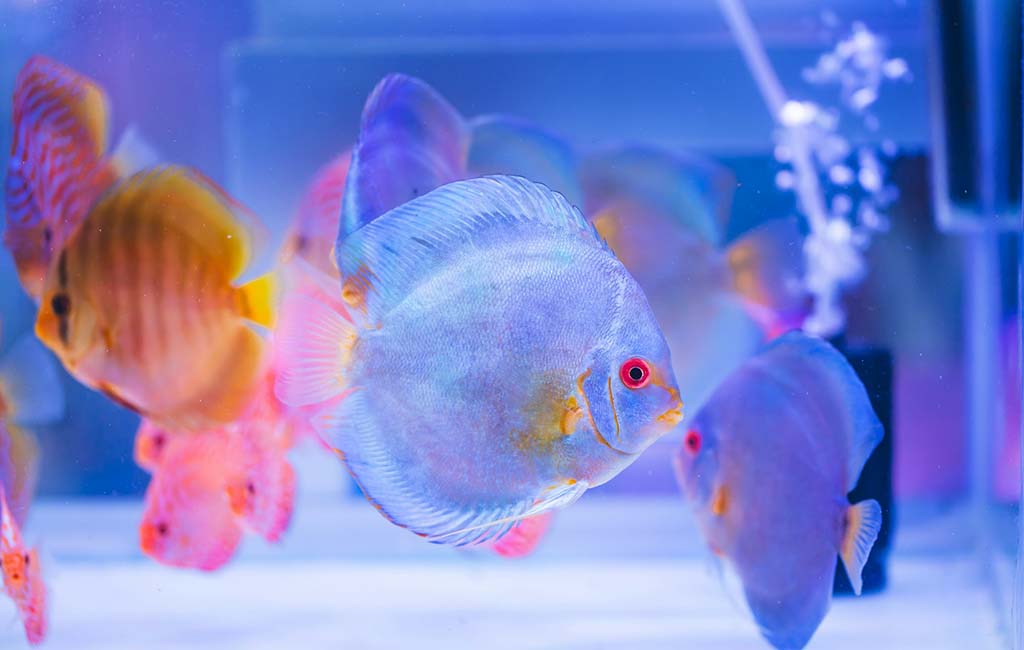
air pump benefits
Benefits of Using an Air Pump in a Fish Tank
Peaceful Environment
Noise causes stress in the environment. A noiseless aquarium air pump runs quietly and keeps the surroundings, i.e., office, home, etc., peaceful.
Improved Oxygenation
It efficiently helps in gas exchange with surface agitation and improves the oxygenation in the tank.
Biological Filtration
Bacterial activity is the foundation of the nitrogen cycle in the tank and supports biological filtration. Bacterial activity in the tank depends on the airflow. An air pump improves the airflow that results in improved bacterial activity.
Healthy Aquatic Pets and Plants
An aquarium with an air pump ensures a steady oxygen supply in the tank, resulting in a stress-free environment, and improves fish immunity and healthy plant growth.
No Toxin Zone
Without optimal airflow in the tank, dead zones formed. These dead zones promote algae growth and host toxins that are harmful to the fish. An air pump helps to avoid these dead zones and keeps your tank algae and toxin-free.
Improved Aesthetics
Air pumps cause bubbles to form in the tank, enhancing aesthetics. Moreover, the air pump itself also helps to improve the aesthetics.
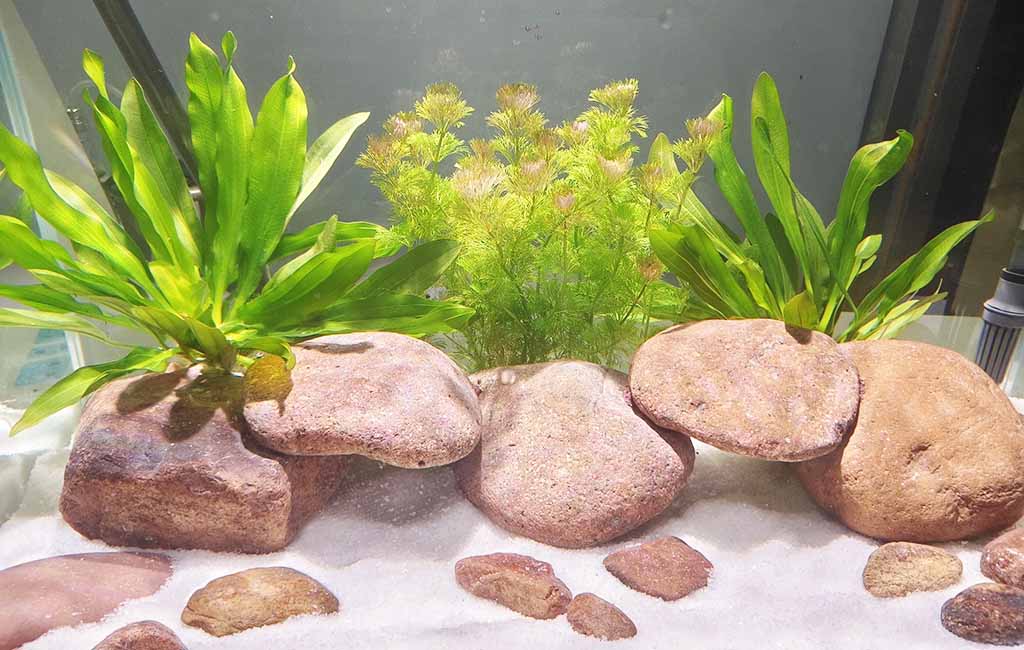
aquarium with air pump
How to Make Your Fish Room Super Quiet?
A quiet environment helps to improve the fish’s health and the overall environment. Therefore, aquarists always look forward to creating a super quiet environment for the tank. Usually, they adopt the following 3 different ways.
- Equipment Selection
- Noise Reduction Techniques
- Maintenance Routine
Equipment Selection
Extra Quiet Air Pump
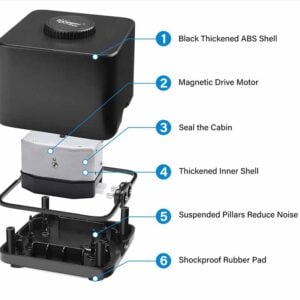
Modern silent air pumps run almost quietly. They have various sound cancellation parts and a specific design.
Silent Aquarium Filter
Sponge filters and canister filters are such options. Combining with a quiet air pump creates a quiet environment.
DC Pumps with Controllers
DC wavemaker pumps also work in silence.
Rubber Mats and Pads
You can remove or reduce the noise by placing rubber mats or specially designed pads under noise-producing or vibrating equipment. They absorb the extra vibration and produce silent operation.
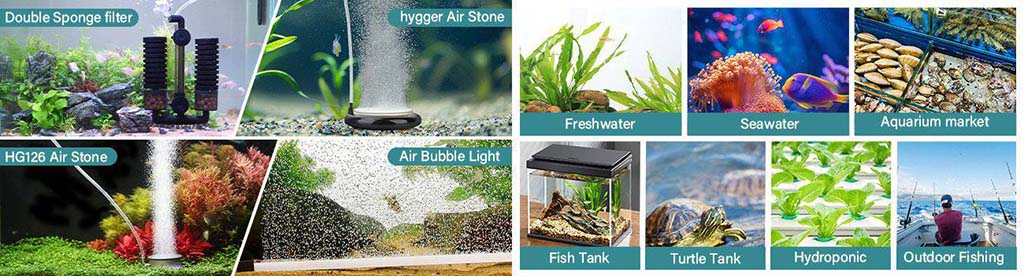
noiseless aquarium air pump
Noise Reduction Techniques
Here are some noise reduction techniques.
- Use airline tubing, check valves, and diffusers.
- Adjust the optimal bubble count. High bubble count causes vibration and noise in the tank.
- If your tank’s lid is not tight and producing noise, add foaming or other sound-absorbing material under the lid.
- Keep the pumps, outer filter, and other vibrating objects at a sturdy and stable place, instead of a glass surface.
- Install sound-absorbing material in the room to absorb the noise being produced by the operation. It includes rugs, curtains, towels, or other acoustic panels, etc.
Maintenance Routine
You can also reduce the noise level with maintenance. Here are some such maintenance routines.
- Keep the water level high in the tank, as water can absorb noise.
- Always keep the impeller, air stone, or other moving objects clean. Dirty moving objects produce more noise.
- Replace the stiff airline tubing, as it can also produce noise in the tank.
- Lubricate the moving objects, as lubrication reduces the friction among moving parts. Low friction leads to quieter operation.
Is the HG138 Extra Quiet Air Pump Worth It?
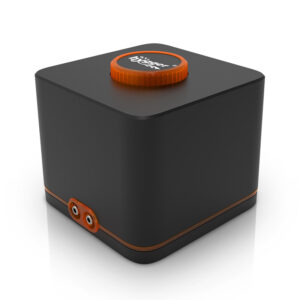
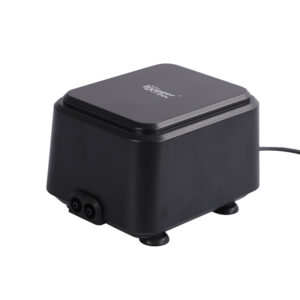
HG138 Extra Quiet Air Pump is an example of a quiet air pump that will reduce the noise in the tank. It has various pros and cons.
Pros
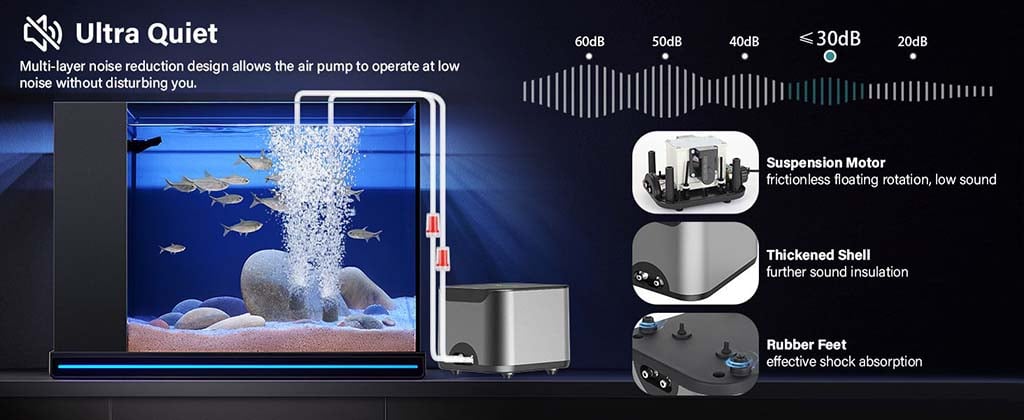
- It operates whisper-quiet due to several quiet parts. Examples of such parts are the double-layer soundproof shell, suspended motor, and silicone feet.
- It produces 190/285 GPH (12/18 LPM) of steady, high-pressure airflow in the tank.
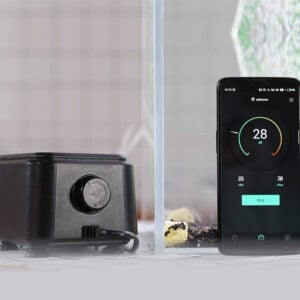
- The HG138has an adjustable control knob that lets you fine-tune bubble output for fish oxygenation, plant roots, or aesthetics.
- It worked well with deep tanks, i.e., up to 5.9/6.5 feet of water depth.
- It worked simultaneously in two tanks.
- The air pump is durable and corrosion-resistant, and it produces a very low sound, less than 30 dB.
- It is suitable for Aquariums, Hydroponics, and ponds.
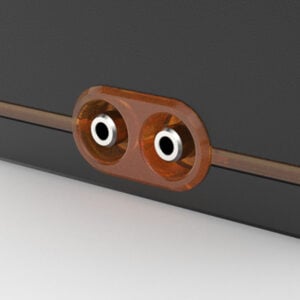
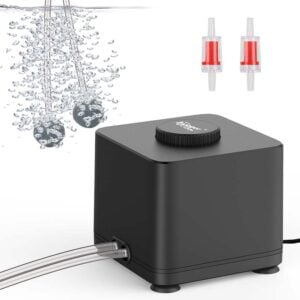
- It has check valve protection that prevents backflow if the pump is installed below the water level.
- The pump has an electrical safety feature, i.e., UL-rated outlets with a drip loop.
- It can work for tanks up to 600 gallons.
hygger 138 air pump pros
Cons
- It does not have a battery backup that helps to run it during a power cut.
- It is not suitable for nano tanks as they produce higher air flow.
Overall Review
It has an overall 4.3-star rating on Amazon.
Which Fish Tank Can Be Installed with the HG138?
It is suitable for various types of tanks.
- Freshwater tank
- Saltwater tank
- Turtle tank
- Hydroponic tanks
- Fish-only tanks
It has two different models, 6W and 10W. The 6W air pump is suitable for up to 300-gallon tanks. The 10W air pump supports up to a 600-gallon tank. However, very small, i.e., less than 10-gallon tanks, are not suitable for it.
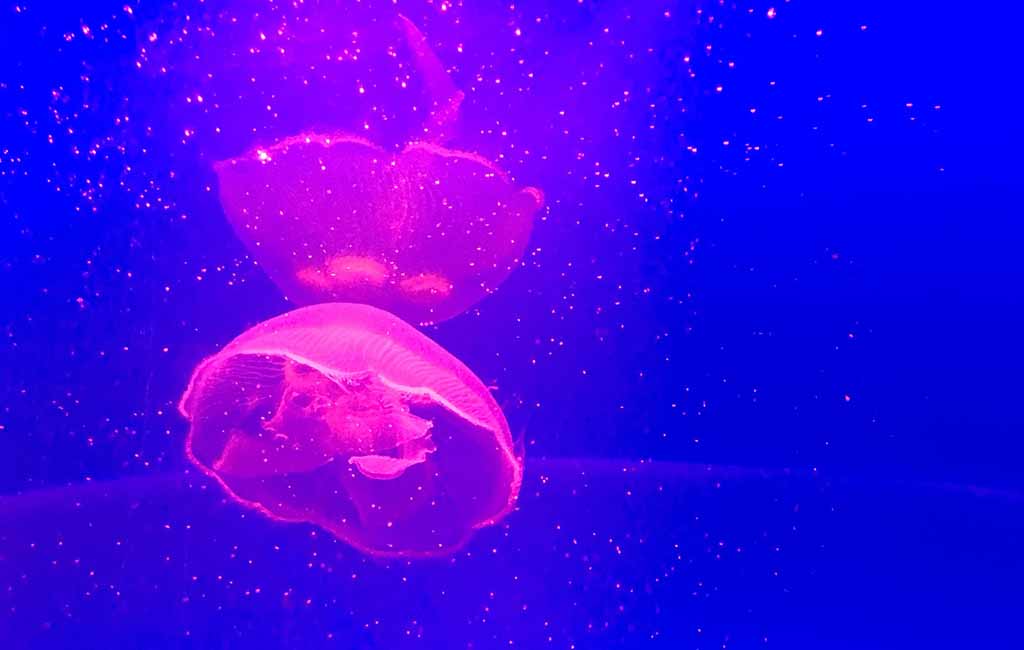
Does your fish tank need an air pump
Does It Need the Air Pump for Your Tank?
You need an air pump in your tank if you have the following.
- Lack of surface agitation. It results in poor gas exchange.
- You have a high fish load in your tank.
- If your tank water has a higher temperature.
- When you have a planted tank, they release CO2 at night.
- If your tank is more than 2 feet deep.
- If you are using sponges and under-gravel filters.
- When your fish are gasping, showing lethargy, or crowding near the filter. All of these signs are oxygen deficiency signs.
Pump Selection Depends
A suitable air pump selection depends on various aspects.
Tank Size
Air pumps come with the suitability tag. However, here is a general tank size and pump size table.
| Tank Size (Gallons) | Pump Power (W) |
| 10 to 20 | 2 to 4 |
| 20 to 55 | 4 to 6 |
| 55 to 150 | 6 to 10 |
| 150 to 600 | 10 or more |
Tank Depth
| Depth | Pump Size |
| Less than 2 feet | Any air pump will work well |
| More than 2 feet | High efficiency pump does well, i.e., like HG138 |
| More than 4 feet | The high-flow pump works well |
Noise Sensitivity
If you are using it in a general place, noise is not a big issue. However, it is crucial in the case of the office and the bedroom. Use an air pump with low noise, i.e., less than 30 dB.
Placement Level
If you are placing the air pump at the water level or higher, any pump without a check valve can work well. Otherwise, you need to have a pump with a check valve, as a check valve helps to avoid reverse flow.
Tank Type
If you have sponge filters or a fry tank, a steady and gentle flow produced by an air pump will be a better option. A strong aeration-producing pump is needed for goldfish or cichlid tanks. A strong and multiple-outlet pump is optimal for hydroponics and ponds.
The Bottom Line
Air pumps are meant to improve the oxygenation of the tank. Quiet air pumps are a blessing for various reasons: improved oxygenation, low stress, healthy fish, etc. Pump selection depends on the tank size, tank depth, fish stocking level, plantation level, etc. If you have a medium to large tank, the HG138 extra quiet air pump will be a blessing.
Related Products


Leave a comment