
If you’re an aquarium enthusiast looking to add a splash of color beyond fish and greenery, aquatic flowering plants can bring a new dimension of beauty to your tank. While many people associate aquatic plants simply with green leaves swaying underwater, some of these plants actually produce flowers — both above and sometimes below the water surface. In this hygger article, we’ll explore the world of aquatic plants and flowers, explain how and why they bloom underwater, and share the five easiest flowering plants you can grow in your home aquarium.
Content Table
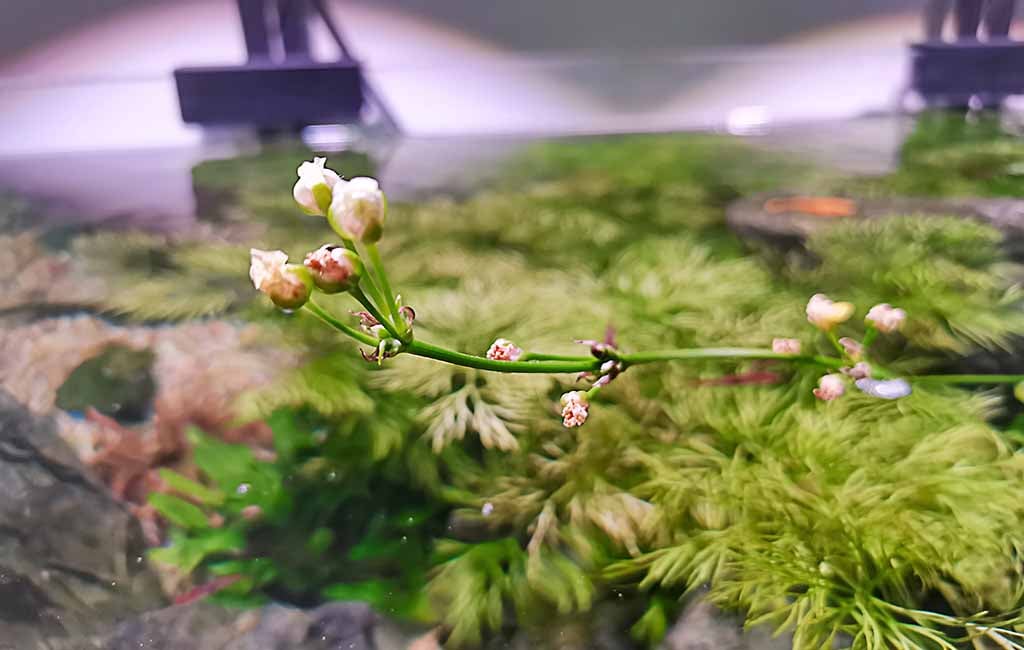
Will Aquatic Plants Have Flowers Underwater
What Are Flowering Aquatic Plants
You might be wondering: can aquatic plants actually flower underwater? The simple answer is — yes, but it depends on the species and their environment.
Aquatic plants are a diverse group of plants adapted to live fully or partially submerged in water. Flowering aquatic plants are those that produce flowers as part of their reproductive cycle, just like terrestrial plants. However, their flowering strategy varies:
- Emergent flowering plants: These plants grow rooted underwater but send their flowers above the water’s surface. This is the most common method for flowering since most pollinators (insects, wind) need to access the flowers.
- Floating flowering plants: Some plants float on the water surface and produce flowers right there, accessible to pollinators.
- Submerged flowering plants: A few species can flower underwater, using water currents to distribute pollen rather than relying on insects or wind.
In a typical home aquarium, it’s rare to see underwater flowers unless you have plants designed for it or allow some growth above the water line. But the flowers, whether submerged or emergent, add natural beauty and signal a healthy aquatic environment.
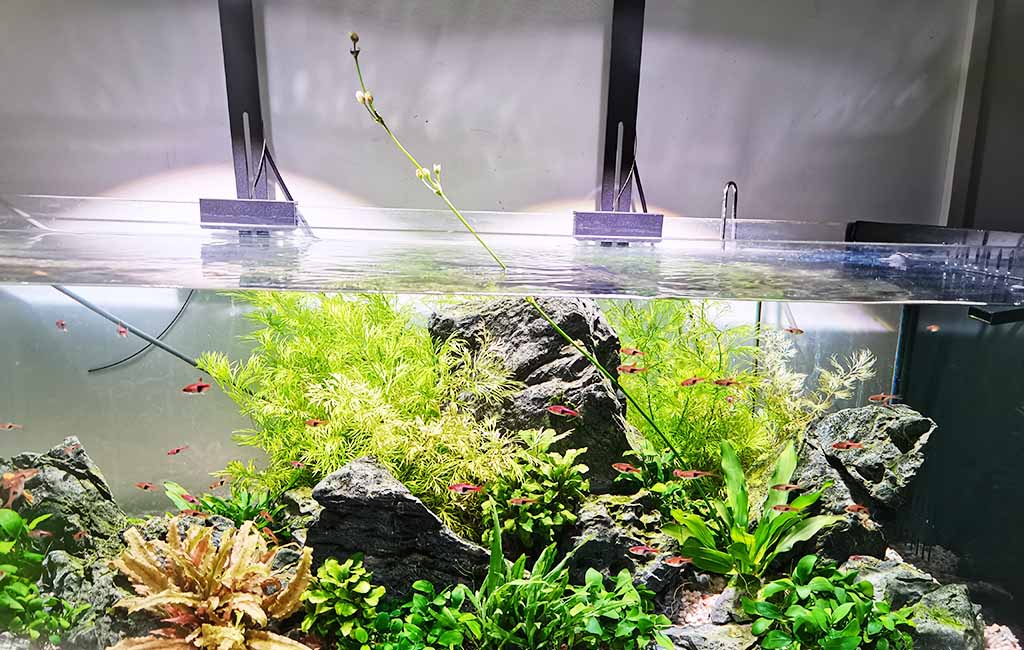
Types of Aquatic Flowering Plants
Aquatic flowering plants belong mainly to the group called angiosperms — plants that produce flowers and seeds. Worldwide, there are roughly 2,000 species of flowering aquatic plants, spread across various families and genera.
These plants can be broadly classified into three types based on how they grow and flower:
- Submerged Plants: Grow entirely underwater. Flowers, if produced, might be small and adapted for underwater pollination or self-pollination.
- Emergent Plants: Rooted underwater but send leaves and flowers above the water surface. These are common in ponds, marshes, and natural wetlands.
- Floating Plants: Rest on the water surface and often have flowers floating or standing above the water.
Why Do Aquatic Plants Have Flowers?
Like all flowering plants, aquatic plants produce flowers primarily for reproduction. Flowers attract pollinators, facilitate pollination, and ultimately lead to seed formation — allowing the plant to spread.
For aquatic plants:
- Emergent and floating flowers rely on insects, wind, or animals for pollination.
- Submerged flowers use water currents (hydrophily) to transport pollen.
Flowering also signals the plant’s health and adaptation to its environment. In home aquariums, encouraging flowering means providing proper lighting, nutrients, and space for the plant to grow beyond leaves.
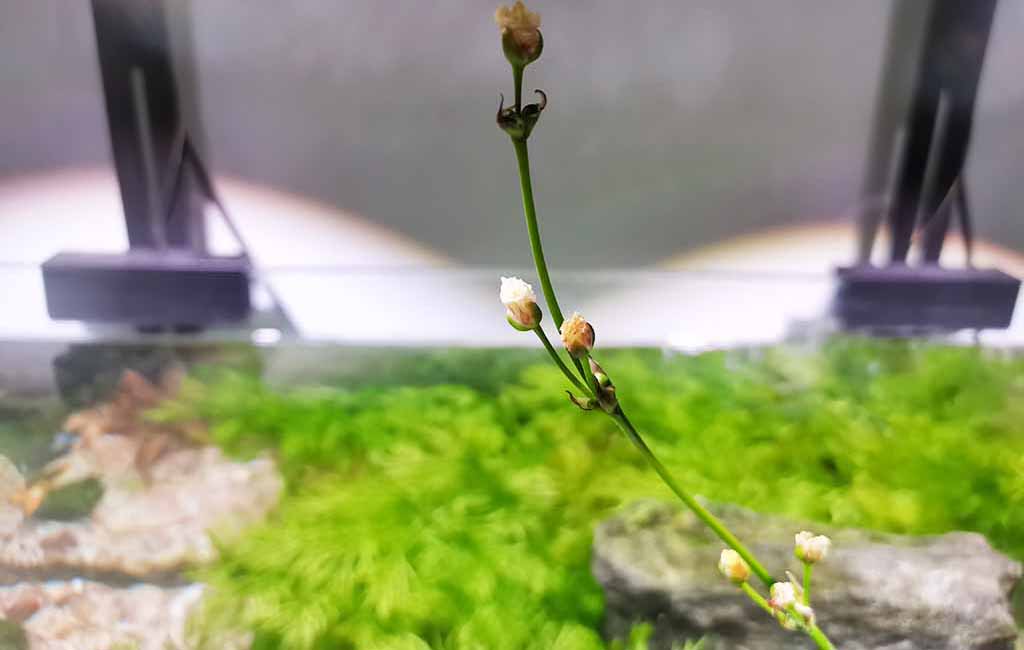
Why Can They Have Flowers Underwater?
Flowering underwater presents challenges since typical pollinators, such as bees and butterflies, don’t exist there. However, some aquatic plants have evolved fascinating adaptations:
- Water pollination: Some plants produce thread-like pollen that floats or drifts in water to fertilize female flowers.
- Self-pollination: Certain species can fertilize their own flowers without needing pollen transfer.
- Emergent flowering: By sending flowers above water, they ensure pollinator access.
In home aquariums, most flowering aquatic plants are emergent or floating types. Providing enough room for them to grow above the surface allows them to flower naturally.
The Easiest Aquarium Flowering Plants to Grow at Home
If you want to add flowering aquatic plants to your tank, here are five beginner-friendly species that flower reliably in home aquariums or paludariums:
- Amazon Sword (Echinodorus grisebachii)
- Description: One of the most popular and hardy aquarium plants, Amazon Sword grows broad, sword-shaped leaves rooted in substrate. With proper care, it sends long stalks that bloom small white flowers above the water.
- Care: Moderate to high light, nutrient-rich substrate, regular fertilization.
- Flowering: Usually flowers in mature, healthy plants growing in deeper tanks or paludariums where stalks can rise above water.
- Anubias (Anubias barteri and varieties)
- Description: Known for tough, dark green leaves, Anubias are easy to grow. It produces unique, small white to pale yellow flowers with a spadix structure similar to peace lilies.
- Care: Low light, slow growth, attach to rocks or driftwood rather than burying roots.
- Flowering: Flowers often appear underwater, but may only bloom occasionally in aquariums.
- Water Wisteria (Hygrophila difformis)
- Description: Fast-growing, feathery-leafed plant. In paludariums or tanks with emergent growth, Water Wisteria produces delicate white flowers.
- Care: Moderate light, easy nutrient needs, tolerates a wide range of water conditions.
- Flowering: Typically flowers above water but can bloom submerged in ideal conditions.
- Cryptocoryne (Cryptocoryne wendtii and others)
- Description: Crypts have unique curled leaves with earthy colors. They produce slender flower stalks that bloom with white or light pink flowers.
- Care: Low to medium light, slow-growing, prefers stable water parameters.
- Flowering: Flowers usually emerge above water in paludarium setups.
- Lotus (Nymphaea species)
- Description: Exotic water lily-like plants that produce large, showy flowers floating or rising on long stalks.
- Care: High light, large tanks or ponds, warm water temperatures.
- Flowering: Classic floating flowers visible above the water surface.
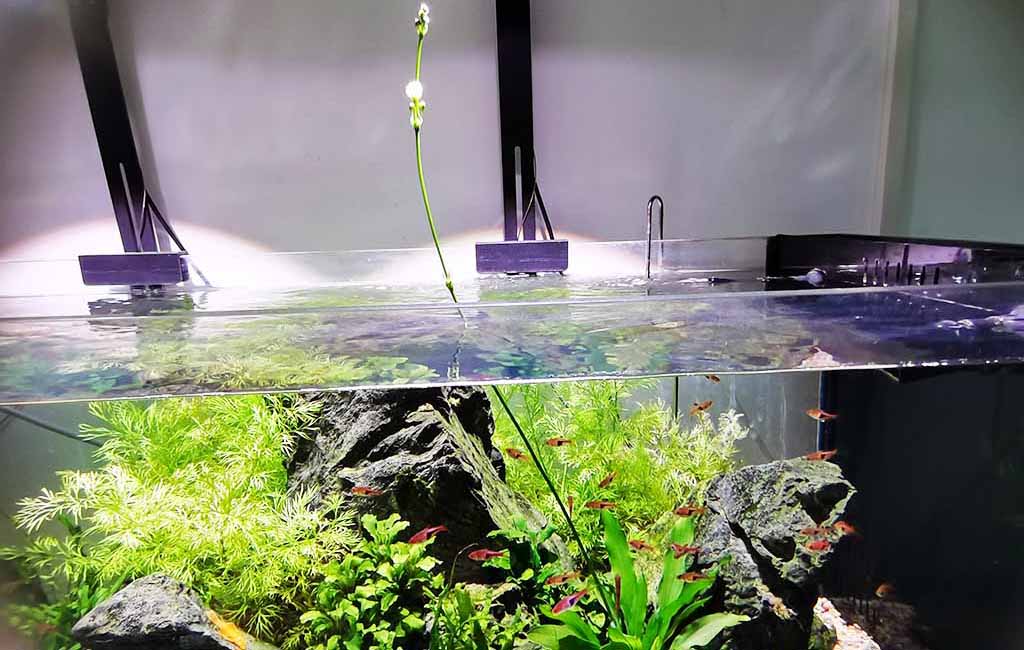
Exploring Flowering Aquatic Plants: Final Thoughts
Aquatic flowering plants add a beautiful and dynamic element to your aquarium or aquatic setup. Whether you prefer the subtle charm of Anubias flowers or the dramatic bloom of Lotus, these plants bring life and color beyond the usual greenery.
To successfully grow flowering aquatic plants:
- Provide ample light — many require moderate to high intensity.
- Maintain nutrient-rich substrates or supplements.
- Allow space for emergent growth where flowers can rise above water.
- Keep water parameters stable and suited to your chosen plants.
Remember, not all aquatic plants will flower in fully submerged environments, but with the right species and setup, you can enjoy the magical experience of aquatic blooms in your home fish tank.
If you want a stunning and healthy aquarium that goes beyond fish and greenery, consider adding flowering aquatic plants — nature’s own underwater blossoms!
Related Products

Leave a comment