
When you are raising aquarium shrimp, water parameters are very sensitive. These parameters vary from type to type. Usually, there are softwater, hardwater, coldwater, and saltwater shrimp species. Their water parameters are very crucial, especially for sensitive species. This article will address shrimp water parameters and how to set up different water tanks for different types of species.
Content Table
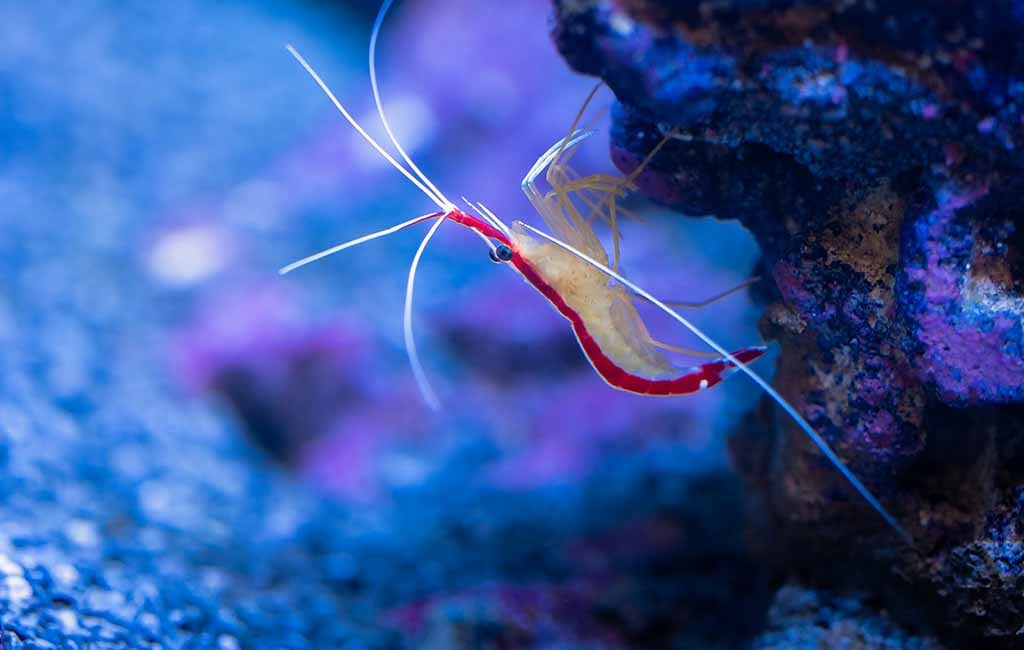
aquarium shrimp water
What Kind of Water Do Shrimp Need?
Aquarium shrimps are mainly classified into saltwater shrimps and freshwater shrimps. Each category requires specific water parameter requirements. These water parameters significantly impact their health, growth, and production processes. Temperature, pH, salinity, Dissolved Oxygen (DO), and ammonia are important water parameters for a shrimp tank. Here are some general values of aquarium shrimp water.
| Parameter | Value | Importance |
| Temperature | 68–79°F for Neocaridina | Higher temperatures can adversely affect the shrimps
● Weaken shrimp ● Reduce feed intake ● Increase stress ● Potentially leading to death |
| pH | 7.5 to 9.0 for production | Higher or lower pH affects the shrimps in the following ways.
● Slow growth ● Stunt development ● Susceptible to disease |
| Salinity | 15-25 ppt for Litopenaeus vannamei | Lower or higher salinity levels cause
● Stress ● death |
| Dissolved Oxygen | 4.1 mg/L for juveniles | Low DO causes the
● Stunt growth ● Reduce disease immunity |
| Ammonia and Nitrate | Unionized ammonia, less than 1 mg/L | Higher ammonia and nitrate concentrations cause a low growth rate. |
Water Parameters for Soft Water Species of Aquarium Shrimp
Several softwater shrimp species are popular among aquarists. Here are some of them, with the general shrimp water parameters for each species.
Popular Softwater Shrimp Species
| Specie | Scientific Name | General Overview |
| Crystal Red Shrimp | Caridina cantonensis | Sensitive
Pristine water conditions Stable water conditions |
| Crystal Black Shrimp | Caridina cantonensis | Sensitive
Pristine water conditions Stable water conditions |
| Taiwan Bee Shrimp | Caridina cantonensis var. | Extremely sensitive to water parameters |
| Shadow Panda Shrimp | Caridina cantonensis | One of the delicate shrimp species |
| Blue Bolt Shrimp | Caridina cantonensis | Soft water
Low TDS |
| Amano Shrimp | Caridina multidentata | High tolerance to water parameters
Show optimal growth at soft and medium water conditions |
| Sulawesi Shrimp | Caridina dennerli | A special shrimp that requires soft but alkaline water conditions |
Optimal Water Parameters for Soft Water Shrimps
| Parameter | Value |
| Temperature | 68-77°F |
| pH | 6.0 to 8.0 |
| GH | 4-6 |
| KH | 0-50 ppm |
| TDS | 100-200 ppm |
| Ammonia | 0 |
| Nitrite | 0 |
| Nitrate | Less than 20 ppm |
| DO | 4 mg/L+ |

shrimp water parameters
Shrimp Water Parameters from Hard Water
Several shrimp species prefer to live in medium to hard water conditions. Here are some popular hardwater species.
| Species | Scientific Name | General Note |
| Cherry shrimp | Neocaridina davidi | ● Hardy
● Beginner-friendly ● Available in multiple colors |
| Rili Shrimp | Neocaridina davidi | ● Multiple coloration
● Translucent patterns |
| Yellow Shrimp | Neocaridina davidi | Similar to cherry shrimp but different in coloration |
| Orange Sakura Shrimp | Neocaridina davidi | ● Type of cherry shrimp
● Vibrant coloration ● Easy breeding |
| Blue Dream Shrimp | Neocaridina davidi | ● Deep blue color
● Beginner-friendly |
| Amano Shrimp | Caridina multidentata | ● Highly tolerant of water parameters |
| Ghost/Glass Shrimp | Palaemonetes sp. | ● Algae eater
● Hardy ● Fast swimmer |
Optimal Water Parameters for Medium to Hard Water Shrimp Species
| Parameter | Value |
| Temperature | 65–76°F |
| pH | 6.5–8.5 |
| GH | 6–12 |
| KH | 4–8 dKH |
| TDS | 150–300 ppm |
| Ammonia | 0 |
| Nitrite | 0 |
| Nitrate | Less than 40 ppm |
| DO | 5 and 8 mg/L |
What Water to Use for Salt Water Shrimp and Cold Water Shrimp
Saltwater Shrimp Species
Marine water shrimps or saltwater shrimps share a large proportion of shrimp species. Shrimp species require specific conditions like soft, medium, and hard water.
| Specie | Scientific Name |
| Peppermint shrimp | Lysmata wurdemanni |
| Red fire shrimp | Lysmata debelius |
| Sexy shrimp | Thor amboinensis |
| Skunk cleaner shrimp | Lysmata amboinensis |
| Coral-banded shrimp | Stenopus hispidus |
| Harlequin shrimp | Hymenocera picta |
| Pederson cleaner shrimp | Ancylomenes pedersoni |
Water Parameters for Marine Shrimps
| Parameter | Value |
| Temperature | 77-86°F |
| Salinity | 15-35 ppt |
| pH | 8.1-8.4 |
| Alkalinity | 8-12 dKH |
| Calcium | 400 mg/l |
| Magnesium | 1250-1450 mg/L (ppm) |
| Ammonia | 0 |
| Nitrite | 0 |
| Nitrate | Less than 20 ppm |
Cold Water Shrimp Species
Cold-water shrimp species are in the North Atlantic and Arctic oceans. They inhabit depths of 10 to 500 meters. Their growth is slower. Usually, they feed on plankton, microforms, and krill. Here are some famous cold-water aquarium shrimp species.
| Specie | Scientific Name |
| Amano Shrimp | Caridina multidentata |
| Ghost Shrimp | Palaemonetes paludosus |
| Northern shrimp | Pandalus borealis |
| North Sea Shrimp | Crangon crangon |
| Chilean nylon shrimp | Heterocarpus reedi |
Water Parameters of Cold Water Shrimps
| Parameter | Value |
| Temperature | 60–72°F |
| pH | 6.5 – 8.0 |
| GH | 5 – 12 dGH |
| KH | 3 – 8 dKH |
| TDS | 100-200 ppm |
| Ammonia | 0 |
| Nitrite | 0 |
| Nitrate | Less than 20 ppm |
| DO | 4-8 mg/L |
How to Prepare Shrimp Tank Water
How to Prepare a Freshwater Shrimp Tank?
- Select a minimum 10-gallon tank. It is hard to manage a small tank.
- Add active substrate for softwater shrimps. Use inert substrate, e.g., pool filter sand or basic aquarium gravel, for hard water shrimps.
- If you want to use tap water, dechlorinate the water. Otherwise, use RO/DI water with a proper mineral level for the shrimps.
- Test the pH, GH, KH, and TDS of water before adding it to the tank. Use GH+ water for softwater and GH and KH water for hard water shrimp species.
- Install a sponge filter.
- Install a small heater for tropical shrimp species.
- Install the mini lights according to the shrimp’s requirements.
- Cycle your tank until water parameters reach Ammonia and Nitrite: 0 ppm and Nitrate: up to 20 ppm.
- Introduce hiding places, grow live plants, and install driftwood in the tank.
- Use the drip acclimation method and do it for 1 to 2 hours.
- Perform a 10 to 20% weekly water change and water parameter testing, and gently clean the filter monthly.
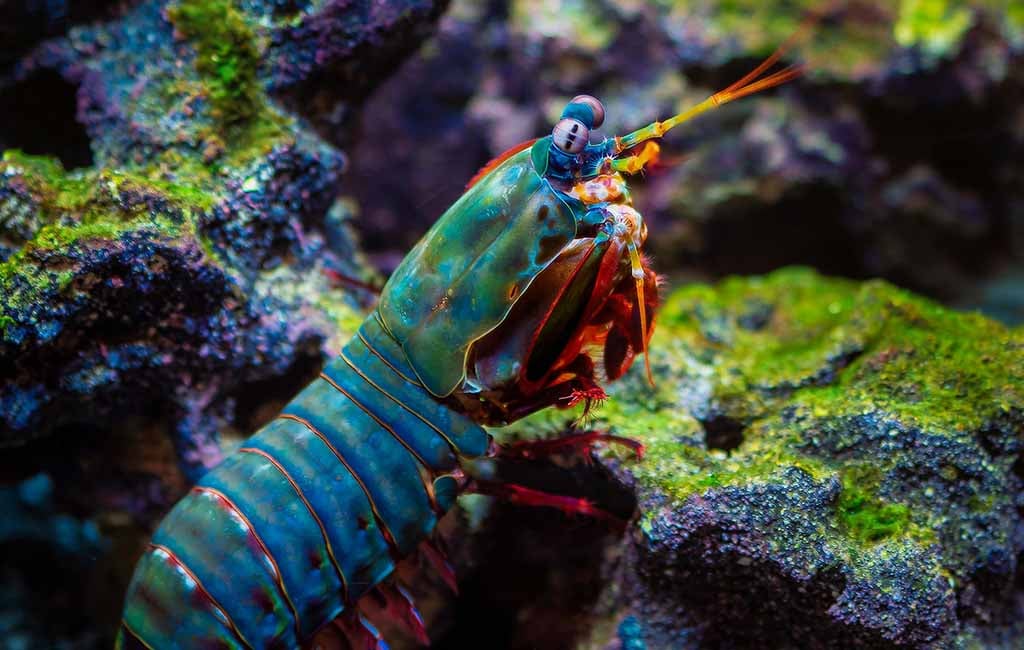
Prepare shrimp tank water
How to Prepare a Coldwater Shrimp Tank?
- Select a minimum 10-gallon tank.
- Introduce inert substrate, i.e., sand or gravel.
- Use dechlorinated tap water or RO/DI water.
- Add GH/KH+ shrimp minerals in RO/DI water.
- Reduce the water temperature to room temperature or lower.
- Check the pH, GH, KH, and TDS of water.
- Use a sponge filter. In large setups, use a HOB filter with a sponge filter as a pre-filter.
- Cycle your tank until water parameters reach Ammonia and Nitrite: 0 ppm and nitrate: up to 20 ppm.
- Add live plants, driftwood, stones, caves, and other hiding spots in the tank. These objects also encourage biofilm growth.
- Use the drip acclimation method and do it for 1 to 2 hours.
- Follow a care routine to maintain your cold-water shrimp tank.
How to Prepare a Saltwater Shrimp Tank?
- Select a minimum 10-gallon tank.
- Use marine aragonite sand or crushed coral as a substrate, as they help to buffer the pH.
- Only use RO/DI water.
- Mix high-quality sand in a bucket and leave it for 12 to 24 hours for stabilization.
- Use a refractometer or a hydrometer to check water salinity. Moreover, check the water temperature as well.
- Add a heater, a sump or marine filter, and a protein skimmer to the tank.
- Cycle your tank until water parameters reach Ammonia and Nitrite: 0 ppm and Nitrate: up to 20 ppm.
- Introduce live rocks or macroalgae in the tank.
- Use drip acclimation. It’ll take 2 to 3 hours for proper acclimation.
- Follow a maintenance routine for an optimal saltwater shrimp tank.
Wrapping Up
Set the optimal water parameters in your tank and enjoy clear aquarium shrimp water. However, don’t forget to follow a strict maintenance routine to keep your aquarium shrimps in optimal condition.
Related Products


Leave a comment