
Plants appear to be magic in blue color when they are underwater, and this gives the aquariums a cool and relaxing feeling. Many aquarists enjoy the color variety in their tanks, particularly the colors that are unique and not typical of most tanks, such as green and red. But in the case of natural blue aquatic vegetation, it becomes slightly tacky.
Content Table
It is extremely difficult to find true-blue aquatic plants, though a few are close to it in having blue-tinted hues or blue-colored flowers. In this article, you will learn whether there are any blue aquatic plants and what kind of plants have blue flowers, the influence of blue light on the plants, and some important tips for planting them successfully.
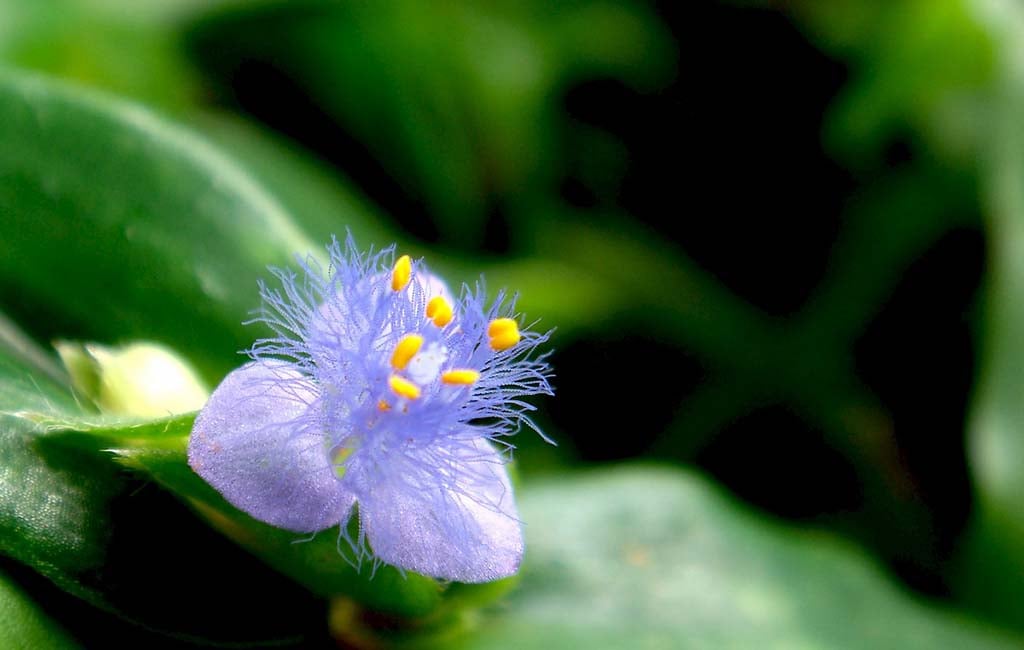
Monochoria vaginalis
Blue Aquarium Plants
In a search for blue colored aquarium plants, one should be aware that there are no actual blue aquatic plants found in nature. The plants that are submerged in water are mostly green because they have chlorophyll that enables them to photosynthesize. There are, however, some species that show blue-colored or bluish-green leaves in particular conditions or lighting. Blue color usually varies with the intensity of the light, the chemistry of the water, and the natural pigment of the plant.
Here are some plants that can show bluish tones or blue highlights in aquariums:
- Ludwigia glandulosa—It is predominantly reddish-purple; the leaf, however, is capable of reflecting a cool-bluish color in bright light. The brightness of the light and the availability of nutrients influence its general color richness.
- Rotala wallichii—This is a fragile plant that is capable of giving a faint tint of blue-green against full-spectrum LED lighting. It is commonly applied in aquascapes to provide depth and balance.
- Bucephalandra species—Bucephalandra is among the most common plants that have bluish-tinted leaves. The species, such as Bucephalandra “Blue Phantom” or Bucephalandra “Blue Green”, have a metallic blue hue with aquarium lighting. Their brightness depends on the quality of the water and the angle of light reflection.
- Anubias barteri var. Nana Blue—Although not literally blue, some rare cultivars are bluish owing to the texture of the leaves and reflected light. They are slow-growing and suitable for low-light tanks.
- Bolbitis heudelotii (African Water Fern)—When this fern is under the soft blue or white lights, it can be slightly bluish-green. It is an excellent midground plant because of its distinctive leaf structure.
The color of aquarium plants, in most cases, appears blue due to the effects of lighting and not the pigments. Cooler colors can be obtained by using adjustable LED lights with a high blue spectrum, which would make plants look bluish, particularly when darker substrates and decor are used in comparison.
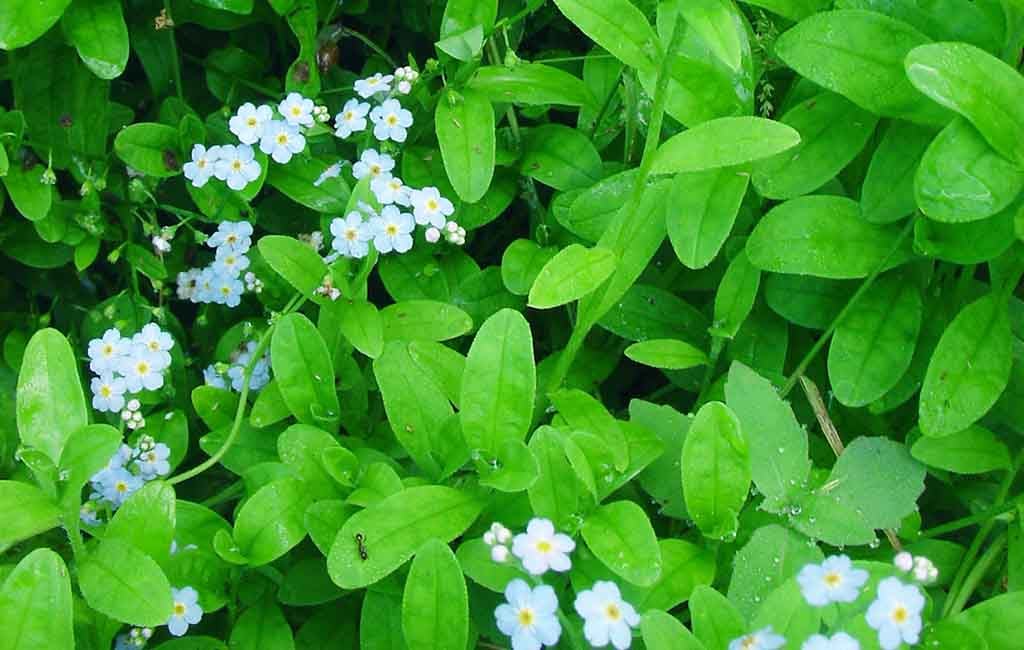
Water Forget Me Not
Aquatic Plants with Blue Flowers
Although blue-leaved aquatic plants are not very common, several aquatic plants can produce beautiful blue flowers. These are some flowering plants that can add a unique color and grace to your tank or pond. Some grow completely underwater, and others flower on the surface of the water.
Here are some aquatic plants known for their blue flowers:
- Water Hyacinth (Eichhornia crassipes)—It is a beautiful plant that grows in water and bears beautiful blue or violet flowers. It grows in large open-top aquariums as well as in ponds. The flowers bloom on top of the surface, and they add natural beauty.
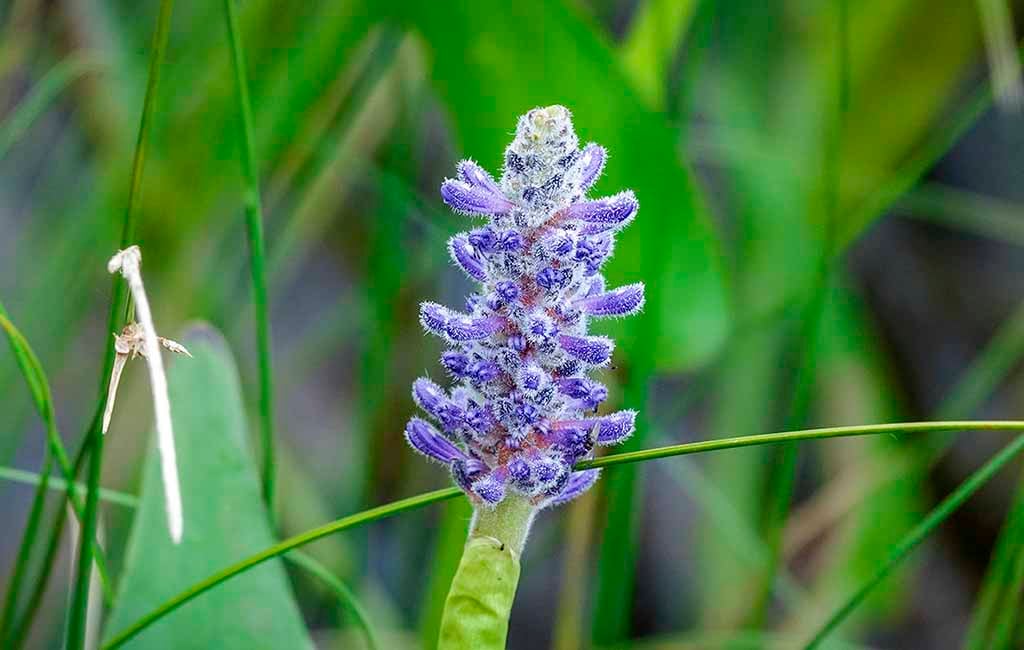
- Pickerel Weed (Pontederia cordata)—Pickerel weed is a perennial that grows in shallow waters, and it has spikes of small flowers of blue-violet color. It is ideal in outdoor tanks or in aquascapes that have open water surfaces.
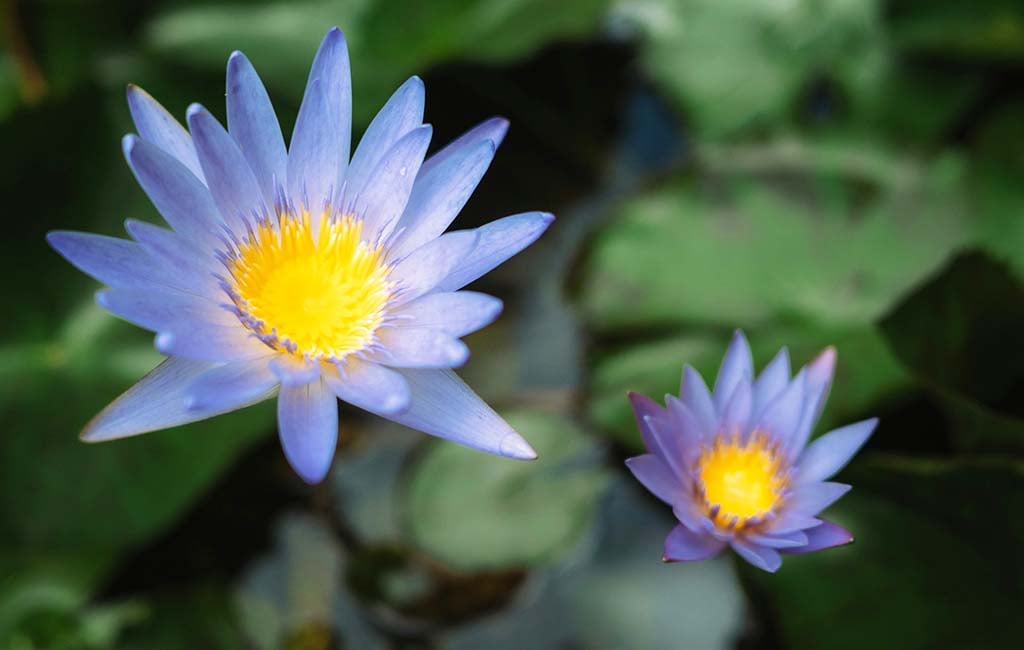
- Blue Water Lily (Nymphaea caerulea)—This plant is also called Egyptian Blue Lotus; it has many flowers, which are huge and blue. It suits well in pond settings or in spacious aquariums where there is room for floating leaves.
- Water Forget-Me-Not (Myosotis scorpioides)—It is a semi-aquatic flower with fragile, blue-colored flowers on the stems. It likes the shallow, dry areas, which makes it ideally suited to paludariums or riparium setups.
- Monochoria vaginalis—It is a less-known aquatic plant, having beautiful blue to purple flowers. It grows in shallow water and usually in wetlands and rice paddies.
The vast majority of flowering plants that grow in water require intense light and a nutritious environment to develop. In case you are growing them inside, then do what you can to imitate natural daylight. The blue flowering plants provide the color and entice the advantageous pollinators in the open arrangements.
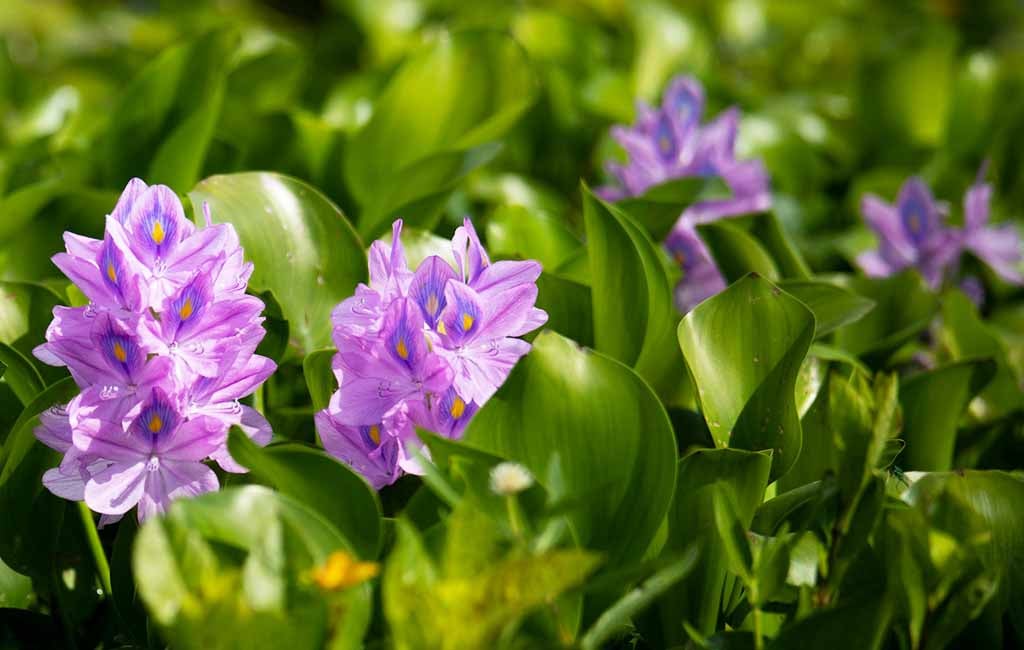
Water Hyacinth
Is Blue Light Good for Aquarium Plants?
Blue light is a very crucial element in the growth of plants in an aquarium, although it has to be balanced. The lighting of an aquarium typically involves a combination of colors (red, green, and blue), each of which has a certain purpose. Blue light (particularly, in the wavelength spectrum of 400-500 nm) is useful in photosynthesis, shaping, and coloration of leaves.
Here’s how blue light benefits aquarium plants:
- It supports vegetative growth, encouraging healthy leaves and compact structures.
- It enhances chlorophyll absorption, helping plants use energy more effectively.
- It can make aquarium plants appear more vibrant and highlight blue or purple tones.
Blue light, however, is not sufficient to grow plants. Red light is also needed by the aquarium plants to produce flowers and energy. Excess blue light may result in the proliferation of algae, since algae are very sensitive to shorter wavelengths. This is the reason why a balanced amount of light between 6500K and 8000K is regarded as the best for planted tanks.
So, do aquarium plants need blue light?
Yes, but in moderation. Blue light also aids in proper leaf structure and pigmentation, particularly in species with red or blue colors. At least in combination with red and white light, it guarantees full photosynthesis and balanced growth of plants.
Best lighting setup for planted tanks:
- Use full-spectrum LED lights designed for aquariums.
- Keep a daylight color temperature between 6500K and 7500K for most plants.
- Adjust the intensity depending on the plant type—high-light species like Rotala or Ludwigia require stronger illumination, while low-light plants like Anubias grow well under dim light.
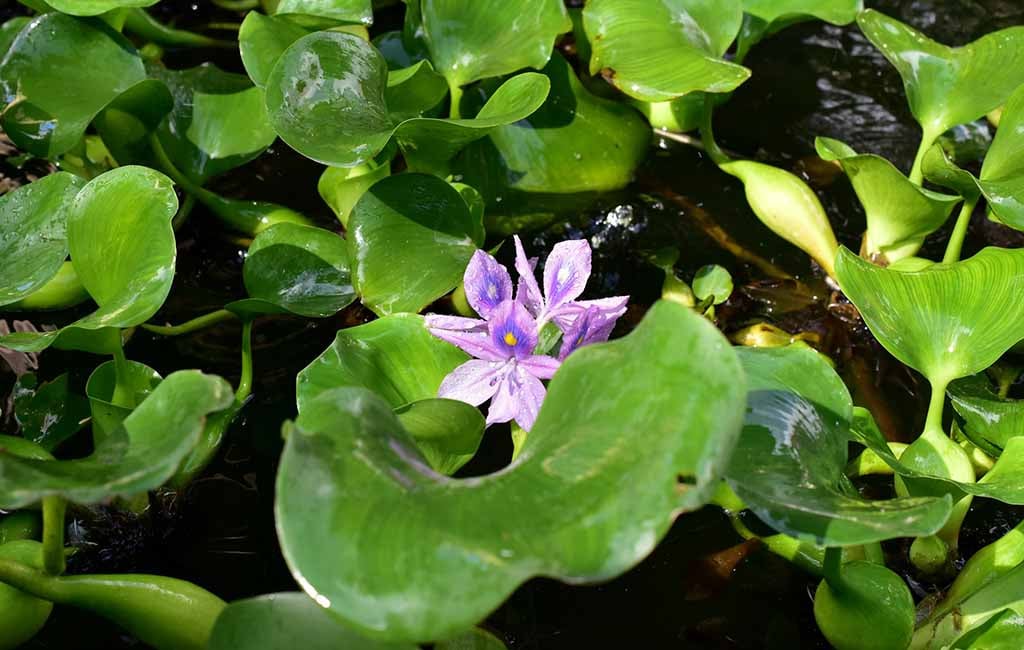
Water Hyacinth
Things to Note When Growing Blue Aquatic Plants in Your Tanks
Blooming blue water plants, or those that have a bluish color, take more than just good lighting. You must keep the tanks in optimal conditions that support the growth and color of plants. There are several main points to consider:
1. Lighting Setup
Plants with blue color are best displayed using white or slightly blue light. Nevertheless, do not use blue light only. Install lighting systems that are adjustable and give the full spectrum. Have a regular light day of 8-10 hours per day. The problem of excessive light may cause algae issues, and the lack of light may make plants fade or change their color.
2. Water Testing and Quality
Plants that survive in the water are sensitive to fluctuations in the water parameters. Maintain the water clean and stable by testing it weekly. The optimal level of pH for the majority of plants is between 6.5 and 7.5, with moderate hardness. Frequent changes of water can be used to avoid the accumulation of nutrients, to ensure the water is in a balanced state.
3. Substrate Selection
The nutrient-rich substrate promotes good growth of roots and their coloration. With blue-colored plants, such as Bucephalandra, select dark substrates; they are a good contrast to the bluish leaves. Root tabs or liquid fertilizers can also be used to provide the nutrients necessary, such as iron, potassium, and magnesium.
Blue Water Lily
4. CO₂ Injection
The addition of CO₂ also aids the growth of most plants in the aquarium and the preservation of their natural color. Plants of blue color tend to be advantageous in a constant CO₂ level since this enhances the absorption of nutrients and maintains control over algae. In case of a lack of CO2 systems, use good circulation of water to ensure that there is enough supply of oxygen.
5. Water Temperature
Keep the water temperature between 22°C and 28°C (72°F–82°F) for most species. Regulated temperature promotes metabolism and eliminates stress in plants. Sudden fluctuations in temperatures may lead to weakness in the leaves of the plants or retardation of growth.
6. Regular Maintenance
Prune and trim your plants regularly so that they are not overcrowded. Clean off decaying leaves before they spike ammonia. Wash your aquarium glass and aquarium equipment so that your blue plants get maximum exposure to the light.
7. Fertilization
Apply liquid fertilizers every week to substitute the necessary micronutrients. Especially, iron and trace elements are utilized in color enrichment. When your plants begin to lose color or have pale leaves, it is an indication that the plants need more nutrients or more light.
Pickerel Weed
The Bottom Part
So, are there truly blue aquatic plants? In nature, not exactly. However, when properly lit and given proper care, several species might exhibit bluish hues that are attractive to the eye or create beautiful blue flowers. Bucephalandra and Anubias nana “Blue” are the plants that can add that special luster that you are seeking. Meanwhile, it is possible to include flowering species (like Blue Water Lily and Pickerel Weed) that will be a splash of real blue to your setup.
The combination of light, quality of substrate, and water should be given attention to produce the best results. Install full-spectrum LEDs that help in increasing the color of plants, and remember to maintain your aquarium. You are either creating a serene aquascape or injecting your tank with color; blue-colored plants may make your underwater habitat look fresh and smooth.
In short, while true-blue aquarium plants may not exist, you still can create a system that will make your tank beautiful and mysterious. The combination of right lighting, species choice, and attention would make your aquarium a phenomenal water masterpiece.
Related Products




Leave a comment