
Acrylic fish tanks are sturdy but come with challenges, i.e., scratches, bending, etc. For these reasons, they require regular maintenance, especially if you want to keep them like new. In the following, all of these things, along with the height-to-thickness ratio, different types, and characteristics, are discussed.
Content Table
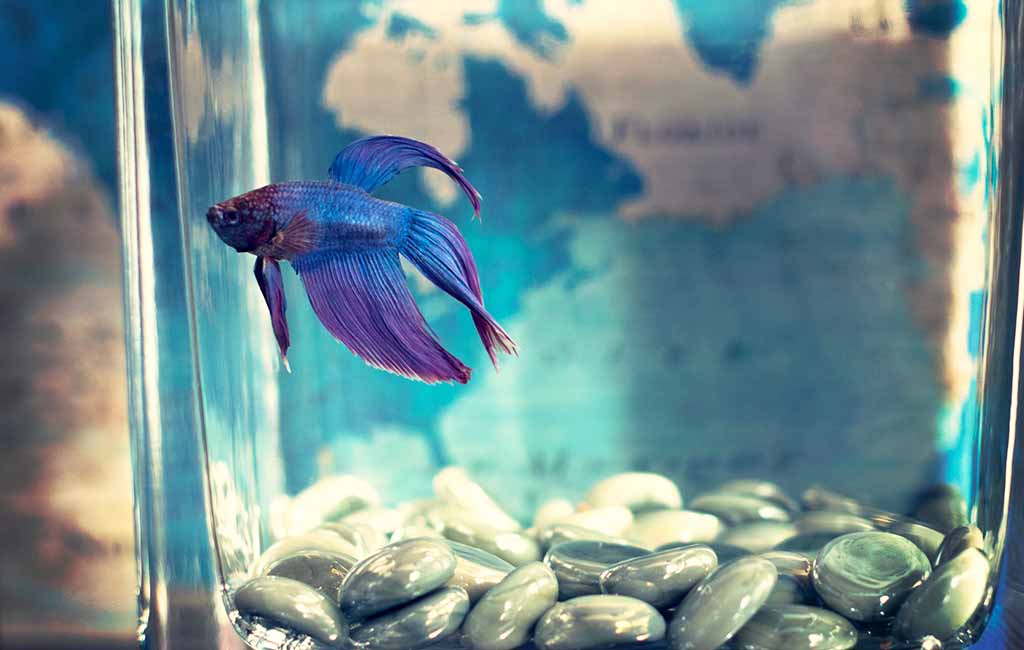
acrylic fish tank
Acrylic Fish Tank
Acrylic is a transparent and shatter-resistant plastic type. Its transparency is almost like glass. If a fish tank is built with it, it is also known as an acrylic fish tank. Here are some peculiarities of an acrylic fish tank.
Peculiarities
- Acrylic fish tanks are lightweight. Therefore, it is easy to move them from one place to another and install them.
- Glass fish tanks are not good against impact. These tanks are highly resistant to sudden impact. Therefore, mostly, giant public aquariums are built with it.
- Acrylic is a type of plastic. Therefore, it offers a high level of customizability. It is possible and easy to mold them to desired shapes, e.g., curved, spherical, etc., unlike glass.
- Acrylic fish tanks are better insulators than glass fish tanks. Therefore, they help to maintain the water temperature.
- These tanks offer great clarity and provide a fantastic view from various angles.
- They are prone to scratches. This aspect made their maintenance hard. It requires frequent buffing to keep the surface scratch-free.
- The initial cost of an acrylic fish tank is higher. This aspect is more obvious in building large setups than small ones.
How Thick Should Acrylic Be for a Fish Tank?
The thickness of an acrylic fish tank depends on the dimensions, especially on the tank height. The general rule of thumb is to increase the thickness by 0.125 inches for every 6 inches of height. Here is a general table for thickness.
| Tank Height | Recommended Thickness |
| Up to 12 in (30 cm) | 1/4 in (6 mm) |
| 12–18 in (30–45 cm) | 3/8 in (10 mm) |
| 18–24 in (45–60 cm) | 1/2 in (12 mm) |
| 24–30 in (60–76 cm) | 3/4 in (18 mm) |
| 30–36 in (76–90 cm) | 1 in (25 mm) |
| 36–48 in (90–122 cm) | 1.25–1.5 in (32–38 mm) |
Which Type of Acrylic Sheet Should I Use?
There are different types of acrylic sheets. So, it is important to select a suitable one. Here are some suitable types to build your acrylic aquarium.
Cell-Cast Acrylic
It is also known as cast acrylic and GS acrylic. It is the most recommended type for aquariums. Here are different reasons that make it special and allow us to build from a small to a giant aquarium with this.
- It is the strongest acrylic sheet.
- It offers the clearest view with the Highest optical clarity.
- Cast acrylic resists scratches.
- It withstands water pressure and doesn’t bend with water’s static pressure.
- It is easy to build this as it bonds well with acrylic cement.
UV-Resistant Cell-Cast
If you are planning to build an outdoor aquarium or want to cordon off your outdoor pond to keep higher visibility, it’s a perfect recipe. However, it is hard to adapt due to the higher cost. Here are some reasons why it is here in this list.
- It helps fish and plants to avoid UV light.
- It avoids yellowing the tank panel.
Impact-Modified Acrylic
It is a suitable option for building a large public aquarium outdoors. It has special additives that make it impact-resistant. Here are some characteristics.
- It stays strong against the impacts.
- However, they don’t offer the clear view as compared to cell-cast and UV-resistant
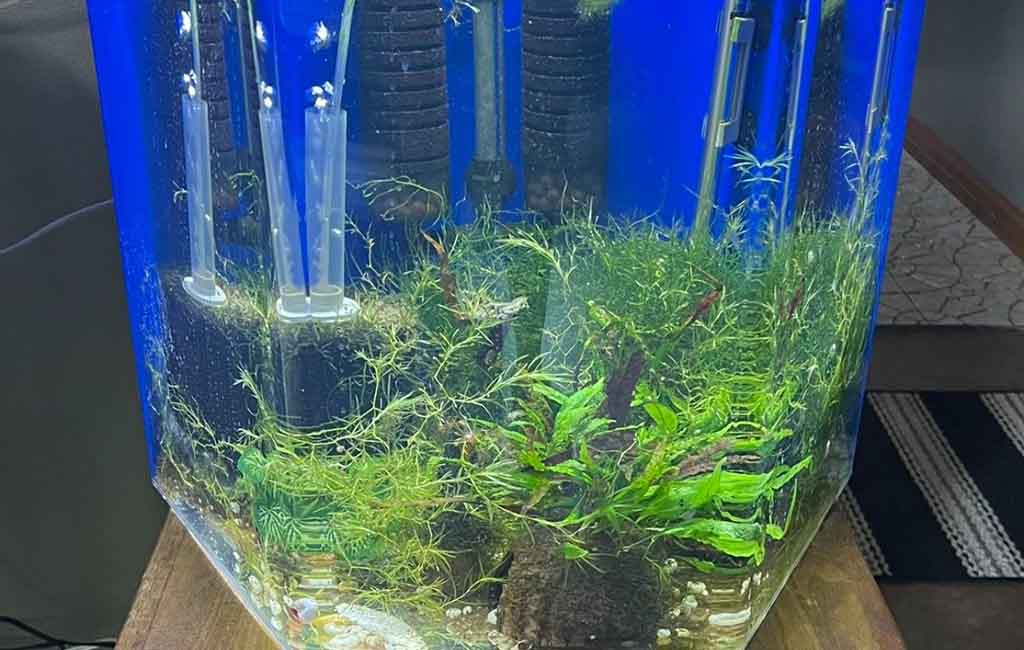
acrylic fish tank maintenance
Keep the Acrylic Fish Tank Clean and Like New
Acrylic fish tanks are more sturdy than glass fish tanks. However, they have maintenance issues. They get scratched very easily, and if you don’t focus on that, soon you’ll lose the optical clarity of your acrylic fish tank. Here are a few tips to keep your acrylic fish like new.
Acrylic Safe Cleaning Tools
An acrylic fish tank gets scratches during cleaning. Therefore, it is wise to use some acrylic-safe cleaning tools.
- Algae-safe scraper
- Soft-microfiber
- Magic eraser
Inside Cleaning
Cleaning from the inside is crucial during acrylic fish tank maintenance, as the inner side is more prone to problems. Here is a safe method for inside cleaning.
- Initially, clean your tank wall with a siphon. It’ll detach the loose debris.
- After that, use an acrylic-safe algae magnetto wipe the inner walls. However, before using it, thoroughly clean it, as it can catch the sand, which will cause abrasion on the surface.
- Now it’s time to remove the tight algae layer. Use a non-metallic magic eraser. Instead of a magic eraser, you can also go with a plastic card.
- After the plain surface cleaning, it’s time to clean the corners, as siphons and magic erasers are ineffective. Use a soft acrylic-safe brush and clean the corners.
Outer Cleaning
Usually, outside of the tank, there are fingerprints and dust. You can clean it with the help of
- Soft microfiber Cloth
- Acrylic safe cleaner. You can also use your own cleaner with 50% water and 50% vinegar.
How to keep an acrylic fish tank like new
Algae Control
You need to clean the tank’s walls due to algae growth. Therefore, it is crucial to control the algae growth in the tank. Less algae means less cleaning and fewer chances of scratches. To keep your acrylic fish tank like new, control the algae growth in the following way.
- Don’t place it in direct sunlight.
- Don’t turn on the fish tank lightsmore than 8 to 10 hours daily.
- Overfeeding causes more fish waste and food left over. This results in an algae bloom in the tank.
- Keep algae eaters in your tank. Moreover, growing the live plants as they are algae competitors is a good option as well.
- Regularly change the water and test the water parameters, especially the nitrate level in the tank.
Regular acrylic fish tank maintenance routine
| Duration | Maintenance Operations |
| Weekly | Clean the algae from the inner side of the tank, if there is any. |
| Clean the outside with a soft microfiber cloth | |
| Change up to 20 to 30% of water | |
| Rinse the filters with the tank’s water. | |
| Monthly | Deep clean your tank’s panel |
| Clean the tank’s areas that are out of reach during weekly cleaning | |
| Fix the scratches |
Scratch Fixation
As mentioned in the monthly cleaning, fix the scratches. It is the way to keep an acrylic fish tank like new.
- Use the acrylic polishing kits to remove haze, scuffs, and other fine scratches in the tank.
- Use wet-sanding and polishing to remove the deep scratches from the tank panel.
Extend the Acrylic Tanks’ Lifespan
Usually, an acrylic fish tank lasts for 10 to 20 years without any serious issues. A high-quality cell-cast acrylic fish tank with proper maintenance can last for 30 years without any serious structural problems.
However, if you are thinking of going with a low-quality, cheap acrylic tank and low maintenance, it is a perfect recipe for disaster. It can only last for 5 to 8 years. They are proan bow, wrap, or craze even before the said duration.
Extend the Acrylic Tanks’ Lifespan
Factors Affecting the Acrylic Fish Tank Life
Here are some factors that will affect the lifespan of your fish tank.
- Acrylic type is the top factor. If you are using Cell-Cast, it’ll go longer. Otherwise, extruded acrylic has a shorter life.
- Proper panel thickness also affects the lifespan. So, consult our thickness chart for different heights.
- The way you join the panels also affects the lifespan, i.e., strong bonding, higher lifespan, and vice versa.
- Higher sunlight exposure also affects the life with yellowing, brittleness, and shorter life.
- The maintenance routine also affects the lifespan. Correct and regular maintenance will lead to a higher lifespan and vice versa.
- Tank shape is also a lifespan affecting factor. A rectangular-shaped acrylic fish tank lasts longer compared to odd-shaped tanks.
How to Extend the Lifespan of Your Acrylic Fish Tank?
There are several ways to increase the lifespan of your tank. But always remember, lay a rock-solid foundation, i.e., use the cell-cast acrylic to build your tank. Here are some methods.
Acrylic Safe Cleaning Tools
As mentioned, acrylic is highly prone to scratches. Therefore, use an acrylic safe cleaning tool.
- Acrylic safe scraper
- Soft microfiber cloths
- Plain and unscented magic eraser
Seam Protection
Glass tanks use silicon for bonding the panels. However, in acrylic tanks, it is altered with chemically bonded seams. Therefore, it’s crucial to protect the seam
- Don’t use tools near the seams.
- Safe the bottom edge from rock and gravel rub.
- Always transport the tank when it is empty.
- Always keep it algae-free.
Bending Protection
Unlike glass, acrylic tanks are prone to bending. To keep them safe
- Always remember the height-thickness ratio.
- Secure them with braces
- Don’t fill it with too much water
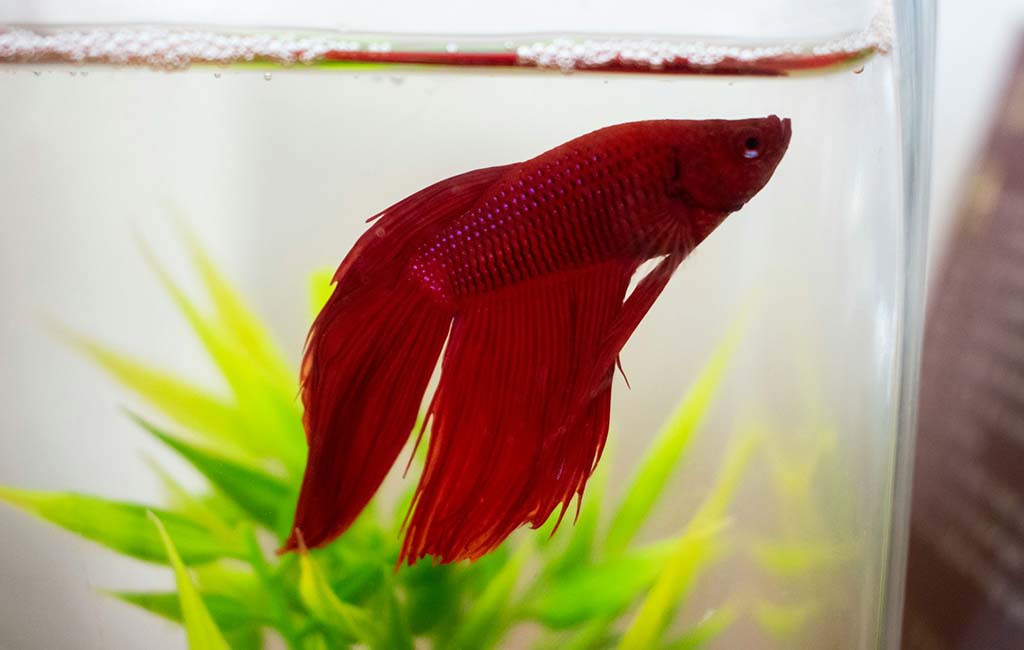
keep acrylic fish tank new
Avoid Direct Sunlight Exposure
Always keep it away from direct sunlight exposure. So,
- Don’t place in windows
- Don’t place near the heater vents
- Keep it in a stable room temperature
Water Quality Maintenance
In glass tanks, water quality only affects the fish and other aquatic pets. However, in acrylic tanks, poor water quality induces micro-stress to the material, which causes damage over time. Although it is minute, it affects over time.
Polish the Surface
If you are looking for the answer to how to keep an acrylic fish tank like new, use acrylic polish. It’ll help you in
- Restoring the scratches
- Removal of fine scratches
- Protect the acrylic sheet surface
- Cure the micro damage that can result in disaster in the future
Level Surface
It is highly prone to bending. Therefore, keep it on a level surface to avoid uneven stress on the different sides. Ensure that the sturdy foundation supports the entire bottom, is perfectly level, and can bear the weight of the tank.
As We Have Seen
As we’ve learned, acrylic fish tanks are great, sturdy, but prone to scratches and other issues. Don’t worry too much, decide the tank size, look at the height-to-thickness table, join the panels correctly, and follow other instructions. You can enjoy them for up to 20 years with proper maintenance, especially by following the ways that are discussed on how to keep an acrylic fish tank like new.
Related Products



Leave a comment