
Nutrient cycling is a key aspect of tank building and long-term sustainability. Moreover, it makes tank maintenance easy. You might be thinking about various questions, e.g., what is nutrient cycling, and different parts of this nutrient cycle in aquariums? Why is it significant, and how long does a tank take to complete nutrient cycling?
Content Table
After establishing the nutrient cycle, how do we maintain it in an aquarium? The simple answer to all of these questions is to scroll down. You will find a dedicated portion for each question’s response, with many other details.
What Is Nutrient Cycling in Aquariums
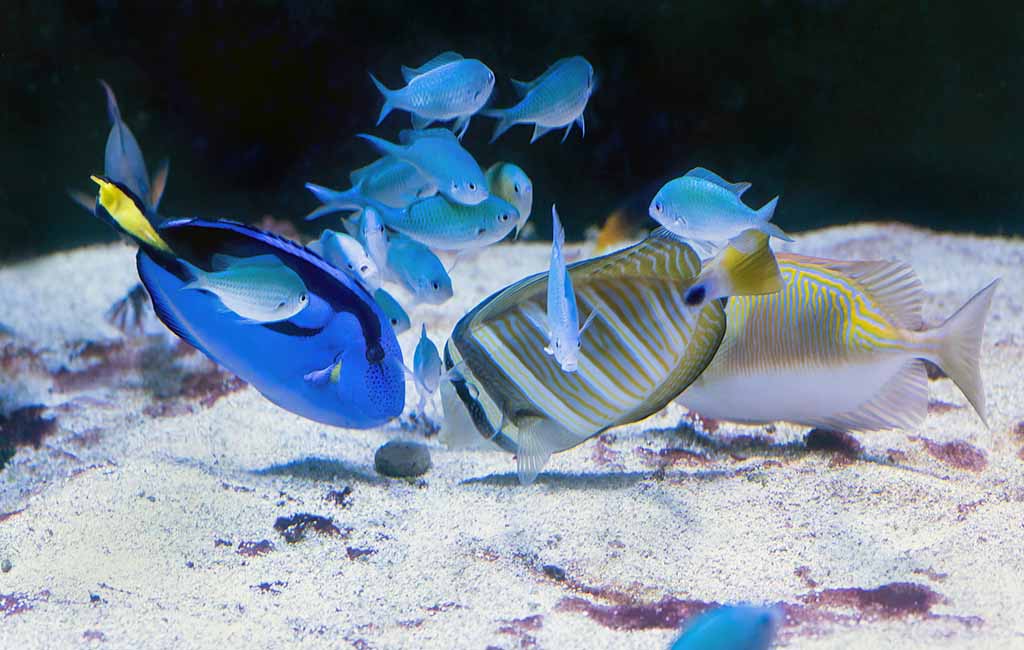
In an aquarium, nutrient cycling is the natural breakdown of harmful materials into less harmful products. It mainly consists of nitrogen cycling and phosphorus cycling.
Fish waste, food leftovers, and decay of other organic matter present in the tank often cause danger to fish and the tank environment. Like on decaying, they can cause an ammonia spike that causes an algae bloom and other problems.
What is nutrient cycling
Why Is Nutrient Cycling Important for the Underwater World?
The nutrient cycle is among the most influential but hidden parameters that create a sustainable aquatic environment. Here are some points to elaborate on its importance.
Safe Fish from toxicity
Leftover food, decaying plant matter, and fish waste produce Ammonia (NH3). Nitrifying bacteria decompose Ammonia into nitrite and nitrite into nitrate. Nitrates are less harmful, and plants take them up. Moreover, water change also helps to remove nitrates from the tank. Without a proper nitrogen cycle, NH3 will cause toxicity in the tank and cause a mass fish death.
Balance Environment
The nutrient cycle helps to maintain a perfect balance between plants, aquatic creatures, and bacteria. Beneficial bacteria break down dangerous matter into harmless material. Plants take up these less harmful nutrients as food and provide oxygen to fish.
Harmful material → breakdown into less harmful material → plants and fish can uptake → again, harmful nutrients are produced
Natural Water Cleaning
A balanced nutrient cycle helps to clean the water and maintain optimal water parameters. It helps to avoid chemical treatment. Chemical treatments can produce trouble for fish, plants, and bacteria.
Food Web Maintenance
It helps to maintain the food web base. Nitrogen and phosphorus are essential for phytoplankton. Improper nitrogen and phosphorus supply affect their growth and reproduction. Phytoplankton is consumed by zooplankton, i.e., macroscopic organisms. Therefore, the nutrient cycle helps to ensure that there is an adequate nutrient supply to support life in the underwater environment.
nutrient cycling
How Long Does the Nutrient Cycling Take in a Fish Tank
Nutrient cycling largely depends on the tank type. It takes some time in a new tank than in a stable tank. Here are different tank types and their nutrient cycle duration. Moreover, the details of the nitrogen, carbon, and phosphorus cycles are as follows.
Uncycled New Tank
Uncycled takes about 4 to 8 weeks for the nutrient cycle. Beneficial bacteria require some time to establish themselves in this new environment.
Fish Only Tank
For the first time after cycling, it takes about 4 to 6 weeks. However, it drops to 1 to 2 weeks after introducing bottled bacteria into the tank. Its nutrient cycle takes some time compared to planted tanks. In planted tanks, plants absorb excessive ammonia, nitrite, or nitrate. However, in the fish-only tank, bacteria have to do the job.
Planted Tanks
Planted tanks take 2 to 4 weeks for the nutrient cycle. It is fast-paced as plants take up the excessive nitrite, nitrate, and ammonia from the tank and make the bacteria’s job easier than in other tank types.
Established Tank
The established tank nutrient cycle instantly. It takes a few days. However, if you replace any intact materials, e.g., gravel, substrate, plant, etc., the nutrient cycle instantly crashes.
Nutrient Cycle Procedure
Nitrogen Cycle
It’s the most critical cycle. Fish waste, leftover food, and plants cause ammonia production. Ammonia is harmful to fish and the aquatic environment. However, nitrifying bacteria, i.e.,
Nitrosomonas, Nitrobacter, Nitrospira, etc., began to decay these inputs before they got into action. Here is a procedure.
Ammonia (NH3) → Nitrite (NO₂⁻)
Nitrite (NO₂⁻) → Nitrate (NO₃⁻)
Nitrate is less harmful. Plant uptake it, or you can even remove it with a weekly water change.
Phosphorus Cycle
Leftover food, fish water, and decaying plant material, i.e., leaves, stems, etc., produce phosphates in water. Phosphates cause an algae bloom that suppresses the other plants’ growth. Therefore, it’s necessary to balance it. It involves the following steps.
- Weathering
- Absorption by Plants
- Absorption by Animals
- Return to the environment through decomposition
Usually, plants take up phosphates through their roots. Moreover, you can control it with a water change. If you are having trouble, go with frequent water changes, i.e., twice a week.
Carbon Cycle
Carbon dioxide is produced in an aquarium due to fish decay and respiration. Plants take up carbon dioxide during the photosynthesis process and convert it into oxygen.
nutrient cycle in aquariums
Maintaining Nutrient Cycling in an Aquarium
Cycling or establishing a nutrient cycle in your tank is one of the crucial aspects of tank building. If you do it properly, you’ll benefit from it later on. Moreover, establishing and maintaining are two different things. In the following, you’ll learn about both.
Establishing the nutrient cycle
The nitrogen cycle is the most crucial part of the nutrient cycle. Here is a step-by-step procedure for nutrient cycle establishment.
Initiation Method
You can establish it with and without fish in the tank. However, when you go with fish, use hardy fish species, i.e., resistant to water parameter changes. However, add an ammonia source, e.g., leftover food, fish waste, etc.
Beneficial Bacteria Establishment
Introduce a biological filter and bottled bacteria. Maintain the optimal temperature, 75–82°F, and pH, i.e., 6.5–7.5. These parameters will boost bacterial growth.
Testing
Be patient and regularly check the water parameters. Usually, it takes 2 to 8 weeks. This duration depends on the tank type. In testing, you will learn it.
Initially, there is an ammonia spike, and it suppresses and converts to nitrites. Nitrites convert to nitrate. Lastly, the nitrate spike slowly reduces to a safe limit. Your tank is cycled when
Ammonia: 0 ppm
Nitrite: 0 ppm
Nitrate: 10 to 40 ppm
Maintaining Nutrient Cycling
How to Maintain the Nutrient Cycle
- Avoid over-cleaning of biological filters to avoid bacterial losses.
- Do weekly water changes according to tank types and stocking density.
- Clean fish food leftovers after 3 minutes. However, 5 minutes is the maximum duration. After that, there should be no food in the tank.
- Grow live plants, as they naturally uptake the nitrates and phosphates and maintain a balance.
- Regularly check the water parameters to have real-time insight.
- Never do sudden changes, as these changes can drastically disrupt the nutrient cycle.
A Call to Action
Nutrient cycling naturally breaks down harmful materials into relatively less harmful materials. It includes nitrogen, phosphorus, and carbon cycles. A well-cycled tank is suitable for housing fish and remains active for a long time. It takes 2 to 8 weeks to establish a nutrient cycle. Duration depends on the tank type. So, if you are planning to build a tank, cycle it before stocking the fish to avoid mishaps.
Related Products



Leave a comment