
Painted turtles are beautiful and relatively easy to keep. These North American creatures can live long with proper care. In the following, you’ll learn about what painted turtles eat and the specifications of their enclosure. Their lifespan, growth stages, what do painted turtles eat, and a comprehensive profile are also a part of this article. Whether they like to be handled or not is also interesting to learn. Scroll down to know more about the painted turtle before starting your journey with these beautiful creatures.
Content Table
painted turtle
Painted Turtle
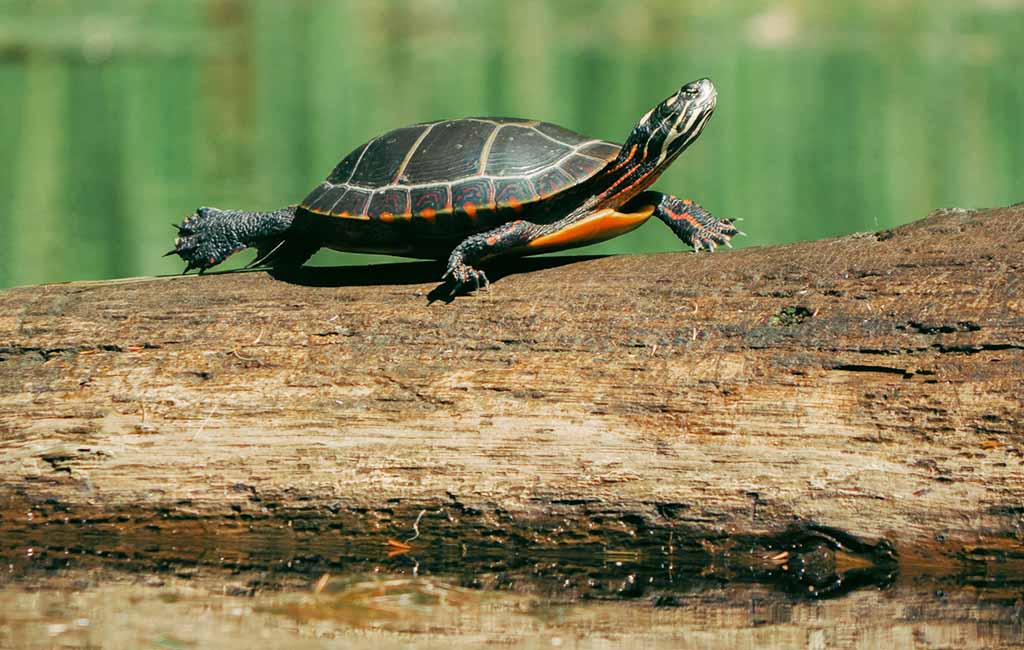
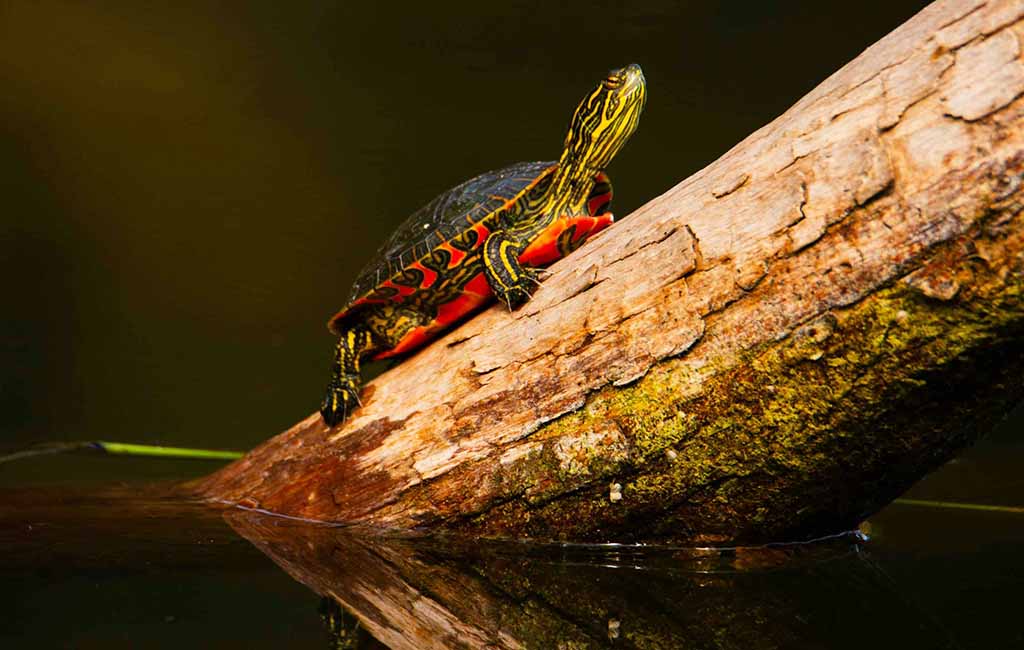
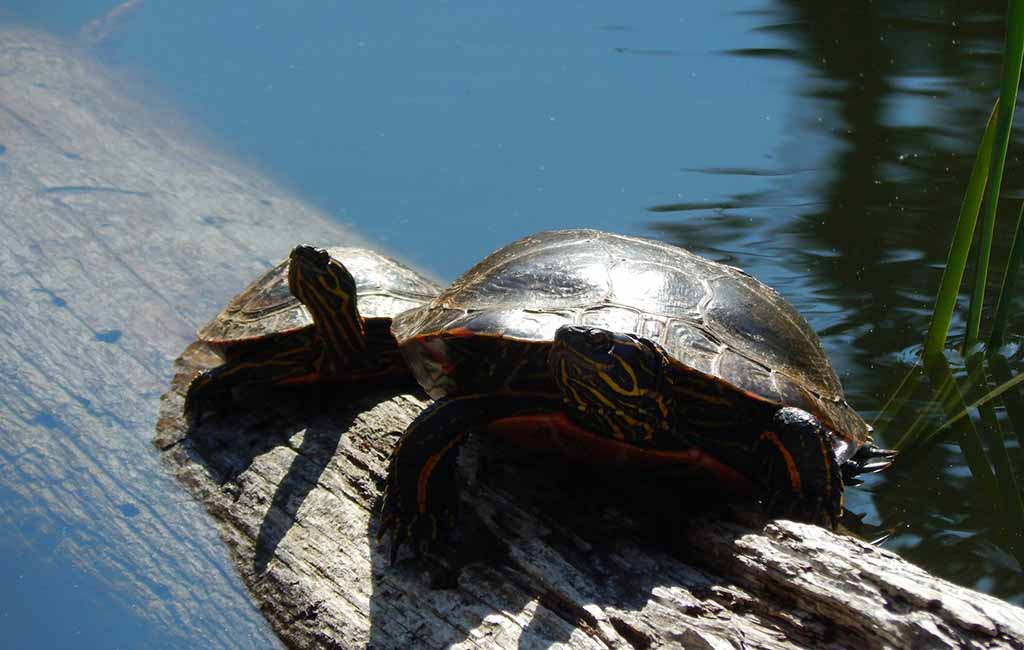
Painted turtles are vividly colored turtles. They have dark olive coloration at the top and edges of the shell, and the underside has various coloration, i.e., red, orange, and yellow. Head and limbs have bold yellow and red stripes. Each turtle carries a different color code, i.e., the color pattern varies slightly in individuals and subspecies.
These turtles belong to the Emydidae family, also known as pond turtles. They are known as Chrysemys picta. They are widely distributed across North America. Till that time, there are 4 recognized subspecies. Here are the names, scientific names, and distribution of each species.
Recognized Subspecies
| Common Name | Scientific Name | Distribution |
| Eastern Painted Turtle | C. p. picta | Atlantic Coast |
| Midland Painted Turtle | C. p. marginata | Great Lakes region and the Midwest |
| Western Painted Turtle | C. p. bellii | West of the Mississippi |
| Southern Painted Turtle | C. p. dorsalis | Lower Mississippi Valley |
Profile
| Feature | Explanation |
| Common names | Painted turtles |
| Pawn turtles | |
| Soldiers | |
| Scientific Name | Chrysemys picta |
| Family | Emydidae |
| Adult Size | 4 to 10 inches |
| Lifespan | 25 to 40 years in captivity |
| 20 to 30 years in the wild | |
| Diet | Omnivore |
| Natural Distribution | Canada to northern Mexico, coast to coast USA |
| IUCN status | Least concern |
How Long Do Painted Turtles Live?
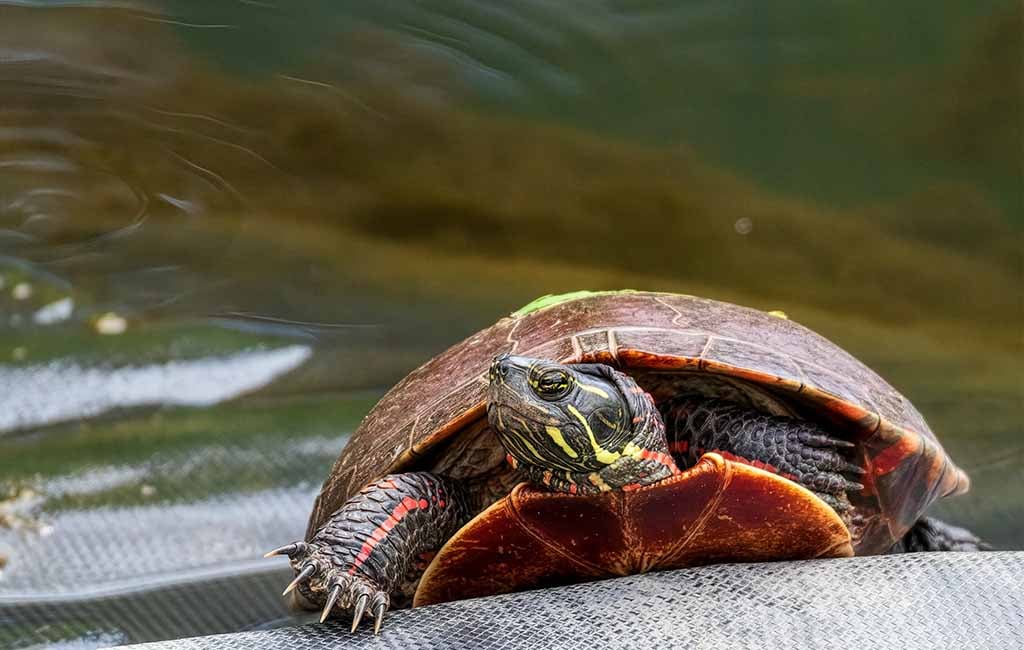
Painted turtles are among the long-lived reptiles. They generally live about 20 to 30 years in the wild and 25 to 40 years in captivity. However, with proper care, they can live longer. Like every living being, their size increases over time.
Average Lifespan
| Habitat | Average Life (Years) |
| Wild | 20 to 30 |
| Captivity | 25 to 40 |
Growth Stages
Usually, there are 3 growth stages: hatchlings, juveniles, and adults. However, you can divide it into 4 growth stages.
| Stage | Duration (year) | Shell Size (Inches) |
| Hatchlings | 0 to 1 | 1 |
| Juveniles | 1 to 5 | 2 to 4 |
| Sub-adults | 5 to 10 | 3 to 5 |
| Adults | 10+ | 5 to 10 |
Male painted turtles are smaller than the female turtles. The difference between males and females is that females carry egg handling. An adult painted turtle weighs around 300 to 500 grams. However, the size varies among the different species of painted turtle. Here is the average size of different species.
| Species | Size |
| Eastern and Midland | 4 to 6 inches |
| Western | Up to 10 inches |
| Southern | 4 to 5 inches |
What do painted turtles eat
What Do Painted Turtles Eat?
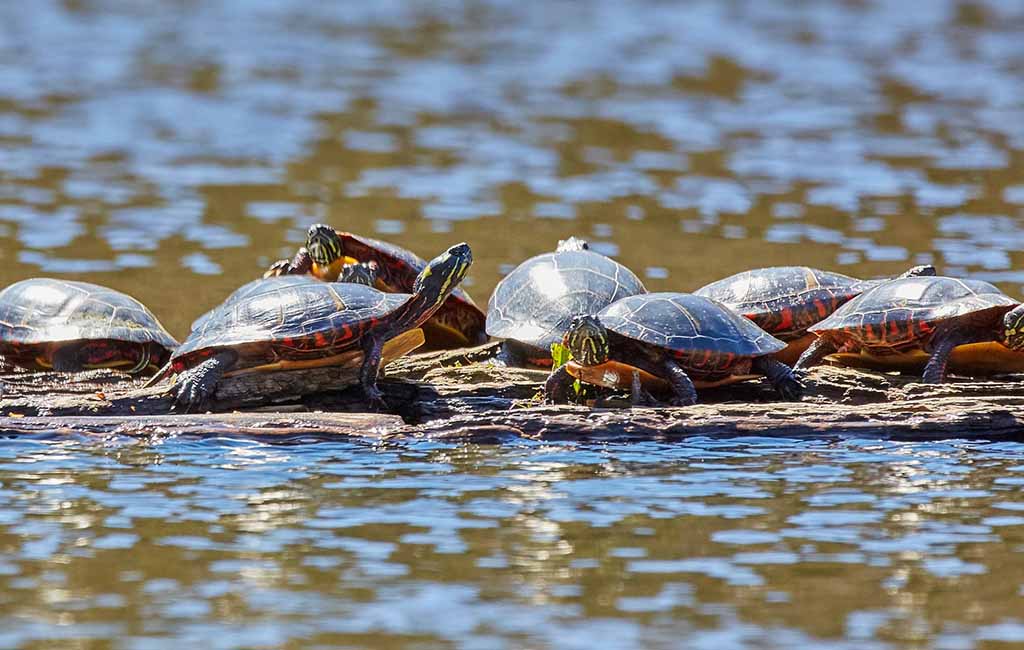
Painted turtles are omnivores, eating plant-based and meat-based foods. Their diet preferences vary over time. At early stages of life, i.e., hatchlings and juveniles, they usually eat meat-based food. Once they reached maturity, they preferred a plant-based diet. Here is the construction of the painted turtle diet.
| Food Type | Examples | Notes |
| Aquatic Plants | Algae | Main food for adults |
| Water lettuce | ||
| Duckweed | ||
| Insects & Larvae | Dragonfly larvae | High protein for juveniles |
| Beetles | ||
| Small Fish & Tadpoles | Minnows | Easy prey in slow water |
| Polliwogs | ||
| Worms & Snails | Freshwater snails | Common year-round food |
| Earthworms | ||
| Carrion | Dead fish | Eaten when available |
| Invertebrates | ||
| Berries & Fruits | Wild berries near water edges | Seasonal supplement |
Diet Construct For Pet Painted Turtles
Feed painted turtles in an optimal way that mimics their natural lifestyle. However, don’t feed them food from an unknown source, as it can cause problems among them.
Protein sources
- Earthworms
- Crickets
- Shrimp
- Turtle pellets
- Feeder fish
- Bloodworms
Vegetables and plants
- Romaine lettuce
- Dandelion greens
- Duckweed
- Water lettuce
- Kale
Occasional treats
- Small feeder fish
- Bloodworms
- Small pieces of cooked shrimp
- Daphnia
- Aquatic snails
Feeding Instructions
- Feed juveniles daily.
- Feed adults every other day.
- Only 25% of the diet is commercial food.
- Remove the leftover food to keep the painted turtle enclosure
painted turtle enclosure
Painted Turtle Enclosure
The painted turtle enclosure is one of the most vital aspects of a painted turtle petting journey. They are aquatic animals. Therefore, they spend most of their life underwater. However, it shouldn’t be completely an aquarium; it should include a dry basking area.
Tank Size For Different Life Stages
The general rule of thumb for a painted turtle is to provide 10-gallon space for each inch of length. However, providing more space is always better and has a healthy impact on pets.
| Turtle Size | Tank Size (gallons) |
| Hatchling | 20 to 30 |
| Juvenile | 40 to 55 |
| Adult | 75 to 125 |
Water Area
Here are some features of the water area.
- 5X depth of water with respect to shell length.
- Clean and filtered
- Water temperature should be between 75 to 80°F.
Basking Area
A basking area is necessary, and it should contain the following features.
- Dry platform or dock
- Easy to climb from the water area
- Should have the UVB light for heating. The temperature should fall between 88°F and 95°F.
- Flat rocks stacked to form a ramp and platform
How Long Do Painted Turtles Live
Filtration
It should have been equipped with a strong filtration system, because painted turtles produce huge amounts of waste. Hang on, back filters or canister filters can help. Moreover, you need to change 25 – 30% water every 7 days.
Substrate
You can keep them in a bare-bottom tank. Here are some options that you can use as substrates. However, never use small gravel or rock as substrate, as they can accidentally swallow it.
- River rocks
- Large aquarium gravel
Key Features Summary
| Feature | Recommendation |
| Tank Size (1 turtle) | 75–100 gallons minimum |
| Water Depth | 1.5x turtle shell length is the bare minimum |
| Water Temperature | 72 to 78°F |
| Basking Spot Temp | 88 to 95°F |
| UVB Lighting | UVB 5.0 or 10.0 bulb, 10–12 hrs/day |
| Filtration | High-capacity canister or hang-on-back filter |
| Substrate | Fine sand or bare bottom (easier to clean) |
| Basking Platform | Cork bark |
| Floating dock | |
| Rock ledge |
Do Painted Turtles Like to Be Held?
The short answer is no. They don’t want to be held like cats, dogs, etc. The reason is their upbringing and evolution. They are raised in the wild, and in the wild, being held means that you are prey. Therefore, initially, they don’t like to be held. You can observe the following behavior when you approach them.
- Hide in shell
- Quick swim
- Try to attack. The attack could be a bite or a scratch.
However, over the period when they are kept as pets, they begin to trust their owners and aren’t afraid of them. If you want to hold them, here are some suggestions.
Instruction To Hold Painted Turtles
- Held them for only a short duration, i.e., 5 to 10 minutes at maximum.
- Held them properly, i.e., held their entire body instead of squeezing their shell.
- Handling painted turtles can cause Salmonella risk. Therefore, always wash your hands before and after handling.
- Don’t hold them after they finish their meal.
- Always supervise when children are trying to hold them.
Do Painted Turtles Like to Be Held
Do Painted Turtles Need a Heat Lamp?
Yes, painted turtles need a heat lamp. They are ectothermic, depending on the environmental heat. Therefore, install a heat lamp in the basking area for optimal temperature increase and UVB lights for keeping them healthy.
Importance of Heat Lamp
Although these painted turtles mostly live in water. However, they need to be baked for a few hours daily. Therefore, install a heat lamp in the basking area to fulfill their ectothermic requirement.
- Warmth improves the immunity and digestion
- Regulate metabolism and activity level
- Avoid the shell rot
Importance of UVB light
UVB lights allow the synthesis of the turtle vitamin D3. It allows calcium absorption and shell development among turtles. Absence of this light leads to the development of metabolic bone disease (MBD), which is painful and sometimes fatal. It softens the shell and bends bones. Here are some UVB lighting instructions.
- Use 5.0 to 10.0 UVB lighting.
- Install a basking area without any hurdle between the turtle and the light.
- Turn it on for 10 to 12 hours daily.
- Replace it every 6 months.
Lasting Impressions
Painted turtles are colorful and appealing to pet keepers. Keep them in a 75 to 100-gallon enclosure and feed them plant-based and meat-based foods. Their enclosure should have a basking and water area with optimal temperature and UVB lights. With proper care, they can live for 25 to 40 years in your enclosure.
Related Products


Leave a comment