
Fathead minnows are among the most underappreciated coldwater fish in the aquarium hobby. Most people associate them with bait buckets or pond stocking, yet these small, hardy fish have real potential as aquarium residents. Choosing the wrong tank size is the single most common mistake new keepers make, and it directly affects their health, breeding behavior, and lifespan.
Content Table
This article breaks down exactly what size tank fathead minnows need at every stage of their life and the ideal tank size chart for fathead minnows.
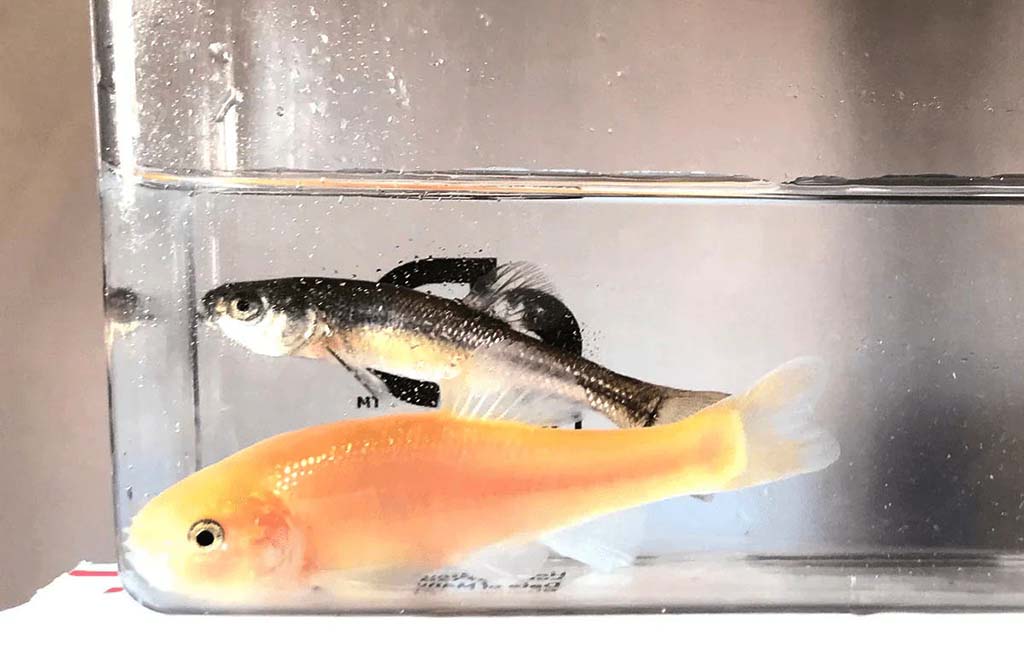
Fathead Minnows in Aquariums
Fathead Minnows in Aquariums
Profile, Family, and What Makes Them Unusual
Fathead minnows (Pimephales promelas) belong to the family Cyprinidae, the largest family of freshwater fish in the world, which also includes carp, barbs, and danios. Within that family, fatheads sit in the genus Pimephales, a small group of North American minnows known for their unique reproductive behavior.
What separates fathead minnows from most aquarium fish is their nesting strategy. Males, not females, guard the eggs. During spawning season, a male develops a thick, spongy pad on the top of his head, which he uses to clean and aerate eggs attached to the underside of flat surfaces like rocks or driftwood. That physical adaptation is exactly where the name “fathead” comes from.
In terms of temperament, they are peaceful schooling fish. They spend most of their time in the mid- to lower-water column and are active throughout the day. Unlike many tropical species, fathead minnows prefer cooler water temperatures between 50°F and 70°F (10°C to 21°C), which makes them an excellent fit for unheated or lightly heated indoor aquariums in temperate climates.
They tolerate a wide pH range, roughly 7.0 to 8.5, and adapt well to hard water. They are resilient. In the wild, fathead minnows survive in poorly oxygenated ponds and drainage ditches where most other fish would not last a week.
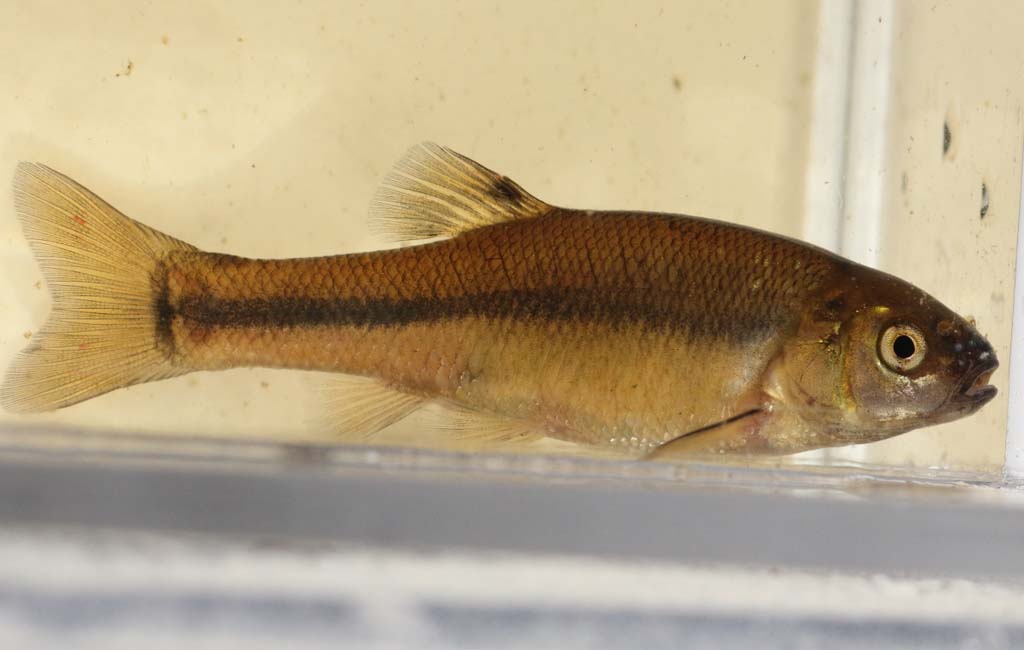
How big do fathead minnows get
How Big Do Fathead Minnows Get
Size and Lifespan
Adult fathead minnows typically reach between 2 and 3 inches (5 to 7.5 cm) in body length under normal aquarium conditions. Males tend to grow slightly larger than females, with some well-fed males touching 3.5 inches in heavily planted, low-competition setups.
Growth rate is fairly predictable:
- Fry stage (weeks 1 to 8): Hatchlings emerge at roughly 0.25 inches and grow to about 0.75 inches within the first two months.
- Juvenile stage (months 2 to 5): Fish reach 1 to 1.5 inches during this phase, and sex differentiation becomes visible by month four.
- Sub-adult stage (months 5 to 10): Growth slows slightly. Most fish land between 1.5 and 2.5 inches.
- Adult stage (10 months onward): Full size is reached, typically between 2 and 3 inches.
Lifespan is one area where aquarium care makes a measurable difference. In the wild, fathead minnows rarely live beyond two years due to predation, drought, and seasonal temperature swings. In a properly maintained aquarium with stable water chemistry and consistent feeding, they regularly reach three years, and some documented cases show individuals living close to four years.
The key factor is temperature stability. Repeated temperature fluctuations stress their immune system and accelerate aging.
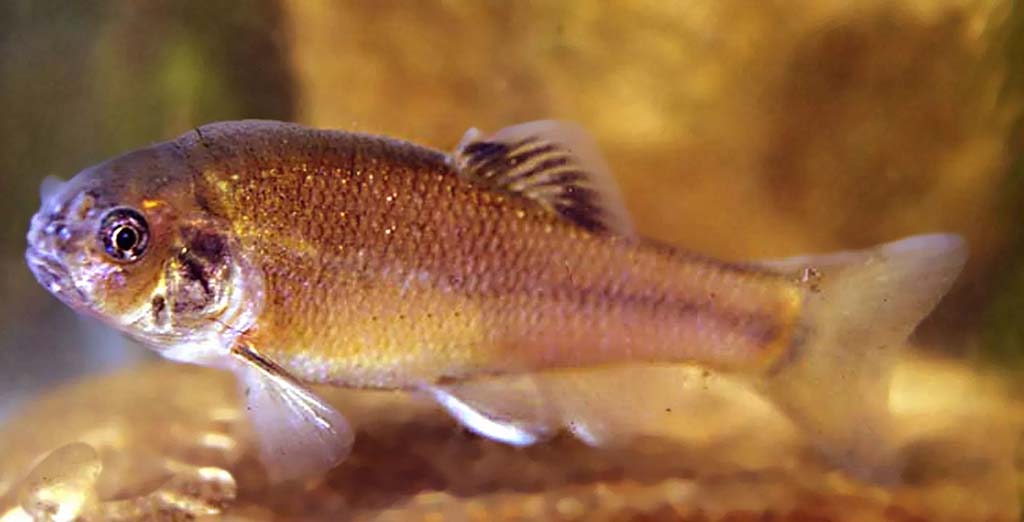
What size tank do fathead minnows need
What Size Tank Do Fathead Minnows Need
Minimum Requirements and Why They Matter
A single fathead minnow kept in isolation is a stressed fathead minnow. These are schooling fish, and a group of fewer than six individuals will show signs of anxiety: erratic swimming, reduced feeding, and pale coloration. So tank size calculations must account for a group, not a single fish.
For a starter group of six adult fathead minnows, the absolute minimum tank size is 20 gallons. That said, 20 gallons works only when filtration is strong, and the tank is not heavily decorated. A 29- or 30-gallon tank provides the fish with meaningful horizontal swimming space and makes water quality much easier to maintain.
Several factors push the required tank size upward:
- Breeding activity: Males become territorial during spawning. Without sufficient space, weaker males get harassed relentlessly and often stop eating.
- Filtration load: Fathead minnows eat frequently and produce moderate waste. In smaller tanks, ammonia spikes faster than in larger volumes.
- Temperature management: Larger water volumes hold temperature more steadily, which matters significantly for a coldwater species.
- Plant density: A heavily planted tank reduces effective swimming space, which means a planted setup needs a larger base footprint than a bare tank housing the same number of fish.
Good filtration is non-negotiable. A hang-on-back filter rated for at least 1.5 times the tank volume per hour keeps nitrate levels manageable between weekly water changes.
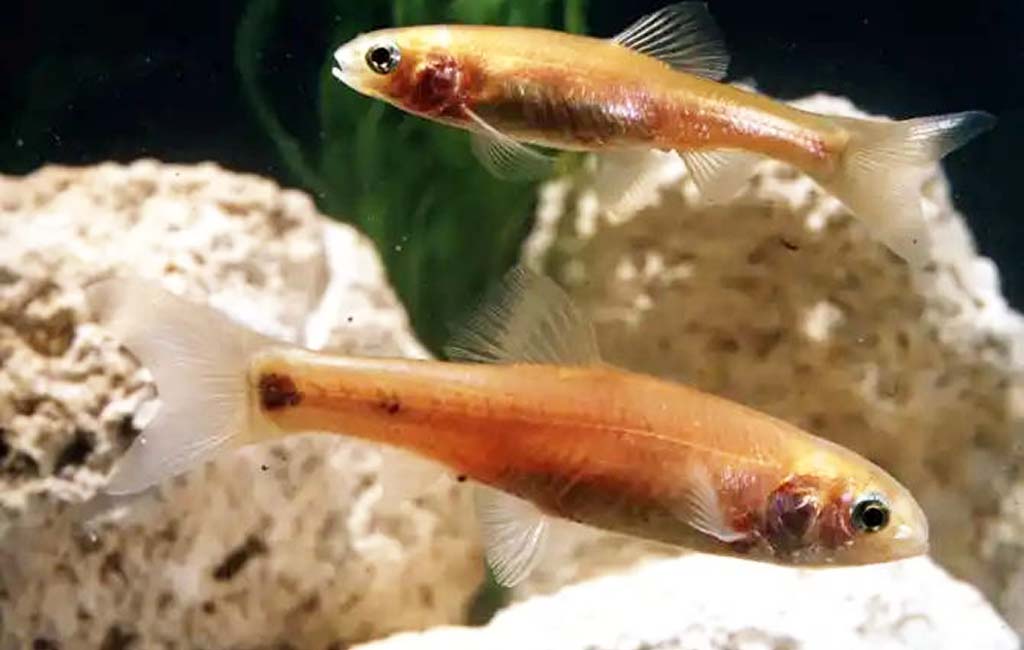
How Many Fathead Minnows
How Many Fathead Minnows Can Go in a 100-Gallon Tank?
A 100-gallon tank offers substantial space for a fathead minnow colony. Using a practical stocking calculation that accounts for bioload rather than the oversimplified one-inch-per-gallon rule, a 100-gallon tank can comfortably house between 25 and 35 adult fathead minnows.
That range accounts for the following:
- Adult size averaging 2.5 inches per fish
- Moderate filtration running at approximately 400 gallons per hour
- Weekly water changes of 25 to 30 percent
- A mix of males and females (a 1:2 male-to-female ratio reduces breeding aggression)
If the goal is breeding, the number should sit closer to 20 to 25 fish. Breeding pairs need territory, and overcrowding suppresses spawning behavior. Males will not invest energy in nest guarding if they are constantly fending off tankmates.
At 35 or more fish, the tank functions more like a display school. The visual effect is impressive, but expect higher maintenance frequency and the need for upgraded filtration.
The Ideal Tank Size Chart for Fathead Minnows
Matched to Growth Stage and Group Size
The chart below organizes tank recommendations by life stage and group size. These figures assume standard rectangular tank footprints, moderate decoration, and consistent water changes.
| Life Stage | Approximate Size | Group of 6 | Group of 12 | Group of 20+ |
| Fry (weeks 1 to 8) | 0.25 to 0.75 inches | 10 gallons | 15 gallons | 20 gallons |
| Juvenile (months 2 to 5) | 1 to 1.5 inches | 20 gallons | 29 gallons | 40 gallons |
| Sub-adult (months 5 to 10) | 1.5 to 2.5 inches | 29 gallons | 40 gallons | 55 gallons |
| Adult (10 months onward) | 2 to 3.5 inches | 30 gallons | 55 gallons | 75 to 100 gallons |
A few clarifications on reading this chart:
- Fry tanks benefit from sponge filtration rather than hang-on-back units. Standard filter intakes pull small fry in and kill them. A sponge filter running on an air pump is safer and still provides adequate biological filtration.
- Juvenile tanks should include flat rocks or small slate pieces along the bottom. Even at this stage, males begin establishing micro-territories, and providing natural cover reduces fin nipping dramatically.
- Sub-adult fish are the most aggressive eaters in the group. Competition at feeding time is high, so spreading food across multiple areas of the tank prevents dominant individuals from monopolizing meals.
- Adult colony tanks of 20 or more fish perform best in 75 to 100-gallon setups with a sand or fine gravel substrate. Fathead minnows root along the bottom regularly, and a soft substrate keeps their barbels intact.
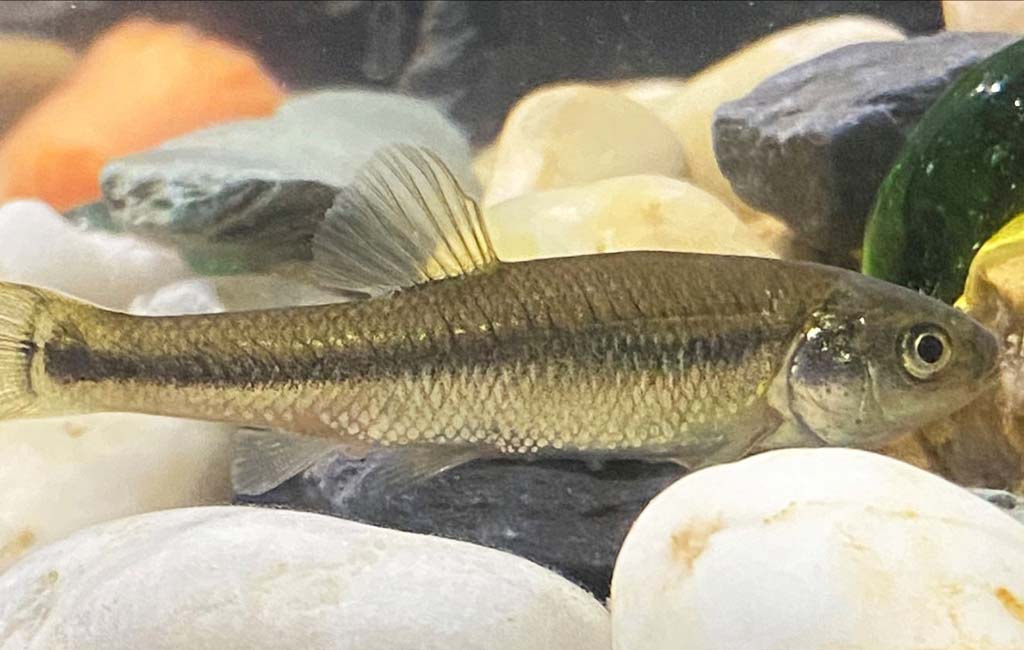
The ideal tank size chart for fathead minnow
Temperature and Its Effect on Tank Selection
One practical consideration worth noting: fathead minnows kept at the lower end of their temperature range (around 55°F to 60°F) eat less, grow more slowly, and produce less waste. A group that requires a 55-gallon tank at 68°F might manage adequately in a 40-gallon tank at 58°F simply because metabolic output and bioload drop significantly with temperature.
This is not an excuse to undersize the tank. It is simply relevant for keepers in naturally cool rooms who want to maintain a larger school without investing in an oversized filtration system.
Wrapping Up
Fathead minnows reward attentive keepers with active schooling behavior, fascinating breeding rituals, and surprising hardiness. The tank size decisions made early in their care directly shape how long they live and how naturally they behave. A 20-gallon tank works for a small starter group, but anyone planning a breeding colony or a larger school should commit to 55 gallons or more. Get the space right first, and the rest of their care becomes considerably more manageable.
Related Products


Leave a comment