
Natural aquarium leave-in waste management is the most critical aspect of having an aquarium. It doesn’t mean removing all organic waste and sludge. It means to have a balance in things. This article will help you to clean organic sludge in an aquarium and achieve this balance in various ways.
Content Table
You will learn how to reduce fish waste and clean organic sludge in aquariums. At the end, a detailed step-by-step procedure for optimal aquarium waste management. Moreover, you will find your journey easier with a special product that is also reviewed in the following. So, scroll it down to learn the natural aquarium waste management solution.
Organic Waste and Sludge in an Aquarium
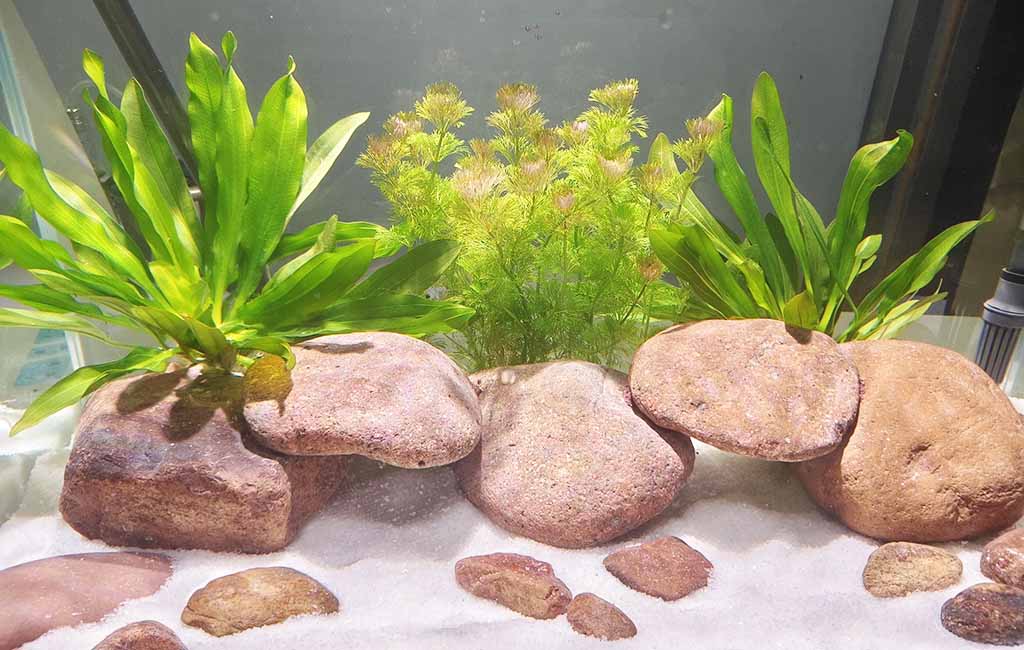
Organic waste is an inevitable part of any aquarium, as numerous sources are always in the tank. Like plants that shed leaves, fish that produce feces, and food leftover. At the end of the day, they all become a single unit in the form of sludge.
How Does Sludge Form?
Fish themselves are the primary source of this process. They excrete ammonia through their gills. Leftover food is another source. Small leftovers accumulate and, over time, pile up at the bottom and decompose. If you have plants in the tank, the shredded leaves, if they are uncurated, also become a part of the sludge. Over time, this waste forms a sludge at the bottom.
Role of Sludge
Sludge is not a bad thing at all, if it is in small quantities. They provide nutrients to plants and become a beneficial part of the tank. They also help in producing beneficial bacterial colonies, which are necessary for the tank.
However, if the sludge is unmanaged, during large decomposition, it consumes the oxygen in the tank. The lack of oxygen moves toward the anaerobic condition and accumulates hydrogen sulphide. Hydrogen sulphide causes a rotten egg-like smell and murky water.
You can also observe the ammonia spike in the tank, which is also harmful for fish and other aquatic pets. Cherry on top, cloudiness blurs the visual. Higher ammonia and nitrite levels enhance the algae growth, and your tank becomes overpowered with algae.
How to Reduce Fish Waste and Organic Sludge?
As mentioned, it is inevitable to remove the organic sludge. Here are some ways that help to keep the organic sludge at the required level.
Optimal Feeding
Overfeeding harms the tank in two ways, like a double-edged sword. It causes the fish to produce high waste. Food leftovers also cause the ammonia spike. Therefore, it is necessary to feed wisely.
- Feed such quantities that fish can consume within 1 to 2 minutes.
- Feed 2 to 3 times instead of one.
- Always feed high-quality food.
- Always remove the leftover food after 1 to 2 minutes.
- Encourage fasting once a week. It helps to recalibrate the system within the fish.
Maintenance
The next aspect to reduce fish waste is to maintain the tank. It usually consists of the following things.
- Maintain the water parameters, temperature, pH, nitrate, etc., at an optimal level.
- Weekly change 20 to 30% of the tank’s water. However, this volume can vary according to the tank conditions. Take the water from waste-accumulating spaces, i.e, behind the filters, etc.
- Weekly, use the gravel cleaner to vacuum the bottom to remove fish waste and leftover food.
Biological Filtration
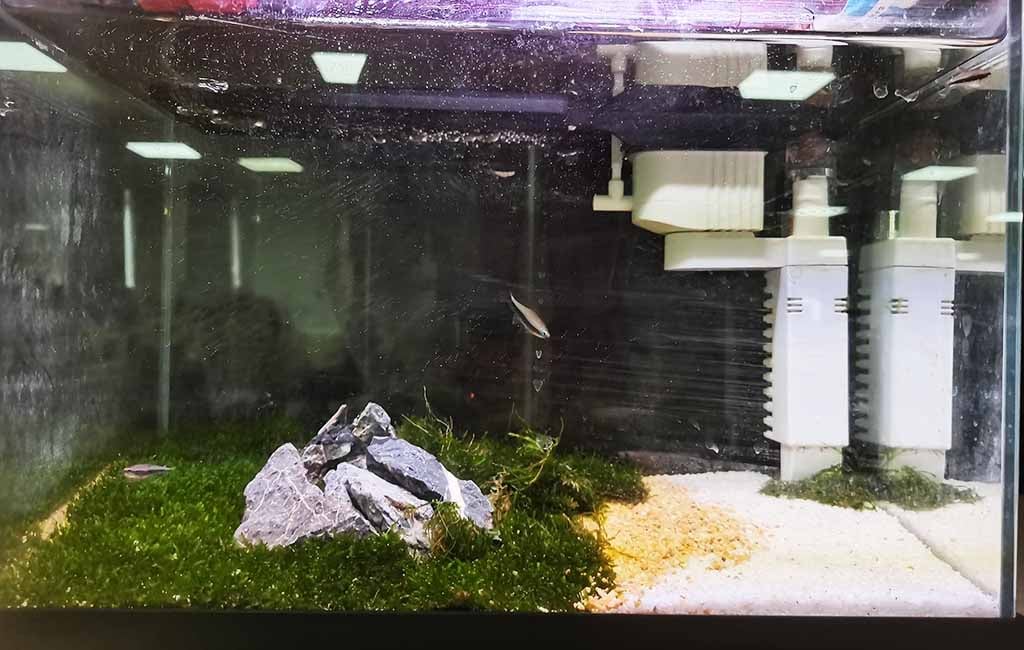
Optimal biological filtration also helps to reduce fish waste in the tank. Biological filters host beneficial bacteria that help to decompose the waste. It reduces the ammonia to nitrite and then to nitrate. This nitrate is less harmful and becomes part of the nitrogen cycle, which is another important cycle.
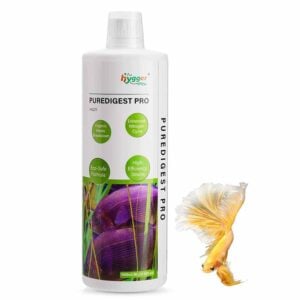
However, use these filters according to the tank size, number of fish, and other parameters. Moreover, don’t over-filter the tank, as over-filtering can cause the beneficial bacterial colonies from the tank. It results in disturbance of biological filtration. Moreover, you can use the hygger HG211 Aqua Pure Digest Pro to enhance the biological filtration. It makes beneficial bacteria more efficient and helps to reduce the murkiness in the tank.
Plantation
Highly planted tanks have fewer problems with organic waste and sludge. Plants take up the nutrients from the organic sludge and turn it into a beneficial part. Moreover, they compete with algae. Naturally, they compress their growth in the tank.
Moreover, stem plants are especially helpful in maintaining the substrate waste and efficiently take up the nutrients.
Optimal Stocking Level
Overstocking kills the tank in two ways.
- Huge numbers lead to more oxygen consumption and cause anaerobic conditions in the tank.
- Overstocking causes stress. Under stress, fish produce huge amounts of waste in the tank.
Therefore, optimally stocking the fish to reduce fish waste in the tank. Look at the volume required per inch before stocking the fish.
hygger HG211 Aqua Puredigest Pro Review
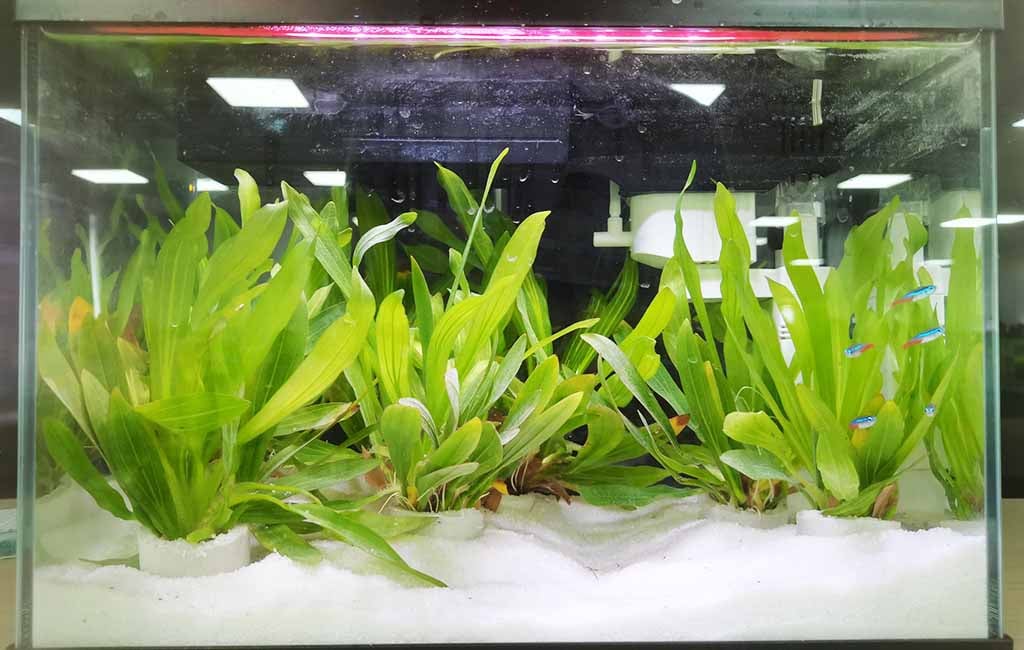
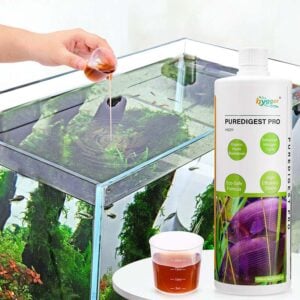
hygger HG211 Aqua Puredigest Pro helps to clean the tank. Its safe formula helps to break down organic waste, i.e., leftover food, fish waste, and other organic debris in the tank. Moreover, it also reduces the ammonia to nitrite and then to nitrate. In this way, it helps to keep the tank clean from organic waste and sludge issues.
Effective
It is equally beneficial for the following types of fish tanks.
- Freshwater aquariums
- Saltwater aquariums
- Plant tanks
Usage
It is equally useful for newly established tanks, weekly maintenance, and emergency backup. However, its dosage level varies for different situations.
| Tank type | Tank size (liters) | Dosage (ml) | Frequency |
| Newly established tank | 100 | 10 | Daily for 3 to 5 days |
| Routine maintenance | 100 | 5 | Weekly |
| Emergency | 100 | 20 | Continue until things become under control |
Caution
- Always use the desired volume.
- Store in a cool and dry place.
- Don’t use it when taking antibiotics.
Suitability
It is suitable in various conditions.
- When you are establishing a new tank. It helps to optimize the colony of beneficial bacteria.
- It is suitable when organic waste and sludge are being piled up.
- When you want to improve the fish recovery period.
- You can use it as a routine, i.e., weekly maintenance.
Water Clean-Up Crew Ideas for Aquariums
You can wisely use various species as a water clean-up crew. They help with organic waste and sludge in the tank. Moreover, they add colors to the tank. Here are different clean-up crew ideas and how they help to reduce the sludge in the tank.
Snails
| Snail Type | Primary Function | Key Benefits | Special Considerations |
| Malaysian Trumpet Snails | Substrate cleaning & aeration | Burrow through the substrate | High reproduction, so keep an eye on the population control |
| Prevent substrate compaction | |||
| Consume buried organic waste | |||
| Aerate substrate naturally | |||
| Nerite Snails | Algae control | Keep glass and decorations clean | Require algae supplementation if no algae are present |
| Excellent algae eaters | |||
| Not reproduce in freshwater | |||
| Mystery Snails | General scavenging | Consume various waste types | Produce moderate waste themselves |
| Easily monitorable | |||
| Peaceful | |||
| Ramshorn & Pond Snails | Plant debris cleanup | Help with planted tanks | High reproduction, so keep an eye on the population control |
| Consume decaying plant matter |
Shrimps
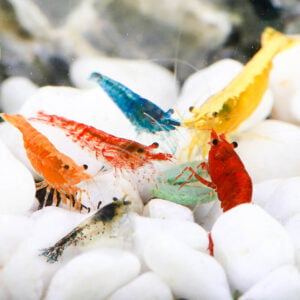
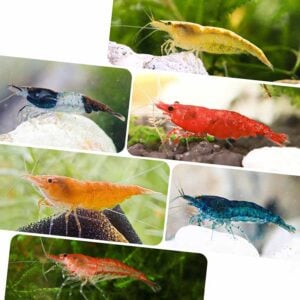
Shrimps are tireless workers. They work all day and keep the tank clean, especially under decorations where it is hard to clean in usual ways.
| Shrimp Type | Size | Primary Function | Tank Recommendation | Population Guide |
| Cherry Shrimp | Small | Biofilm | All tank sizes | 10-20 per 20-gallon |
| Algae | Readily breed in optimal conditions | |||
| Micro-particle cleanup | ||||
| Amano Shrimp | Larger | Algae control specialist | Medium to large tanks | 1 per 2-3 gallons |
| Consume leftover food and dying leaves | ||||
| Ghost Shrimp | Small-Medium | General scavenging | Budget-friendly option for waste control | 10-15 per 20-gallon |
Bottom Dwelling Fish
Bottom-dwelling fish are another cleaning crew for any tank. Here are different options and their details.
| Fish Species | Temperament | Primary Function | Best For | Important Notes |
| Corydoras Catfish | Peaceful and schooling | Substrate sifting for food particles | Community tanks | Keep in groups of 6+ |
| Planted tanks | Prevent food decomposition | |||
| Otocinclus Catfish | Peaceful | Algae grazing (diatoms, soft algae) | Planted tanks | Won’t damage plants |
| Nano tanks | Keep in a group of 3-6 | |||
| Bristlenose Plecos | Peaceful | Algae consumption | Medium to large tanks | Produce significant waste |
| Avoid overstocking | ||||
| Kuhli Loaches | Peaceful and shy | Substrate burrowing and detritus consumption | Planted community tanks | Improve water flow through the substrate |
| Reduce anaerobic zones |
Beneficial Crew for Planted Tanks
| Organism Type | Size | Role in Ecosystem | Population Control |
| Seed Shrimp (Ostracods) | Tiny | Process detritus | Self-regulating in balanced tanks |
| Process microalgae | |||
| Copepods | Tiny | Consume detritus | Self-regulating |
| Process microalgae | indicate healthy ecosystem | ||
| Planaria & Flatworms | Small | Consume decaying matter | Usually balanced naturally |
| Overpopulation indicates overfeeding |
Establishing Your Cleaning Crew for a 20-Gallon Tank
- 5-10 Nerite snails (algae control)
- 3-5 Malaysian Trumpet snails (substrate cleaning)
- 15-20 Cherry shrimp(general cleaning)
- 6-8 Corydoras catfish (bottom feeding)
Creating a Balanced, Self-Sustaining Ecosystem
A well-balanced and self-sustaining ecosystem is a dream of every aquarist. It is not hard to achieve. You need a proper strategy to achieve this. Here is an optimal strategy.
Understand the Basics
First of all, understand the basics of the system. Fish and invertebrates produce waste, bacteria break it down into non-hazardous elements, the cleaning crew consumes the waste, and plant uptakes these elements as nutrients.
Solid Foundation
Add the substrate 2 to 3 inches for planted tanks. This substrate hosts the beneficial bacterial colony. After that, add the biological filtration layer according to the tank size and stocking level. Let the tank cycle properly and establish an optimal bacterial colony.
Waste Management Strategy
A layered waste management strategy instead of relying on a single strategy. Stock the optimal level of fish, add the plants to uptake the nutrients generated from waste breakdown, and a cleanup crew. Once you are done, use the HG211. It’ll enhance the performance of bacteria and help to clean the tank.
Monitoring
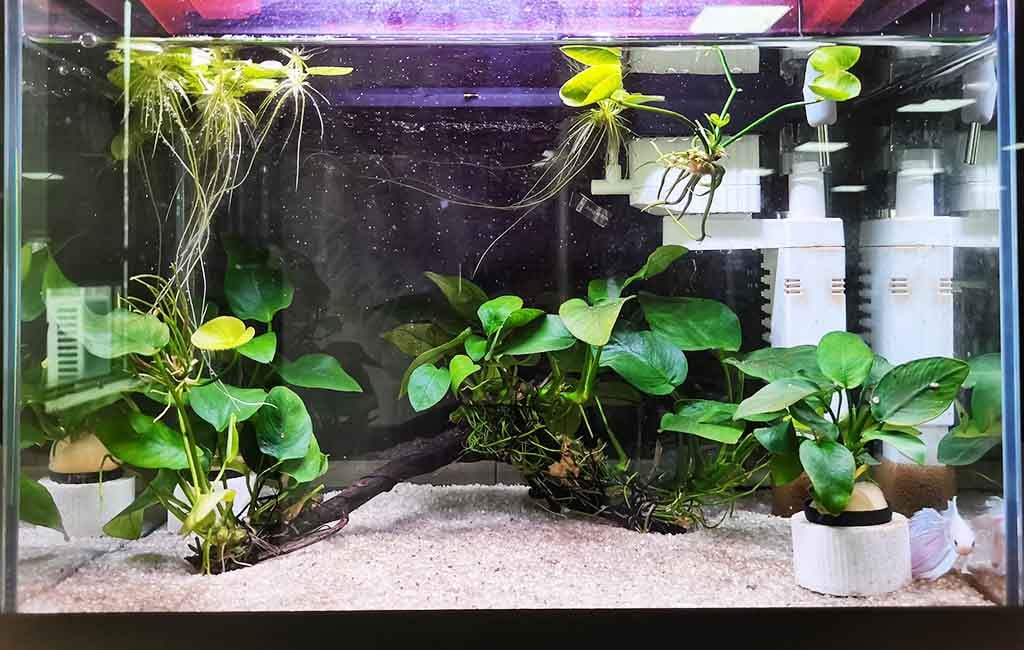
Once you have established these things, the next step is monitoring. Weekly, check the water parameters for the first few months. After that, move to bi-weekly checking. Regularly check the visual appearance of the tank, i.e., murkiness of water, algae growth, fish behavior, etc. Do a gradual adjustment if needed instead of suddenly, to avoid shocking the fish.
Season Checking
Fish behavior and tank parameter effects over the seasons. It is wise to keep a seasonal check on the water parameters and fish behavior. Do the changes according to that, i.e., heating and cooling, etc.
Bottom Line
Organic waste and sludge are a good aspect, but under control. You can control it with optimal stocking level, maintenance, plantation, etc. Follow the aquarium waste management methods as they help to achieve sustainability and make your journey pleasurable. Check out the HG211 to make this journey easier and sustainable.
Related Products

Leave a comment