
Nitrifying bacteria are the backbone of the nitrogen cycle in any fish tank. They keep the tank clean from ammonia, waste, and food leftovers. They reduce ammonia to nitrate in two steps. They prefer to live in certain places in the tank. What do nitrifying bacteria do in aquariums?
Content Table
These steps and colonizing surfaces are discussed in detail in the following. Moreover, how to grow and prevent them from accidental elimination from the tank is also a part of the discussion. So, scroll down to maintain the nitrifying bacteria aquarium of your tank.
nitrifying bacteria
Nitrifying Bacteria for Aquarium
Nitrifying bacteria are essential for the nitrogen cycle. They act as a natural biological filter for any aquarium setup. They break down the harmful product, ammonia, to a less harmful product, nitrate. Here is a list of several nitrifying bacteria.
Nitrifying Bacteria
| Process | Bacteria Involved |
| Ammonia to Nitrite | Nitrosomonas |
| Nitrosococcus | |
| Nitrosospira | |
| Nitrite to Nitrate | Nitrobacter |
| Nitrospira | |
| Nitrospina |
Structure
Here is the structure of nitrifying bacteria.
| Feature | Detail |
| Cell Type | Gram-negative bacteria |
| Shape | Mostly rod-shaped and spherical |
| Metabolism | Obligate aerobes |
| Cell interior | Spherical internal membrane for oxidation |
| CO2 resource | Inorganic CO₂ |
| Energy Source | Gain chemical energy from nitrogen compounds |
Roles
- They detoxify the tank by converting ammonia into nitrite.
- They maintain the water quality.
- Nitrifying bacteria help to maintain a stress-free environment.
- They provide nutrients to plants in the form of nitrates.
- Once they establish their population in a tank, they sustain the nitrogen cycle for a long time.
Habitat in an Aquarium
They don’t freely float in water like many other things. They adhere to various surfaces, where plenty of oxygen is available. Here are examples of such colonizing surfaces.
- Filter media
- Substrate
- Decors
- Rocks
- Driftwood
- Tank glass
Where Do Nitrifying Bacteria Come from in Aquariums?
Multiple sources add nitrifying bacteria to the aquarium. Here are some sources.
Sources
Air and Water
Nitrifying bacteria are naturally present in soil, rivers, lakes, oceans, and minutely in the air. They come along the water and soil, in the tank. Moreover, air also helps to add nitrifying bacteria to the tank.
Fish and Plants
Fish and plants have nitrifying bacteria. Fish carry with their gills and excretory organs. Moreover, fish waste, shed plant leaves, and food leftovers produce ammonia that boosts their population in the tank.
Aquarium Decor and Substrate
Driftwood, decor, and plants have fringes of nitrifying bacteria. Under optimal conditions, they colonize these surfaces.
Commercial Products
Bottled nitrifying bacteria are also available in the market. Bottled bacteria greatly help while establishing a new tank.
Seeding From Established Tank
The other way to establish a bacterial colony in the tank is to introduce gravel, substrate, decor, or filter media from the established tank. These surfaces have a colony of nitrifying bacteria. It also helps to establish a nitrifying bacterial colony in a new tank.
nitrifying bacteria aquarium
How Do They Form in a Tank?
Ammonia Production
Waste, leftover food, and other sources produce ammonia in the tank.
Ammonia Oxidizers
Nitrosomonas bacteria reach the ammonia source, build colonies at various surfaces, and convert it into nitrite.
Nitrite Oxidizers
Nitrospira bacteria colonize and convert the nitrite source into nitrate.
Stabilization
Waste is converted into a less harmful product that plants can use and can even reduce to N2. The bacterial colony size adjusts itself according to the waste load in the tank.
How Do Nitrifying Bacteria Contribute to the Nitrogen Cycle?
Nitrifying bacteria are the backbone of the nitrogen cycle in a tank as they convert ammonia to nitrates. Here is a complete process through which they contribute to the nitrogen cycle.
Ammonia Production
Several sources produce ammonia in the tank. Ammonia is highly toxic to tank inhabitants, even at low levels.
- Fish waste
- Plant waste
- Food leftover
Ammonia Oxidation
Here come the nitrifying bacteria to oxidize the ammonia. In freshwater, Nitrosomonas and Nitrosococcus bacteria do the oxidation job in saltwater. They convert the ammonia into nitrite, which is still toxic.
Nitrite Oxidation
At this stage, nitrite is oxidized to nitrate with Nitrospira bacteria. Nitrobacter also contributes to oxidizing the nitrite. Nitrate is mildly harmful to the aquarium. A low to medium-level nitrate is acceptable.
Final Stage
At the end, nitrate accumulates in the tank. Various sources help to reduce this accumulation.
- Regular water change
- Plant absorption
- Denitrifying bacteria (anaerobic bacteria)
What do nitrifying bacteria do
When Does the Number of Nitrifying Bacteria Decrease in a Fish Tank?
An optimal population of nitrifying bacteria is critical for proper functioning. However, several reasons reduce the nitrifying bacteria population in the tank. In the following, you’ll learn about these factors that result in an ammonia spike in the tank.
Reasons
Extreme Temperature
Usually, nitifying bacteria grow at 25 to 30 degrees centigrade. Temperature fluctuation reduces their population in the tank.
Reduced Oxygen Level
Nitrifying bacteria are aerobic. They do well at higher oxygen conditions. However, when oxygen levels decrease from the optimal level, i.e., 4 and 8 mg/L, it destroys their population. Usually, this happens during power supply failure, low water circulation, etc., conditions.
pH Imbalance
Nitrifying bacteria do well between 7.0 and 8.5. They produce acid during nitrification of the water, and the pH of the water tends to decrease. In this case, if proper buffering does not happen through water change, it will cause stress and death of nitrifying bacteria.
Poor Filtration
When filter media is clogged, it reduces the flow and decreases the population of nitrifying bacteria. Moreover, improper cleaning also reduces their population.
Effect of Decreasing Nitrifying Bacteria
It results in various issues.
- It will cause an ammonia spike, waste, and food leftover accumulation in the tank.
- It will result in a nitrite spike.
- Ammonia spikes cause stress, illness, and ultimately death of fish.
- It will cause deterioration of water quality.
- It will result in a decrease in nitrate levels that will affect plant growth.
How to Grow Nitrifying Bacteria
How to Grow Nitrifying Bacteria Naturally in a Fish Tank?
Growing nitrifying bacteria in your tank is crucial, as they sustain the nitrogen cycle in the tank. There are several ways, such as addition through bottling bacteria and growing the already available bacteria in the tank. Growing the already available bacteria is quite interesting, like growing a plant in your tank.
Introduce Ammonia Source
They multiply their population by having an ammonia source in the tank. Without that, it’s impossible to grow them in your tank. You can add ammonia from various sources.
- Hardy fish’s waste
- Decaying fish food or leftover food
- If you don’t have fish, you can add pure ammonia to your tank
Well-Oxygenated Environment
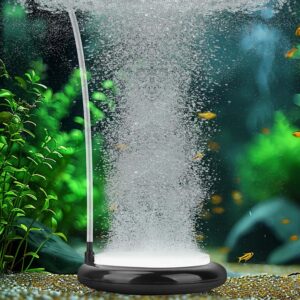
They are aerobic and require an optimal oxygen level in the tank. You can make your tank well-oxygenated by increasing the water circulation. Moreover, introducing the air stone also increases the oxygen level in the tank.
Colonizing Surface
They can’t grow freely in the water. They need some surface to colonize their population. You can provide a colonizing surface through
- Filter media
- Gravel or substrate
- Decor
- Driftwood
- Rocks
- biofilms
Optimal Water Conditions
Provide them with optimal water parameters for optimal growth of nitrifying bacteria.
| Feature | Value |
| pH | 7.0 to 8.5 |
| Temprauter | 25 to 30 degrees centigrade |
| Chlorine | No |
| Chloramine | No |
| Oxygen level | 4 to 8 mg/L |
Surface Transfer From Established Tank
If your tank has low nitrifying bacteria, introduce the established tank’s filter, decor, plants, or other surfaces. It’ll reduce the establishment time.
Keeping Nitrifying Bacteria in a Fish Tank Safely
- Avoid adding chlorine, antibiotics, copper-based meds, and other harsh chemical cleaners.
- Introduce various colonizing surfaces in the tank.
- Keep your tank well oxygenated.
- Maintain a steady ammonia source, i.e., waste, supply to the tank.
- Maintain the optimal water parameters in the tank.
- Avoid sudden changes in water temperature and pH.
- Don’t frequent deep cleaning. Rather, gentle cleaning helps sustain the nitrifying bacterial population in the tank.
- Always have a backup power supply to handle the power supply cut-off.
- Do a gradual cycling in the tank.
A Call to Action
Nitrifying bacteria help to sustain the nitrogen cycle in the tank. Under optimal conditions, they grow colonies on well-oxygenated surfaces. They reduce the ammonia to nitrate, which is mildly harmful to the tank. To sustain their population, avoid sudden water parameter changes, regularly change water, and maintain optimal water conditions in the tank.
Related Products


Leave a comment