
The circulation of water within an aquarium is extremely essential to the well-being of the fish and maintains extensive ecological equilibrium. A wavemaker pump assists in replicating the natural currents in water, enhancing the circulation of oxygen and removal of waste in the tanks. But when people think of what size wavemaker to purchase, they may become confused about the selection of the right size.
Content Table
A fish that is too small would meet with stagnant conditions, and a fish that is too powerful would have gone through unjustified stress. The knowledge to design a wavemaker, flow rates, and tank compatibility will make sure that you choose a wavemaker to runs best in your aquarium.
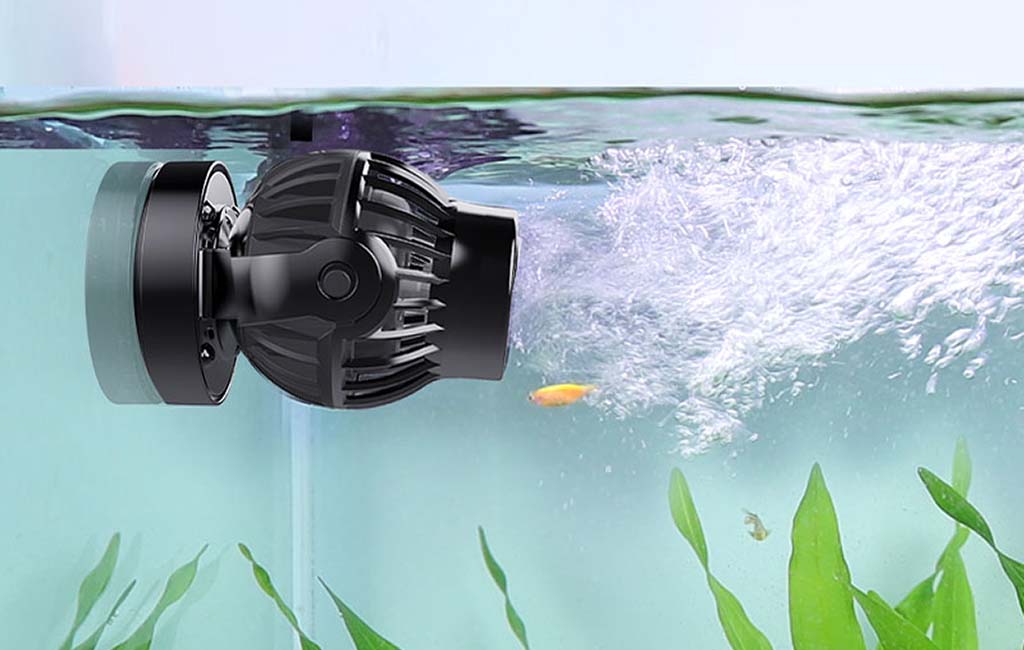
Choose a wavemaker
Wavemaker Pump Design and Its Flow Patterns
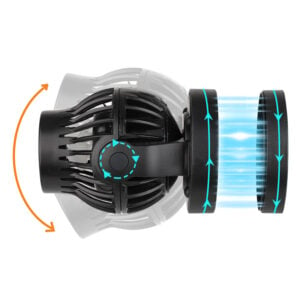
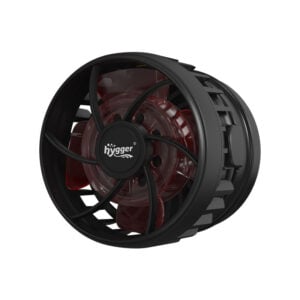
The wavemaker pumps of today are geared towards replicating the natural bodies of water by displacing water over the tank. Wavemakers are different from traditional powerheads as they produce movable water dispersed over a long and wide area rather than in a jet-like stream. The design is used to minimize dead areas in which waste has a chance to collect, and oxygen depletion might occur.
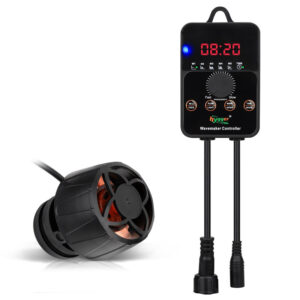
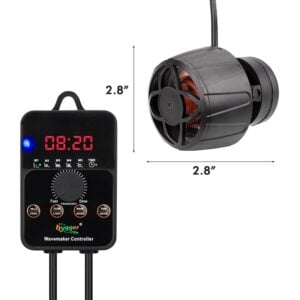
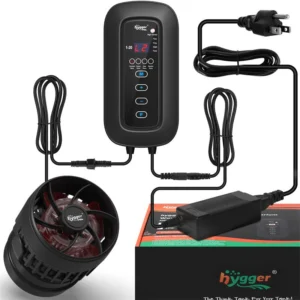
The majority of the wavemaker pumps employ magnetic impellers that cause the flow to be circular or oscillating and spread the water uniformly throughout the aquarium. There are advanced models that are fitted with programmable controllers, which enable aquarists to modify the speed, direction, and time to simulate realistic flow patterns. Such environments imitate ocean waves, tidal surge, or a calm river current based on the ecosystem of your tank.
A common standard will contain GPH (Gallons Per Hour) when choosing a wavemaker. GPH is the amount of volume of water the pump is capable of pumping within an hour. Taking the example wavemaker with a 2,000 GPH, it can theoretically move 2,000 gallons of water in 60 minutes.
This is the most important measurement that helps in deciding what size wavemaker can fit in your tank size. In most cases, the aquarists suggest the circulation rate to be 10–20 times the volume of the tank in one hour.
Wave Flow in Freshwater vs. Saltwater Aquariums
The kind of aquarium that you have is also a major factor in the size of the wavemaker and the style of waves to consider. Biological needs and natural environments of freshwater and saltwater tanks are different. Hence, the movement of water is also different in the two settings.
Freshwater Aquariums
In freshwater systems, rivers, lakes, or slow streams, most fish are obtained. Their circulation needs to be soft or moderately strong instead of strong, flowing water. As an illustration, species such as bettas and angelfish will do well in cooler waters, where excessive movement may make them suffer. In freshwater tanks, a wavemaker ought to produce regular circulation without moving the vegetation around or relocating fish that do not need to be moved.
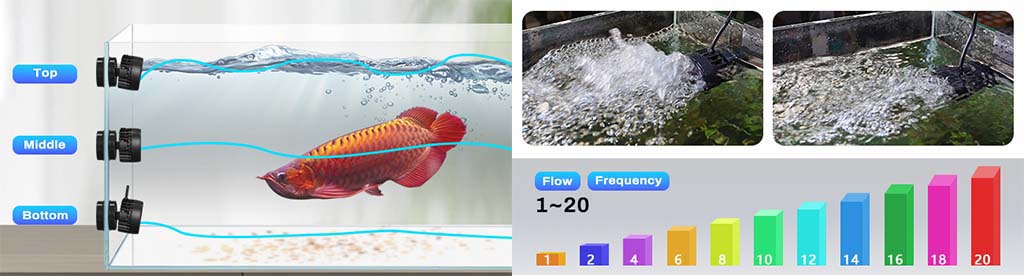
wavemaker flow pattern
Saltwater Aquariums
Reef tanks, particularly those made of saltwater, require significantly more forceful and more diverse water circulation. The ecosystems in oceans are dynamic as the currents continuously change and cross different parts of coral reefs, carrying nutrients. Corals are very dependent on good circulation to take in food and expel the waste of the polyps. Tidal surges and the self-resemblance of restless dashing waves are simulated with a wave maker in saltwater tanks and are typically run at a higher GPH rate. In the case of a reef aquarium, the various wavemakers can be strategically located to ensure maximum coverage of every area with constant movement of water.
Stated in short, freshwater aquariums necessitate less vigorous yet balanced flow. Whereas saltwater aquariums necessitate additional and more aggressive circulation to sustain corals and marine life.
What Size Wavemaker for Various Tanks
The method of determining the correct wavemaker size depends on the gallon capacity and type of setup of your tank of choice. The general rule to follow in the choice of a correct GPH range to use in either freshwater or saltwater aquarium is as follows.
20–40 Gallons
- Freshwater: A wavemaker with 200–400 GPH is usually sufficient for smaller tanks.
- Saltwater: Use 400–800 GPH to ensure proper nutrient distribution and coral support.
50–75 Gallons
- Freshwater: A wavemaker between 500–800 GPH maintains adequate circulation without stressing fish.
- Saltwater: Opt for 1,000–1,500 GPH to replicate natural reef-like movement.
90–125 Gallons
- Freshwater: 900–1,200 GPH helps maintain oxygen levels and prevents stagnant zones.
- Saltwater: 1,800–2,500 GPH is recommended, often requiring two pumps for balanced flow.
150–200 Gallons
- Freshwater: 1,500–2,000 GPH provides healthy circulation across larger freshwater environments.
- Saltwater: 3,000–4,000 GPH ensures corals and marine fish thrive under dynamic wave conditions.
250–300 Gallons
- Freshwater: 2,500–3,000 GPH will keep water movement strong yet not overpowering.
- Saltwater: 5,000–6,000 GPH is essential for reef aquariums, often requiring multiple units working together.
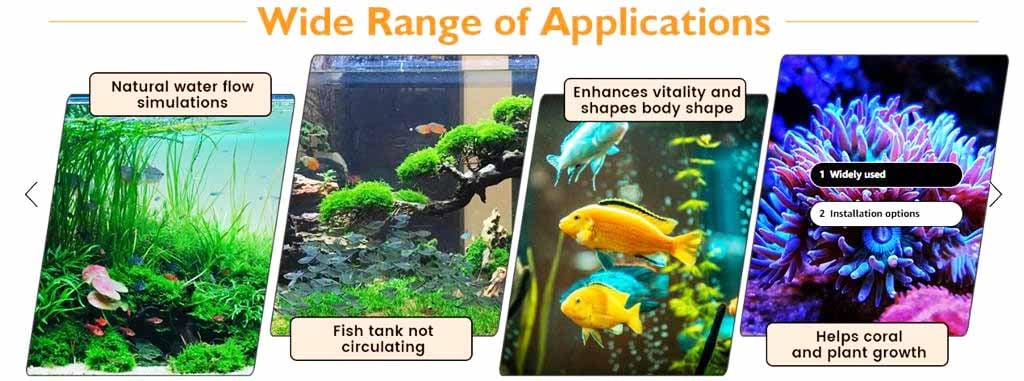
wavemaker pump size
How Do I Know If the Wavemaker Is Too Strong?
The selection of the wavemaker depends not just on the gallons per hour. It is also important to observe it. Clear indications are often given by fish and corals on whether the pump is excessively powerful in its setting.
When you can see that your fish is continually fighting against the stream or being blown over the tank, the accomplished flow is too much. On the same note, corals keeping their polyps shut or withdrawing them could also be being over-stressed in just one direction. Fine plants in freshwater aquariums can be bent or uprooted in strong currents, and this denotes that adjustment is required.
The other indicator is a lack of balance in food or rubbish. The wavemaker might be too large in case the food eaten falls straight out of sight without being picked by the fish. It has been suggested by most aquarists to set wavemakers slightly upwards or against aquarium glass, to spread the flow and to minimize hard direct impact; or set the feeding mode to pause for 10 minutes for fish feeding.
In the end, the appropriate wavemaker ought to offer continuous circulation of water and still give the fish a chance to swim freely, as well as corals to feed freely. When containing stress behaviors, it is usually possible to eliminate the problem by slowing down the flow speed or rearranging the pump.
Other Considerations When Choosing a Wavemaker
Although size and GPH are essential, there are a number of other factors that affect the performance and selection of wavemakers. With these factors and the consideration of size, the aquarists can select wavemakers that have adequate functionality, energy consumption, and durability.
1. Energy Efficiency
Wavemakers are continuous, and it is energetically sound. Find pumps that have efficient motors that can provide good flow without increasing the costs of electricity in a major way.
2. Noise Levels
Silent mode is a must for a serene aquarium experience, particularly in a living room or bedroom. Modern wavemakers also have a dampener vibration mount and sound-reducing capability.
3. Durability and Maintenance
Wavemakers are often used under wet and often salty conditions, and hence, durability is crucial. Use pumps that have anticoagulant materials and pumps that are easily cleaned to add up to their life and performance.
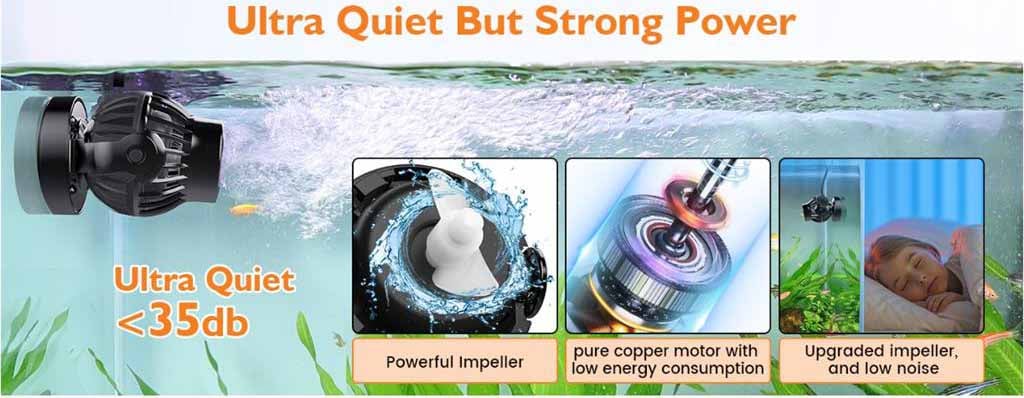
Choosing a wavemaker
4. Adjustable Flow Modes
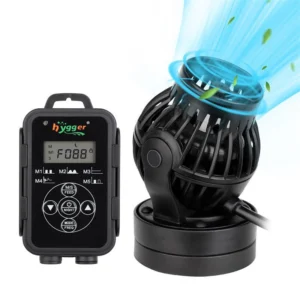
Advanced wavemakers are provided together with controls with various flow options, such as pulse, surge as well and random mode. This flexibility can assist in modeling various conditions of water depending on the needs of a particular species.
5. Placement Options
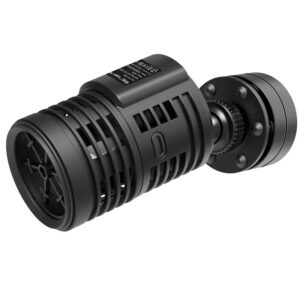
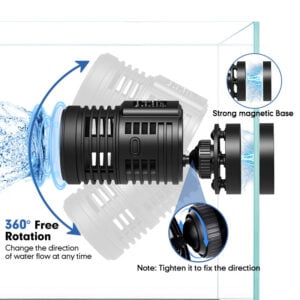
Placement strategy makes sure of circulation. Check to see whether your wavemaker can have magnetic mounts, suction cups, or swiveling nozzles to fit your distribution of water flow.
6. Compatibility with Aquarium Type
Not all wavemakers can fit all aquariums. Reef systems usually require several high-GPF pumps. Whereas smaller, softer models are beneficial to planted freshwater tanks. As they do not disturb the vegetation.
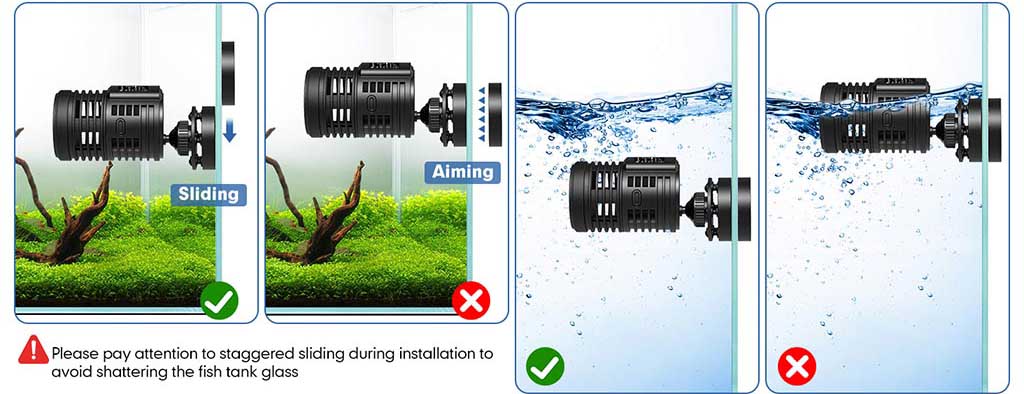
wavemaker installation
Parting Thoughts
The Wavemaker pump is an important investment in the establishment of a vibrant aqua ecosystem. This differs, with the appropriate size being determined by the size of the tanks, freshwater or saltwater habitat, and the particular requirements of the fish and corals. Freshwater tanks usually need more gentle circulation, and saltwater aquariums are strong and turbulent in movement. GPH used as a guideline will reduce the options, but nothing works better than watching your livestock and manipulating them.
By choosing a wavemaker, a buyer must examine their size, efficiency, noise, durability, and their capacity to adjust the flow as well. Keep in mind that you are trying to create natural environments that help to keep fish alive and corals growing. With the right wavemaker pump selected in your aquarium, you will be able to maintain a habitat where aquatic life flourishes, wastage is minimal, and beauty is produced.
Related Products

Why does my mini wavemaker flow out from the sides instead of out the front nozzle?
Is there a way to change it?
I need to aim it towards dead spots.
Check if it is clogged or if the nozzle is misaligned.