
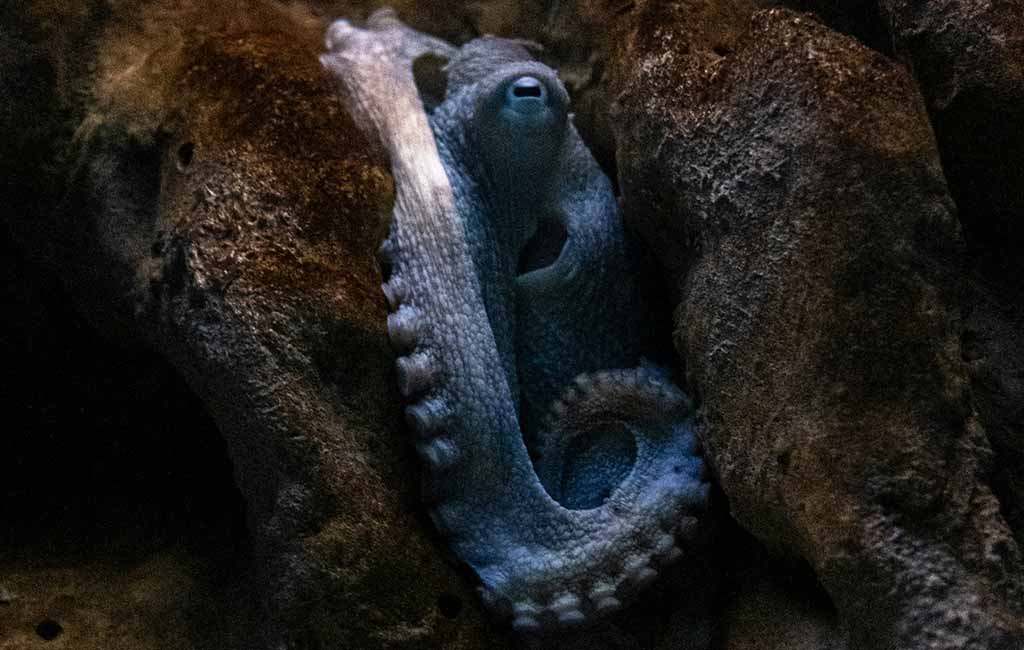
Octopuses are fascinating marine creatures that you can keep in your aquarium. Before starting an octopus journey, you should know about various details. These details include how many octopus species there are and how many are suitable to keep in your tank. Knowledge about their natural habitat and requirements to keep them in a tank is worth knowing. These things with some of the best aquarium octopus species are in the following.
Content Table
aquarium octopus species
Octopus Types of Species
There are about 300 different octopus species. These species are globally distributed. Researchers are continually discovering new species. Here are some common octopus species.
- Caribbean reef octopus
- Common octopus
- Blue-ringed octopus
- East Pacific red octopus
- Giant Pacific octopus
- Mimic octopus
- Octopus vulgaris
- Atlantic pygmy octopus
- Blanket octopus
- Southern blue-ringed octopus
- California two-spot octopus
- Typical octopuses
- Coconut octopus
- Seven-arm octopus
- Cephalopoda
- Dumbo Octopus
How Many Hearts Does an Octopus Have?
Octopuses have 3 hearts; two of them pump blood from the gills, where they intake oxygen, while 3rd the central heart, supplies it throughout the body. They have 3 hearts due to blue blood. Instead of red, they have blue blood because they have a copper-based oxygen-carrying protein. Regularly, iron-based proteins carry oxygen. Therefore, they have red blood.
Profile
Here is a general profile of the octopus.
| Features | Detail |
| Scientific name | Cephalopoda |
| Life span | Usually, 1 to 3 years |
| Physical characteristics | Soft body
Bilateral symmetry Eight arms No internal skeletal structure |
| Size | Vary from 2 cm to up to 5 meters arm span |
| Coloration | No permanent coloration
They change color according to conditions. The color-changing ability helps them in communication and camouflage. |
| Learning ability | Highly intelligent |
| Diet | Carnivorous |
Habitats
Octopuses are excellent at adapting to different environments. They can camouflage themselves, squeeze their bodies, and survive in the event of being attacked by predators, as they can regenerate their body parts. Here are different habitats where they can live.
- Rocky bottom with crevices and stones
- Coral reefs
- Seabed
- Shallow waters
- Deep ocean
- Pelagic waters
- Manmade structures

Keep an Octopus in an Aquarium
Can It Keep an Octopus in an Aquarium
Yes, it is possible to keep an octopus in an aquarium. However, it is not an easy journey. Octopuses require specific tank adjustments, feeding, and thorough knowledge. Here are some specific captivity requirements to have an octopus in your aquarium.
Tank Size
You should have at least a 50-gallon saltwater tank that is wide and shallow. However, if you raise the threshold to 100+ gallons, you can stock even larger species. Even small species will feel better in this.
| Species | Tank Size (minimum in gallons) |
| California Two-Spot | 50 to 75 |
| Common Octopus | 100 to 125 |
| Day Octopus | 120 to 150 |
| Caribbean Reef Octopus | 75 to 90 |
| Algae Octopus | 40 to 55 |
| Coconut Octopus | 50 to 60 |
| Dwarf Caribbean Octopus | 15 to 25 |
| Giant Pacific Octopus | 300+ |
Escape Proof
Octopuses are extremely intelligent and can even squeeze their body. So they can escape from your tank if there is any gap or weak point. Therefore, ensuring the sealing and addressing the weaknesses of the tank are necessary to prevent their escape.
Stock Density
Octopuses are cannibalistic. Therefore, to avoid any unnecessary scenes, keep only an octopus in a tank.
Filtration
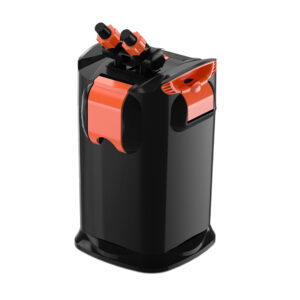
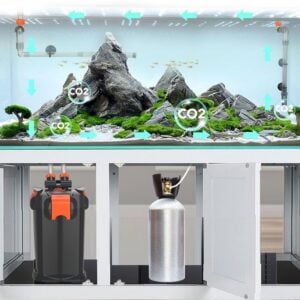
Octopus produces a high waste load. Therefore, introduce a robust filtration system in the tank. It’ll help to maintain the optimal water quality in the tank. Otherwise, there’ll be an ammonia spike and other problems in the tank. Focus on biological filtration. For mechanical filtration, install a canister filter in the tank.
Decor Installation
Install plenty of tank decorations and climbing structures in the tank. These decors will help to fulfill their climbing, hiding, exploring, and curious nature.
Water Parameters
Octopuses are sensitive to water parameters, especially pH, ammonia, and salinity. Here are the general optimal water parameters. It is suggested to research this section for your specific octopus species, as temperature varies between 5 and 27 degrees Celsius.
| Feature | Value |
| Salinity | 1.025 to 1.027 |
| pH | 8.1 to 8.3 |
| Ammonia | 0 ppm |
| Nitrates | Less than 5 ppm |
| Phosphates | Less than 0.1 ppm |
| Copper | 0 ppm |
| Temperature | Set according to species |
| Dissolved Oxygen | Minimum: 35% Optimal: 65 to 100% |
Weekly change of at least 25% of water in the tank. However, it can vary according to the tank conditions.
Tank Cycling and Maturity
Maintain stable water parameters in the tank. The tank should be matured for at least 3 to 4 months.
Substrate
Install a layer of fine sand at the bottom. Otherwise, they are not good with bare bottoms.
Lighting
Install a low light in the tank. Moreover, installing a red light will help to optimize visibility at night.
What Types of Octopus Can Be Kept in a Tank?
| Specie | Tank Size (gallon) | Temperature (°F) | Behavior | Lifespan
(years) |
| California Two-Spot Octopus | 50–75 | 60–72 | Beginner-friendly | ~ 1 to 2 |
| Curious | ||||
| Diurnal | ||||
| Caribbean Reef Octopus | 75+ | 75 to 78 | Shy | ~1 |
| Nocturnal | ||||
| Colorful | ||||
| Dwarf Caribbean Octopus | 15 to 25 | 75–78 | Extremely shy | ~6 to 8 months |
| Small (up to 2 cm)
Nocturnal |
||||
| Coconut Octopus | 50+ | 75 to 78 | Super-intelligent | ~1 |
| Uses shells and objects for shelter | ||||
| Algae octopus | 45 | 76 to 80 | Agile walkers | ~10 months |
| Diurnal | ||||
| Intertidal species | ||||
| Common octopus | 100 to 125 | 70 to 76 | Strong | ~1 to 2 |
| Intelligent | ||||
| Always in search of a way to find escape route | ||||
| Atlantic pygmy octopus | 30 | 72 to 78 | Small | 6 to 12 months |
| Good eyesight | ||||
| Change the color that helps to camouflage |
The Friendliest Aquarium Octopus Species
- California Two-Spot Octopus
- Caribbean Reef Octopus
- Dwarf Caribbean Octopus
Octopuses
Leaving a Lasting Impression
Octopuses are among the fascinating marine creatures. They are known for their intelligence, adaptability to a changing environment, and various other unique features, e.g., blue blood and a three-chambered heart. Among 300 known species, only a few are suitable for raising in an aquarium.
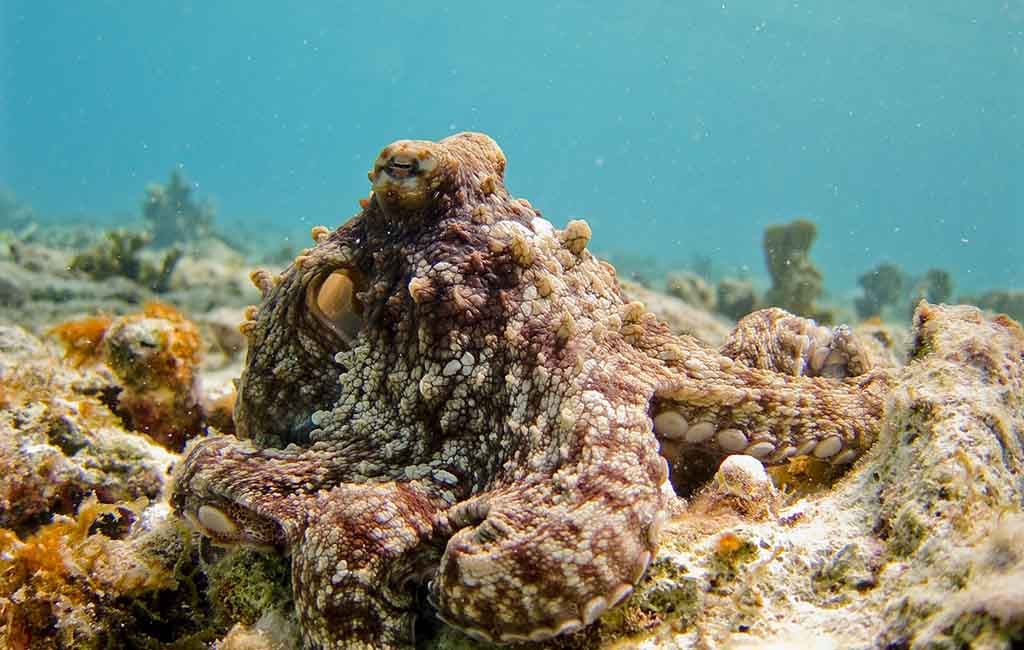
The California Two-Spot, Caribbean Reef, and Dwarf Caribbean Octopus are among the friendliest aquarium octopus species. You can enjoy these fascinating marine creatures in your tank with proper care, setting an optimal environment, and attention to detail.
Related Products

Leave a comment