
Montipora is a popular SPS coral. Their colouration, appearance, and ease of maintenance make them ideal for beginner reef aquarists. Montipora corals have several famous species and unique features. Their placement in the tank and how to grow them optimally is also quite interesting. Moreover, once you go through the setup procedure, Montipora tank maintenance is also a necessary aspect. In the following, you’ll learn all of these aspects in detail.
Content Table
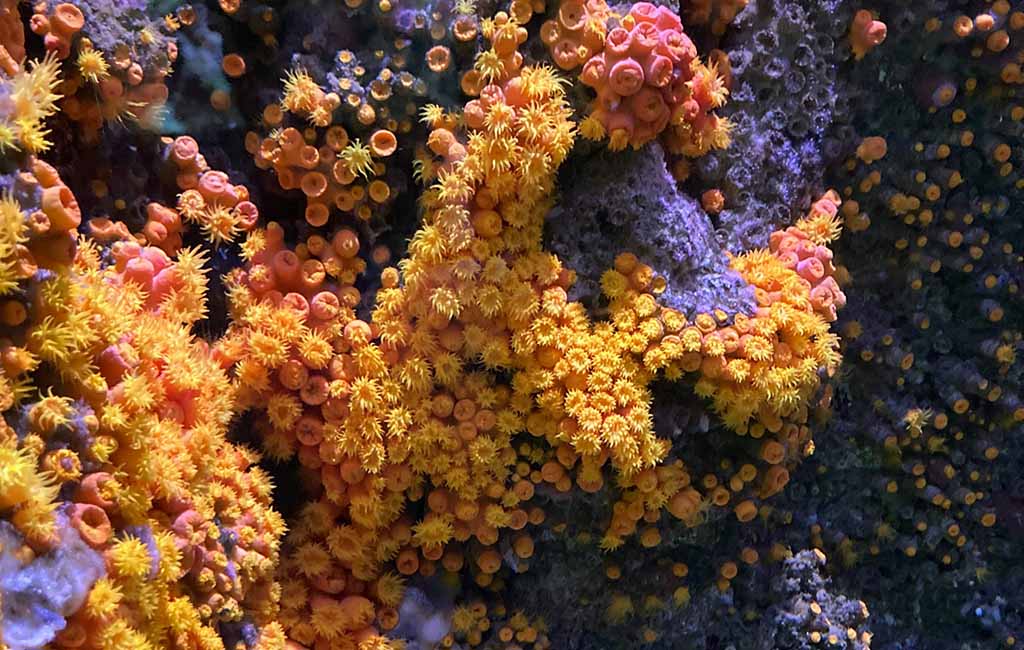
montipora coral
Montipora Digitata
Montipora is a small polyp stony coral that is renowned among aquarists for its vibrant coloration and diverse species. It features various types of corals, including branching Montipora, plating Montipora, encrusting Montipora, and the unique Mystic Montipora. They vary in coloration and growth form. Here is a list of some well-known Montipora coral species.
Popular Montipora Varieties
| Type | Species | Features |
| Branching Montipora | Montipora digitata | Commonly known as finger coral |
| Connect each other | ||
| Vertical growth | ||
| Show diverse growth | ||
| Moderate growth rate | ||
| Sensitive to water change | ||
| Available in pale cream, yellow, brown, red, purple, and green coloration | ||
| Grow into hemispherical mounds | ||
| Montipora setosa | Bright orange or reddish-orange coloration | |
| Encrusting base | ||
| Generally peaceful but compete with space occupiers, corals, and algae | ||
| Moderate to high water flow | ||
| Relatively fast growth rate | ||
| Unique branching patterns | ||
| Plating Montipora | Montipora capricornis | Form a vase-like shape or layered plates |
| Fast growth | ||
| Exhibit a variety of colors, i.e., purple, blue, brown, red, green, orange, and pink. | ||
| They are not raised or bumpy | ||
| It can grow into various shapes | ||
| Start as encrusting coral and later develop into a plating montipora | ||
| Montipora danae | It is a branching, plating, or submassive stony coral | |
| It has bright green polyps | ||
| It has a purple/brown base | ||
| It has a textured appearance | ||
| Require a strong light | ||
| Require a moderate flow rate | ||
| Encrusting Montipora | Montipora spongodes | It is a branching and encrusting SPS |
| Form large colonies | ||
| Easy to care for | ||
| Fast growth rate | ||
| Vibrant colors |
Montipora Coral Placement
Montipora coral’s growth highly depends on its placement in a reef tank. Therefore, it’s essential to keep it in the optimal place.
Optimal Place
They thrive in higher lighting conditions. Therefore, it’s optimal to place them in the middle or upper sections of the tank. In these sections, they receive moderate to high lighting, which helps them display vibrant coloration, in addition to their higher growth rate.
How to Place in the Tank?
| Montipora Coral Type | Species | Placement |
| Plating Montipora | Capricornis
|
Give them enough space as they grow horizontally |
| Avoid placing them near small plants or corals, as they can hinder their growth by overshadowing. | ||
| Branching Montipora | Montipora Digitata | Place them somewhere where they are not being overshadowed by some plant or object. |
| Montipora Setosa | Avoid aggressive neighbors. | |
| Encrusting Montipora | Danae Montipora | In optimal lighting conditions, place them on rocks. |
| Sunset Montipora | Give them enough space so they can spread over other corals |
Keeping the Reef Tank for Montipora Coral
Aquarists love to keep them due to their vibrant coloration and ease of maintenance. For these reasons, they are more popular than soft and LPS corals. However, it is necessary to provide them with a specific environment for optimal growth. Here is the answer to what a Montipora coral needs.
Tank Type
Keep them in a well-established reef tank. It should be at least 6 months old. Fish-only and low-tech marine tanks are not suitable options. Therefore, drop this idea if you happen to have it.
Tank Size
Keep them in a tank of at least 30 gallons. A higher volume is generally preferable to a lower volume. A higher volume will help keep the water parameters stable and forgive beginners’ mistakes.
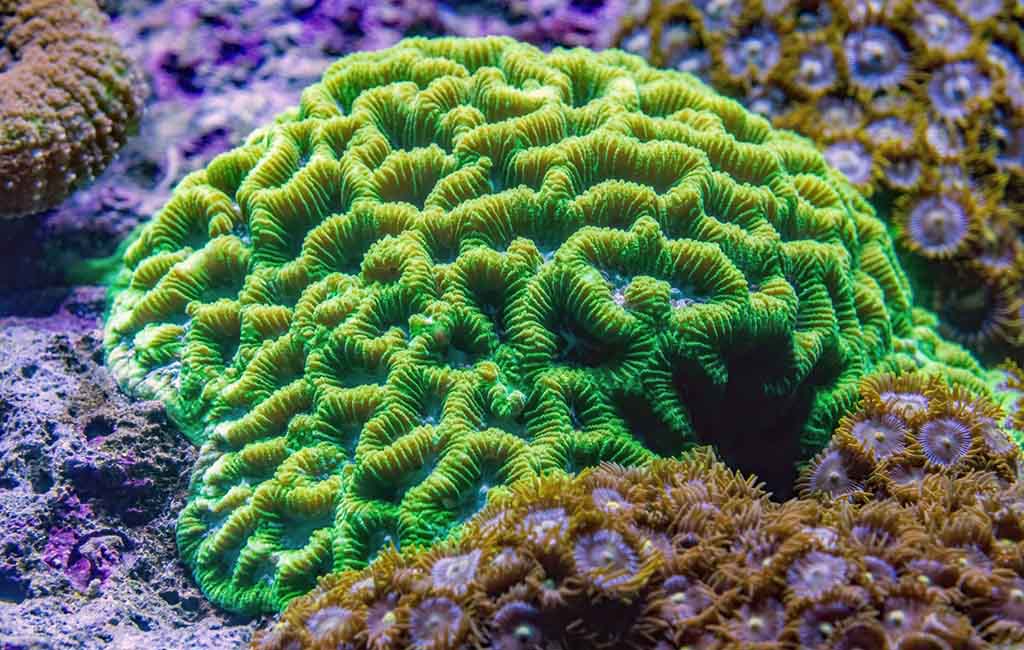
Reef Tank for Montipora Coral
Lighting
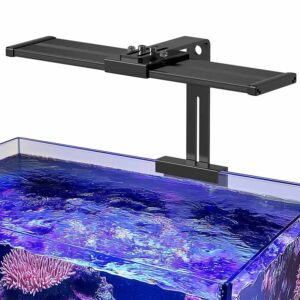
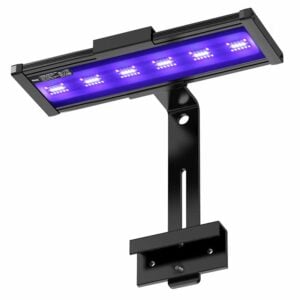
Install a moderate to high PAR lighting in the tank. A 200- to 350-PAR light will significantly enhance Montipora growth. High-quality LEDs, T5 fluorescent, and metal halide lamps are suitable lighting options for the tank. Too low will cause dull coloration and redundant growth. While higher intensity can cause coral bleaching.
Water Flow
Adjust a moderate to higher non-direct flow rate in the tank. It will help to remove mucus and deliver nutrients to the corals.
Optimal Water Parameters
| Parameters | Optimal Range |
| Temperature | 75 to 81 °F |
| pH | 8.0 to 8.4 |
| Salinity | 1.025 to 1.026 |
| Alkalinity | 7.5 to 9.5 dKH |
| Calcium | 400 to 450 ppm |
| Magnesium | 1250 to 1350 ppm |
| Nitrate | 2 to 10 ppm |
| Phosphate | 0.01 to 0.05 ppm |
Rock Placement
Install rocks in the tank as they provide a strong foundation for the Montipora corals. Moreover, always give them ample room for growth and avoid aggressive coral neighborhoods.
Water Parameter Stabilizing Equipment
- Install a protein skimmer to keep your tank free of organic waste and maintain a stable nutrient level.
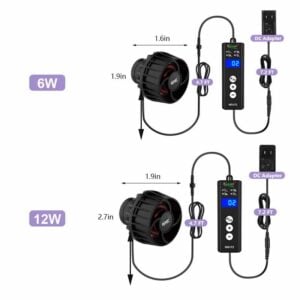
- Wavemaker to produce a moderate to higher flow rate.
- Install ATO (Auto Top Off) to stabilize the salinity level in the tank.
- It’ll be optimal to introduce a refugium to control phosphate and nitrate levels in the tank.
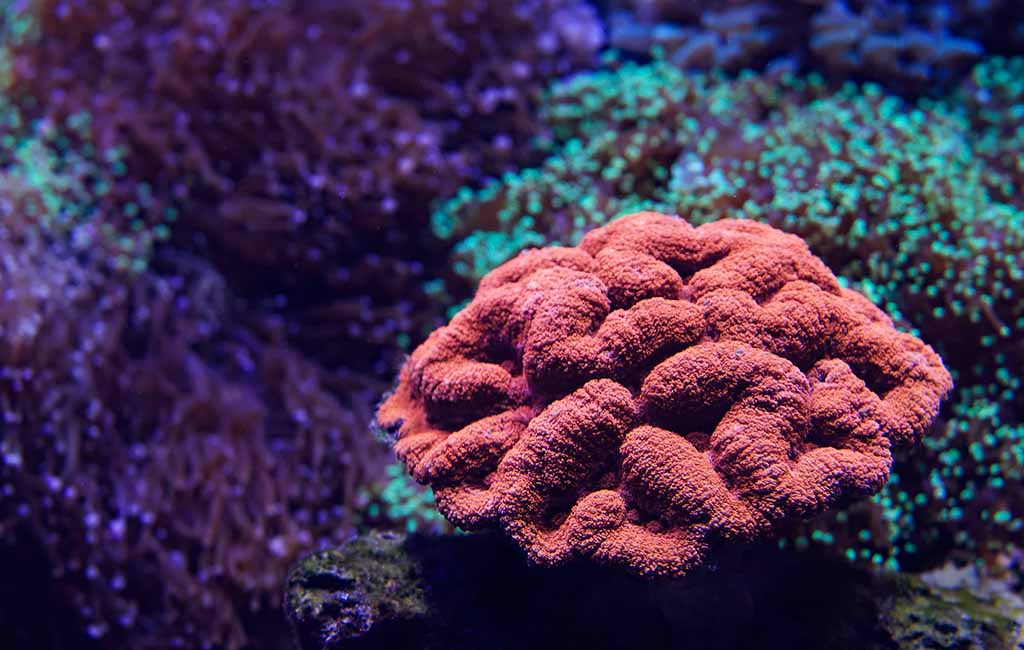
Montipora tank maintenance
Do Better Montipora Tank Maintenance
Water Change
Weekly change of 5-10% of the tank’s volume. Always prepare the water with stable water parameters and add it to the tank. However, in case of any change, fulfill the requirement.
Water Parameter Stabilization
Weekly, test the alkalinity, magnesium, and calcium levels in the tank, in addition to water changes. In case of any fluctuations, correct them with optimal supplementation.
Optimal Nutrient Level
Always remove any uneaten leftover food from the tank and use a protein skimmer to prevent organic waste from accumulating. Use a macroalgae refugium to maintain an optimal level of nitrate and phosphate in the tank.
Equipment Cleaning
Monthly, clean the filter, protein skimmer, and wave maker. Cleaning will optimize the functionality of this equipment and prevent the housing of unintentional visitors to the tank.
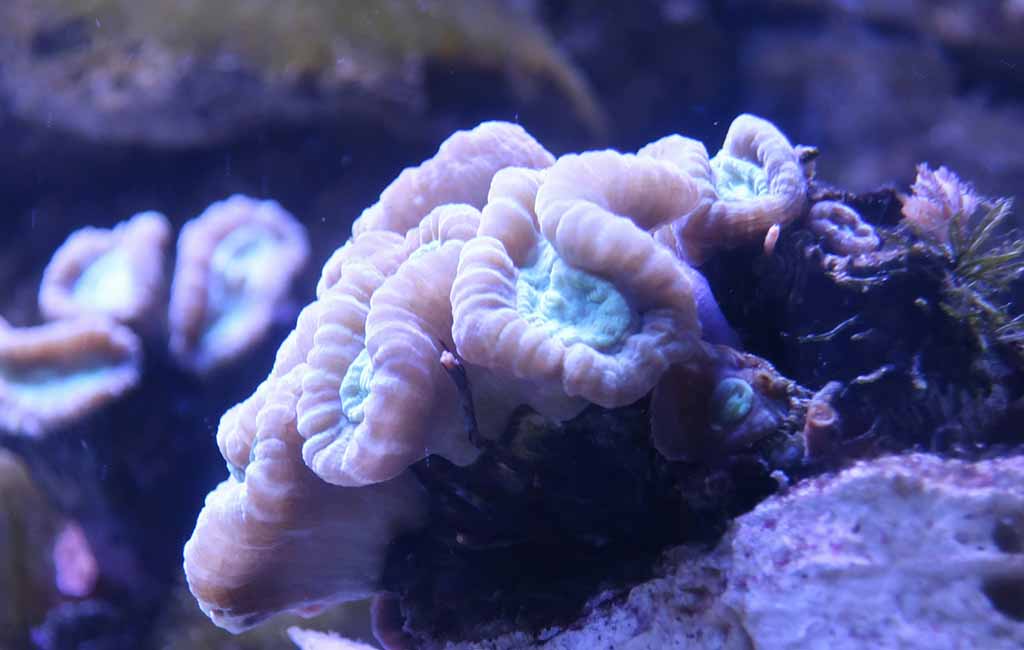
Montipora coral placement
Lighting Maintenance
After every 1 to 2 months, clean the lighting cover or lens, as salt can accumulate on them and reduce the lighting intensity. T5 bulbs provide optimal performance for 6 to 12 months. So, change them after the optimal duration.
Pest Inspection
Montipora-eating nudibranchs are harmful to the Montipora corals. Therefore, inspect their presence weekly, i.e., for physical signs, eggs, or biting marks. If you find any such thing, remove it and cure the coral. Tissue recession, bleaching, and brown jelly are other common problems with them. If you find any such problem, care accordingly.
Trimming
They grow at a fast rate. When they overshadow other corals or hinder the lighting, trim the corals accordingly. Remove the trimmed fragments from the tank.
Maintenance Schedule
| Frequency | Tasks |
| Daily | Temperature check |
| Observe the coral’s overall appearance | |
| Observe coral polyp extensions | |
| Equipment inspection | |
| Weekly | Test water parameters, i.e., calcium, magnesium, and alkalinity. |
| Change the water volume | |
| Clean the protein skimmer cup | |
| Bi-weekly | Light cleaning of the pump/wave maker |
| Monthly | Deep cleaning of the pump and overhead |
| Do a lighting inspection | |
| Replace the chemical filter | |
| 3 to 6 months | Calibrate the water parameter testing kit |
| Sump deep cleaning | |
| Coral pruning | |
| Review coral placement |
Concluding Remarks
Montipora is a type of SPS coral famous among beginner to some extent experienced aquarists. They grow in various shapes, i.e., plating, eructing, and planting. Each coral species has some unique features and some common aspects, i.e., colors, lighting requirements, etc. When you are growing it in your tank, especially focus on space, water flow, lighting, and parameters. Once you set them up, follow the maintenance routine to enjoy their unique appearance in your reef tank.
Related Products


Leave a comment