
Live plants help in maintaining optimal water parameters and offer unmatched aesthetics. Live aquarium plants help to replicate the natural environment in their tanks. If you are new and want to learn how to keep live plants in an aquarium and root them, the article is just for you. Scroll now to learn about importance, peculiarities, substrate types, planting methods, and how to anchor them to establish proper rooting. At the end, you’ll feel confident to start your live aquarium plant journey.
Content Table
live aquarium plants
Live Aquarium Plants
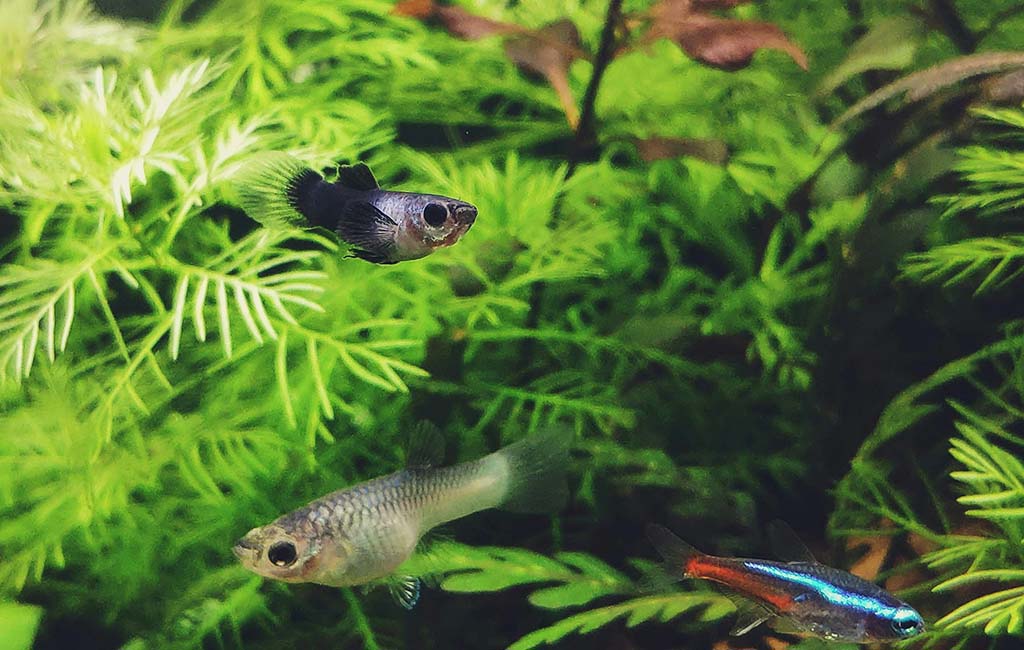
Live aquarium plants are plants that can grow in your tank. They help to create a natural environment in the tank. They are available in a wide range of shapes, sizes, and rooting styles. The most important thing is to know your priority,i.e., which plant will serve your tank perfectly. Here are some plant types, examples, and their rooting style.
| Plant Type | Examples | Rooting Style |
| Stem Plants | Water Wisteria | Planted into the substrate |
| Hornwort | ||
| Bacopa | ||
| Rosette Plants | Cryptocoryne | Deep root system |
| Amazon Sword | ||
| Rhizome Plants | Java Fern | Attach to rocks or wood |
| Anubias | ||
| Floating Plants | Duckweed | No rooting needed |
| Frogbit | ||
| Bulb Plants | Aponogeton | Planted partially in substrate |
| Tiger Lotus | ||
| Mosses | Christmas Moss | Tied or glued to surfaces |
| Java Moss |
Peculiarities
- They have flexible stems that move due to water flow.
- Sometimes the aerenchyma, internal air spaces, help them in floating and for gaseous exchange.
- Many live aquarium plants use their leaves to absorb nutrients.
- The plants that use their leaves for nutrient absorption use their roots just to anchor in the substrate.
- They act as a natural filter.
- They help in maintaining the nitrogen cycle in the tank.
- They help to overpower the algae growth in the tank.
- Live plants play a vital role in stabilizing water pH with their metabolic process.
- They help to reduce the fish stress in the tank.
- Live aquarium plants are a natural food source for herbivorous fish species.
- Many plants help to create a disease-free environment by suppressing the pathogens in the tank.
Proper Rooting for Live Plants
The Importance of Proper Rooting for Live Plants
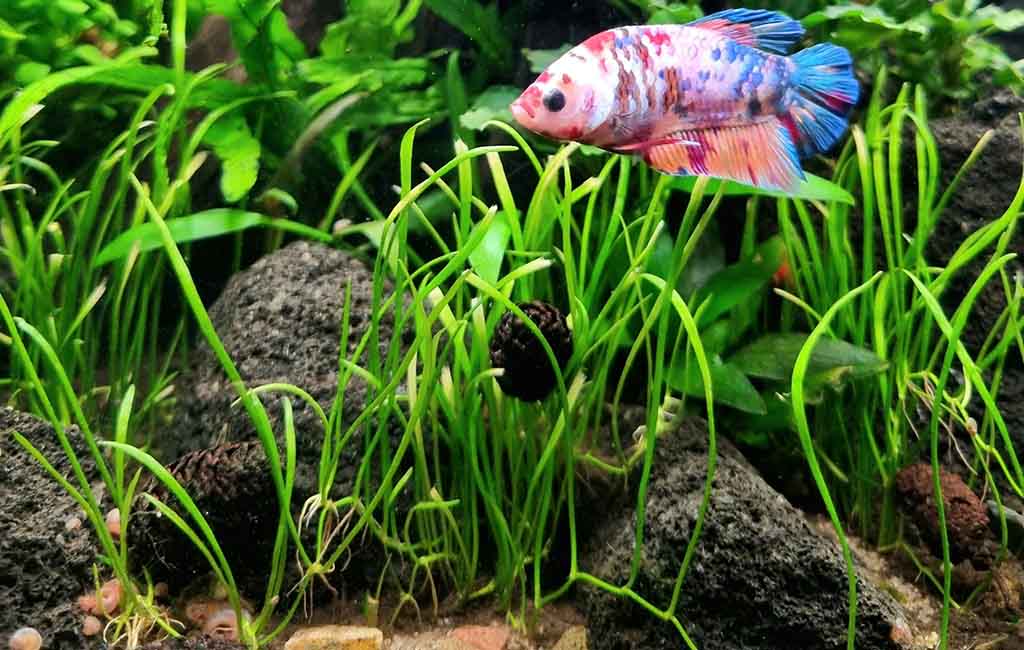
Proper rooting is inevitable for root plants. Without proper rooting, a plant is like a house without a base. Here are some reasons why it is important to properly root the live plants in your aquarium.
- Many live plants absorb nutrients directly through their roots.
- Proper rooting keeps live plants stable when fish pass by or during water flow.
- It helps to promote fast growth.
- Live plants can compete with algae by sharing nutrients.
- They help to cycle a tank as plants absorb nitrates for their optimal growth.
- Roots help to maintain the substrate by avoiding anaerobic conditions.
- Proper rooting helps to avoid nutrient deficiency for a longer period.
Nutrient Strategies to Encourage Root Growth
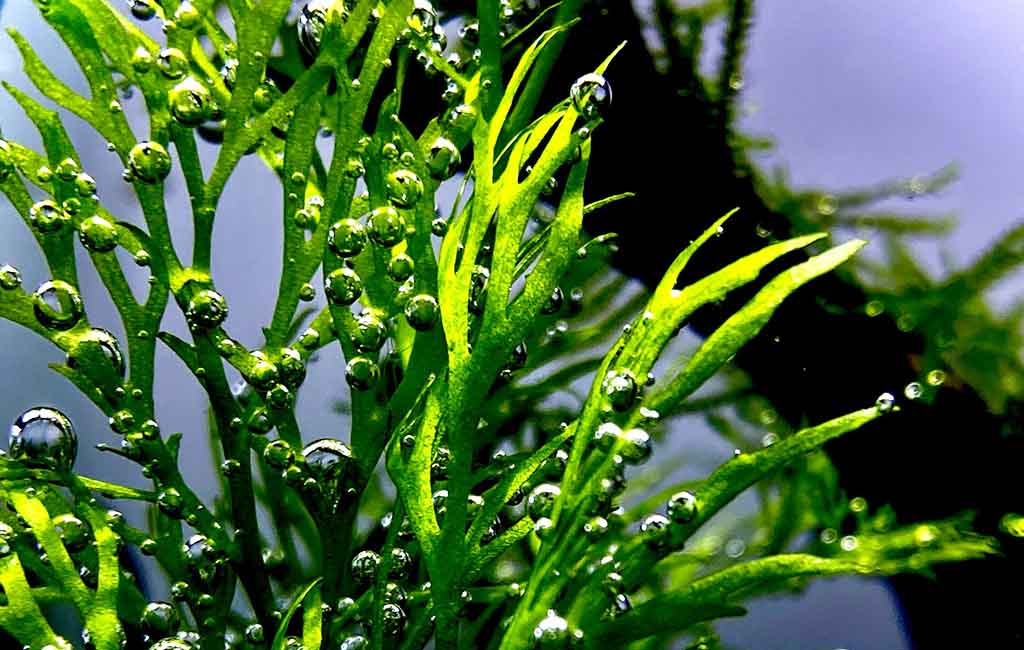
Proper nutrient supply and strategy help to encourage root growth in a planted tank. Plant roots follow the path where they find the nutrient. Therefore, it is necessary to adopt a proper nutrient strategy to encourage root growth. Here is a strategy that can help you achieve this.
Encourage Root Growth
Substrate Selection
Proper substrate selection is the first step in a nutrient strategy. Here are some of the best substrate choices.
- Use aqua soil, because roots dig deep and grow fast.
- Use inert gravel with root tabs for an economic setup. The root tabs under the inert gravel pull plant growth toward the bottom side.
- Laying a thin layer of sand over the nutrient-rich substrate provides a clean substrate option.
Fertilization
Here are some fertilizers that boost root growth.
- Phosphorus
- Potassium
- Iron
- Calcium
- Sulfur
Optimise Environmental Conditions
- Add a 2 to 3-inch layer of substrate for proper root growth.
- In a new setup, reduce the light to 6 hours for the first 3 to 4 weeks. This will enable the plants to use most of their energy on root development instead of leaf growth.
- Use CO2kit to increase the overall growth rate.
Specialized Techniques
- Trim the roots to 2 – 3 cm. It will help to promote a fresh and strong root structure.
- Avoid overfeeding of liquid fertilizer, especially in new tanks. Otherwise, you’ll see the algae bloom in your tank.
How to keep live plants in an aquarium
Make Live Plants Secure Rooting in Gravel/Sand/Substrate
Planting In Gravel
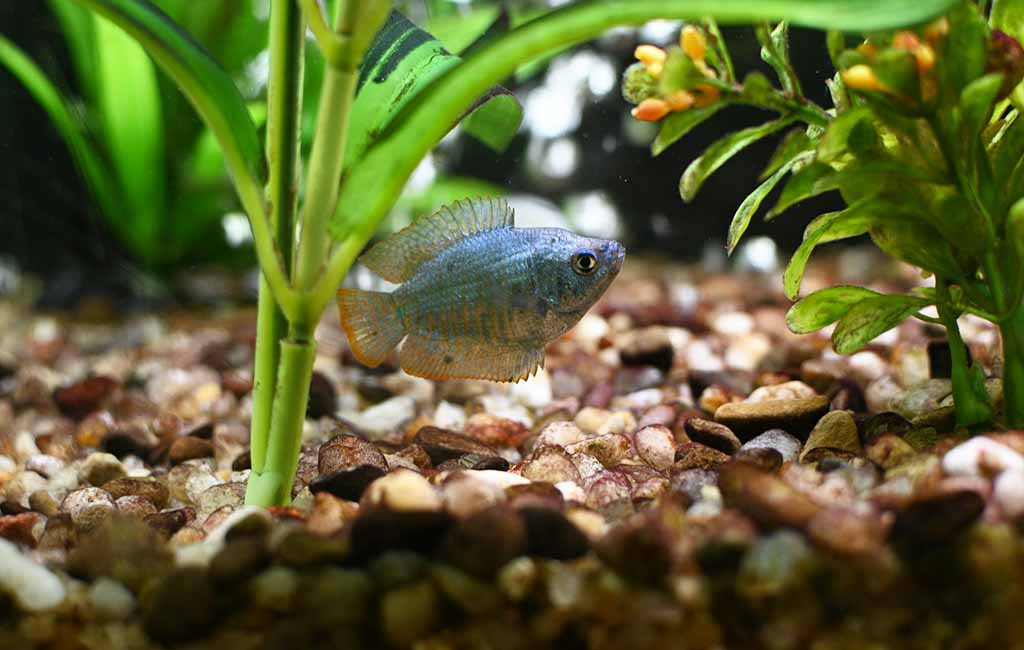
Planting in gravel develops moderate rooting and is one of the best options for root feeders. You can use various anchoring methods, like plant weights, root tabs, and tweezers, to insert plants. Bury the plant roots fully so that the only crown remains exposed. A 1 to 2-inch space works well for planting in gravel. Use low to medium light. However, initially provided with low light, as medium or high lighting can cause an algae bloom in the tank. Maintain a gentle to moderate flow so that water does not uproot the plants.
Planting in Sand
Growing plants in sand is hard because sand has fine particles and low oxygen. Use root tabs or insert plants deep for proper anchoring. Moreover, use plant anchors initially. Insert the plant roots 3–5 cm in lightly compacted sand and keep 1.3 to 3 inches. Keep low to medium lighting. Maintain a gentle flow as sand shifts easily.
Planting in Stone Or Pebbles
Stone or pebbles offer poor rooting ability. Tie plants to stones with fishing line thread or glue, and don’t bury rhizomes. Adjust the spacing according to rock placement. Initially provided with low to medium light. Use a moderate flow rate as plants are attached with glue or fish line.
Planting Active Carbon Substrate
It offers weak rooting as the active carbon substrate is not a nutrient-rich soil. Initially, use an anchor for the plants and use root tabs for optimal rooting. Insert 1 to 1.5 inches deep in the substrate. Provide them with low to medium light initially. Moreover, a gentle to moderate flow rate is enough for plants.
Planting At Live Rock
Live rock offers no rooting. You can only use them to attach plants. Several anchoring materials can be used as anchors, e.g., super glue gel, a fish line, or thread. There is no plantation depth or defined planting space. It completely depends on the plants. Initially, provide them with a low light and maintain a moderate to strong flow rate in the tank.
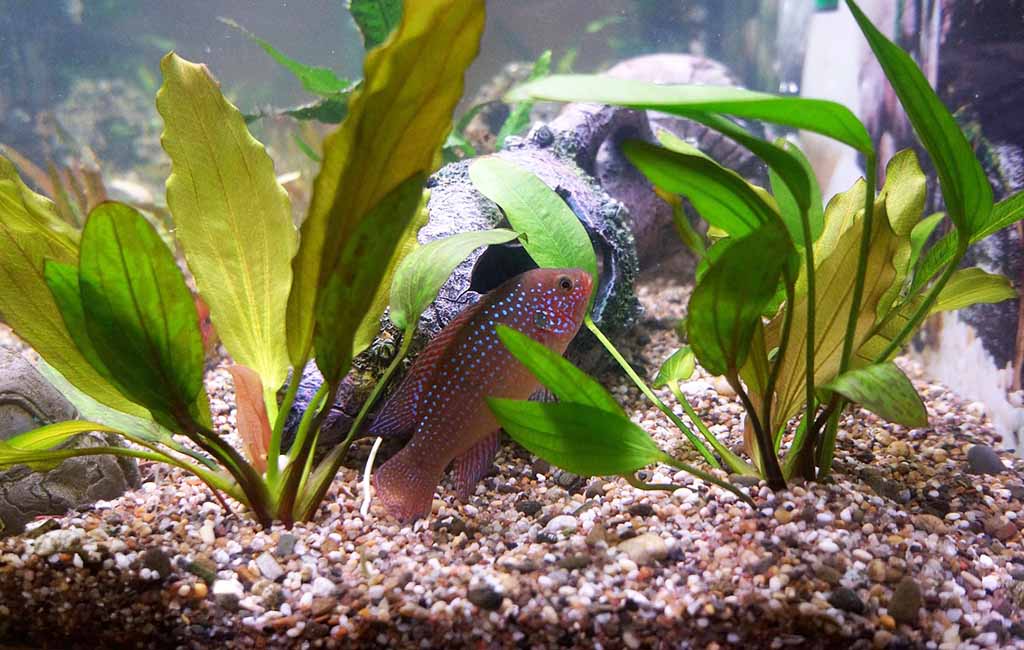
make live plants root
Planting in Aquasoil / Active Soil
Aqua or active soil offers excellent rooting as these are nutrient-rich substrates. They require minimal anchoring. Use tweezers for planting. A 2 to 4 cm depth and a 2 to 5 cm space between every 2 plants is optimal for plantation. Initially, provide medium light and increase it later on according to the plant’s requirements. Maintain a gentle to moderate flow rate.
Planting In Clay / Mud-based Substrate
It offers strong rooting, and minimal anchoring is required. Initially, plants need anchoring. However, they are also fine without it. Keep 3 to 5 cm plantation depth and adjust the spacing according to plant type and position. Initially, provide them with medium light and maintain a gentle flow in the tank.
Plantain At Bare Bottom
It offers no rooting as there is nothing at the bottom. You need to use pots, driftwood, rocks, suction cups, or floating plants for anchoring the plants. Depth and space are not defined. It is completely up to you. Initially, provide them with low to medium light and maintain a moderate flow rate in the tank.
Planting In Mixed Substrate
It offers variable rooting due to the mixture of various materials. Rooting depends on the material composition. Moreover, you can use root tabs and anchor the plants according to requirement. A depth of 2 to 4 cm is suitable for a mixed substrate. Initially, use medium light and maintain a moderate flow rate in the tank.
Anchored Live Plants in Aquascape Firmly
| Method | Materials Needed | Best For | How Does It Work? |
| Thread Tying | Cotton thread or nylon thread | Epiphytes like Anubias, Java Fern | Tie the plant gently to the rock/driftwood until it self-attaches |
| Super Glue | Aquarium-safe cyanoacrylate glue | Moss, rhizome plants | Apply a small drop on the rock/wood and press the plant |
| Fishing Line | Transparent fishing line | Moss carpets, delicate plants | Wrap around plant and hardscape tightly |
| Plant Weights | Plant weights | Stem plants (temporary hold) | Wrap lead/steel strip at base to hold plant down |
| Plant Anchors or Clips | Metal or plastic anchors | Foreground plants, carpeting plants | Clip base into the substrate to prevent floating |
| Rock Wedging | Small stones | Any small plant clumps | Wedge roots between rocks or crevices |
| Driftwood Attachment | Glue or thread | Epiphytes & moss | Attach plants directly onto Driftwood |
| Mesh Method | Mesh sheet and thread | Moss carpets | Spread moss on mesh and place on substrate |
| Planting in Pots | Pots with aquasoil or gravel | Root feeders like Amazon Sword | Use small pots with nutrient media |
| Suction Cups | Suction cups with clips | Floating or vertical placement | Attach plants to tank walls or decor |
Prevent New Aquarium Live Plants from Floating
New aquarium plants are vulnerable to floating as they have not established their roots properly in the tank. Therefore, it is necessary to anchor them. Here are some such smart anchoring tricks.
- Use aquascaping tweezers to push the plants into the substrate with accuracy. It will help to provide an initial anchor to plants and also help establish roots.
- Tie a weight to the bottom of the plant stem. Don’t use any hazardous material to add weight at the bottom.
- Initially, keep the water level low. It will reduce resistance and allow the plant to establish proper roots.
- On the plantation, turn off the filter for the first 30 to 60 minutes to establish the plant anchor in the substrate. Gradually increase the flow rate in the tank.
- If you are planting in a fine substrate, add a thin layer of gravel around the bottom of the plant at the top of the substrate.
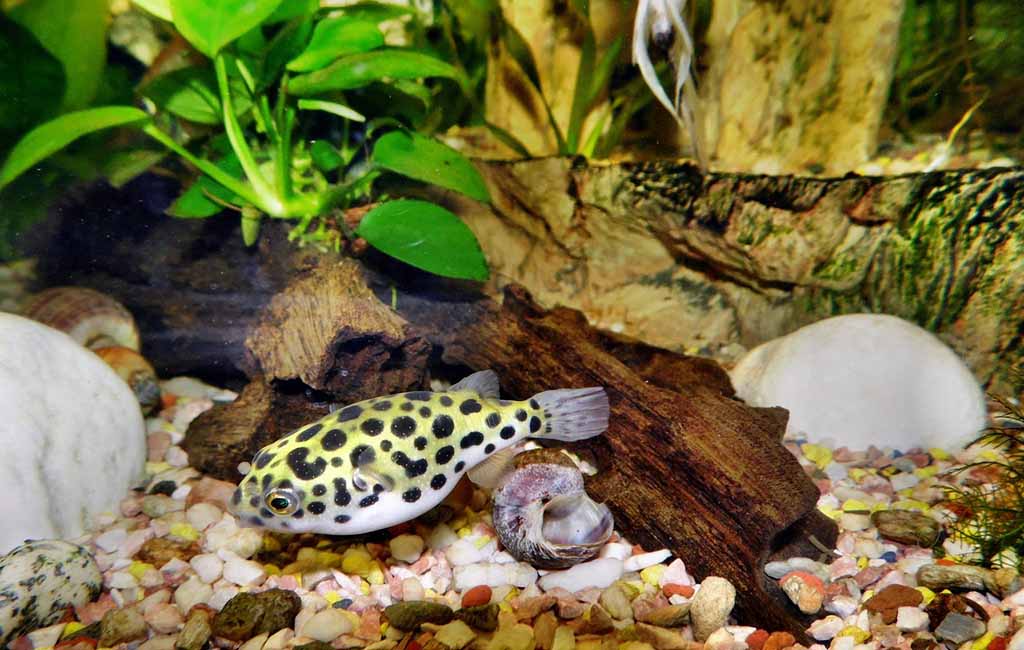
live plants
We Can Create Something Beautiful
Now, you can start with live aquarium plants in the tank. Select the plants, know the substrate type, and follow the planting requirements. Use proper anchoring to make live plants root properly in your tank. Follow the anchoring tips, and that’s all about how to keep live plants in an aquarium. Don’t be confused, just start the process, you’ll be proud of yourself.
Related Products

Leave a comment