
The aquascaping community seeks decorative aquatic plants that offer simplicity of care. The ‘Weiss-Grün’ variant of Shinnersia rivularis stands out as an underrated yet attractive aquatic plant. The quickly growing Shinnersia rivularis becomes widely favored by aquarists because of its unique bicolor leaves, which thrive well in aquarium settings.
Content Table
We will examine Shinnersia rivularis from its Mexican roots through its growth patterns, including tank integration strategies while demons, while demonstrating its impact on contemporary aquarium aesthetics.
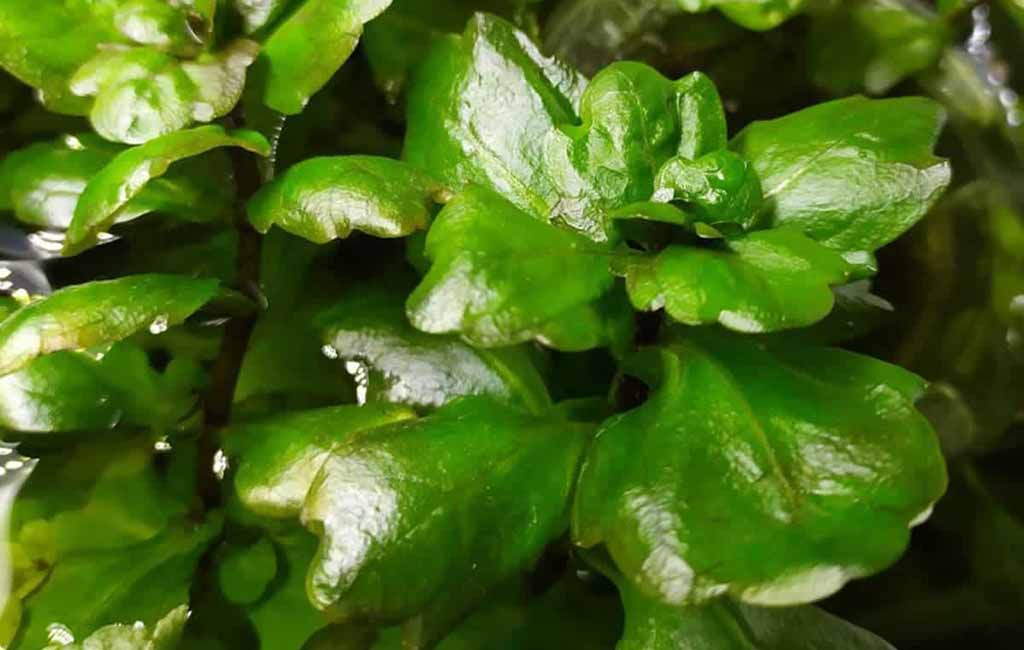
Shinnersia rivularis
Shinnersia Rivularis– An Introduction to the Species
The floral plant Shinnersia rivularis is part of the Asteraceae family, along with numerous other plant species. It belongs to Mexican ecosystems because its natural habitat encompasses moist territories and riverbanks, where it creates dense foliage. The semiaquatic Shinnersia rivularis adapts perfectly to an aquarium environment because of its ability to develop underwater, which appeals to aquatic plant enthusiasts.
The plant frequently confuses observers by being placed among other green-stemmed plants, although its distinctive light green to whitish leaves, together with quick upward growth, easily reveal its identity. Shinnersia rivularis ‘Weiss-Grün stands as the leading choice among aquarists because of its beautiful white-green leaf pattern.
When purchased as an aquarium plant, Shinnersia rivularis provides benefits beyond aesthetic appeal. The aquatic system benefits from this plant because it creates oxygen while reducing impurities in the water and providing a residence for underwater animals and fish.
A Fast Grower and Lovely Stem Plant
Shinnersia rivularis ‘Weiss-Grün’ stands as an exceptional plant choice in the aquarium hobby because of its striking appearance. The plant’s German name expresses its characteristic two-colored leaves through the translation of “white-green.” Under aquarium lighting, this plant creates an appealing contrast of its bright white veins against light green blades, which produces a glowing effect.
The distinctive quality of this aquatic plant is its quick propagation rate. When conditions remain ideal, Weiss-Grün grows extensive amounts each week to fill up space vertically in the aquarium habitat. The plant thrives perfectly as a dense structure for background and midground areas, particularly helping tanks that recently underwent planting by controlling algae growth with fast-growing greenery.
The aquatic plant Shinnersia rivularis ‘Weiss-Grün achieves heights between 10–30 cm in virtually all tanks while receiving regular pruning. When planted together in multiple stems, it forms an attractive bushy formation due to opposite leaf pairings on its robust stalks.
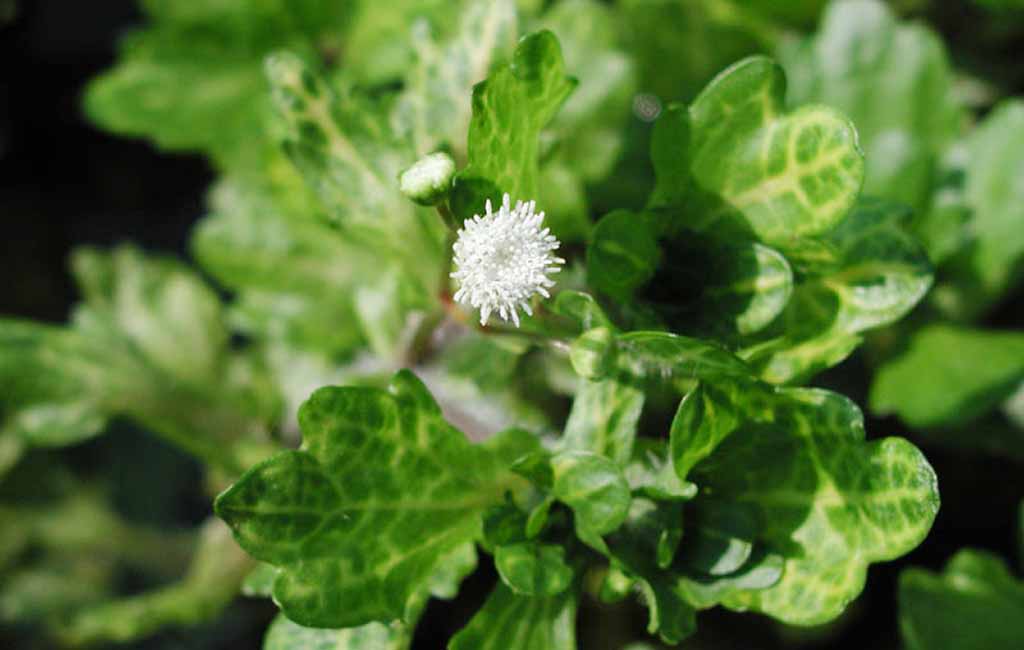
Shinnersia rivularis ‘Weiss-Grün’
Shinnersia Rivularis ‘Weiss-Grün’ Aquarium Plants – Planting Guide
When introducing Shinnersia rivularis ‘Weiss-Grün’ to your aquarium, it’s essential to follow proper planting techniques to ensure healthy growth and vivid coloration. This lovely stem plant can flourish in a variety of tank setups, but giving attention to a few key areas can make all the difference in both its visual appeal and longevity.
1. Substrate
The substrate requirements of Shinnersia rivularis ‘Weiss-Grün’ are basic, but using aqua soil or clay-based, or mineralized soil will provide helpful nutrients for development during its first growth period.
When combined with a feeding regimen that includes root tabs or liquid fertilizers, hobbyists can cultivate Shinnersia rivularis ‘Weiss-Grün’ successfully using sand or gravel as their inert substrates. Its adjustable nature enables use in aquariums across all technological ranges.
2. Lighting
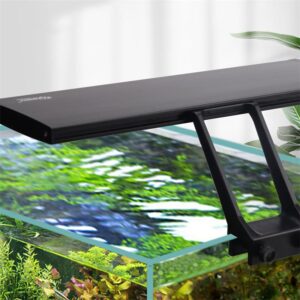
Illumination is very important to enhance the variegated green and white coloration of the plant, which is the emblem of foliage plants. Bright light sensation of 30-60 PAR or 0.5-1 watt per liter is preferred to maintain the bright white color tone in the leaves rather than turning into dull green color.
Low light causes bleaching, thus robbing the plant of colors, and leads to elongation of the stem in an attempt to reach the source of light, resulting in a sparsely branched plant. It is advisable to place the plant where it receives an even amount of light so that it may grow dense and full.
3. CO₂ and Fertilization
Although the species is capable of existing in trade without active CO₂ injection, the contained CO₂ ensures the rapid growth and also the enhanced coloration of the leaves of Shinnersia rivularis. It can be done by using liquid fertilizers loaded with iron, potassium, and micronutrients, especially in hi-tech, geeky places where demand is so impressive.
Daily or more frequent dosing maintains consistent nutrient intake, perhaps as required by prescription. The tanks that contain plants that grow rapidly are habitable for Shinnersia rivularis if it is supplied with balanced quantities of fertilizers to prevent the growth of algae on the leaves.
4. Spacing
There should be a proper space between flowers to prevent overcrowding and allow each stem to get enough light as well as nutrients. This implies that planting individual stems with a space of 3–5 cm apart will provide enough space for side shoots as well as adequate ground filtration to minimize the shading at the stem base.
Gradually, these shoots evolve to form new stems, thereby creating a presentable bushy lump at the mid-ground or background of any aquascape. If planted near each other at the beginning, the lower leaves of the plant may brown and wilt due to inadequate light and circulation of water circulation.
5. Propagation
Even though reproducing Shinnersia rivularis ‘Weiss-Grün’ is quite simple, it is the best option for aquarists who want to expand the number of plants in their collection or to keep the aquarium neat and compact. To propagate, one has to take a healthy top part of the stem, which is about 10–15 cm long, and put it in the substrate.
The cutting will soon start to root and, within a week, if not a few days, will start growing into it as a new plant. This way, the aquascaper can manipulate the growth of the plant, balance the overall layout or design, and prevent the older stems from getting too tall and thin.
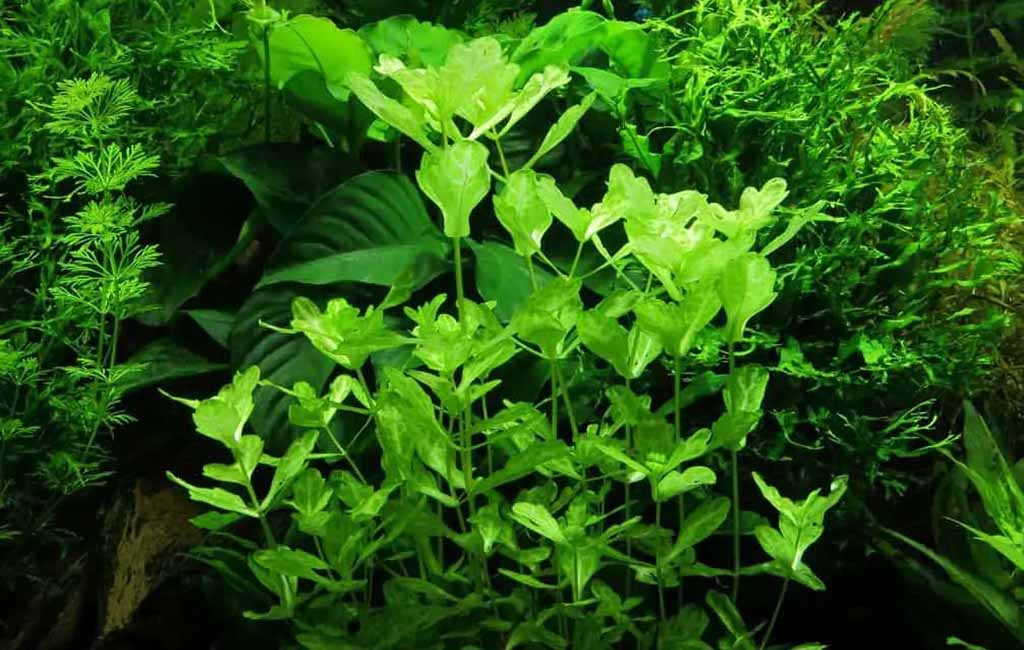
Shinnersia rivularis aquarium plants
Experience With Shinnersia Rivularis ‘Weiss-Grün’ In Aquascaping
In aquascaping, lighting arrangement and any kind of symmetry are of supreme importance. Shinnersia rivularis ‘Weiss-Grün’ can be placed in the mid-section as well as in the background area of the aquarium, depending on the size of the aquarium. This makes it easy to distinguish from the darker background, such as plants or the many hardscape features, such as driftwood and rocks.
In Dutch-style work, it is used as a focal point or as a contrasting plant among stem plants due to its effect of the multicolored brands. The white-green colored plant has an eye-catching look and enhances planted aquarium fish tanks.
It also grows fast, and this makes it perfect to use in natural styles of aquascapes or those gardening structures imitating the emerged plants or the wild vegetation alongside rivers. Despite its rapid growth, trimming is required to contain its dimensions so that it does not monopolize the foliage of the specific zone with slower-growing trees.
Another important point is that it is advisable to plant Shinnersia rivularis with three or five stems in one clump to make a more natural view. Cut some of the tops so that they are slimmer and longer to give the festival a more 3D look.
Shinnersia Rivularis Care Guide
Maintaining Shinnersia rivularis is relatively easy, making it ideal for both beginners and experienced aquarists. Here’s a care sheet to help you get started:
| Parameter | Recommended Range |
| Light Requirement | Medium to High |
| CO₂ Requirement | Low (optional) to Medium (ideal) |
| Temperature | 18°C – 28°C (64°F – 82°F) |
| pH Range | 6.0 – 7.5 |
| Hardness | Soft to moderately hard |
| Growth Rate | Fast |
| Propagation | Stem cuttings |
| Placement | Midground / Background |
| Trimming Frequency | Weekly or bi-weekly (based on growth) |
Common Issues:
- Melting leaves: Often occurs when transitioning from emersed to submerged growth. Give it time to adjust.
- Leggy growth: Usually due to low light; trim and increase light intensity.
- Algae on leaves: Combat with improved flow and balanced nutrients.
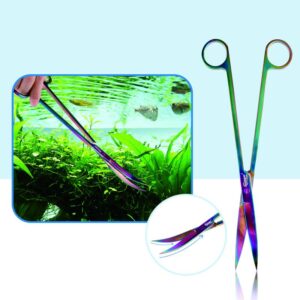
Regular maintenance involves trimming the tops and replanting them, which keeps the plant bushy and prevents it from becoming too tall or sparse at the base.
Leaving a Lasting Impression
If you are an aquatic gardener with one tank setup or decades of experience, or if you’re just starting your planted aquarium journey, Shinnersia rivularis ‘Weiss-Grün’ is a plant to get acquainted with. It has a fairly rapid reproduction rate, bright color, and does not require stringent conditions within the aquarium. So, it is a rather unpretentious plant for a freshwater aquarium.
Anthony, Shinnersia rivularis is one of the less famous yet eye-catching aquarium plants. It suits both artistic Dutch designs and natural style in aquascaping. And whereas this plant can also grow in substandard environments, it is ideal for developing an artistic and stable underwater environment.
At the end of the day, not only does the aquarium look more attractive due to the presence of Shinnersia rivularis, but it also becomes healthier and more alive, something which more than pays for the aquarium’s aesthetic value. It stays imprinted on the minds of everyone who will see it, especially the aquascape that you have created.
Related Products


Leave a comment