
Royal Gramma fish are unique reef fish. Their coloration attracts aquarists. However, it requires special attention to keep them in your tank. In the following, you’ll learn about its profile, peculiarities, life expectancy, coloration, and reef-safe nature. Moreover, methods to pop out their coloration, royal gramma diet, and how to overcome their shy nature are also part of the article, with numerous other interesting topics.
Content Table

royal gramma
Royal Gramma
Royal Framma is a beautiful saltwater fish. Fairy Basslet and Gramma Loreto are other names for this marine fish. Other than their beauty, they are popular among beginners due to their hardiness. Here is the profile of this beauty.
| Feature | Props |
| Common name | Fairy basslet |
| Royal Gramma | |
| Scientific name | Gramma loreto |
| Family | Grammatidae |
| Species | The only one that is a Royal Gramma |
| Size | Up to 3 to 4 inches |
| Lifespan | 3 to 5 years |
| Habitat | Western Atlantic Ocean |
| Caribbean Sea | |
| Some parts of the Gulf of Mexico | |
| Temperament | Usually peaceful. However, they are aggressive towards other Royal Grammas. |
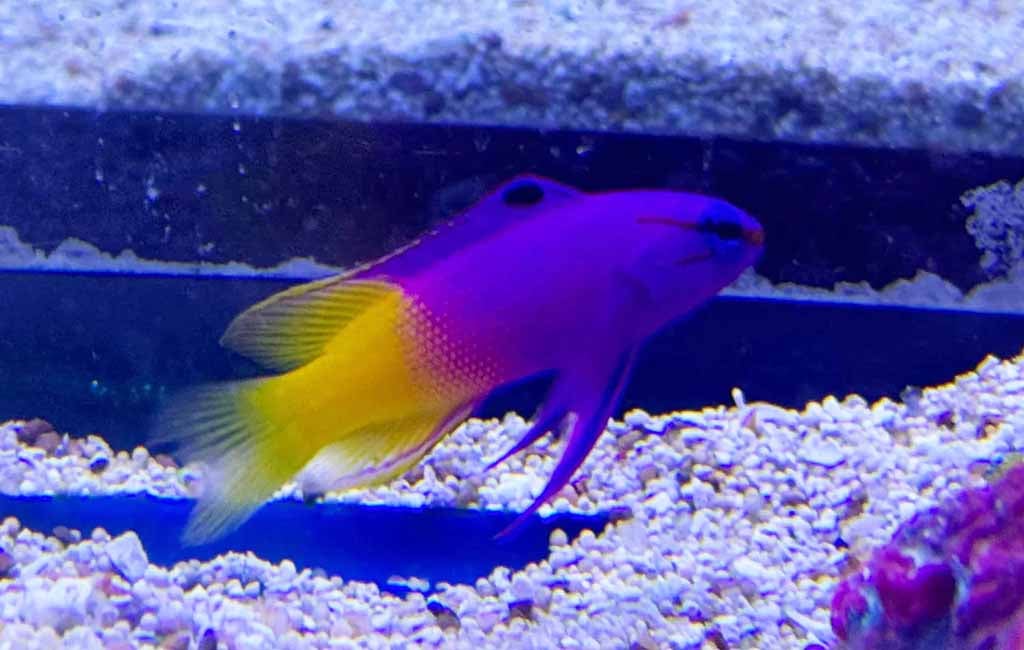
| Coloration | Vibrant.
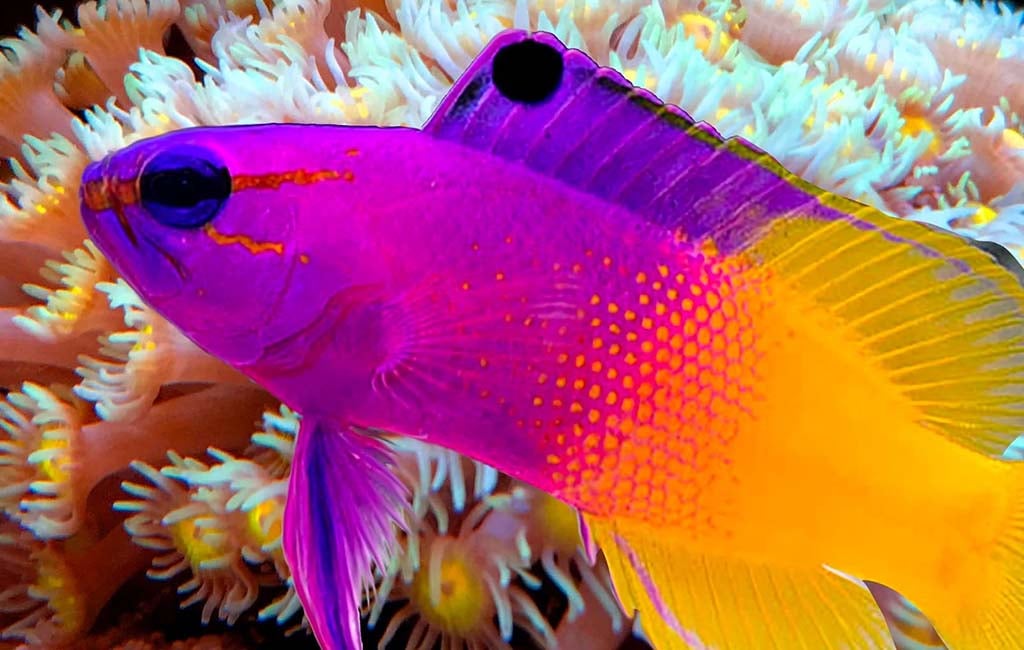
Two-toned coloration, i.e., the front half is vibrant purple or violet, and the rear side is vibrant yellow. |
Peculiarities
- The abrupt change in coloration from violet to vibrant yellow.
- They have an eye-catching black dorsal fin and a black streak in their eyes.
- Royal Gramma needs plenty of hiding spots. However, they are aggressive to others.
- They are carnivorous and enjoy diverse food items.
- Females lay eggs in a pre-built nest. Usually, they build the nest beside the cave or crevices.
- They are small.
- Someone can confuse them with the Royal Dottyback due to similarities in coloration. Royal Dottyback has transparent fins and more distinct coloration.
How Long Do Royal Grammas Live?
In aquariums, Royal Gramma usually lives up to 5 years. However, some individuals can live up to 8 years. This saltwater fish does not get very big, i.e., grow up to 3 inches long. Royal Grammas are usually peaceful and suitable for a community tank. They are shy.
Therefore, even one fish in a tank requires several hiding spots in your aquarium. However, it is surprising that they are aggressive toward other Royal Grammas. They show aggression to defend their territory when they feel threatened. This behavior is quite visible in a smaller aquarium.
Royal Gramma Native To Reef Environments
Royal Gramma is a reef-safe fish. They live around the deep sides of the reefs, build their territories, and defend their caves and overhangs from other Royal Gramma. However, they don’t affect the corals, but they help to clean them. This makes them suitable for reef tank environments.
How Did They Develop Stunning Colors?
Pigments
Their body cells produce specific pigments in skin and scales that develop coloration. These pigments are
- Carotenoids
- Melanins
- Iridophores
Environment
Optimal water conditions and proper lighting help to boost their coloration.
Diet
Feeding a balanced and proper diet optimizes the fish’s health. A healthy Royal Gramma fish shows vibrant coloration. In their natural diet, several ingredients that boost their coloration are also well.
Royal Gramma Diet
Why Does Royal Gramma Have Special Coloration?
Royal Grammas are famous for their coloration. There is a special meaning to this color.
Attracting Breeding Partners
They use it to attract potential partners. Their coloration indicates their health level, which enables us to understand the partners ‘potential breeding partners’ health. Moreover, coloration also tells about their age, which also affects partner selection.
Hierarchy
Coloration also indicates the status of a fish in their social hierarchy. Brighter species tend to rank higher than dull ones.
Defense
Their yellow and purple colors help them to camouflage with their surroundings. They do so to save themselves from predators.
Is Royal Gramma Hard To Keep?
The one-word answer is “NO”. Royal Gramma fish are relatively easy to keep and considered beginner-friendly fish species. Here are some tips to keep Royal Gramma in your tank.
Tank Setup
Your tank should be 30+ gallons. Introduce hiding spots, i.e., caves, artificial structures, and reef structures in the tank. These hiding spots and rocks will help to define their territory. A moderate to low lighting intensity will do better.
Water Parameters
| Feature | Value |
| temperature | 72 to 78°F |
| Salinity | 1.020 to 1.025 |
| pH | 8.1 to 8.4 |
| Nitrates | Less than 10 ppm |
| Ammonia and Nitrites | 0 ppm |
Tank Mates
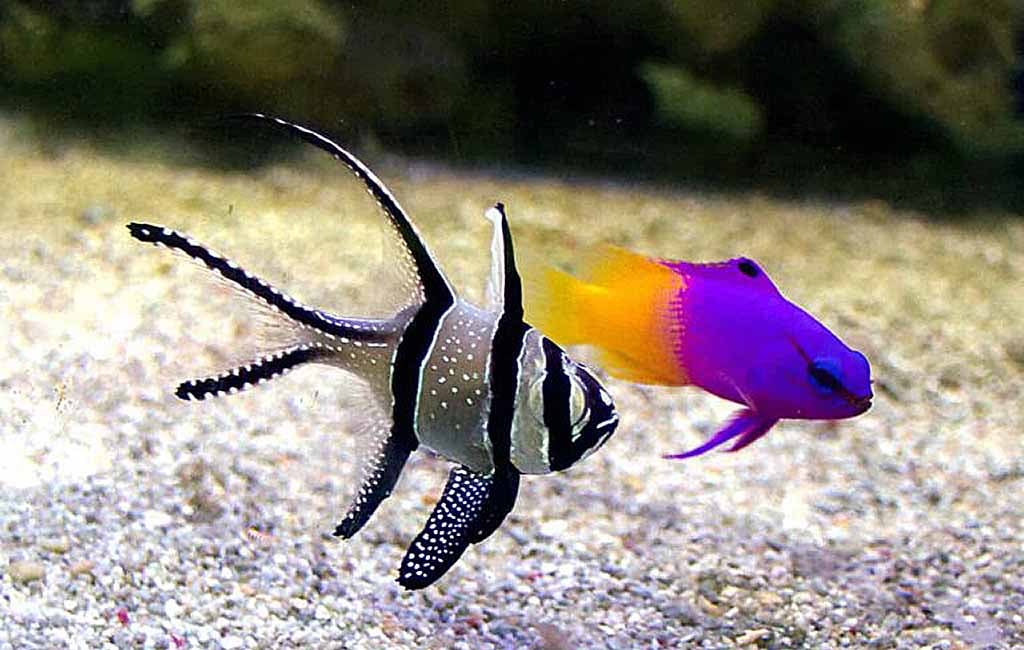
Introduce small, i.e., similar-sized, and peaceful fish in the tank. Royal Gramma lives peacefully with other species. However, they tend to be aggressive toward other Royal Gramma fish.
Acclimation
Royal Grammas are slow to acclimate to their new habitat. Therefore, give them enough time for proper acclimation. It will take days to weeks to synchronize with the tank’s environment.
Water Quality
The optimal water parameters are above. However, 10% of regular water changes are weekly to maintain the water quality.
Health
Regularly inspect Royal Gramma’s behavior. If they tend to increase hiding, lose interest in feeding, or show discoloration, it could be a sign of sickness. Usually, they are susceptible to Ich. In such a case, use reef-safe medication and a UV sterilizer.
Royal Grammar tank mates
Royal Gramma Diet
Royal Gramma are carnivores. Therefore, they eat diverse food. Feed them high-quality food. It’ll help to improve their coloration.
Feeding Options
They consume both plant-based and meat-based diets. It includes
| Zooplankton | Crustacean flesh | Mysis shrimp |
| Phytoplankton | Brine shrimp | Copepods |
In a tank, you can feed them on processed food. However, they preferably consume a natural diet, either fresh or frozen. However, you can try pellets as well.
Feeding Quantity
A teaspoon of food is enough for a single Royal Gramma. Calculate the bioload and supply food according to your calculation to avoid under or overfeeding. Frozen food is more suitable as it offers more control over nutrition, quality, and quantity.
Feeding Frequency
Royal Grammas are highly picky about quality food. Feeding frequency varies according to age. Young ones require 4 times, while adults can live on 2 times daily. Feed them in the middle of the tank. It’ll help to get them out of their hiding spots. Moreover, remove the leftover after 3 minutes, as it can cause an ammonia spike in the tank.
Royal Gramma Fish
How To Get Royal Gramma Out Of Hiding?
Royal Grammas are shy. Their shyness is more visible when they are transferred to a new tank. Here are some tips to get Royal Gramma out of hiding with some other care tips.
Give Them Time
On transferring to a new environment, Royal Gramma goes into hiding. It can prolong for days to weeks. This is a common behavior. Just give them time to acclimate to the environment.
Provide Enough Hiding Space
They love to hide. Provide them with proper hiding spots in the tank. These spots will help to regain their natural environment vibe and revive their natural attributes of balanced hiding and display routine.
Build a Proper Feeding Habit
You can keep them out of their hiding place with a scheduled feeding routine. Set a feeding routine and supply food in the middle of the tank. They will come out of their hiding spots. Moreover, mysis or brine shrimp scents attract them. Use this scent to lure them out.
Add Compatible Tank Mates
Sometimes, they tend to hide to avoid the aggression of their tank mates. Therefore, research the potential tank mates’ behavior before adding them to your Royal Gramma tank. Always add peaceful fish species with them.
Don’t Rapidly Change Their Habitat
Don’t bring rapid changes in your tank’s environment, i.e., changing the cave setup, plants, and other hiding spots. This location change can cause discomfort, and they tend to hide more than display.
Bringing It All Together
Royal Gramma are unique, multi-color, and small fish. They have numerous peculiarities, e.g., small size, laying eggs in pre-built nests, unique eye patterns, etc. With a ~5 years of life expectancy, they develop colors due to pigments, diet, and lighting coloration. These reef-safe fish are easy to keep with a proper diet, water parameters, and lighting setups. Give them acclimation time, supply food in the middle of the tank, and add compatible tank mates to enjoy this marine reef beauty.
Related Products




Leave a comment