
Nuisance algae is a problem, especially for beginners who encounter it. This covers the tank in a short period and destroys the tank’s ecosystem. It happens for various reasons and could be controlled with some precautions. In the following, you’ll learn about what nuisance algae is, its types, and its causes. How to git rid of nuisance algae in a fish tank and control it. Moreover, an interesting scenario, whether it will go by itself or not, is also discussed.
Content Table
nuisance algae
What is Nuisance Algae
Nuisance algae are unwanted algae types that grow too much and too fast. It can be any type, i.e., hair, bubble, blanket, etc. Usually, algae grow in a small and controlled way, and it is necessary for the tank ecosystem. However, when it grows too much and too fast, it causes problems. Like a bad odor, it hinders light penetration in the tank, affecting plant growth and fish’s health. If you want a difference between algae and nuisance algae, here is the difference.
| Algae | Nuisance Algae |
| Grow slowly and can be controlled. | Grows too much and too fast |
Types of Nuisance Algae in Aquariums
Here are nuisance algae, their species, appearance, causes, and the level required to control them. The Blue-Green algae is not a true algae; it is a cyanobacterium. However, aquarists treat it like algae.
| Type | Detail | Species | Causes | Control Level |
| Filamentous Algae | Long, stringy, or hair-like, forming dense, slimy mats on surfaces. | Spirogyra | Excess nutrients | Medium |
| Derbesia | light | |||
| Bryopsis | ||||
| Enteromorpha | ||||
| Oedogonium | ||||
| Pithophora | ||||
| Cladophora | ||||
| Blue-Green Algae | Slimy, dark green sheets | Oscillatoria | Poor water circulation | Hard |
| Microcystis | ||||
| Aphanizomenon | ||||
| Anabaena | ||||
| Lyngbya | Excess nutrients | |||
| Planktothrix | ||||
| Phormidium | ||||
| Scytonema | ||||
| Brown Algae | Brown dust on surfaces | Gomphoneis | Silicates | Easy |
| New tanks | ||||
| Green Water | Water becomes cloudy green | Too much light | Easy | |
| Nutrients | ||||
| Green Spot Algae | Hard green spots on glass | Green Spot Algae | High light | Medium |
| Phosphate imbalance | ||||
| Black Beard Algae | Black or dark tufts | Audouinella sp. | CO₂ imbalance | Hard |
| Rhodochorton sp. | Organic waste |
What is nuisance algae
Common Causes of Aquarium Nuisance Algae
To properly address the nuisance algae problem, identify the root cause. In the case of this nuisance algae, there are various reasons. Here are the reasons.
Light
Light is one of the major reasons for nuisance algae in an aquarium. It affects the following way.
- Light is on for more than 10 to 12 hours daily
- Direct sunlight to the aquarium. It means the aquarium is placed near the window.
- High light intensity
Excessive Nutrient
Nitrates and phosphates are the fuel for nuisance algae in any tank. The following things add nitrates and phosphates to the tank.
- Leftover food
- Fish waste
- Dead or dying plant
Irregular Water Change
If you skip or irregularly do the water change, it can cause nitrates and other nutrient buildup in the tank. This buildup leads to nuisance algae in the tank. Therefore, it is suggested to change about 25 to 30% of the entire water tank every week.
Filtration
When the tank’s filters are not working properly, it leads to waste buildup in the tank. Waste breaks down into nitrates and phosphates, which encourages the nuisance algae growth in the tank.
Improper Water Circulation
If your tank has improper water circulation, it will produce dead spots in the tank. It will lead to
- Low oxygen
- Waste buildup
- Faster algae growth
New Tank
When you have a new tank that is not properly cycled, it promotes algae growth due to ammonia and nitrite spikes in the tank. This leads to faster brown algae growth. However, over the period, after cycling, it reduces from the tank.
get rid of nuisance algae
Will Nuisance Algae Go Away on Its Own?
In new tanks, nuisance algae go away on their own. However, in established tanks, it does not go away on its own. It requires effort.
When It Goes By Itself
- The tank stabilized after proper cycling.
- Plants become stronger and begin to use nutrients that algae were consuming.
- Nutrient level drops in the tank.
When It Doesn’t Go By Itself
If your tank is fully established and plants are growing optimally, in this case, it will not go by itself. It results in
- Covers the plants, decorations, and tank walls.
- Begin to block the light
- Odor from water
- Bad water quality
Ways to Get Rid of Nuisance Algae
There are several ways to remove nuisance algae from your tank. Here are proven ways.
Remove the Algae
This is the instantaneous way to remove the algae from your tank. This method involves the following.
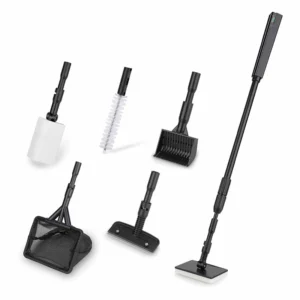
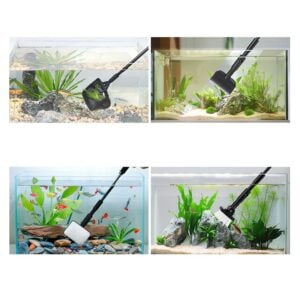
- Scrap the algae from the tank wall
- Brush the decorations.
- Trim affected plants
- Siphon the algae from the water during a water change.
Reduce Lighting
Light is another factor that gives rise to nuisance algae. If it turns on too much or it is too strong. Here are the optimal lighting hours.
- A fish-only tank requires 6 to 8 hours
- Planting a fish tank requires 8 to 10 hours.
Water Change
Go for regular water changes to control nuisance algae in the tank.
- Change 25 – 30% of tank water weekly.
- Remove the debris, i.e., food leftover, and waste, from the bottom of the tank.
- Regularly clean the water filter.
Control and Prevent the Nuisance Algae
Filtration and Water Circulation
Filtration helps to keep the water clean from waste and keep it moving. This results in an algae-free tank. Here are some ways to improve it.
- Add a filter according to the tank size and stocking level
- Install a wave maker pump, as it helps to keep the water moving
- Adjust filter outlet direction
Algae Eating Crew
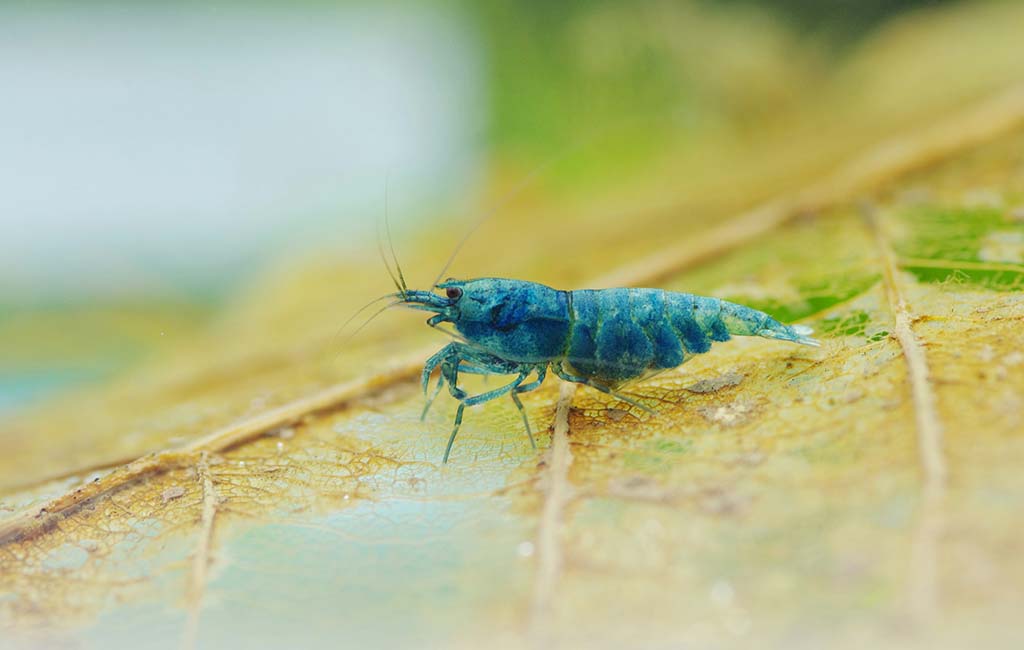
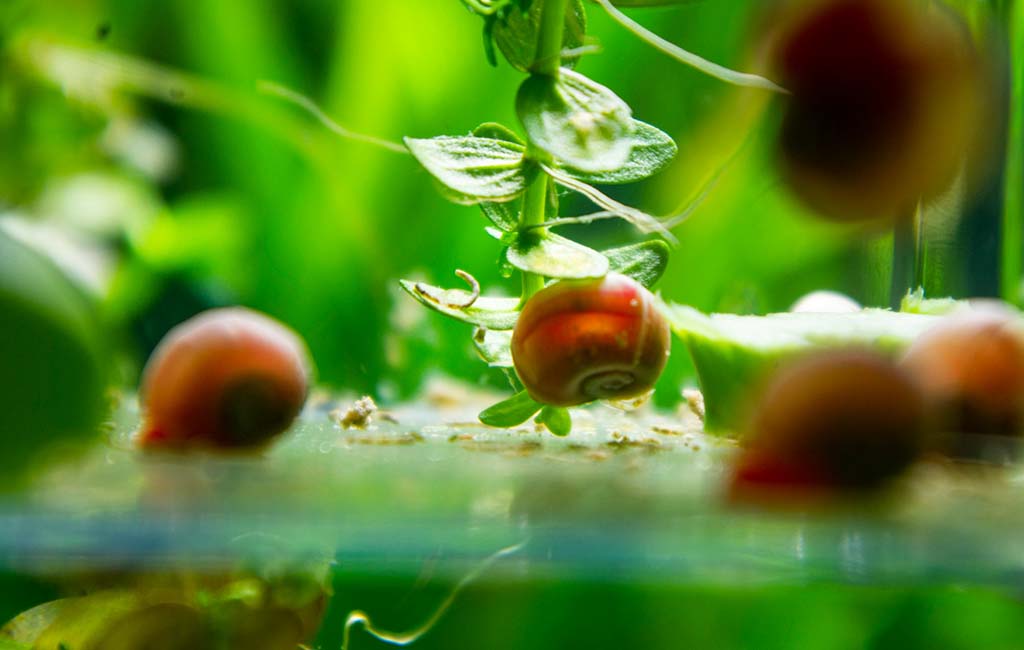
Some pets eat algae as their primary food. If algae grows out of control in your tank, add the algae-eating crew; it will help to control the nuisance algae in the tank.
| Algae Eater | Suitable Algae Type(s) |
| Nerite Snails | Green Spot Algae, Brown Algae |
| Amano Shrimp | Hair Algae, Thread Algae |
| Otocinclus Catfish | General algae grazers (good for planted tanks) |
| Siamese Algae Eaters | Black Beard Algae |
| Bristlenose Plecos | General algae on glass and wood |
Promote Plant Growth
Plants compete with nuisance algae in a tank. If you want to keep algae growth under control, promote plant growth in your tank. Plants will compete for nutrients, and ultimately, healthy plantations will help to suppress the nuisance algae. Here are some ways to do so.
- Balanced fertilization in the tank.
- Ensure proper lighting
- Maintain optimal CO₂ level in the planted tank
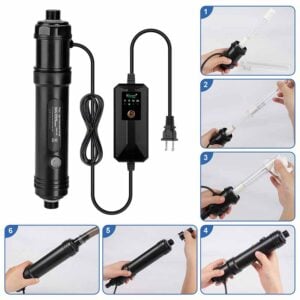
Nuisance Algae Control Products
You can find the algae control products in the market. Use these products. However, remember a few points on buying such a product.
- Is it safe for fish?
- Is it safe for water?
- Look at which nuisance algae type will be eliminated with the selected product.
- Strictly add the desired quantity and follow the proper procedure.
prevent the nuisance algae in fish tanks
Control and Prevent the Nuisance Algae in Fish Tanks
You can control and prevent nuisance algae in a fish tank in the following ways.
- Use programmable lights that remain on for 8 to 10 hours. Program the lights according to the tank type, i.e., planted or fish-only.
- Optimally feed the fish and remove the leftover after 3 to 5 minutes.
- Weekly change is 25 to 30% of the tank’s water.
- Check the water parameters regularly and address any unbalanced parameters promptly.
- Promote live plant growth.
- Clean the filter regularly to improve the water filtration.
- Change chemical filters every month.
- Add an algae-eating crew to the tank.
- Improve the filtration and water circulation. Avoid dead spots in the tank.
- Weekly, trim the plants, clean the grass, and vacuum the substrate.
- Avoid direct sunlight.
- Keep an eye on fish and plant health.
- Avoid overstocking.
Bringing It All Together
Nuisance algae grow too much and too fast. It could be any type. It causes problems in the tank, i.e., odor, declining fish health, visual degradation, etc. Look at the root causes, i.e., light, waste, nutrient imbalance, etc., and address the root causes to keep your tank free from nuisance algae. Maintain a routine for permanent control.
Related Products
Leave a comment