
Arowana fish are one of the big-buck fish. Their metallic sheen scales make them attractive. However, due to arowana scales disease, they lose their metallic sheen. In some cases, it leads to loss of scales, and an untreated arowana leads to fatality. Therefore, it is essential to understand the arowana decaying scales problem, its root causes, and effective treatment methods. All of these things, and many others, are covered in this article.
Content Table
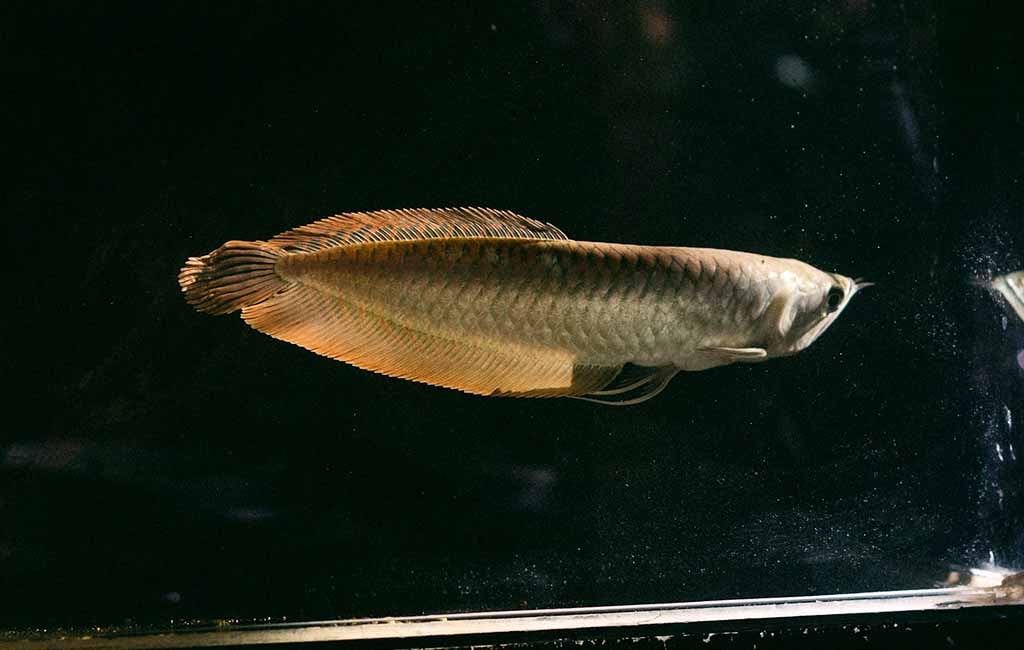
arowana decaying scales
Arowana Scales Disease
Arowana scales disease is a condition rather than a disease. It underlies various problems that can lead to this. In this condition, you can observe the wrapped, damaged, lifted edges, or no scales on the body.
Here are some reasons for arowana scales disease.
- Poor water quality
- Sudden environmental shocks
- Injuries
- Bacterial infection affecting scale roots or underlying tissue.
- Dropsy / Protruding Scales disease
The Symptom of Arowana Scales Disease
This problem does not develop suddenly. Here are some common symptoms that will help you understand the arowana decaying scales problem.
- Scales raised from the edges.
- Pinecone-like swollen body parts
- Missing scales
- No scales
- Loss of metallic shine of scales.
- Redness around the scales.
- Loss of protective sheen on the scales.
- Refuse to eat
- Reduced appetite
- Lethargic
- Erratic motion
- Rubbing against the wall or decor
- Rapid gill moment
These symptoms arise in phases. Here are the phases.
Early-Stage Symptoms
- Scales lose their metallic shine and become dull.
- Scales lift slightly or curl at the edges.
- A white, grey, or cloudy patch on the problematic scales.
- Uneven scale tone
- Mild discoloration
- Increased scratching and rubbing against objects and walls.
- Show occasional flashing behavior.
- Begin to hide briefly and show reduced activity.
- You can observe the slight decline in feeding. However, at this stage, they continue to eat.
Advancement Phase
- Visible scale erosion.
- Redness at the base of affected scales.
- Scales are protruding outward.
- Partial scale loss.
- Swelling in the affected area.
- Increased sensitivity.
- Noticeable stress in behavior
- Inconsistent appetite
- Vulnerable to bacterial infection around the exposed area with no scale due to partial scale loss.
Critical Stage
- Large area with missing scales
- Bleed or ulcerate in exposed, raw, and inflamed flesh.
- Tissue damage due to severe inflammation.
- Cause to develop secondary fungal infections, i.e., white and cotton-like growth or fuzzy patches on scaleless areas.
- Prolonged inactivity
- Completely refuse to eat.
- Rapid gill moment
- Gasping near the top surface
- Fish spend more time at the bottom.
- Symptoms of systemic infection
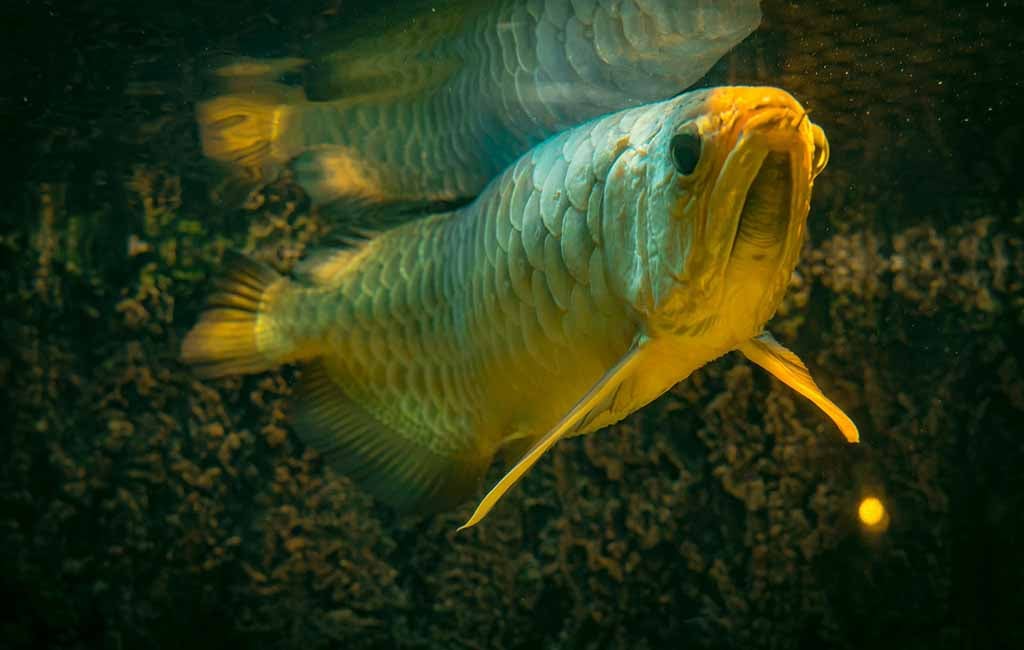
Arowana Tank Water Parameters
What Are Your Arowana Tank Water Parameters?
Water parameters often cause the arowana scales disease. Increased nitrite and ammonia enhance the vulnerability. Highly changing water parameters often lay the foundation of the problem. Therefore, it is essential to keep optimal water parameters in the tank. Here are the optimal water parameters for arowana fish.
| Parameter | Optimal Range |
| Temperature | 28–32 °C (82–90 °F) |
| pH | 6.5–7.5 |
| Ammonia | 0 ppm |
| Nitrite | 0 ppm |
| Nitrate | < 20 ppm |
| General Hardness | 8-12 dGH |
| Dissolved Oxygen | >6 mg/L |
| Carbonate Hardness | 6-8 dKH |
How to Keep Good Water Quality for Arowana
Before Scale Decaying Infection
It involves various maintenance routines to maintain the optimal water parameters in a tank when your arowana fish is healthy.
Filtration
Arowana fish produce huge amounts of waste in the tank. So, it is necessary to have a robust filtration system. Here are some filtration-related suggestions.
- Use the aquarium filter that provides double filtration for the tank volume.
- Ensure that mechanical, chemical, and biological filtration is working optimally.
- Use the large bio-media surface. It will help to promote bacterial growth to provide optimal biological filtration in the tank.
- A combination of a canister filter with a sponge filter also helps for arowanan tanks.
Water Changes
- Weekly, perform 25–30% of the tank’s water change.
- Weekly vacuum the bottom to keep the substrate clean from arowana waste and leftover food.
- The new water should be dechlorinated, and the temperature should match the previous water temperature. Sudden changes cause stress.
Optimal Feeding
- Avoid overfeeding as it can deteriorate the water quality.
- Feed for only 3 to 5 minutes. After that, remove the leftover food from the tank.
- Feed once or twice daily.
- Avoid feeding low-quality pellets as they make the water cloudy.
- Ensure that they are high quality. Include shrimps, fish pellets, and crickets in their diet.
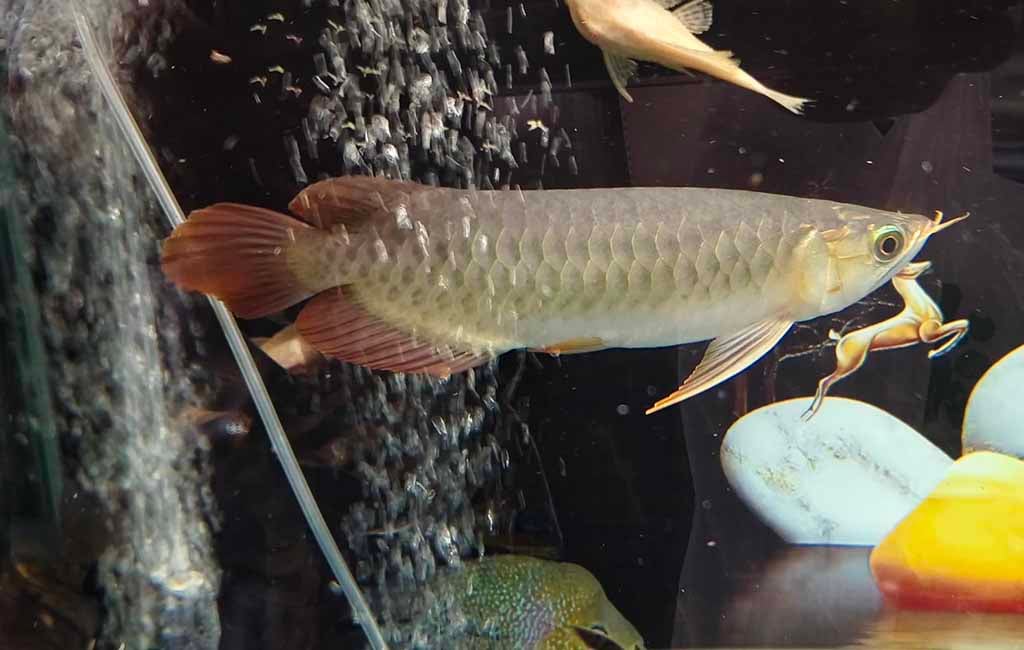
Keep Good Water Quality for Arowana
Higher Oxygenation in the Tank
A well-oxygenated tank helps in improving beneficial bacterial growth, fast recovery, and reducing stress among fish.
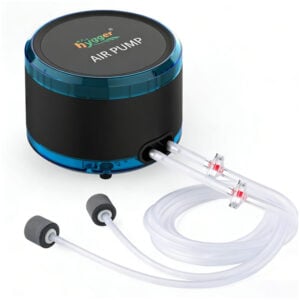
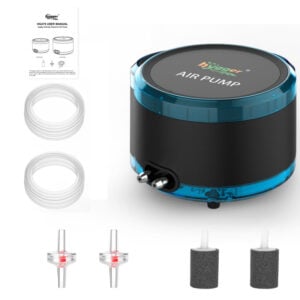
- Use an air stone
- Maintain the higher oxygen level in the tank.
- Ensure that the tank is well-oxygenated. Although they breathe at the surface.
Optimal Stocking Level
Arowana fish require a large tank, i.e., 250 gallons per fish, for optimal growth. Overcrowding leads to excessive waste generation, reduces water quality, and increases stress in the tank. These things lead to Arowana scales disease.
After Scales Disease
If, due to neglect or unforeseen circumstances, your arowana fish develops scale disease. The first thing to fix is the water quality. Here are some maintenance routines that will help you recover from the catastrophe.
Frequent Water Change
- Change about 30 to 40% water after every 3 to 4 days.
- The water change should not change the water parameters, i.e., consistency in water parameters.
- Do not shock fish with water parameters.
Increase biological Filtration
You can increase the biological filtration level in the tank through the following ways.
- Add extra bio-media.
- Use beneficial bacteria in the tank.
The increased bacterial strength will improve the
- Nitrogen cycle
- Waste treatment
- Boost the medication efficiency.
Remove Chemical Filtration
Remove the chemical filtration from the tank as it absorbs the medicine.
Boost Aeration
Medication can lead to a lower oxygen level in the tank. So increase it to the optimal level. Here are various methods to improve the oxygenation in the tank.
- Add an extra air stone.
- Increase surface agitation.
The improved oxygenation in the tank leads to
- Optimising the healing process.
- Avoid fish from respiratory stress.
Water Parameter Testing
Daily test the water parameters in the tank, especially for ammonia spikes and nitrite spikes. In case of emergency, change the water even before the 3 to 4-day routine.
Stable Temperature
Maintain the optimal temperature in the tank, i.e., 80–82°F. Lean toward the warmth as it boosts the immune system and speeds recovery. However, try to stabilize the temperature.
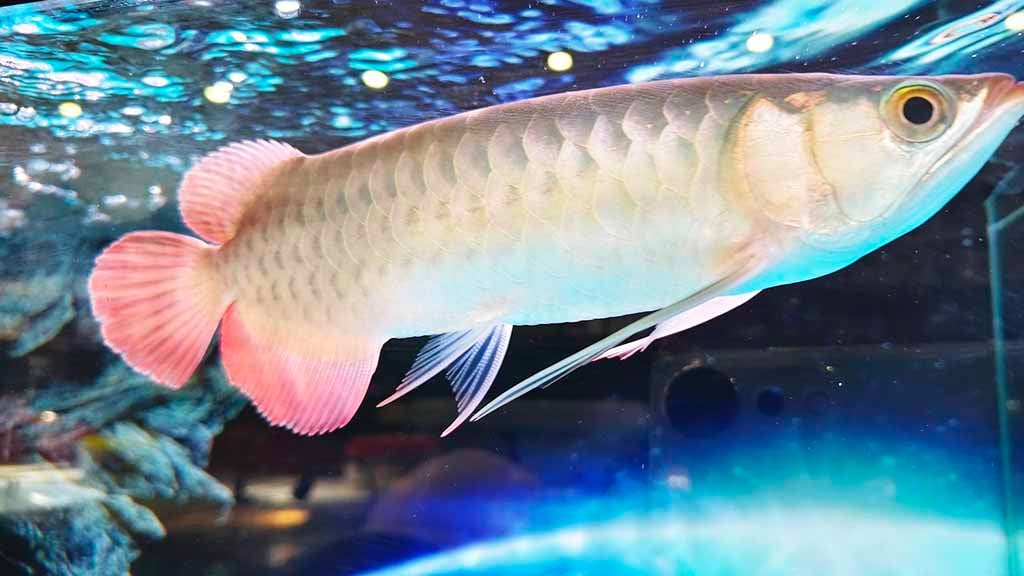
Advice for Arowana Scales Disease
Medications and Advice for Arowana Scales Disease
Proper medication and treatment involve a step-by-step method. Here is a combination that you need to adapt for an optimal recovery.
- Correct medication
- Optimal water parameters
- The best nutrition
- Low-stress environment in the tank
As mentioned, it involves a step-by-step procedure. Here is the procedure.
Identify The Root Cause
Before starting any medication, identify the root cause. Usually, arownana scales diseases for 4 reasons. Here are the details.
| Bacterial Infection | Parasitic Infection | Physical Injury | Poor Water Quality |
| Red or inflamed scale bases | Visible parasites (sometimes) | Clean and isolated wounds | Large body areas are effected |
| Fast worsening of symptoms | Heavy scratching or flashing | Little swelling or redness | Loose interest in food. |
| Raised or sticking-out scales | Damage is limited to specific areas | Sharp edges on missing scales | Gradual but slow scale erosion. |
| Lethargy |
Bacterial Infection Treatment
There are four (4) primary recommended medications for bacterial infection.
Kanamycin Sulfate
Gram-negative bacteria, Aeromonas and Pseudomonas, are one of the major causes of arowana scale disease caused by bacterial infection. Kanamycin is highly effective against it.
Dosage:
Add 200 to 400 mg per 10 gallons. Treat your fish for 5 to 7 days. Every second, 25% of the tank water changes.
Erythromycin
It is effective against Gram-positive and some Gram-negative bacterial strains.
Dosage:
Use 200 to 400 mg per 10 gallons. Treat your fish for 5 days. This medication affects the oxygenation in the tank. Therefore, ensure your tank is well-oxygenated.
Nitrofurazone
Nitrofurazone or Fruan-2 is a broad-spectrum antibacterial. It helps to cure external infections.
Dosage:
Use it according to the manufacturer’s instructions. Usually, this treatment lasts for 7 to 10 days with re-dosing after every 2nd or 3rd day. Perform the partial water change during the process.
Acriflavine
It carries antifungal properties. These properties make it effective against external bacterial infections.
Dosage:
Add 10 mg per gallon. Regularly clean your tank during treatment. This medication leaves yellow-green stains, especially on sealant and decorations.
Treatment Protocols
Here are some treatment protocols that you need to perform to make the medication more effective.
- Before medication, know the exact volume of your tank. After that, dose according to the volume.
- Before starting the medication, change 50% of the tank water. It will help to reduce the pathogen load in the tank.
- Don’t forget to remove the activated carbon filter, as it reduces the efficiency of the medication.
- Don’t lose the course midway after observing improvement. Complete the treatment up to the defined duration.
- While on medication, look at the fish’s behavior. Be cautious about gill movement and any unusual behavior. Improves the oxygenation of the tank, which will reduce gill movement.
- Once the treatment is finished. Go back to normal filtration. Install the activated carbon filter. Change the biological and mechanical filtration media to a new one.
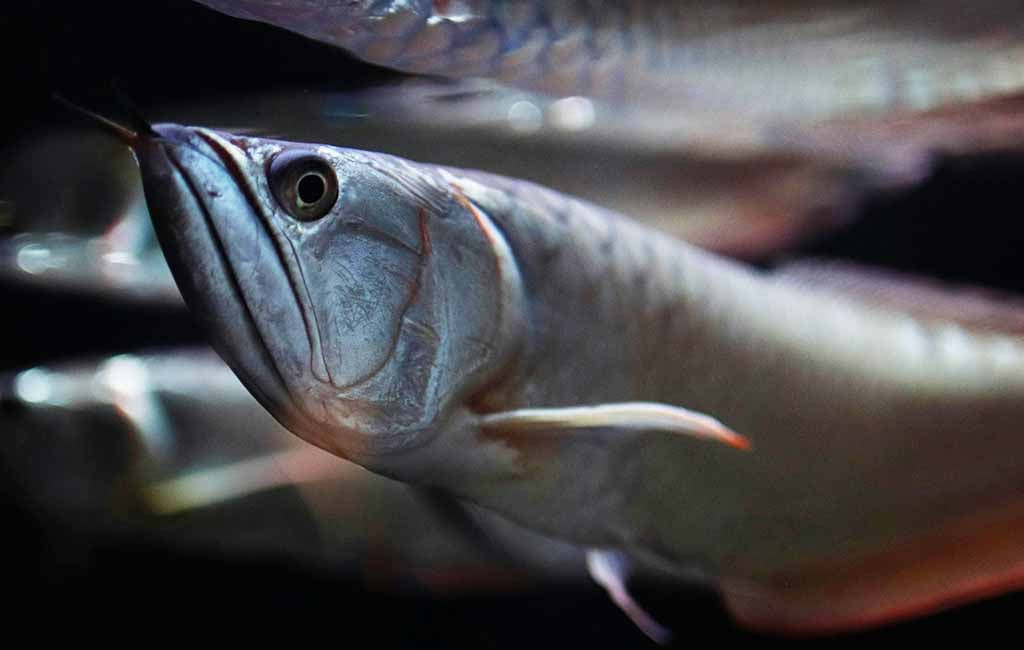
The Treatment of Arowana Scales
Parasitic Infestation Treatment
If you find that your fish has scale disease due to parasites. The following medication and treatment protocols will restore your fish’s health.
Praziquantel
It helps to treat flukes and some worms, i.e., Monogeneans, Trematodes/Turbellarians, Cestodes, and Intestinal Worms/Bile Pipe Parasites.
Dosage:
Add 2 to 10 mg per gallon. It will not affect the biological filtration, good bacteria, and the arowana fish.
Potassium Permanganate
It helps to fight against the external parasites and is even effective against bacteria.
Dosage:
Add 2 to 4 mg per gallon. It is highly potent and recommended to use it only in a separate container. Keep the fish in touch for only 10 to 30 minutes.
Formalin + Malachite Green
These are used in combination. This combination helps to treat ich, external parasites, and velvet problems.
Dosage:
Follow the manufacturer’s instructions. If you see the problem solved with one dosage, avoid the second dosage. Otherwise, you can use this combination multiple times. However, always avoid overdosing.
Treatment Protocols
- Identify the parasite type before treatment.
- Select the medication according to the bacteria.
- Sometimes, you need to use the medication for a prolonged duration according to the parasite’s life stage.
- A salt bath before starting the proper treatment helps to cure several external parasites. For a salt bath, add 1 to 3 tablespoons for 5 to 10 gallons. However, give the salt bath in a separate tank.
- Always quarantine the new fish to avoid any problems in the main tank.
Antifungal Treatment
You need this treatment in advance of arowana scales disease. It develops after the scales are lost on exposed body parts. It has two (2) recommended medications.
Methylene Blue
It helps to cure mild fungal and bacterial problems.
Dosage:
Add 2 to 3 mg per gallon. Be cautious with medication, as it can cause everything blue in the tank. However, it is completely safe for most fish.
Malachite Green
It is a powerful antifungal. However, it requires being very cautious while using it. Overdose leads to toxicity for fish.
Dosage:
Use it according to the manufacturer’s instructions. Use only if it is prescribed as aquarium safe. Otherwise, it can pose issues.
Treatment Protocol
- It helps to cure fungal growth on exposed skin.
- Remove the fish from the water for up to 30 seconds to apply medication. Apply the diluted medication to the affected area.
- After the mediation application, return it immediately to the tank.
- It should be used in critical stages of Arowana scales disease. It causes stress in fish.
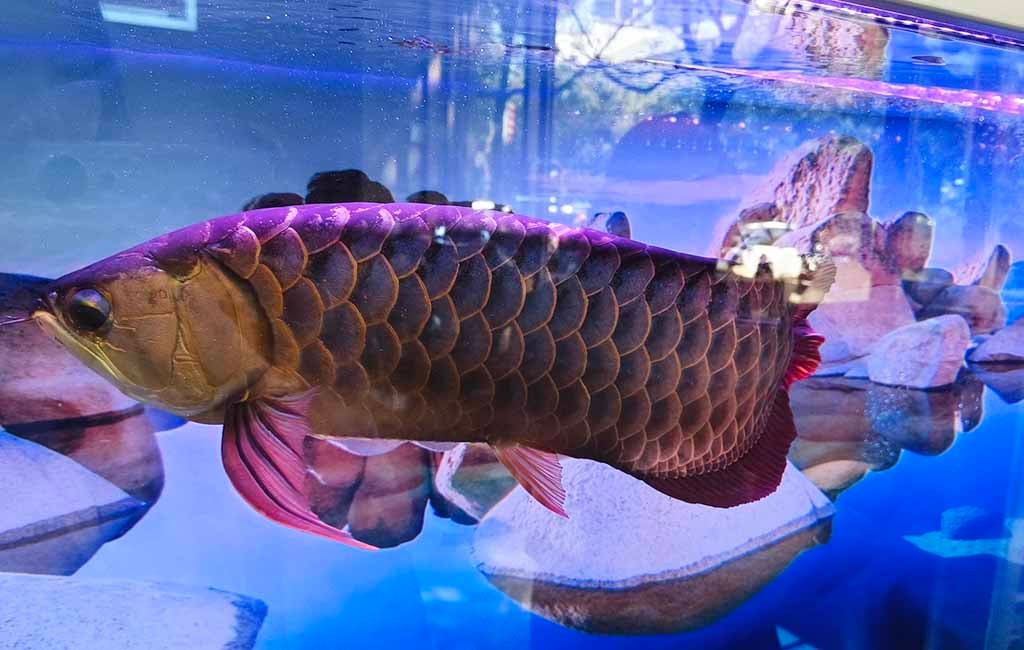
arowana scales disease
Salt Treatment
As mentioned, the salt treatment can help to cure some parasitic diseases. It also has mild antiseptic properties and improves osmoregulation during the healing process. This treatment is helpful in recovery. However, it should be remembered that Araowana fish are freshwater fish. Salt exposure should be minimal. Therefore, only use it in serious conditions.
Treatment Protocol
- Use non-iodized salt or aquarium salt for treatment.
- For an antiseptic effect, add 1 tablespoon per 5 gallons in a separate tank and allow the fish to be in saltwater for only 5 to 10 minutes.
- During the salt bath, look at the fish’s behavior.
- Gradually remove them from the saltwater tank and introduce them to the main tank.
Supplemental and Alternative Treatments
In the following, some supplemental and alternative treatments for sick arowana. These treatments are not the main treatment. Some aquarists find these treatments effective in arowana scales disease.
Indian Almond Leaves
Indian Almond Leaves release the tannins that have mild antifungal and antibacterial attributes. It reduces stress in the tank by creating a natural environment and slightly lowering the pH.
Dosage:
Add 1 to 2 leaves per 20-gallon tank.
Here are two more treatment methods that some aquarists find suitable.
- Tea Tree Oil Products
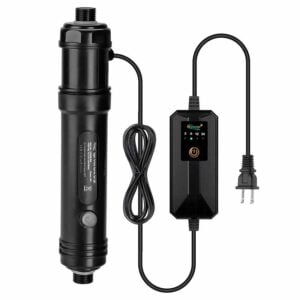
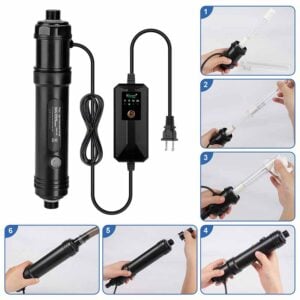
- UV Sterilization
Nutrition Support
During and after the treatment, it is necessary to provide optimal nutrition support for speedy recovery. Here are some dietary modifications and supplementations that help in the nutrition support route.
Dietary Modification
- Avoid dry foods.
- In the initial stages of treatment, reduce the feeding as fish don’t have the desire to eat. Feed 2 to 3 meals weekly.
- In recovery, feed them high-quality shrimps, fish fillets, crickets, and earthworms.
- Feed the vitamin-soaked food to fish.
- Feed them with vitamin C-rich food. It helps in scale regeneration by producing collagen.
- Garlic-extracted food also helps in fast recovery.
Environmental Modifications
- Remove sharp edge decorations to avoid injury in exposed areas.
- If the fish is weak, reduce the water flow to avoid exhaustion.
- Reduce the light intensity in the tank; high-intensity lights can cause stress.
- Avoid noise in the tank to avoid stress.
- Remove aggressive tank mates.
Timeline
Here is the expected treatment timeline.
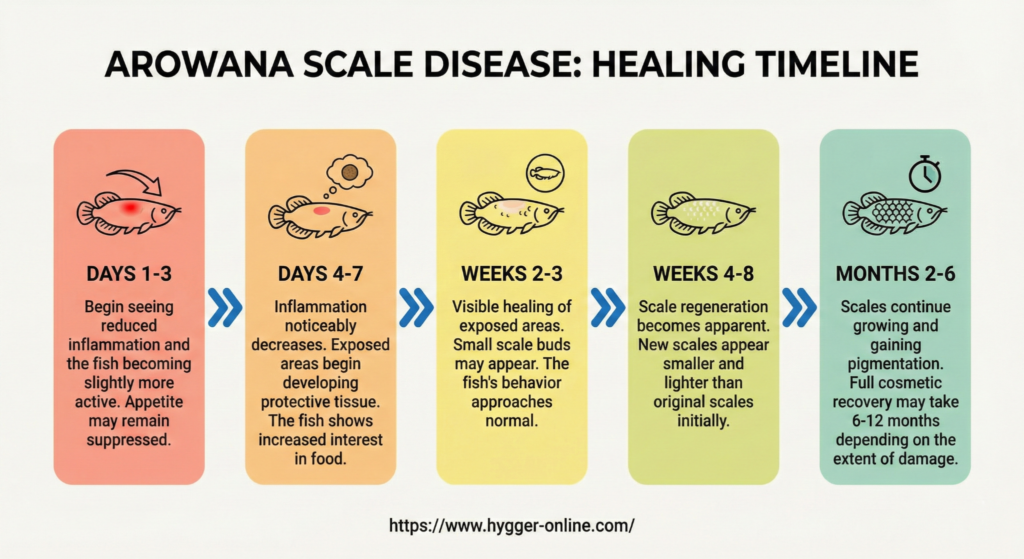
After Scales Disease
Veterinarian Consultation
Here are some scenarios that require consulting with the veterinarian. After a veterinarian consultation, follow the doctor’s instructions.
- The fish have not eaten fish for one week.
- Symptoms are getting worse even after treatment.
- A large area is affected, and you are observing no healing even after two weeks.
- Other symptoms, bloating, popping eyes, and extreme lethargy, have developed.
Will Arowana Scales Grow Back?
Yes, after proper treatment and recovery, Arowana regenerates scales as it has an excellent ability for scale regeneration.
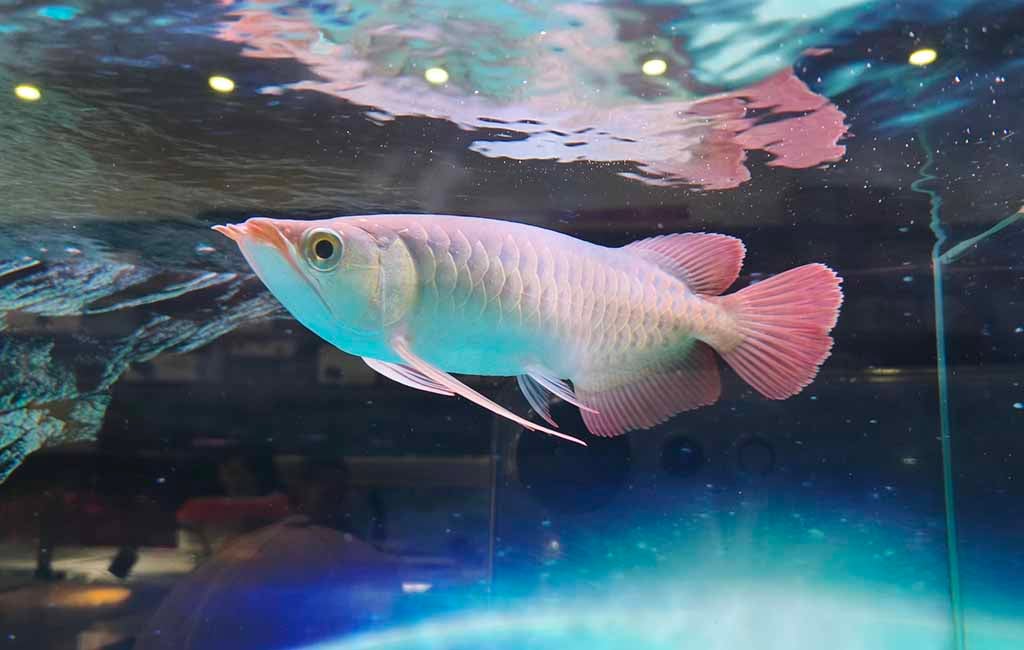
Will arowana scales grow back
The Final Word
Arowana scale disease is not a single disease, but it is a symptom. If you are observing scale loss and it is more than two weeks, treat your arowana. If your fish is not showing a recovery, consult a veterinarian. It may take about 2 months to fully recover. So, be patient and treat your arowana well.
Related Products

Leave a comment